
Reviewed · WORKSHOPS
Ancient Art Workshop: Fresco
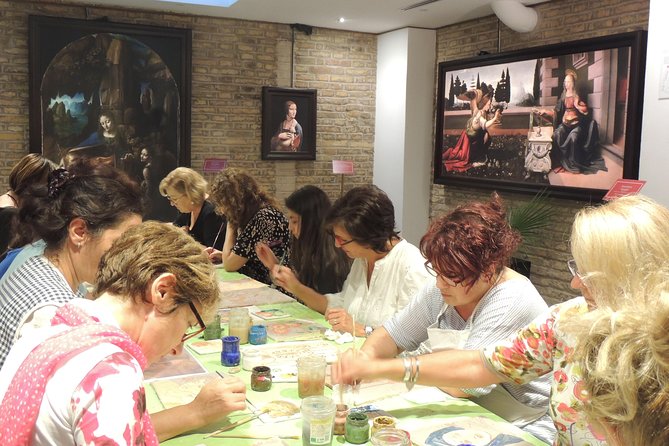
A Rome fresco workshop lets you do something most museum visits cannot: work with the same basic materials used by ancient and Renaissance artists. You can paint a small copy of a Sistine Chapel detail or make a Roman-style mosaic with colored marble tiles, guided step by step by Italian artists such as Cecilia and Nina.
I like the direct link between the lesson and Rome’s art. I also like that you leave with a finished souvenir, not just a few photos. The main consideration is scheduling: a last-minute cancellation has happened, and some participants have found the appointment time or meeting details less clear than expected.
In This Review
- Key points to know
- Why this two-hour class feels different from a Rome art lesson
- What happens when you arrive at the Rome studio
- Choosing a fresco inspired by the Sistine Chapel
- Choosing a Roman mosaic with colored marble
- How the teaching works for beginners and children
- Why the lesson adds meaning to churches and Pompeii
- The price, private format, and overall value
- Who should book the Ancient Art Workshop
- Practical booking advice for this Rome art class
- Should you book this workshop?
- FAQ
- How long does the Ancient Art Workshop last?
- What can I make during the activity?
- Are the materials included?
- Can I take my artwork home?
- Is the workshop suitable for children?
- What languages are available?
- What is the cancellation policy?
Key points to know
- Choose fresco or mosaic: Paint a Michelangelo-inspired detail or assemble a Roman floor design with marble tiles.
- Use traditional materials: Natural pigments, plaster, brushes, and colored marble make the lesson more than a simple craft class.
- Get patient instruction: Cecilia and Nina guide beginners, children, and experienced artists through each stage.
- Take your work home: Your finished piece is ready to leave with you at the end of the two-hour session.
- Book private time: Only your own group participates, with a maximum of two people at the listed price.
- Plan communication carefully: Confirm the exact appointment time and route before setting out.
Why this two-hour class feels different from a Rome art lesson
The clever idea here is simple: you do not just look at a fresco, you try to make one.
A fresco is painted onto fresh plaster, allowing the pigment to bond with the surface as it dries. The process helps explain why old wall paintings can last for centuries, yet it also shows why the artist must work with care. Color choices, brush control, and timing all matter.
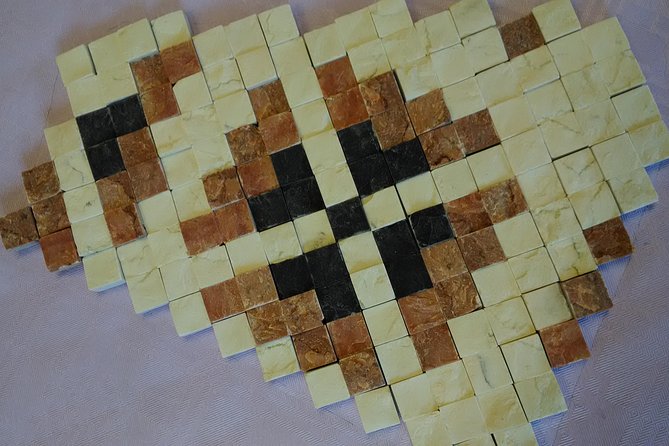
The mosaic option gives you a different kind of Roman connection. Instead of painting, you arrange small pieces of colored marble to create a pattern or detail inspired by Roman floors. The materials are tactile and substantial. You are handling stone rather than assembling a lightweight souvenir kit.
I especially like the choice between a detail inspired by Michelangelo’s Sistine Chapel work and a Roman floor design. That choice lets you match the activity to your interests. Pick the fresco if you want to connect with Renaissance painting. Pick the mosaic if ancient Rome and geometric decoration appeal more.
This is also a useful break in a packed Rome schedule. The work takes place indoors or in a studio setting, and one participant described it as a peaceful stop during a hot day of sightseeing. You still learn something, but you are sitting down and making things with your hands instead of crossing another museum or piazza.
More Rome tours worth comparing
- 3 in 1 Cooking Class near Navona: Fettuccine, Ravioli & Tiramisu
★ 5.0 · 7,376 reviews - Rome: Pasta & Tiramisu Class with Fine Wine by the Vatican
★ 4.9 · 4,852 reviews - Rome: Pasta Making Class with Wine, Limoncello, and Dessert
★ 4.9 · 3,177 reviews
What happens when you arrive at the Rome studio
The activity begins and ends at the listed meeting point, Bsocial, at Via del Commercio 12 G, 00154 Rome. The supplied information also describes the studio as being on the Appian Way and reachable by Metro A, so I would confirm the exact route and entrance before you go. Those details do not line up perfectly on paper.
The class lasts about two hours. That is long enough for an introduction, a demonstration, your own project, and some guidance without taking over an entire day. The workshop is offered in English, Italian, French, German, and Spanish, which makes it easier to ask questions about the technique rather than simply copy instructions.
The setting is private for your group. At the listed price of $246.90, up to two people can participate. For two people, that works out to $123.45 per person before considering any booking fees or other charges shown at checkout. That is not a cheap souvenir activity, but it compares more favorably when you treat it as a private art lesson with materials, personal help, and a finished piece included.
The listed operating hours are Monday through Friday, 10:00 a.m. to 6:00 p.m., for dates running from January 5, 2025, through July 1, 2027. Since the class is by arrangement rather than a standard museum time slot, check the confirmed start time carefully. One participant had difficulty finding a fixed class time and found WhatsApp the quickest way to reach the provider.
Choosing a fresco inspired by the Sistine Chapel
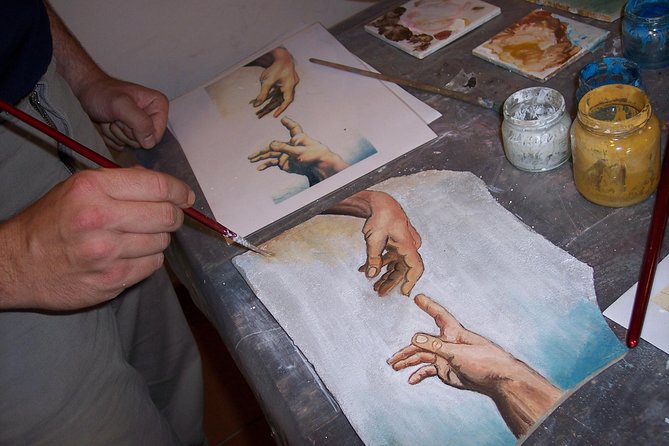
The fresco lesson is the natural choice after visiting the Vatican Museums or the Sistine Chapel. You will have just seen large-scale wall painting, but here the scale becomes manageable. Instead of trying to understand a vast ceiling from the floor below, you can follow the basic process with your own hands.
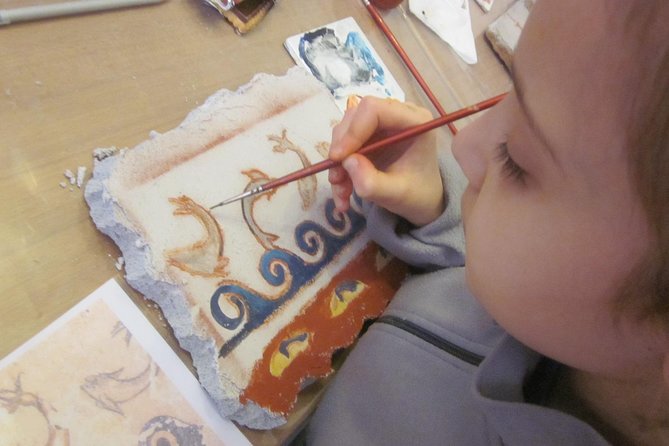
The lesson includes historical background and practical instruction. You learn how the plaster is prepared, how marks are transferred, and how pigment is applied. A particularly useful point is the explanation of how the paint bonds to wet plaster and becomes a lasting, water-resistant surface once dry.
The artists use natural pigments and traditional materials. Information provided for the class notes that the plaster is made with sand and that mineral materials create the paint pigments. This gives the activity more substance than simply painting a modern image on a dry canvas.
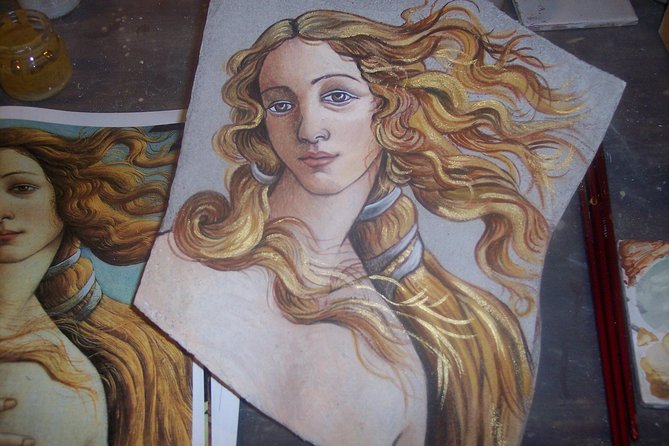
You then choose an ancient subject or a detail connected with Michelangelo. The instructor helps you select a project suitable for your time and ability. That support matters. A blank surface can be intimidating, especially if you consider yourself a poor artist, but the class is structured around clear steps rather than freehand talent.
Cecilia has been described as warm, patient, and attentive, with experience as a fresco restoration specialist. Nina has also taught the technical process and answered detailed questions about how the old method works. The instructors’ restoration backgrounds add useful context because they have dealt with the real materials and techniques, not just read about them.
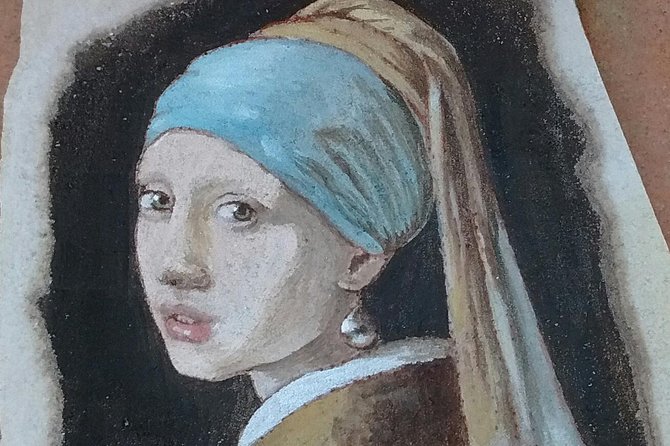
Do not expect to produce a full Sistine Chapel scene in two hours. You are making a small decorative piece or detail. The reward is understanding the method and leaving with something you created, not matching Michelangelo.
Choosing a Roman mosaic with colored marble
The mosaic workshop has a different rhythm. You work with small tiles made from colored marble, selecting and placing pieces to reproduce a Roman floor detail or related ancient design.
This is a strong option for families and for anyone who prefers assembling shapes to handling paint. An eight-year-old participant completed a mosaic with a parent, and another family used the class for a child and a teenager. The instruction is designed to be accessible, with simple steps and help at each stage.
The marble tiles are one of the best reasons to choose this workshop. They give your souvenir weight and a real connection to Roman decorative art. You are not merely printing a design inspired by antiquity. You are handling a material that has long been part of Italian architectural decoration.
Mosaic also gives you a chance to slow down. Placing pieces one at a time can be calming, especially after a morning around major monuments. If you or your child tends to lose interest during long historical explanations, this format keeps the hands occupied while the background information continues.
The activity description allows you to choose between fresco and mosaic, but you should confirm your preference when booking. Materials for both are included, including colors, brushes, and marble tiles. Food, drinks, and transportation are not included.
A completely different way to spend the day in Rome:
- Vatican: Museums & Sistine Chapel Entrance Ticket
★ 4.5 · 144,003 reviews - Vatican Museums & Sistine Chapel Tour with Optional Basilica
★ 4.3 · 67,413 reviews - Vatican Museums, Sistine Chapel & St Peter’s Basilica Guided Tour
★ 4.5 · 39,149 reviews - Rome: Colosseum, Palatine Hill and Roman Forum Guided Tour
★ 4.8 · 32,814 reviews
How the teaching works for beginners and children
You do not need previous art training. The instruction begins with an explanation of the method, followed by demonstrations and guided practice. The artists help with transferring marks, mixing or blending color, and completing the individual stages.
That makes the class suitable for mixed-ability groups. A parent and an eight-year-old can work alongside more experienced adults without the lesson becoming too technical for the child or too basic for everyone else. The private format also means you can ask for help without worrying about slowing down a larger class.
Cecilia has been praised for being patient and attentive, while Nina is described as upbeat and willing to answer questions. One useful personal touch is Cecilia’s friendly approach to language. She speaks English well and may also help you pick up a little Italian during the session.
I would still set realistic expectations. The quality of your finished piece will depend partly on how carefully you work. The teacher can guide your color blending and technique, but this is not a professional restoration course. It is a hands-on introduction designed to give you a satisfying result in a short time.
For children, the activity works best when they enjoy making things and can follow instructions. The class is suitable for children, but an adult should expect to stay involved with younger participants. That is part of the appeal for families: you make the piece together rather than sending a child off to a separate activity.
Why the lesson adds meaning to churches and Pompeii
The strongest value here comes after the workshop.
Once you understand how pigment sits on plaster, a church fresco becomes easier to read. You begin noticing the surface, the limits of the artist’s working time, and the difference between painted decoration and later restoration. A visit to the Sistine Chapel can feel less distant when you have just attempted the basic process yourself.
The same applies to Pompeii. Roman wall painting and floor mosaics can look like fixed decoration behind glass or barriers. After making your own small piece, you have a clearer sense of the labor involved, from preparing materials to placing each mark or tile.
This is why I would schedule the class after a major art visit if possible. A Vatican visit followed by the workshop creates a natural sequence: first see the finished masterpieces, then learn by doing. You can also take the class before Pompeii and bring a better eye to the ancient work.
The workshop is not a substitute for the Vatican Museums, Pompeii, or Rome’s churches. It does something different. It turns art history into a physical process, which can be particularly useful for children and for adults who find long explanations hard to retain.
The price, private format, and overall value
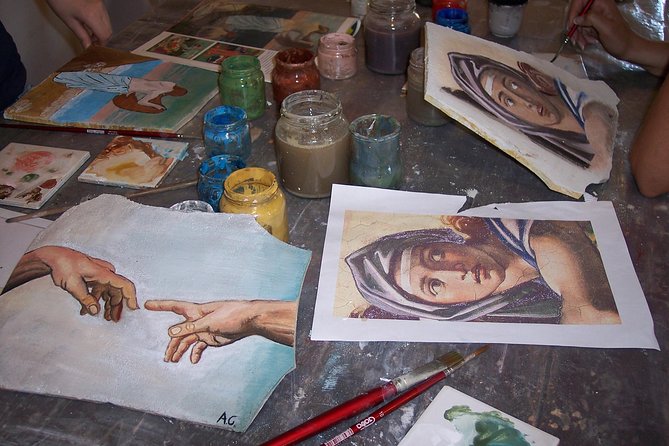
At $246.90 per group of up to two, the price is easiest to justify for two people who want a private lesson. You receive the instruction and all workshop materials, and you take the finished artwork away immediately.
For one person, the cost is less attractive because the group price does not drop to half. For two people, it becomes a shared activity and a private lesson at roughly $123.45 each. That can be reasonable for a special occasion, a parent-child activity, or a couple looking for something beyond the standard sightseeing list.
The class also saves you from buying materials separately. You do not need to find pigments, brushes, plaster, or marble tiles in Rome, and you do not need to arrange a place to work. Those practical details are already handled.
The biggest value is personal attention. You are not simply watching an artist demonstrate fresco painting. You receive help with your own piece, and the instructor adjusts the guidance to your ability. The private setting is especially useful if one person is confident and the other is not.
The drawbacks are clear. Transportation, food, and drinks are not included. The meeting information deserves a careful check because the description refers to an Appian Way studio and gives a Via del Commercio address, along with a Metro A note. Also, a family emergency once led to a cancellation about an hour before the scheduled class. The provider refunded that booking, but the incident shows that a time-sensitive plan can carry some risk.
Free cancellation is available up to 24 hours before the start time. Changes or cancellations inside that window are not accepted for a refund, so keep the local cut-off time in mind.
Who should book the Ancient Art Workshop
I would book this for:
- A parent and child who want a shared Rome activity
- Couples looking for a private creative lesson
- Art lovers visiting the Vatican, Roman churches, or Pompeii
- Adults who claim they are not artistic but enjoy patient instruction
- Families needing a calm indoor break from summer heat
- Anyone who wants a handmade souvenir instead of another shop purchase
I would think twice if you have only one day in Rome and need to focus on major sights. The class takes about two hours, plus the time required to reach the studio and return to central Rome. I would also be cautious if your schedule cannot absorb a possible last-minute change.
This is not the right pick if you want a formal museum tour, a large group social event, or a full professional art course. It is a short, guided introduction with a personal project at the center.
Practical booking advice for this Rome art class
Book well ahead if the workshop is important to your plans. It is commonly reserved about a month in advance, with an average lead time of 31 days.
After booking, confirm the start time, meeting address, transport route, and preferred activity. Ask specifically if you want fresco rather than mosaic, or the reverse. The provider can conduct the activity in English, French, German, Italian, and Spanish.
Use the provided contact method to confirm the details, particularly if the booking page does not show a clear class time. WhatsApp has been useful for quick communication.
Wear something you do not mind getting marked by art materials, although the supplied information does not list a clothing requirement. Service animals are allowed, the studio is near public transportation, and most people can participate.
The artwork can be taken home at once. If you are flying later that day, consider how you will protect and carry it, since the exact finished size and packing method are not specified.
Should you book this workshop?
Book it if you want Rome’s art to become something you can understand through your hands. The mix of natural pigments, plaster, colored marble, and guidance from artists with restoration experience gives the class a clear sense of purpose.
I would choose the fresco after visiting the Vatican or before seeing Pompeii. I would choose mosaic for a child-friendly activity or for anyone who likes patterns and careful assembly. The price is high for one person, but fairer for two people sharing a private session and leaving with original work.
Confirm the location and appointment time, and avoid placing it beside an unmissable flight or timed attraction. With those precautions, this is a thoughtful, memorable addition to a Rome itinerary, especially for families and art lovers who want more than another hour of looking.
FAQ
How long does the Ancient Art Workshop last?
The workshop lasts approximately two hours.
What can I make during the activity?
You can choose to create a fresco inspired by a detail from Michelangelo’s Sistine Chapel work or make a mosaic based on a Roman floor design.
Are the materials included?
Yes. The fee includes materials needed for the workshop, including colors, brushes, and marble tiles.
Can I take my artwork home?
Yes. You can take your finished piece away immediately at the end of the lesson.
Is the workshop suitable for children?
Yes. The activity is suitable for adults and children and is described as a good choice for families. Most people can participate.
What languages are available?
The activity can be conducted in Italian, English, French, German, and Spanish.
What is the cancellation policy?
You can cancel at least 24 hours before the experience start time for a full refund. Cancellations or changes made less than 24 hours before the start time are not accepted for a refund.
Newest reviews from Rome
- ROME:Colosseum & Ancient Rome – private/small group TOUR★ 5.0 · 24 reviews
- Off the Beaten Track in Rome: Rione VI Parione Private Tour★ 5.0 · 24 reviews
- Cinematic Photoshoot in Rome★ 5.0 · 24 reviews
- Rome: Best of Colosseum and Roman Forum Small Group Guided Tour★ 4.5 · 24 reviews
- Vatican and Trionfale Market Tour with Wine and Food Tasting★ 5.0 · 24 reviews
- private tour: Vatican Museums, Sistine Chapel, St. Peter’s Basilica★ 4.5 · 24 reviews
- The Labyrinth of Rome between catacombs and ancient quarries★ 4.5 · 24 reviews
- Colosseum guided tour with Virtual Reality★ 5.0 · 24 reviews
Workshops, compared.
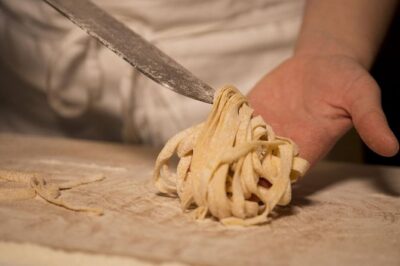
3 in 1 Cooking Class near Navona: Fettuccine, Ravioli & Tiramisu
Read our review →
Pasta & Tiramisu Class with Fine Wine by the Vatican
Read our review →
Pasta Making Class with Wine, Limoncello, and Dessert
Read our review →
3-in-1 Fettuccine, Ravioli, and Tiramisu Cooking Class
Read our review →
Fettuccine Pasta Cooking Class in Rome’s City Center
Read our review →
Traditional Pasta with Cocktails Cooking Class
Read our review →
Become a Masterchef in Rome: Pasta, Ravioli and Tiramisù Class
Read our review →
Fettuccine and Tiramisu Cooking Class with Wine
Read our review →Browse the lists this tour appears in