
Reviewed · OSTIA ANTICA TOURS
Daily life in Ostia Antica (private tour)
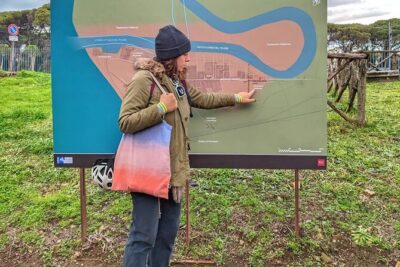
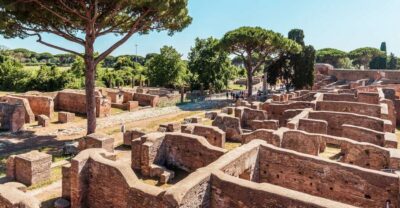
Ostia Antica is where ancient Rome feels less like a collection of grand monuments and more like a real town. You walk original streets, enter baths and shops, and see the practical spaces where workers, merchants, worshippers, and families once spent their days. A private guide helps turn broken walls into a readable city.
I like the daily-life focus, especially the mosaics linked to shipping trades and professional groups. I also like the calm setting and the chance to adjust the visit for your group, with guides including Paola, Paulo, Maria, and Maria Rita praised for clear explanations and strong archaeological knowledge.
The main consideration is the price: $187.06 per person is a serious outlay for three hours, even with admission included. It makes the most sense for a small group that wants personal attention, rather than for someone happy to walk around with a guidebook.
In This Review
- Key points to know before you book
- Why Ostia Antica makes ancient Rome feel personal
- The Necropolis: beginning at the edge of the city
- The Terme di Nettuno and Roman bathing
- Theater and Piazzale delle Corporazioni
- The Terme del Foro and the Capitolium
- Tabernae: where the city worked and ate
- What the guides add to the ruins
- Time, cost, and the practical tradeoff
- Who will enjoy this private Ostia Antica tour
- Should you book it?
- FAQ
- How long does the Ostia Antica tour last?
- Is this a private tour?
- What language is the tour offered in?
- Is admission to Ostia Antica included?
- Where does the tour begin and end?
- Can the itinerary be adjusted for my group?
- What happens if the weather is poor?
Key points to know before you book
- Ancient Rome at street level: Explore homes, baths, shops, temples, a theater, and business spaces rather than only monumental ruins.
- A private three-hour visit: Only your group takes part, so the pace and emphasis can suit children, adults, or serious history fans.
- Mosaics with a practical purpose: Look for designs that identify trades and connect Ostia to shipping and marine commerce.
- Guides with archaeological expertise: Paola is frequently named, while Paulo, Maria, and Maria Rita have also led highly praised visits.
- A quieter change from central Rome: Ostia Antica offers more room for thought than the busiest ancient sites in the city.
- Admission is included: The listed cost is $187.06 per person, with group discounts available.
Why Ostia Antica makes ancient Rome feel personal
Rome’s central monuments show power. Ostia Antica shows ordinary life.
This was a port city connected to Rome, and its ruins preserve the places people used every day. You are not simply looking at a forum or a triumphal arch. You are following streets, peering into shops, entering bath complexes, and reading clues about work, religion, food, housing, and trade.
That difference matters. A guide can explain why a plain room mattered, how a building may have been used, and what its decoration says about the people who paid for it. Paola is described as an archaeologist with a strong grasp of art, religion, construction, and living conditions. That sort of training is useful here, because Ostia can otherwise look like a large field of walls with no obvious order.
I especially like the way this tour centers on people who rarely get top billing in ancient Rome. The mosaics in the marketplace, for example, could identify professional groups with images and words. Many were connected to shipping and marine commerce. These details show Ostia as a working port, not just a backdrop for emperors and temples.
The private format also changes the feel of the visit. You do not have to follow a fixed script designed for a large crowd. The tour can be adapted to the ages and interests of your group, which is helpful if one person wants architecture, another wants Roman religion, and someone else simply wants to understand how people lived.
More Ostia Antica visits:
- Ancient Ostia Antica Semi-Private Day Trip from Rome by Train with Guide
★ 4.5 · 579 reviews - From Rome: Ostia Antica Guided Half-Day Trip by Train
★ 4.8 · 486 reviews - Horse Sanctuary & Trail Ride in Ostia Antica
★ 4.5 · 276 reviews
The Necropolis: beginning at the edge of the city
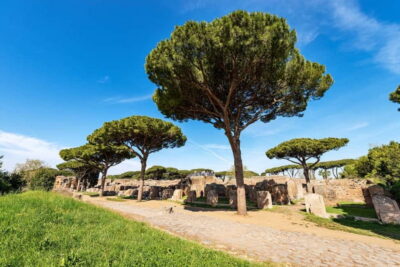
The itinerary includes the necropolis, the cemetery area outside the main city. This is a useful place to begin because it sets up an important Roman habit: the dead were commonly placed beyond the urban center.
You may find tombs and funerary remains that introduce the people connected to Ostia before you enter the streets where they worked and lived. A guide can help you read the site as a community, not just as separate stone fragments.
This first stop also gives the tour a natural beginning. You start outside the living city, then move inward toward public buildings, commercial spaces, and religious centers. The sequence helps you understand Ostia as an organized settlement rather than a random spread of ruins.
The Terme di Nettuno and Roman bathing
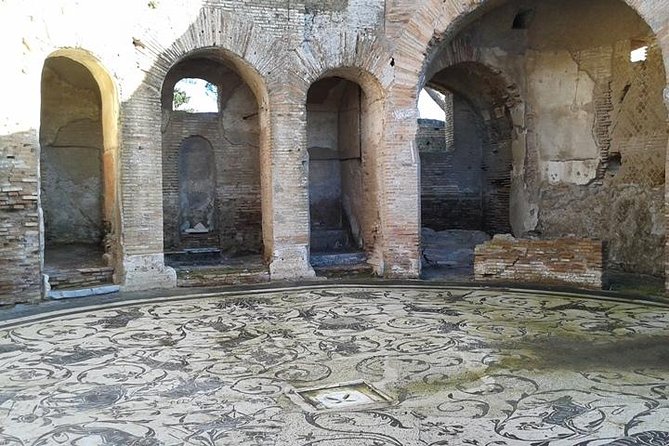
The Terme di Nettuno, or Baths of Neptune, are among the most rewarding stops for anyone interested in Roman daily routines. Bathhouses were not simply places to wash. They were social and public spaces, and their decoration shows how much care Romans gave to shared buildings.
The mosaics are a major reason to pay attention here. Black-and-white floor designs can depict figures, animals, or themes connected to the sea. The artwork is attractive, but it also reflects Ostia’s connection to water, trade, and maritime life.
I would ask your guide to point out how the baths were arranged and what each area may have been used for. The surviving walls and floors do not explain themselves. Paola’s strength, according to the supplied details, is connecting architecture and art with the daily lives of average residents.
Three hours is enough to see the main bathing complex without rushing past every detail, but it is not enough for an exhaustive study of every building. If mosaics and Roman engineering are your priorities, make that clear at the start.
Theater and Piazzale delle Corporazioni
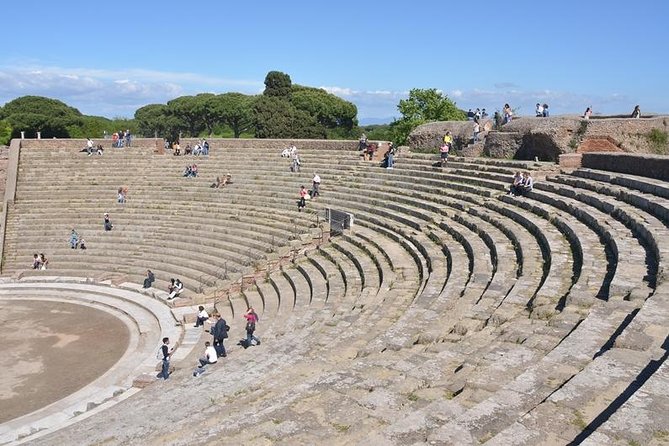
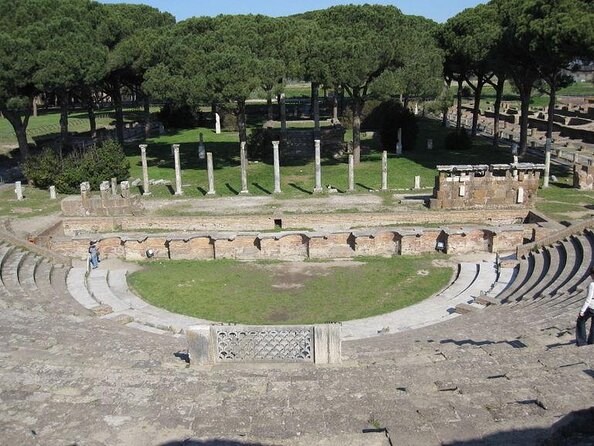
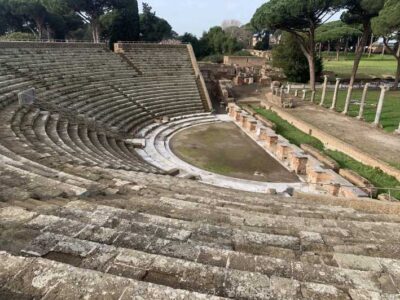
The theater gives you a look at entertainment and civic life. It is one of the site’s more recognizable structures, with a form that makes sense even when much of the surrounding city is reduced to foundations.
From there, the Piazzale delle Corporazioni adds a different layer. This area is closely tied to trade and professional associations. The mosaic decorations are particularly useful because they connect businesses and occupations with the port’s wider economy.
This is one of the places where a private guide can add real value. You might notice a pattern underfoot, but your guide can explain what the image means and why it was placed there. The professional symbols help you picture a city full of specialized workers rather than a vague ancient settlement.
For many people, this section is the clearest answer to the question of why Ostia matters. The city was not only a stopping point for ships. It supported a network of trades, services, and commercial relationships that helped feed and supply Rome.
More Rome tours worth comparing
- Rome by Golf Cart Private Tour: Beyond the Landmarks
★ 5.0 · 4,361 reviews - Early Morning Vatican, Sistine, St. Peter’s Semi or Private Tour
★ 5.0 · 3,779 reviews - Rome on a Golf Cart Semi-Private Tour Max 6 with Private Option
★ 5.0 · 2,502 reviews - Rome Private Arrival Transfer: Fiumicino Airport to Hotel in Rome
★ 4.5 · 2,492 reviews
The Terme del Foro and the Capitolium
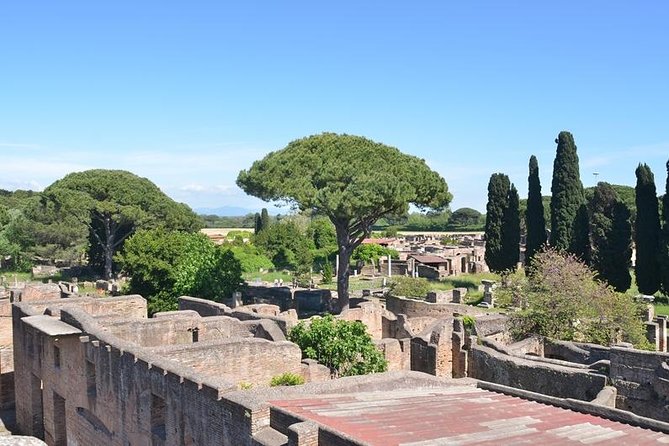
The Terme del Foro and the Capitolium show how public life and religion fit into the city.
The baths offer another chance to compare how Roman public facilities were built and decorated. You can look for the relationship between open areas, rooms, floors, and walls. The guide’s explanation is important here because the remains are often incomplete, and it takes context to understand the original scale.
The Capitolium, dedicated to Jupiter, Juno, and Minerva, represents the official religious center of the Roman civic world. It is a useful contrast with the more practical spaces elsewhere in Ostia. After seeing shops, bathhouses, and work areas, you encounter a building connected to state religion and civic identity.
I like this balance in the itinerary. You are not given only pretty mosaics or only political monuments. The route brings together religion, leisure, business, and ordinary movement through the city.
Tabernae: where the city worked and ate
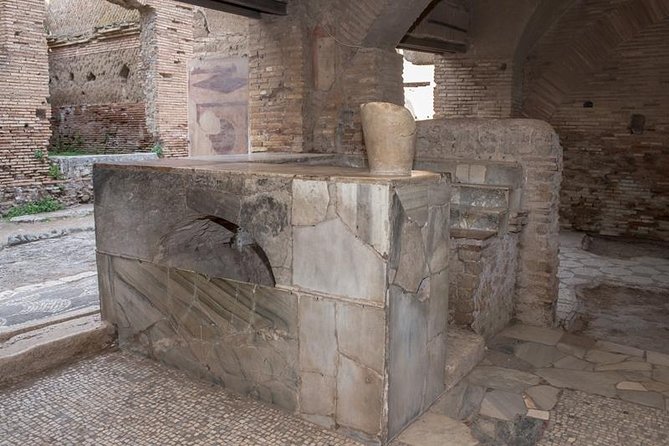
The tabernae were shops or commercial rooms, often opening onto the street. They help you imagine the texture of an ancient neighborhood: people moving between businesses, buying goods, meeting others, and carrying out work in compact spaces.
The remains may look simple, but that simplicity is exactly their value. A row of rooms tells you more about urban routine than a grand monument can. Your guide can help identify how these spaces may have functioned and how they fit into the surrounding streets.
The tour also includes private buildings and houses away from the most obvious route. One of the strongest features of the experience is the chance to see less familiar homes that you might pass without recognizing on your own. If you want the tour to concentrate on housing, food, family life, or working conditions, say so early.
This is also where the private format is most useful for families. Children may understand a shop, a bathroom, or a home more easily than an abstract discussion of imperial government. Adults can then add the larger questions about class, trade, religion, and urban planning.
What the guides add to the ruins
The guides are the central reason to consider this experience instead of visiting alone.
Paola is the guide named most often in the supplied material, and she is described as an archaeologist who explains the city’s construction, history, art, religion, and everyday conditions with energy. Paulo is also praised for his command of the site and willingness to share information. Maria and Maria Rita have led visits that focused on bringing the ruins and daily routines into focus.
That range of expertise matters because Ostia Antica is large and layered. You need help deciding what deserves your attention. A guide can direct you to a mosaic, explain a building’s purpose, and show how separate parts of the city connect.
The best approach is to tell your guide what you want before setting off. If your group includes a 25-year-old history fan, an older relative, and children, the flexible structure lets the guide balance detail with movement. The tour is offered in English, and only your group participates.
The experience has earned a 4.9 rating from 54 reviews, with 98 percent recommending it. Those figures do not replace your own judgment, but they do fit the consistent picture of a tour valued for guide quality, clear storytelling, and attention to ordinary Roman life.
Time, cost, and the practical tradeoff
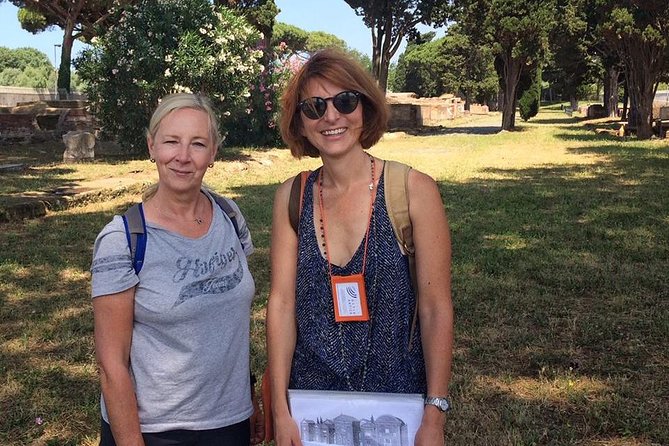
The visit lasts about three hours and begins at 00119 Ostia Antica RM, Italy, ending back at the meeting point. The site is near public transportation, so you do not need to treat it as an all-day expedition from central Rome, though you should allow time for getting there and returning.
At $187.06 per person, the cost is high for a three-hour activity. Admission is included, and group discounts may lower the per-person price. Still, you are paying mainly for private guidance rather than for a long list of included extras.
The value improves when several people in your group share the same interests. A private archaeological explanation can be worth more than a cheaper group walk if you care about details and want to ask questions. It is less compelling if you only want a quick look at the ruins or plan to spend most of your time taking photographs.
The site’s quieter atmosphere is another part of the value. Several descriptions emphasize the relief of getting away from the noise and crowds of central Rome. Ostia Antica is not presented as a replacement for the Colosseum or Roman Forum. It offers a different experience, with more space to consider how people actually lived.
Plan for a walking visit across archaeological ruins. Most people can participate, and service animals are allowed. Good weather is required. If poor weather cancels the activity, you are offered another date or a full refund.
Who will enjoy this private Ostia Antica tour
I would choose this tour for anyone who wants ancient Rome explained through daily routines rather than famous names alone.
It suits:
- First-time Rome visitors who want a calmer ancient site.
- Families who need a flexible pace and explanations suited to different ages.
- History, archaeology, and architecture fans.
- Visitors who enjoyed Pompeii or the Roman Forum but want a less crowded setting.
- People with only a few hours to spare for a guided visit outside the city center.
- Small groups willing to pay more for personal attention.
You may want something else if your priority is a large group atmosphere, a very low price, or a full-day archaeological program. Three hours gives you a strong introduction, not a complete survey of every ruin at Ostia Antica.
A local restaurant visit is not part of the listed tour, though one account describes eating afterward at a family-run restaurant. Treat that as a possible personal add-on, not as an included feature.
Should you book it?
Book this private Ostia Antica tour if you want the ancient city to make sense. The strongest reason is not simply the number of ruins. It is the guide’s ability to connect mosaics, baths, shops, temples, houses, and professional spaces with the people who used them.
The price is the sticking point. At $187.06 per person, this is best for a group that will ask questions and take advantage of the flexible format. If that sounds like your style, the three hours can become one of your most useful history lessons in the Rome area.
If you prefer to explore independently, admission and public transportation access make a self-guided visit possible. But you will miss much of what gives the site meaning, especially the signs of trade, work, housing, and social life hidden in plain view.
FAQ
How long does the Ostia Antica tour last?
The tour lasts approximately three hours.
Is this a private tour?
Yes. Only your group participates in the activity.
What language is the tour offered in?
The tour is offered in English.
Is admission to Ostia Antica included?
Yes. An admission ticket to Parco Archeologico di Ostia Antica is included.
Where does the tour begin and end?
It begins at 00119 Ostia Antica RM, Italy, and ends back at the meeting point.
Can the itinerary be adjusted for my group?
Yes. The itinerary can be customized to suit the ages and interests of your group.
What happens if the weather is poor?
The experience requires good weather. If it is canceled because of poor weather, you will be offered a different date or a full refund.
Newest reviews from Rome
- ROME:Colosseum & Ancient Rome – private/small group TOUR★ 5.0 · 24 reviews
- Off the Beaten Track in Rome: Rione VI Parione Private Tour★ 5.0 · 24 reviews
- Cinematic Photoshoot in Rome★ 5.0 · 24 reviews
- Rome: Best of Colosseum and Roman Forum Small Group Guided Tour★ 4.5 · 24 reviews
- The Labyrinth of Rome between catacombs and ancient quarries★ 4.5 · 24 reviews
- Vatican and Trionfale Market Tour with Wine and Food Tasting★ 5.0 · 24 reviews
- private tour: Vatican Museums, Sistine Chapel, St. Peter’s Basilica★ 4.5 · 24 reviews
- Colosseum guided tour with Virtual Reality★ 5.0 · 24 reviews
Ostia Antica Tours, compared.
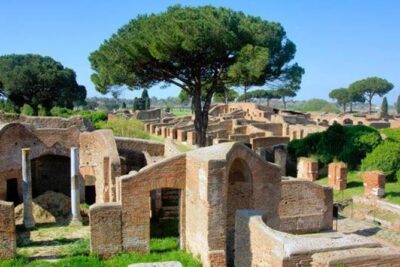
Ancient Ostia Antica Semi-Private Day Trip from Rome by Train with Guide
Read our review →

Ostia Antica Archaeological Park Ticket & Audio App
Read our review →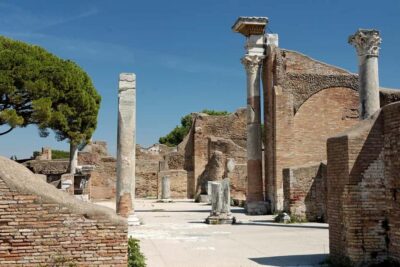
Browse the lists this tour appears in