
Reviewed · OSTIA ANTICA TOURS
Rome: Ostia Antica Tour From Rome
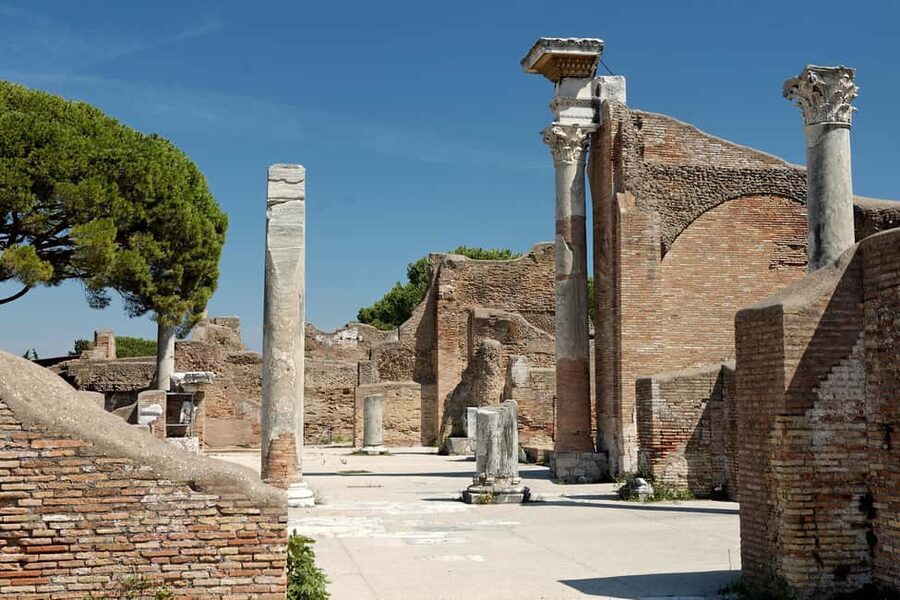
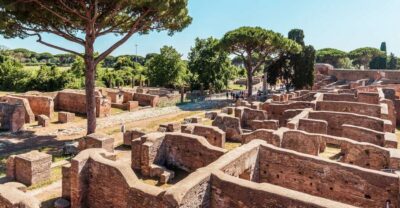
Ostia Antica gives you something the center of Rome often cannot: ancient Rome without the crush of crowds. This vast port town still has its streets, shops, apartment blocks, baths, temples, theatre, and business buildings in place, so you get a clear look at ordinary Roman life as well as grand monuments.
I like the easy 25-minute train ride from Piazzale Ostiense, which avoids Rome’s morning traffic, and I like the small groups of 12 or fewer. Guides such as Sonia, Rebecca, Camille, and Andy have been praised for bringing the site to life with clear stories and strong knowledge of archaeology. The main drawback is cost: at $77, you still pay about €3 for train tickets and cover your own food.
In This Review
- Key points to know before you book
- Why Ostia Antica may be Rome’s best ancient site for you
- Meeting at Piramide and riding the train
- Entering Ostia Antica with skip-the-line admission
- The first 90 minutes: streets, shops, and Roman business
- The theatre and Decumanus Maximus
- The ancient firehouse and Roman infrastructure
- A 20-minute break for water, coffee, and a breather
- The final 90 minutes: Forum and the largest baths
- What happens after the guided tour
- Guide quality and group size
- Is $77 a fair price?
- Who should book this Ostia Antica tour?
- Should you book it?
- FAQ
- Where does the Ostia Antica tour meet?
- How long is the train ride to Ostia Antica?
- Are train tickets included?
- How long do you spend inside the archaeological site?
- Is food included?
- Can I stay at Ostia Antica after the tour?
Key points to know before you book
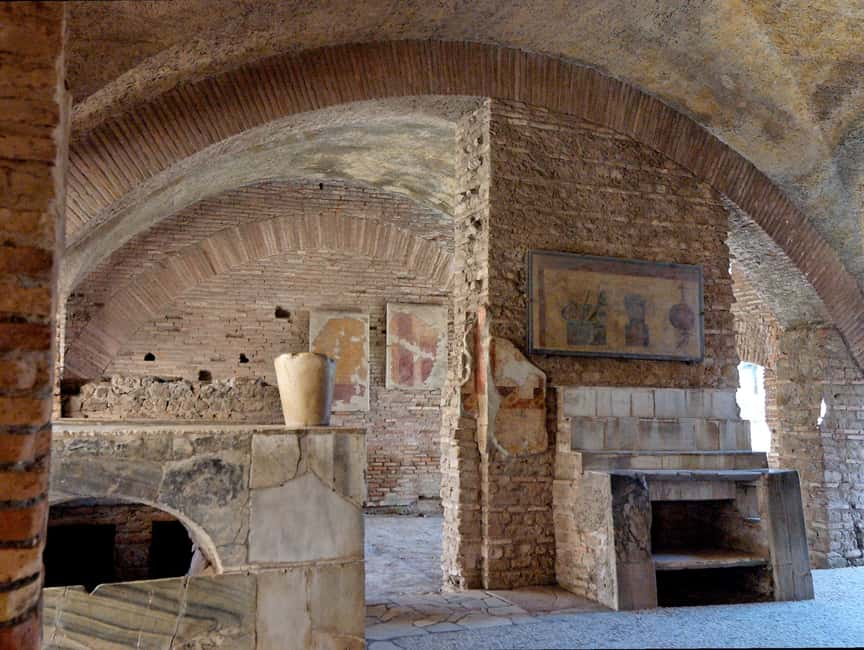
- A rare look at everyday Roman life: See ancient shops, apartment buildings, trade offices, bakeries, baths, temples, and a firehouse.
- Three hours inside the ruins: The visit includes two 1.5-hour guided sections with a 20-minute break.
- Small group format: Groups are limited to 12 people, and the tour may run with only a few participants.
- Straightforward transport: Meet outside Piramide Metro station and take the train with your guide.
- Useful after-tour choices: Stay to explore more, return to Rome with the guide, or ask how to reach the beach.
- Bring practical gear: Comfortable shoes, water, and sun or rain protection matter because the tour runs in all weather.
Why Ostia Antica may be Rome’s best ancient site for you
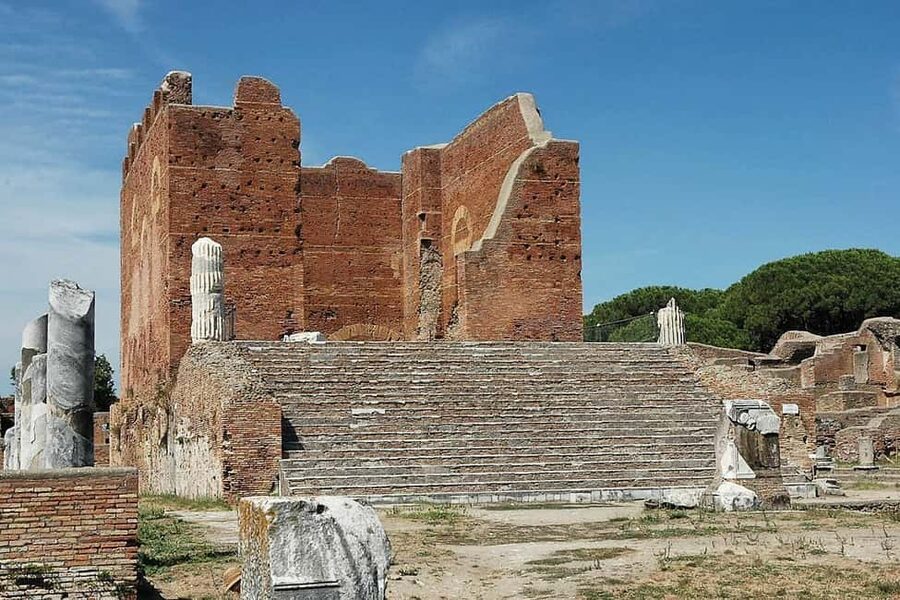
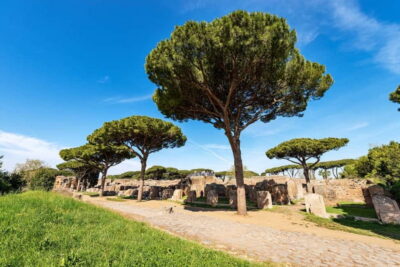
Ostia was Rome’s old port town, and its ruins explain how the empire worked at street level. The Forum and major baths are impressive, but the real pleasure comes from seeing the spaces between them: commercial counters, residential buildings, tavernas, workshops, and paved roads.
At the Colosseum and Roman Forum, your attention is pulled toward famous monuments. At Ostia Antica, I find it easier to picture daily routines. People bought food, met friends at the baths, handled trade, worshipped in temples, and lived in buildings that still outline the old streets.
The site is also a good choice if you want history without constant crowd pressure. One July booking described being able to walk freely among the ruins, with far less congestion than at Pompeii. That does not mean you will have the place entirely to yourself, but the open setting gives you more room to listen, look around, and take photographs.
The tradeoff is scale. Ostia Antica is extensive, and this four-hour plan cannot show every corner. One visitor stayed another two and a half hours after the guided portion ended. If you want a quick, tightly packed ancient-city visit, the tour works well. If you want to inspect every building, plan extra time after the guide finishes.
More Ostia Antica visits:
- Ancient Ostia Antica Semi-Private Day Trip from Rome by Train with Guide
★ 4.5 · 579 reviews - From Rome: Ostia Antica Guided Half-Day Trip by Train
★ 4.8 · 486 reviews - Horse Sanctuary & Trail Ride in Ostia Antica
★ 4.5 · 276 reviews
Meeting at Piramide and riding the train
Your morning starts at Piazzale Ostiense, 9, outside the Piramide Metro station near Cafe Piramide. Look for the guide holding an E&D Tours sign, under the BAR T sign.
This meeting point is practical, but give yourself enough time to locate the exact spot. Pick-up and drop-off from your hotel are not included, so you make your own way to the station.
The train ride to Ostia Antica takes about 25 minutes. Train tickets are not part of the $77 price and cost €3 according to the tour information. Your guide travels with you and can help with the ticket purchase, which makes this part less awkward if you are unfamiliar with the local system.
I like this transfer because it turns a potentially annoying morning drive into a simple transition. Your guide can begin explaining the area before you reach the ruins, and you avoid sitting in traffic. The return trip also takes about 25 minutes, bringing the scheduled tour back to Piazzale Ostiense.
Entering Ostia Antica with skip-the-line admission
Skip-the-line admission is included, so you do not need to spend part of your visit waiting at the ticket window. That matters here because the site rewards time. Every extra minute gives you another street, mosaic, or building to examine.
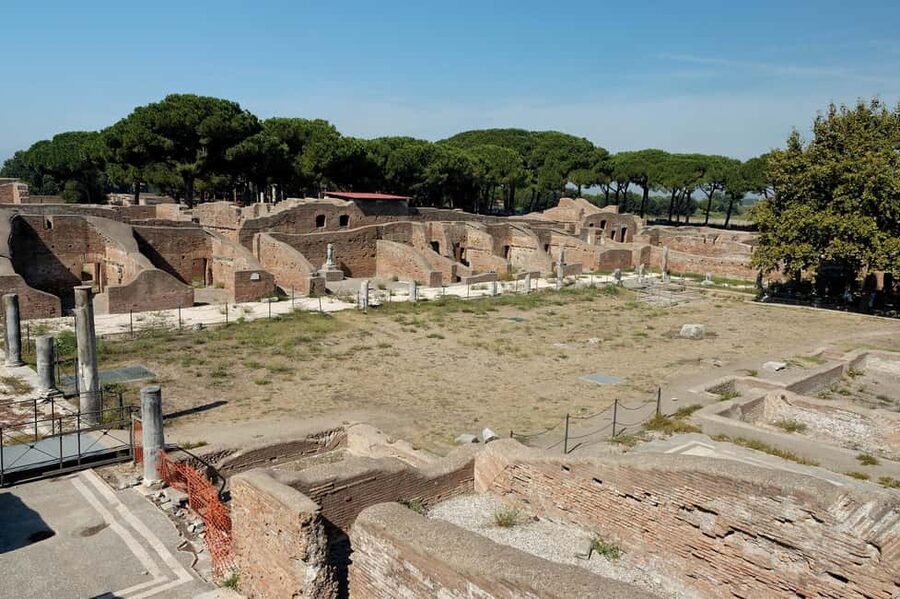
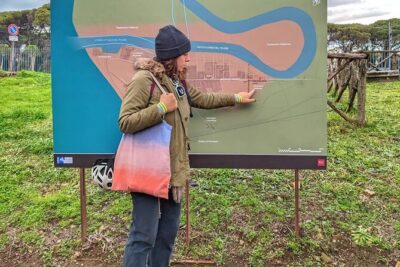
The ruins are spread over a large area, and the tour uses the guided time to create a route through the most important sections. You will walk outdoors for much of the visit, often on ancient paving and uneven surfaces. Comfortable shoes are essential, not just a nice idea.
The site has water fountains where you can refill your bottle. Take advantage of them, especially in summer. An August or July visit can be very hot, and guides have adjusted the pace and used shade when possible. Still, you should bring protection from the sun and dress for the forecast. The tour runs in all weather conditions.
The activity is not suitable for wheelchair users. The uneven ground and ancient structures make this an important limitation to consider before booking.
The first 90 minutes: streets, shops, and Roman business
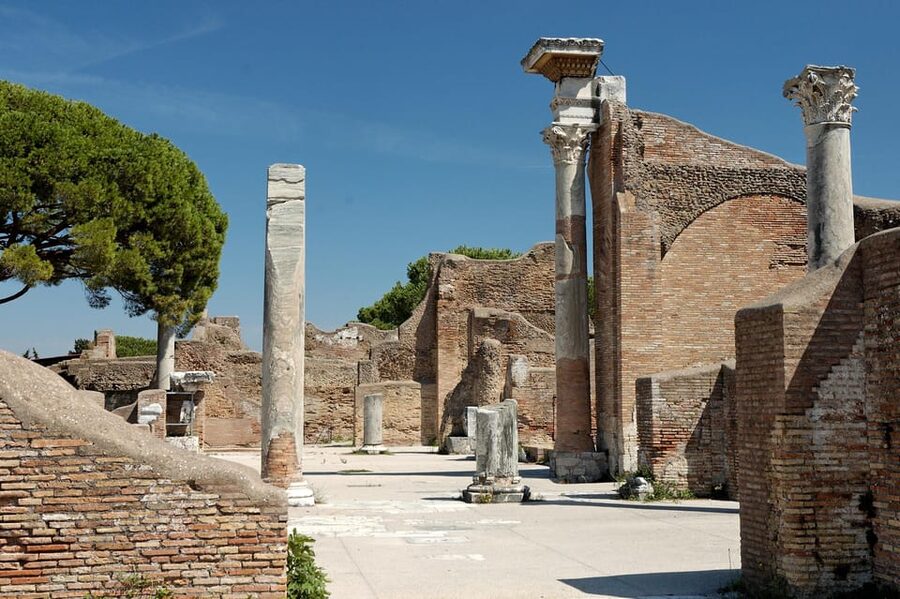
The first guided section lasts about 1.5 hours. Expect a broad introduction to Ostia’s role as a port and commercial center, followed by stops among the town’s streets and buildings.
The mosaics are a major reason to come. Floors in the ancient trade center carry images connected with commerce, giving you clues about the goods and services once handled here. These are not merely decorative remains. They help show how businesses identified themselves and how international trade shaped the town.
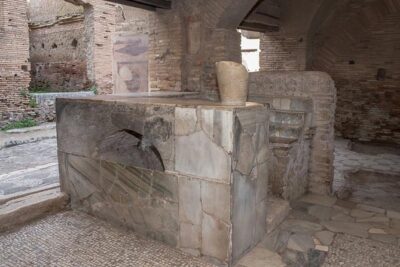
You will also see marketplaces, shops, and residential buildings. Together, these spaces make Ostia feel more like a town than a collection of isolated ruins. A shopfront beside a living area tells you more about Roman routines than a single grand statue can.
Your guide’s role is especially important in this section. Without explanation, a row of low walls can be hard to read. With a good guide, you can understand which spaces were built for trade, which served as homes, and how roads connected the different parts of town.
The strongest guides use the buildings to explain wider Roman systems. William specifically praised Rebecca’s explanation of Roman roads and how they connected the empire for communication, commerce, and the spread of culture. That kind of context turns a walk through stones into a lesson about how a large empire functioned.
A completely different way to spend the day in Rome:
- Vatican: Museums & Sistine Chapel Entrance Ticket
★ 4.5 · 144,003 reviews - Vatican Museums & Sistine Chapel Tour with Optional Basilica
★ 4.3 · 67,413 reviews - Vatican Museums, Sistine Chapel & St Peter’s Basilica Guided Tour
★ 4.5 · 39,149 reviews - Rome: Colosseum, Palatine Hill and Roman Forum Guided Tour
★ 4.8 · 32,814 reviews
The theatre and Decumanus Maximus
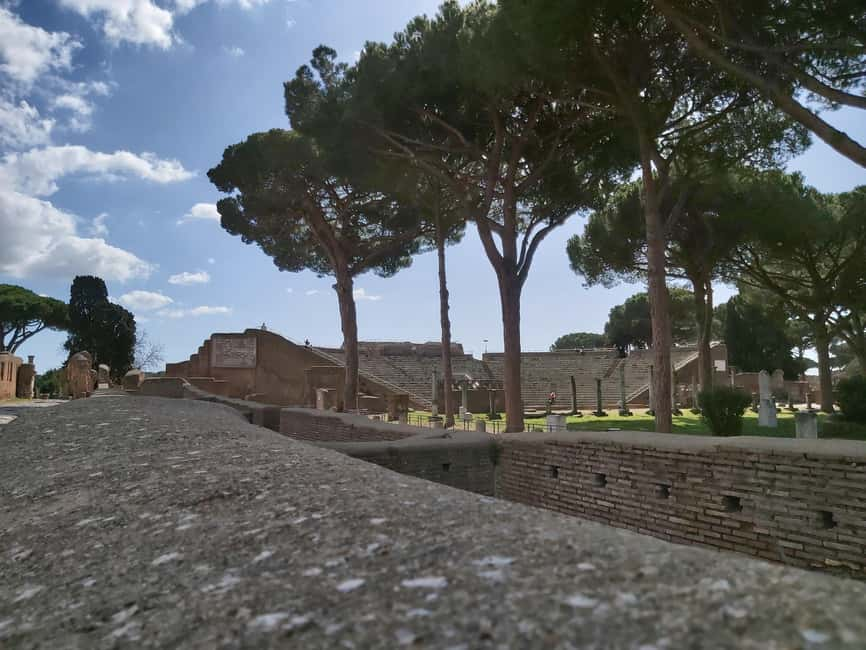
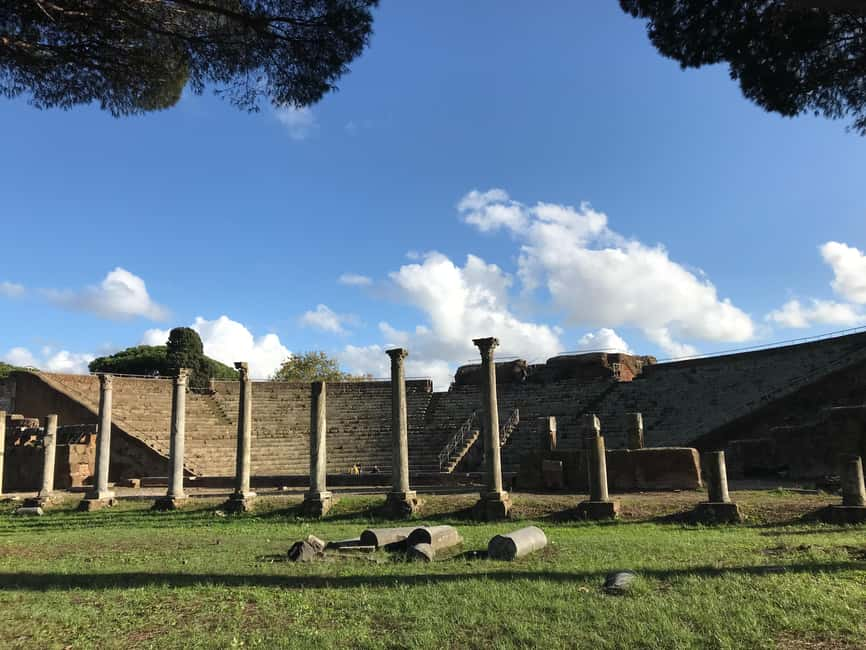
The route includes the ancient theatre, where actors and gladiators entertained crowds. It is one of the places where Ostia’s public life becomes easy to imagine. You can picture an audience gathering for a performance while the surrounding town carried on with business and errands.
Afterward, the group walks along the Decumanus Maximus, the principal boulevard. It was lined with shops and tavernas, making it one of the best places to understand the town as a working community.
I like this part because it ties architecture to movement. The main road was not simply a route from one monument to another. It connected public spaces, businesses, homes, and religious buildings. As you walk it, look for how the buildings face the street and how the remains suggest different kinds of activity.
The theatre and boulevard also provide a welcome change of rhythm. You move from close study of mosaics and walls to a broader sense of how people gathered and moved through Ostia. Guides have used humor, stories, and direct questions to keep families engaged here. One family noted that their guide kept nine-year-old twins interested and happy, which suggests the tour can work for children who enjoy stories more than formal lectures.
The ancient firehouse and Roman infrastructure
One of the more unusual stops is the first recorded firehouse in the Western world. It is an excellent reminder that Roman towns needed organized services, not just temples and monuments.
This stop helps correct the common picture of ancient Rome as a place built only around emperors and armies. Ostia had systems for safety, water, commerce, bathing, transport, and public life. Your guide can use the firehouse to explain how the town operated and why infrastructure mattered.
Details about construction are another strength of the tour. Quintino praised Ali’s explanation of building methods, mosaics, and the town’s past. This is useful if you want more than dates and names. You can pay attention to materials, construction choices, and the way buildings were adapted to their purposes.
Since the ruins cover a large area, the guide’s route saves you from wandering without a plan. You will not see everything, but you will understand the key structures you do see. If a particular building catches your eye, make a note of it and return during the break or after the tour.
A 20-minute break for water, coffee, and a breather
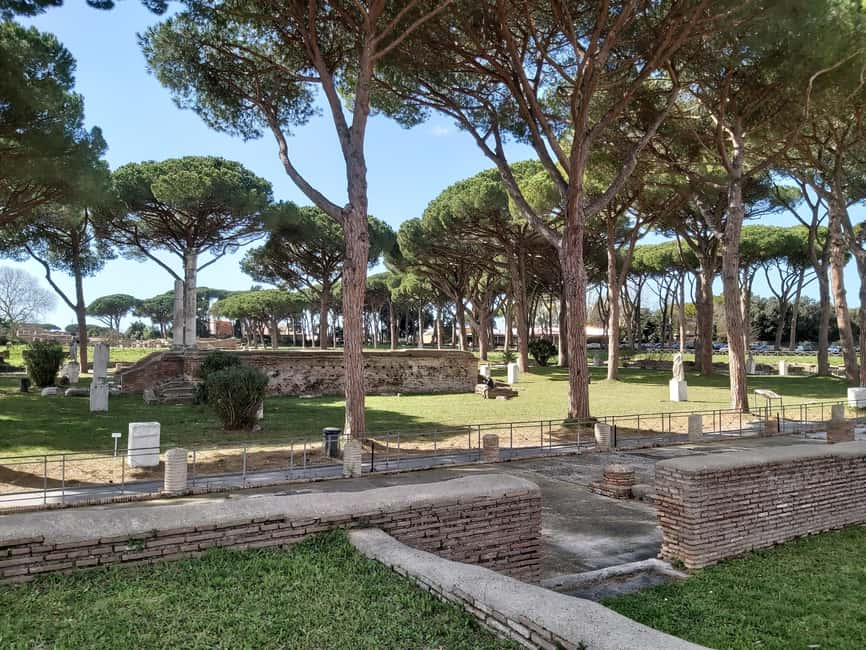
After the first 1.5 hours, you get a 20-minute break. It is short, so think of it as a chance to use facilities, refill your bottle, have a snack, and rest your feet rather than a full meal.
Food is not included. You should bring something small or budget for the park cafe, if it is open and convenient during your visit. A gift shop and cafe are available in the park, and one January visit specifically praised the cafe crema.
This pause matters more than it may sound. Ostia requires walking, and a brief rest makes the second half easier. In hot weather, use it to cool down and drink water. In wet or cold conditions, it is a useful chance to adjust clothing before continuing.
The final 90 minutes: Forum and the largest baths
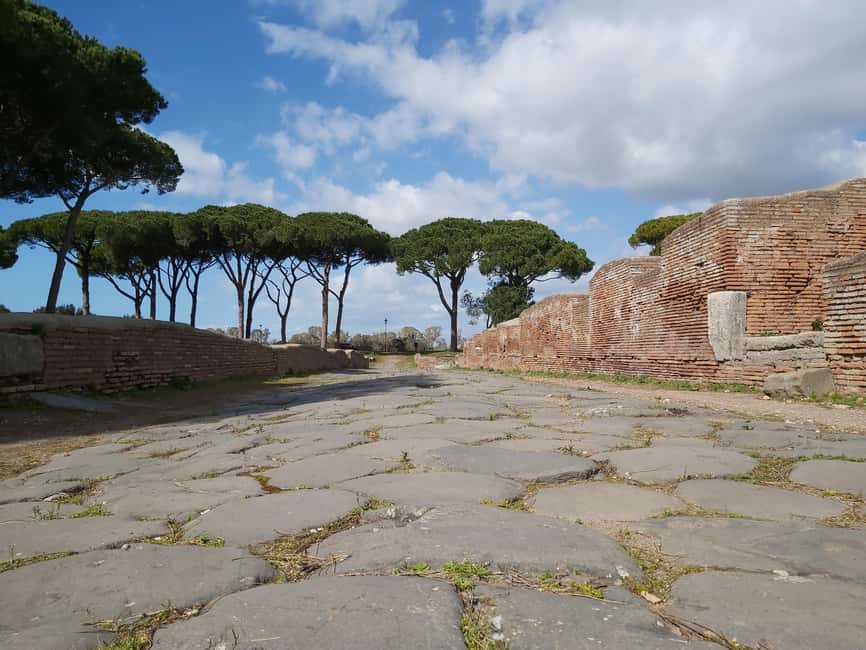
The second guided section also lasts about 1.5 hours and finishes at the Forum and the largest bathhouse in Ostia Antica.
The Forum gives you the formal public center of the town. After seeing shops, homes, and work spaces, you can better understand why this open civic area mattered. It is the right place to pull the different pieces together: trade, religion, government, and public gatherings.
The bathhouse is equally important, perhaps more so for understanding daily life. Roman baths were social centers as well as places to wash. One guide used details such as glass windows to show how advanced and comfortable some Roman buildings could be. Another explained that the baths were used by nearly everyone, moving the subject beyond the simple fact that Romans bathed communally.
The mosaics in the baths are among the visual highlights. Take time to look down as well as around. The floor designs can show themes, occupations, and ideas that help explain how a public building was used.
This final section can feel full if the weather is hot or if you walk slowly. The guides have received praise for stopping in shade and adapting to slower walking and stair climbing. Even so, you should not expect a leisurely cafe-style outing. It is an active archaeological walk lasting several hours.
What happens after the guided tour
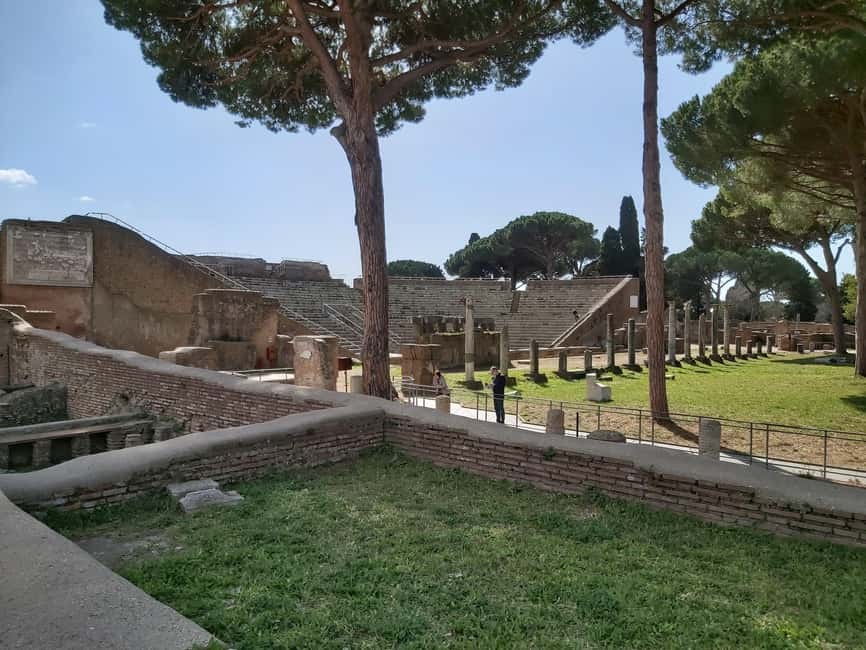
At the end, you have three sensible choices.
You can remain at Ostia Antica and explore on your own. This is the best choice if you want to see more than the main route. Since the ruins are extensive, an additional hour or two can be worthwhile, particularly in cooler months.
You can return to Rome with your guide. The train ride back takes about 25 minutes and ends at Piazzale Ostiense, 9. This is the simplest option if you have dinner plans or another appointment.
You can also ask your guide how to reach the beach and spend the rest of the day there. That combination gives the tour a pleasant change of scene: ancient ruins first, seaside time afterward. The beach is not part of the guided activity, so treat it as an optional extension rather than a promised second tour.
Guide quality and group size
The guide can make or break an archaeological visit, and this tour has drawn especially strong praise for its staff. Sonia has been described as warm, engaging, and able to connect Roman archaeology with memorable stories. Rebecca has been praised for her archaeological expertise, humor, and care with guests who walked more slowly. Camille’s enthusiasm and archaeology background have helped make the visit lively for families.
Andy has also been praised for his passion for Roman history and for taking a small group through less obvious paths to attractive parts of the site. Ali has been noted for explaining construction techniques, mosaics, and the town’s place in Roman culture.
You are not guaranteed a particular guide, but the repeated strength of the guiding is a real part of the tour’s value. A group of 12 or fewer keeps the visit personal and makes it easier to hear. In quieter periods, the group may be much smaller. One booking had only two participants, turning the outing into something close to a private tour.
Is $77 a fair price?
The $77 price is not the cheapest way to reach Ostia Antica. You still pay €3 for train tickets, and lunch or snacks cost extra. There is no hotel pick-up or drop-off.
You are paying for more than transport, though. The fee includes skip-the-line admission, an English-speaking local guide, and roughly three hours of interpretation at a large site that can be confusing without direction. For a first visit, that guidance is the main value.
If you are comfortable researching the ruins and exploring independently, you can reduce the cost by arranging your own visit. You will also have complete control over your pace. But you may miss the meaning behind the mosaics, firehouse, baths, and commercial buildings.
For me, the tour earns its price if you want the site explained well and prefer not to manage the train and entrance details alone. It is less attractive if you dislike group schedules or want to spend the whole day exploring every corner.
Who should book this Ostia Antica tour?
I would recommend it to anyone interested in ancient Roman society, especially if you have already seen the Colosseum and Roman Forum and want a different angle. Ostia shows how people lived and worked, not only how rulers presented themselves.
It also suits families, provided everyone can handle several hours of outdoor walking. The guides have kept children engaged with stories and clear explanations, but the site has uneven surfaces and is not suitable for wheelchair users.
This is a good pick for people who want a small group, an English guide, and a simple train connection from central Rome. It is less suitable for anyone needing hotel transport, a fully accessible route, or a food-inclusive outing.
Should you book it?
Book this tour if you want Ostia Antica to make sense rather than simply look impressive. The site is large, the mosaics and buildings reward explanation, and the train ride is easy with a guide.
Skip it if you have only a few hours in Rome and prefer to stay near the city center, or if you want an entirely independent visit. If you do book, wear sturdy shoes, carry water, allow extra money for the train and food, and consider staying after the guided route. That extra time may be the best part for you.
FAQ
Where does the Ostia Antica tour meet?
Meet at Piazzale Ostiense, 9, outside the Piramide Metro station near Cafe Piramide. The guide waits under the BAR T sign and holds an E&D Tours sign.
How long is the train ride to Ostia Antica?
The train ride takes about 25 minutes each way. You travel with your guide from Piazzale Ostiense to Ostia Antica and return to the same meeting area at the end of the scheduled tour.
Are train tickets included?
No. Train tickets cost €3 and are not included in the tour price. The guide can help you purchase them.
How long do you spend inside the archaeological site?
The site visit lasts about three hours, split into two guided sections of 1.5 hours each. There is a 20-minute break between them.
Is food included?
No. Food is not included. You have a short break at your own expense, and a cafe and gift shop are available in the park.
Can I stay at Ostia Antica after the tour?
Yes. You can remain at the site and explore further, return to Rome with your guide, or ask the guide how to reach the beach.
Newest reviews from Rome
- ROME:Colosseum & Ancient Rome – private/small group TOUR★ 5.0 · 24 reviews
- Off the Beaten Track in Rome: Rione VI Parione Private Tour★ 5.0 · 24 reviews
- Cinematic Photoshoot in Rome★ 5.0 · 24 reviews
- Rome: Best of Colosseum and Roman Forum Small Group Guided Tour★ 4.5 · 24 reviews
- The Labyrinth of Rome between catacombs and ancient quarries★ 4.5 · 24 reviews
- Vatican and Trionfale Market Tour with Wine and Food Tasting★ 5.0 · 24 reviews
- private tour: Vatican Museums, Sistine Chapel, St. Peter’s Basilica★ 4.5 · 24 reviews
- Colosseum guided tour with Virtual Reality★ 5.0 · 24 reviews
Ostia Antica Tours, compared.
Ancient Ostia Antica Semi-Private Day Trip from Rome by Train with Guide
Read our review →

Ostia Antica Archaeological Park Ticket & Audio App
Read our review →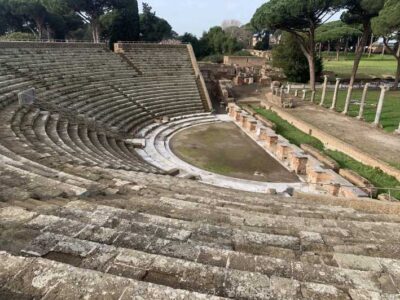
Browse the lists this tour appears in