
Reviewed · AUDIO TOURS
Rome: Ostia Antica Archaeological Park Ticket & Audio App
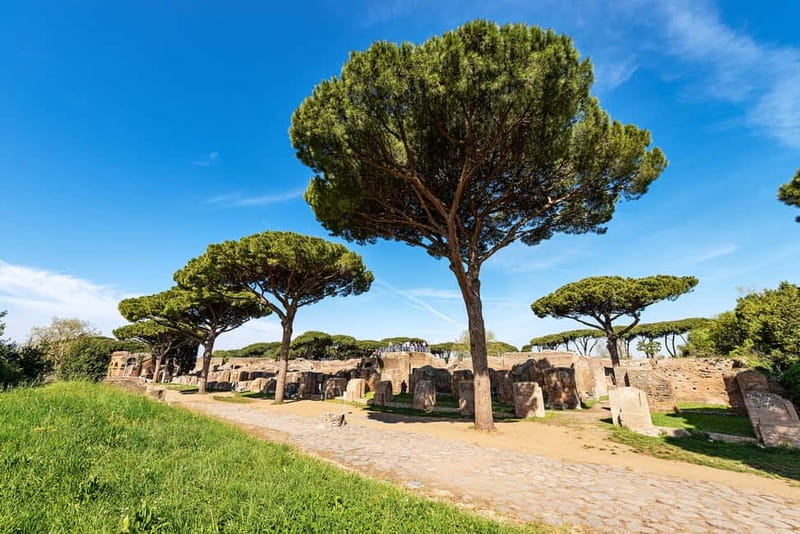
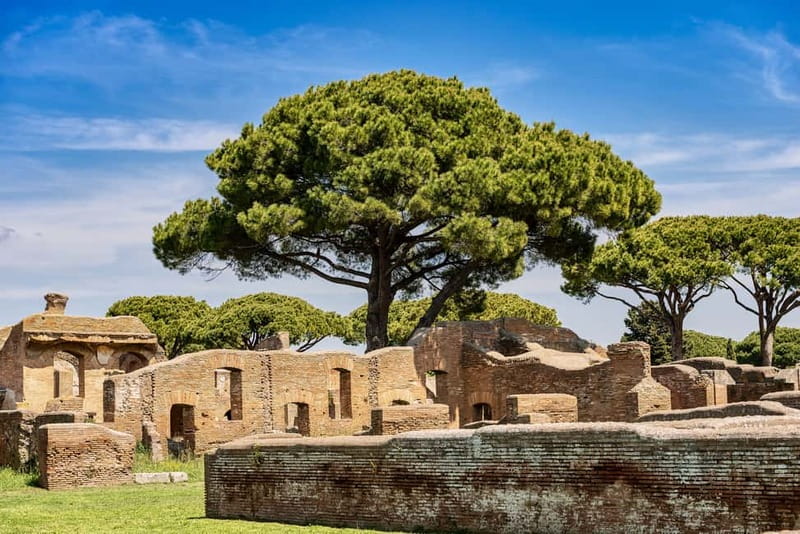
Ostia Antica gives you something Rome’s famous center often cannot: a whole Roman city to walk through, with streets, apartment blocks, villas, baths, shops, mosaics, and theaters spread across a large open site. The ruins are remarkably readable, so you can picture ordinary urban life rather than just admire a single grand monument.
I like the excellent mosaics and frescoes, and I like the freedom to explore without being tied to a group timetable. The audio guide adds useful context, while the postcard feature gives you a fun way to turn one of your photos into a keepsake. The catch is size: the paths are uneven, the route is not always clear, and a full visit can mean a long day on foot.
In This Review
- Key points to know before you go
- Why Ostia Antica feels different from central Rome
- Starting at the Ostia Antica ticket office
- Walking the ancient streets and apartment blocks
- Villas, baths, and the Procoio area
- Mosaics and frescoes that make the ruins readable
- The extra sites included with the ticket
- The audio guide and the postcard feature
- How much time and energy should you allow?
- Is $27 a fair price?
- Who will enjoy Ostia Antica most?
- Should you book this Ostia Antica ticket?
- FAQ
- Where does the activity begin?
- Is transportation included?
- What does the ticket include?
- Is an audio guide included?
- How long is the ticket valid?
- Do I need identification?
- What should I bring?
- Are the paths easy to walk?
- Can I cancel the booking?
Key points to know before you go
- A full Roman city, not one isolated ruin: See apartments, villas, baths, streets, an amphitheater, mosaics, and frescoes.
- Five archaeological sites are covered: The ticket includes Ostia Antica, Julius II Castle, the Museum of Ships, the Imperial Ports, and Porto’s Necropolis.
- The audio app matters: It helps explain what you are seeing, though you may need a map to match commentary with individual sites.
- Plan for serious walking: Uneven paths and the park’s size call for comfortable, sturdy shoes and plenty of water.
- The ticket offers several days of flexibility: The supplied details describe validity for 8 days after first activation, while the important information also says 7 days, so confirm the exact validity when booking.
- You make your own schedule: Transportation is not included, and you exchange your voucher at the Ostia Antica ticket office.
Why Ostia Antica feels different from central Rome
Ostia was Rome’s port city at the mouth of the Tiber. According to tradition, King Ancus Marcius founded it in 620 BC as a Roman colony. The ruins you see today present a later and much fuller picture of Roman urban life, with public buildings and homes spread across a broad archaeological park.
That scale changes the experience. At the Colosseum, you focus on one enormous structure. Here, you walk along ancient streets and keep finding clues about how a city worked. A two-story apartment block can tell you as much about daily life as a temple can. A mosaic floor hints at the wealth of a household. A bath complex shows how much time Romans spent in public spaces.
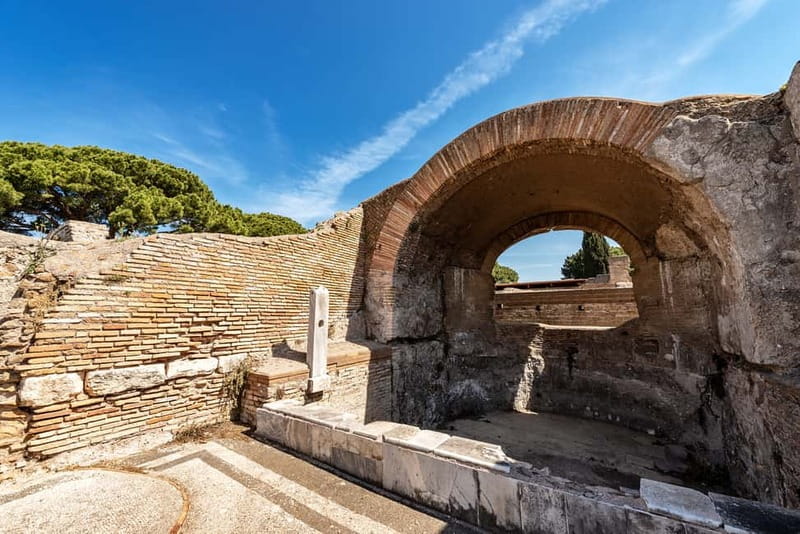
The town was later covered by silt from the Tiber. That burial helped preserve buildings, decorative floors, and wall paintings. The result is unusually helpful for your imagination. You are not only looking at broken stone. You can see rooms, thresholds, courtyards, street plans, and decorative details that make the ancient city easier to read.
I find Ostia especially rewarding if you have already seen Rome’s grand monuments and want a quieter, more ordinary side of Roman civilization. It is still a major archaeological site, but the focus shifts from emperors and spectacle to housing, commerce, bathing, worship, and neighborhood life.
More Ostia Antica visits:
- Ancient Ostia Antica Semi-Private Day Trip from Rome by Train with Guide
★ 4.5 · 579 reviews - From Rome: Ostia Antica Guided Half-Day Trip by Train
★ 4.8 · 486 reviews - Horse Sanctuary & Trail Ride in Ostia Antica
★ 4.5 · 276 reviews
Starting at the Ostia Antica ticket office
You begin by exchanging your voucher at the Ostia Antica ticket office. The activity does not include transportation, so you need to arrange your own way to the site and allow time to reach the entrance.
Bring your passport or ID card, since a valid ID is required. You also need a charged smartphone for the digital audioguide. The guide can add much-needed meaning to foundations and fragments, especially if you are not already familiar with Roman building types.
The audio guide is useful, but it does not remove every practical problem. The site is large, and it may be difficult at times to match a particular commentary track with the exact building in front of you. I would bring or download a map if one is available, and I would keep your phone charged before entering.
Walking the ancient streets and apartment blocks
The best way to approach Ostia is as a city, not as a checklist of ruins. Start by noticing the street plan and the range of buildings around you. The remains include two-story apartment blocks, which offer a glimpse into housing for people who did not live in grand villas.
These buildings are important because they broaden your picture of Roman society. Rome is often presented through palaces, forums, monuments, and wealthy homes. Ostia lets you think about the many people who lived in shared urban housing and used the same streets, shops, baths, and public buildings.
As you move through the park, look down as often as you look ahead. The mosaic floors are among the site’s strongest features, and their patterns can reveal the purpose or status of a building. Some are decorative, while others help you picture a bath, dining space, or commercial setting.
Do not rush from one famous stop to the next. The smaller details make the visit work: a doorway, a worn threshold, a line of rooms, or a wall painting still holding its color. The audio guide can help connect those fragments to Roman life, but give yourself time to look before moving on.
Villas, baths, and the Procoio area
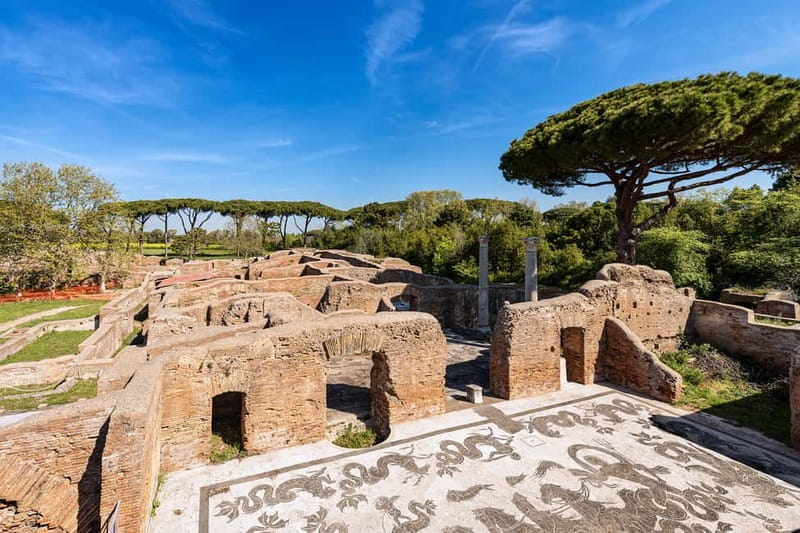
The seaside villas of Procoio add a different note to the visit. These were not the same sort of crowded apartment buildings found elsewhere in the town. They suggest more spacious living and a different social setting.
The Procoio area contains a large bath complex. Roman baths were not simply places to wash. They were social and public spaces, and their size helps you understand the importance of bathing in Roman urban culture.
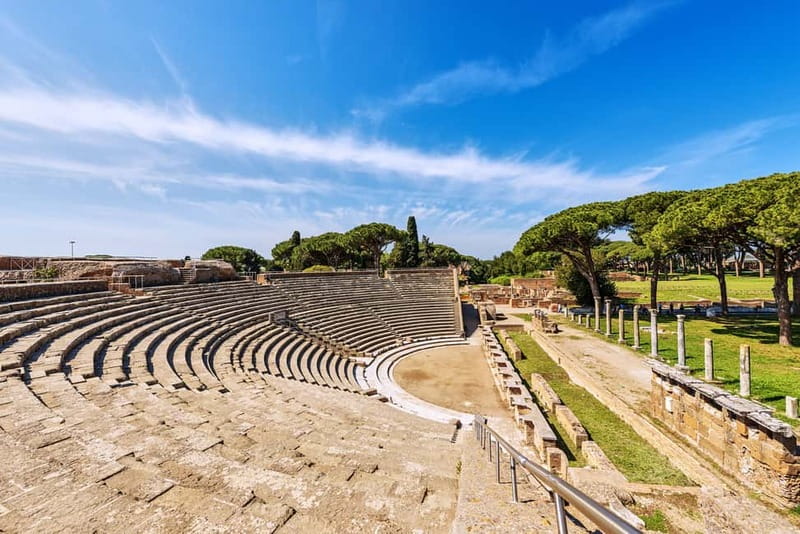
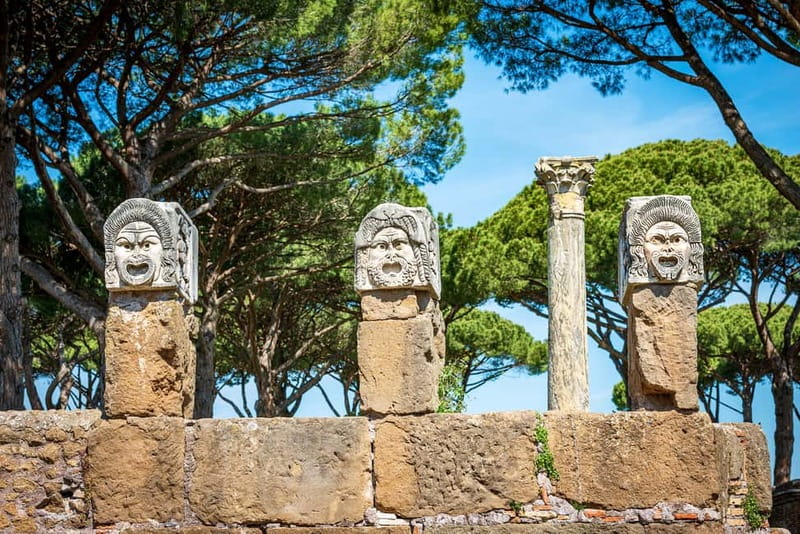
You can also find an amphitheater lined with striking theatrical masks made from stone. This is one of the more memorable details in the park because it combines architecture and decoration in a way that is easy to picture. The masks connect the building to performance and entertainment, while the amphitheater shows that Ostia had its own public spectacles.
The site’s wide layout is both its strength and its challenge. You have room to wander and make discoveries, but distances add up. If you want to see the main city, the villas, the baths, and other parts of the park, plan for a substantial walk rather than a quick stop.
More Rome tours worth comparing
- Rome: Colosseum & Forum with Audio Guide App -Optional Arena
★ 4.2 · 24,770 reviews - Rome: St. Peter’s Basilica & Dome Entry Ticket & Audio Tour
★ 4.2 · 7,537 reviews - Vatican & Sistine Chapel Ticket with Optional Audio Guide
★ 4.1 · 5,405 reviews - Rome: Colosseum, Forum, & Palatine Hill with Audio Guide
★ 4.3 · 4,591 reviews
Mosaics and frescoes that make the ruins readable
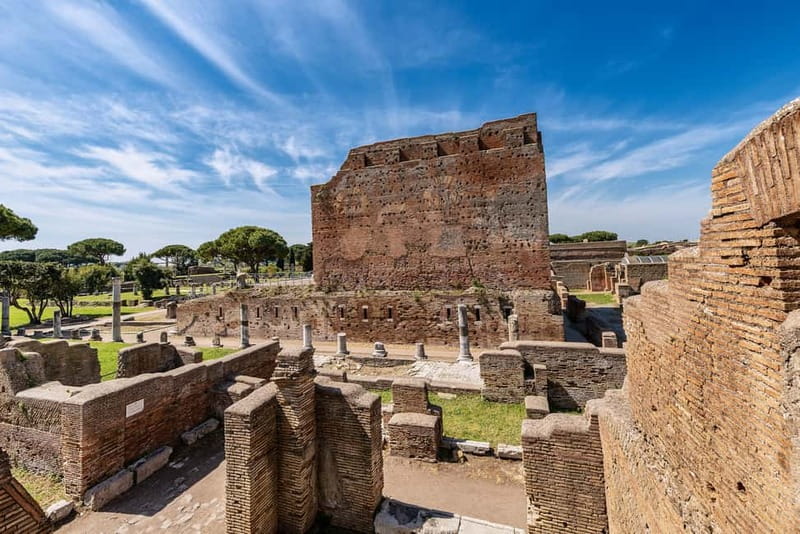
Ostia’s mosaics and frescoes are a major reason to choose this outing. Stone walls alone can feel abstract, especially after several days of Roman ruins. Decorative floors and painted surfaces give you color, pattern, and a sense of how rooms once looked.
The preservation is not perfect, of course. You are still in an archaeological park, and some structures are fragmentary. But enough remains to make the buildings feel more complete than many ancient sites.
I would take the audio commentary slowly here. Listen to the explanation, then look around the room or floor before going on. You will get more from a mosaic if you consider where it sits and what kind of building surrounds it.
The audio guide is included, which improves the value of the ticket. A guidebook or human guide may give you a clearer route, but the app lets you pause, continue at your own speed, and spend extra time at details that interest you. The tradeoff is that you are responsible for navigation.
The extra sites included with the ticket
The admission is not limited to Ostia Antica. It also covers four related sites in the wider archaeological area:
- Castle of Julius II: This gives you a different type of historic setting from the Roman ruins, with a fortified structure rather than an ancient city block.
- Museum of Ships in Fiumicino: The museum adds a maritime angle, useful when you are thinking about Ostia as a port city.
- Imperial Ports of Claudius and Trajan: These sites help explain the port system that supported Rome’s trade and supply.
- Necropolis of Porto on Isola Sacra: The necropolis offers a look at burial practices and the world surrounding the living city.
The ticket is valuable if you have time to visit more than Ostia Antica. It gives you a wider picture of the port district, from urban life to shipping and burial grounds.
The catch is that transportation is not included. You need to plan your own movement between sites, and the ticket’s multi-site value depends on whether you can realistically reach them during your stay. If your schedule allows only one outing, Ostia Antica itself is the central attraction.
There is also a validity detail worth checking. The summary describes the integrated ticket as valid for 8 days from first activation. The important information says 7 days from first admission. Since that difference affects planning, confirm the current period when you book or exchange your voucher.
The audio guide and the postcard feature
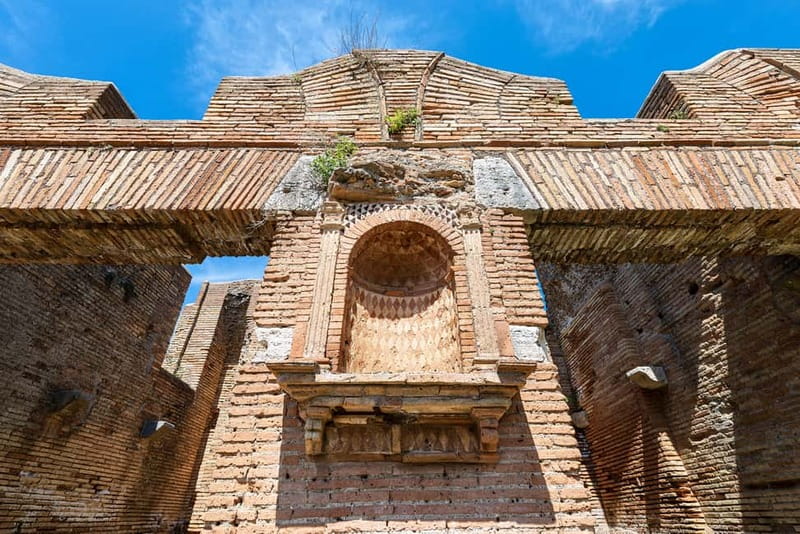
The digital audioguide is the practical heart of this self-guided visit. Ostia is too large to understand fully by simply wandering among the ruins. The commentary can explain the role of buildings and help you connect a mosaic, villa, apartment, or bath complex to a larger picture.
At times, you may find it hard to locate the building being discussed. That is the main weakness of an audio app at a spread-out archaeological site. Keep your bearings with a map, watch for site markers, and do not feel you need to follow the commentary in a rigid order.
The postcard feature is a small but appealing extra. You can turn one of your own digital photos into a postcard to send to friends or family anywhere in the world. It gives the visit a personal touch, particularly if you want something more distinctive than a standard shop souvenir.
How much time and energy should you allow?
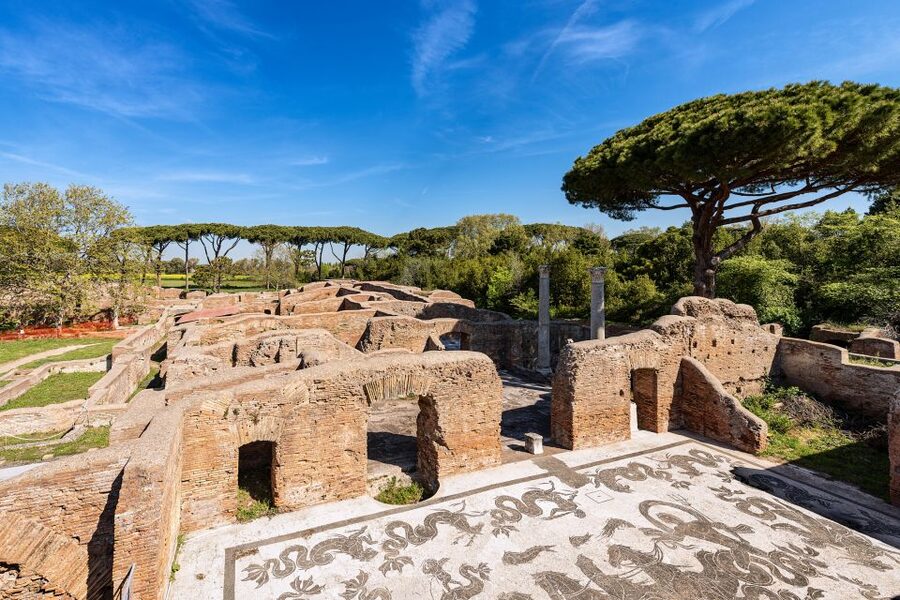
The ticket is valid for several days, but the park itself deserves more than a hurried hour. One of the clearest practical lessons is to treat this as a walking outing. The ruins are extensive, and a full circuit can become an all-day effort.
Wear sturdy, comfortable shoes. The paths are uneven, and the surface can make casual footwear a poor choice. Carry water, especially in summer, and keep your phone charged for the audio guide and photography.
The route is not always obvious. You can get turned around, and even a guidebook may not make every connection clear. The cafe is also easy to miss, though it can be useful if you find it. I would not depend on stumbling across refreshments at exactly the moment you need them.
You should also pace yourself. Pick the parts you most want to see, then treat additional buildings as bonuses. That approach is better than racing through the park and losing the pleasure of noticing its details.
Is $27 a fair price?
At $27 per person, the ticket is reasonably priced if you value time at the site and use the included audio guide. The cost covers Ostia Antica plus four other locations, so it can offer good value for a history-focused visit extending beyond a single afternoon.
The value drops if you use only a small part of the admission. Someone with a tight Rome schedule may visit Ostia Antica once and never reach Fiumicino, the Imperial Ports, or Isola Sacra. In that case, you are paying partly for flexibility you may not use.
The multi-day validity helps. You are not forced to see every included site on one exhausting day, at least according to the supplied booking terms. The conflicting 7-day and 8-day descriptions mean you should verify the exact period, but either version gives you more planning freedom than a single timed entry.
The free cancellation up to 24 hours before the activity and the reserve-now, pay-later option also reduce commitment. Those policies are useful when your Rome plans are still changing.
Who will enjoy Ostia Antica most?
I would recommend this experience to you if you like archaeology, Roman history, photography, or open-air sightseeing at your own pace. It is particularly good for anyone who wants to understand how ordinary Roman buildings fit together.
Families with older children may also find the city layout easier to enjoy than a museum full of small objects, though the walking and uneven paths require sensible planning. Anyone who dislikes long walks, unclear routes, or hot outdoor sites should think carefully before booking.
This is not the best choice if you want a short, tightly guided excursion with transportation handled for you. It is a better fit if you want freedom and are willing to do some navigation.
Should you book this Ostia Antica ticket?
Book it if you want more than Rome’s headline monuments. The preserved mosaics, frescoes, apartment blocks, villas, baths, and theater details make Ostia Antica one of the most useful places near Rome for picturing Roman city life.
I especially like the combination of a self-guided pace, included audio commentary, and access to several related sites. Just plan for a large archaeological park, uneven footing, and a route that may require patience. Bring ID, sturdy shoes, water, and a charged phone, and verify whether the current ticket validity is 7 or 8 days.
FAQ
Where does the activity begin?
You begin by exchanging your voucher at the Ostia Antica ticket office.
Is transportation included?
No. Transportation to Ostia Antica and between the additional sites is not included.
What does the ticket include?
The ticket includes entry to Ostia Antica Archaeological Park, the Castle of Julius II, the Museum of Ships in Fiumicino, the Imperial Ports of Claudius and Trajan, and the Necropolis of Porto on Isola Sacra.
Is an audio guide included?
Yes. A digital audioguide is included with the admission.
How long is the ticket valid?
The summary states that the ticket is valid for 8 days from first activation. The important information also states 7 days from first admission, so confirm the current validity when booking.
Do I need identification?
Yes. You need to present a valid passport or ID card.
What should I bring?
Bring comfortable or sturdy shoes, a charged smartphone, and your passport or ID card. Water is also a sensible choice because the site is large and requires walking.
Are the paths easy to walk?
The paths are uneven. Comfortable, sturdy shoes are recommended.
Can I cancel the booking?
Yes. You can cancel up to 24 hours in advance for a full refund. You can also reserve now and pay later, according to the booking terms.
More Audio Tours in Rome
- Rome: Castel Sant’Angelo Skip-the-Line Ticket & Audio Guide
★ 4.4 · 3,500 reviews - Skip the Line: Vatican & Sistine Chapel Ticket with Audio Guide
★ 4.0 · 3,271 reviews - Rome: Pantheon Priority Entry Ticket & Audio Guide App
★ 4.1 · 3,234 reviews - Rome: Colosseum Experience with Audio Guide and Arena Option
★ 4.2 · 2,200 reviews
Newest reviews from Rome
- ROME:Colosseum & Ancient Rome – private/small group TOUR★ 5.0 · 24 reviews
- Off the Beaten Track in Rome: Rione VI Parione Private Tour★ 5.0 · 24 reviews
- Cinematic Photoshoot in Rome★ 5.0 · 24 reviews
- Rome: Best of Colosseum and Roman Forum Small Group Guided Tour★ 4.5 · 24 reviews
- The Labyrinth of Rome between catacombs and ancient quarries★ 4.5 · 24 reviews
- Vatican and Trionfale Market Tour with Wine and Food Tasting★ 5.0 · 24 reviews
- private tour: Vatican Museums, Sistine Chapel, St. Peter’s Basilica★ 4.5 · 24 reviews
- Colosseum guided tour with Virtual Reality★ 5.0 · 24 reviews
Audio Tours, compared.

Colosseum & Forum with Audio Guide App -Optional Arena
Read our review →
St. Peter’s Basilica & Dome Entry Ticket & Audio Tour
Read our review →
Vatican & Sistine Chapel Ticket with Optional Audio Guide
Read our review →
Colosseum, Forum, & Palatine Hill with Audio Guide
Read our review →
Castel Sant’Angelo Skip-the-Line Ticket & Audio Guide
Read our review →
Skip the Line: Vatican & Sistine Chapel Ticket with Audio Guide
Read our review →
Pantheon Priority Entry Ticket & Audio Guide App
Read our review →
Colosseum Experience with Audio Guide and Arena Option
Read our review →Browse the lists this tour appears in