
Reviewed · ROME GHOST & LEGEND TOURS
Ghost & Legends in Night Rome Walking Tour
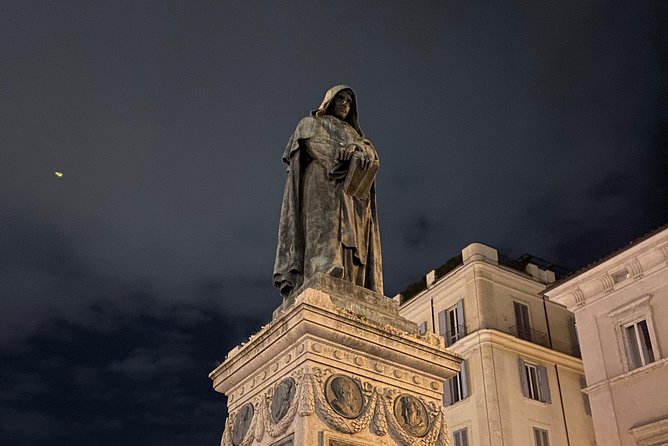
Rome’s most unsettling stories begin in a beautiful place: Campo de’ Fiori, now lined with bars and restaurants but once used for public executions. I like the tour’s clever route from this square to Castel Sant’Angelo, and I like that it uses quiet lanes and overlooked churches rather than repeating Rome’s standard sightseeing script.
The guides, including Sarah, Diletta, Domenica, Simon, Paula, and Dalila, are praised for lively storytelling and humor. One practical drawback is that noise from busy piazzas can make parts of the talk hard to hear, so you should stay close to the guide and avoid expecting a jump-scare haunted house. This is mainly a history and storytelling walk with a spooky edge.
In This Review
- Key points to know before booking
- Why Rome’s dark stories work so well at night
- Campo de’ Fiori and Piazza Farnese: executions beside elegant Rome
- Madonelles, narrow lanes, and crime prevention
- Ponte Sisto and the Fontana del Mascherone
- A church associated with death
- Via di Monserrato and the Spanish church
- Via Giulia and cosmetics that kill
- Mastro Titta and Rome’s executioner
- Castel Sant’Angelo and the Cenci family
- What the guides add to the experience
- Price, pace, and who will enjoy it
- Is the Ghost & Legends in Night Rome Tour worth booking?
- FAQ
- How long does the Ghost & Legends in Night Rome Walking Tour last?
- How much does the tour cost?
- Where does the tour begin?
- Where does the tour end?
- What language is the tour offered in?
- How many people can join the tour?
- Does the tour include admission tickets?
- Is the tour suitable for most people?
- What is the cancellation policy?
Key points to know before booking
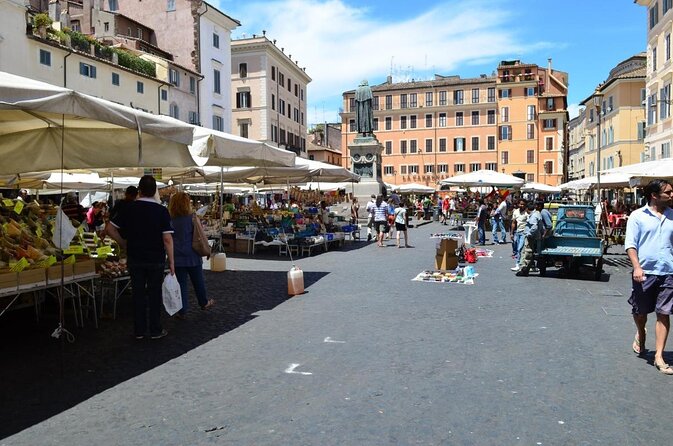
- Campo de’ Fiori begins the story: You start at a former execution ground that now feels social and cheerful at night.
- Eleven stops in two hours: The route covers Campo de’ Fiori, Ponte Sisto, eerie churches, Via Giulia, and Castel Sant’Angelo.
- Rome after dark: Cooler temperatures and fewer daytime crowds change the mood of familiar streets.
- Stories matter more than special effects: Expect tales of executions, murders, scandals, ghosts, and suspicious deaths.
- A small-group format: The maximum group size is 20 people, with the tour offered in English.
- Comfortable shoes are essential: This is a walking tour through Rome’s streets and lanes, not a stationary presentation.
Why Rome’s dark stories work so well at night
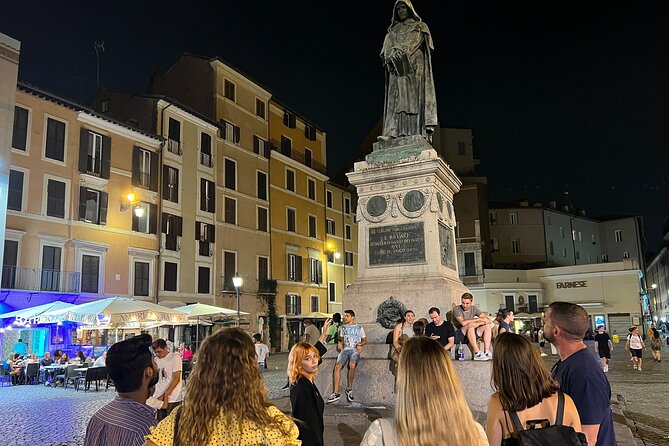
Rome is full of grand monuments, but its smaller streets often carry the stranger stories. A church doorway, a narrow alley, or an ordinary apartment block can reveal more about old Roman life than another view of a famous ruin. This tour uses those places as story settings.
You will hear about executions, tragic accidents, murders, theft, secret passages, and suspicious deaths. The tales are rooted in Rome’s past, but the presentation is meant to entertain. That balance matters. If you want a serious academic lecture, this may feel light. If you enjoy history with a little theatrical shadow around it, the format should fit.
Night also helps. Rome can be hot and crowded during the day, especially in the warmer months. After sunset, the walk becomes more comfortable, and familiar squares take on a different character. In winter, bring warm clothing. One guide specifically warned that the cold can be sharp during the evening walk.
The tour lasts about two hours and has a maximum of 20 people. That is small enough to feel manageable, though it is not a private walk. Stay near the guide when the group gathers in noisy squares.
More Rome legends after dark:
- Rome by Night Walking Tour – Legends & Criminal Stories
★ 4.5 · 1,003 reviews - Haunted Rome Ghost Tour – The Original
★ 4.5 · 668 reviews - Rome: Angels and Demons Guided Tour
★ 4.7 · 610 reviews
Campo de’ Fiori and Piazza Farnese: executions beside elegant Rome
The meeting point is Piazza Campo de’ Fiori, at the center of the square. You begin with the contrast between its present life and its grim past. Today, it is associated with food, drinks, and evening activity. In earlier centuries, it was an execution site.
That opening gives the whole walk its theme. Rome’s beauty and cruelty often sit side by side. The guide may use Campo de’ Fiori to introduce public executions and figures connected with them, including the famous executioner Mastro Titta and the philosopher Giordano Bruno.
The first stop is brief, around 10 minutes, but the square can be noisy. I would arrive early, find the guide, and stand where you can see and hear clearly. The open setting makes it easy to become separated from the group.
From there, you walk to Piazza Farnese, a more polished square associated with wealthy Roman society and lavish parties. The mood shifts from public punishment to private excess. Here, the story concerns an alleged secret passageway and the privileged world of the elite.
This is a good early contrast. The tour is not only about ghosts. It also examines power, wealth, scandal, and the way Rome’s grand families shaped the city.
Madonelles, narrow lanes, and crime prevention
The route continues along Via del Mascherone and Vicolo dei Venti, where you will see several madonelles, or small images of the Virgin Mary. These religious images once had a practical role in neighborhood life.
The story here concerns the belief that these little Madonnas could help discourage crime. It is a useful reminder that old Roman streets were not just routes between monuments. They were lived-in spaces where faith, fear, and public order mixed together.
This section should appeal to you if you like small details. You are not stopping at a major sight with a famous ticket desk. You are looking at decorations that can be easy to pass without noticing, then hearing how people once understood them.
The lane setting may also make the stories feel more personal. At the same time, narrow streets can be crowded, and the guide’s voice may not carry far. Keep your group nearby and pay attention before the story begins.
Ponte Sisto and the Fontana del Mascherone
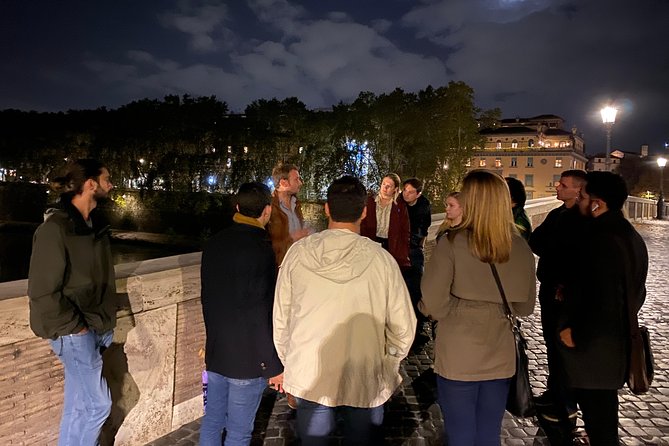
At Ponte Sisto, the tour moves onto one of Rome’s historic bridges. The bridge’s dark associations include accidents, political struggles, theft, and suspicious deaths. It is a natural place for stories about danger because bridges have long been points of movement, control, and escape.
You will probably spend only about 10 minutes here, but the bridge helps connect the older streets around Campo de’ Fiori with the final section near the Tiber. The walk is not simply a series of unrelated horror tales. The route gradually carries you across central Rome toward Castel Sant’Angelo.
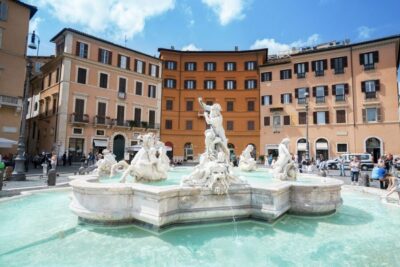
Next comes the Fontana del Mascherone, a fountain with a deadly legend attached to it. You are not supposed to drink from Rome’s fountains, and this one adds an especially grim reason to resist temptation.
This is the sort of short tale that works best in a walking tour. The fountain itself may look modest compared with Rome’s grand fountains, but the guide gives it a memorable role. You will likely remember the warning long after the walk ends.
More walking tours in Rome:
- Rome: Trastevere & Campo de Fiori Street Food Walking Tour
★ 4.9 · 2,768 reviews - Rome: Paranormal Night Walking Tour & Secret Backstreets
★ 4.9 · 1,921 reviews - Rome: Guided City Center Evening Sightseeing Walking Tour
★ 4.4 · 953 reviews - Best of Rome Walking Tour including Trevi Fountain
★ 4.5 · 923 reviews
A church associated with death
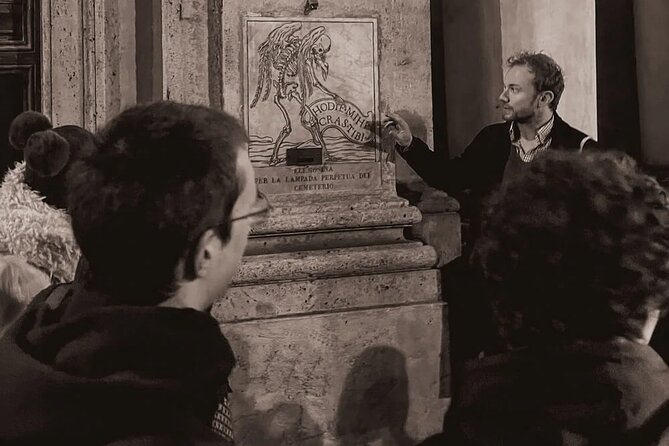
One of the most unusual stops is Chiesa di Santa Maria dell’Orazione e Morte, a 17th-century church linked with human bones and the idea that death is always close.
The stop adds a more serious note to the evening. The tour’s stories can be playful and dramatic, but this church points toward the real presence of death in earlier Roman society. Religion, burial, public punishment, and daily life were not kept in separate boxes.
The information provided for the experience does not promise admission inside the church. Plan on hearing the story at the stop rather than assuming you will receive an interior visit. That is important if you are booking because you want to see the inside of this unusual building.
I like this part of the route because it gives the tour some texture. You get legends and scandals, but also a physical place that reflects how earlier generations faced mortality.
Via di Monserrato and the Spanish church
On Via di Monserrato, you will hear about one of Rome’s most haunted apartment blocks. The street was also associated with one of the city’s worst prisons, adding a real historical setting to the ghost stories.
This is a good example of what the tour does best. It turns an ordinary-looking street into a place with layers of memory. You do not need a grand monument for the past to feel close. Sometimes an apartment facade and a grim story are enough.
The next stop is Chiesa di Santa Maria in Monserrato degli Spagnoli, a Spanish church with a scandalous story. The guide presents it as a tale of romance, betrayal, and public drama, with the tone of a historical television melodrama.
This part should suit families with older children and young teens, especially if the guide adjusts the story’s detail and language. One guide, Sarah, was praised for adapting stories for a 12-year-old without losing the entertainment. Still, the subject matter includes death and public executions, so parents should decide if that tone fits their children.
Via Giulia and cosmetics that kill
Via Giulia brings another change of subject. At a former beauty shop, you will hear how cosmetics could become lethal.
The story adds a domestic and social angle to the tour. Not every danger came from a battlefield, a prison, or a public square. Beauty customs could also carry risk, especially when people used substances without knowing their effects.
This stop is likely to be more about the guide’s telling than the building itself. Some locations on this walk are atmospheric settings rather than attractions with displays or exhibits. If you want a tour packed with interiors, artifacts, or visual effects, you may find the experience too talk-heavy.
For me, that storytelling focus is also the reason to book it. A strong guide can make an unremarkable doorway memorable. Guides such as Dalila and Sarah are noted for using pictures on their phones to help identify the people connected with the tales. That can make complicated names and events easier to follow.
Mastro Titta and Rome’s executioner
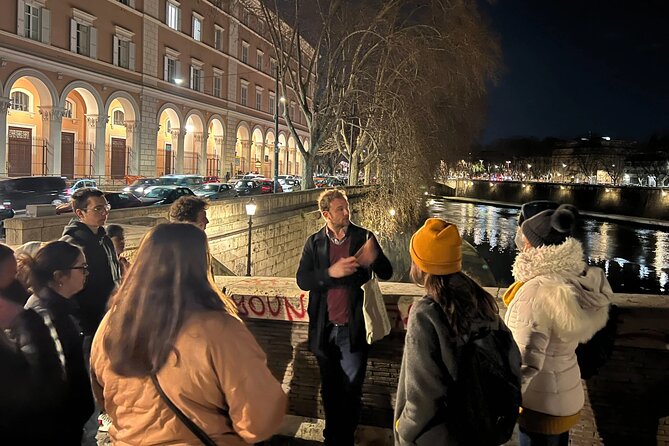
At Via dell’Arco dei Banchi, the group stops at the childhood home of Mastro Titta, one of Rome’s best-known executioners.
This is a particularly effective location because it connects a specific person with the wider history introduced at Campo de’ Fiori. Instead of treating executions as a vague part of the past, the story gives you a character and a home tied to that work.
The stop also shows how the tour moves between public and private spaces. Campo de’ Fiori was where executions could be seen by crowds. Here, you consider the person who carried them out and the ordinary setting in which he grew up.
Expect a story, not a museum visit. The house is part of the route, and the value comes from understanding its connection to Rome’s justice system and darker public rituals.
Castel Sant’Angelo and the Cenci family
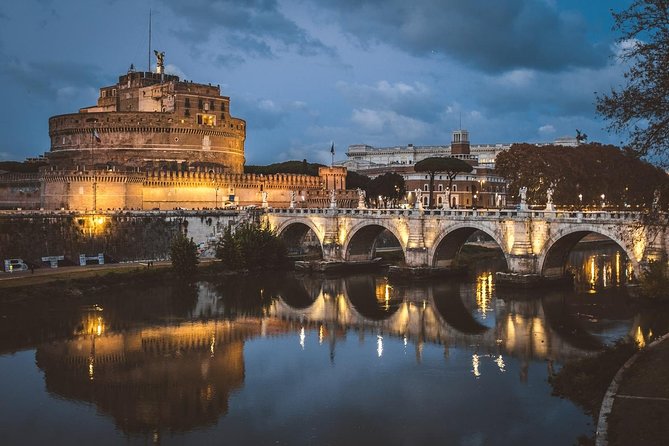
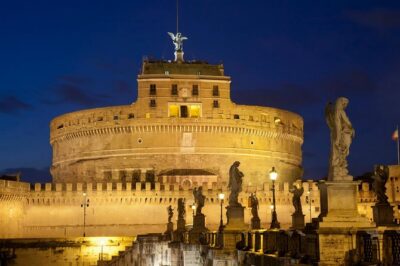
The final stop is Castel Sant’Angelo, where the tour ends on Lungotevere Castello. The bridge leading to the fortress is now lined with statues of angels, but it once had a far more threatening role. The bodies of executed people were displayed there as warnings to sinners.
That ending brings the evening full circle. You begin at an execution site and finish beside another place connected with public punishment. In between, the route fills in the gaps with stories of crime, religion, wealth, scandal, and death.
The final tale concerns the Cenci family and their fatal end. It is one of the tour’s more dramatic stories, and Castel Sant’Angelo provides a strong setting for it. You finish near a major Roman landmark, rather than being left in a remote neighborhood.
The tour ends outside the castle area. You can continue your evening from there, though no onward plans are included. If you need to return to your lodging, check your route before starting.
What the guides add to the experience
This tour depends heavily on the guide. The route is free to enter at each listed stop, so you are paying for the research, structure, delivery, and ability to make scattered locations feel connected.
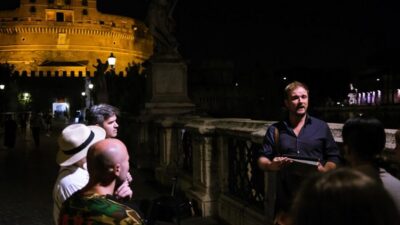
The strongest guide feedback centers on clear historical detail, humor, and personal energy. Sarah is praised for bringing pictures of the people in her stories. Diletta is noted for her humor and wide range of facts. Domenica is described as especially committed to answering questions, while Simon is remembered for being personable and entertaining.
Other guides named in the feedback include Antonio, Dominica, Maham, Changa, Paula, Csenge, and Dalila. Your guide will depend on the date, and the experience is offered in English.
The guide’s skill matters even more because public squares can be loud. Two separate comments point to difficulty hearing in noisy areas. Stay close, avoid standing behind the group, and politely ask the guide to repeat a point if needed.
Price, pace, and who will enjoy it
At $29.96 per person, the price is reasonable for a two-hour guided walk in central Rome. Every stop has free admission, so the fee is not paying for entry tickets. It pays for the guide and the storytelling route.
That makes the value strongest for you if you enjoy guided interpretation. If you already know central Rome well and prefer to wander alone, you could visit many of these streets without paying. But you would miss the connections between the locations and the stories of the people tied to them.
The route includes roughly 11 stops, each planned for about 10 minutes. The remaining time is used for walking between them. Comfortable shoes are a must, and you should expect regular standing on Roman streets and piazzas.
The tour has a maximum of 20 people. Group discounts are available, which may help families or friends traveling together. A mobile ticket makes entry simple, and confirmation is received when you book.
Most people can take part, and service animals are allowed. The activity is near public transportation. Since it requires good weather, check the forecast and keep the cancellation terms in mind: you can receive a full refund if you cancel at least 24 hours ahead, while cancellations or changes inside 24 hours are not refunded. If poor weather forces cancellation, you are offered another date or a full refund.
Is the Ghost & Legends in Night Rome Tour worth booking?
I would book this tour if you want Rome with fewer daytime crowds and more unusual stories. It is a good match for first-time visitors who have already seen the major sights, repeat visitors who want fresh corners of central Rome, and families with older children who enjoy spooky history without a haunted-house production.
I would skip it if you want extensive access inside churches, supernatural proof, or a polished theatrical show. The experience is a guided walk through public streets, with the atmosphere supplied by Rome itself and the drama supplied by the guide.
At $29.96, the walk offers solid value, especially when you consider the number of locations and the English narration. Wear good shoes, dress for the temperature, stay close enough to hear, and arrive ready for stories that make ordinary Roman streets feel anything but ordinary.
FAQ
How long does the Ghost & Legends in Night Rome Walking Tour last?
The tour lasts approximately two hours.
How much does the tour cost?
The listed price is $29.96 per person.
Where does the tour begin?
It begins at Piazza Campo de’ Fiori, Rome, Italy.
Where does the tour end?
The walk ends by Castel Sant’Angelo at Lungotevere Castello, 50.
What language is the tour offered in?
The tour is offered in English.
How many people can join the tour?
The maximum group size is 20 travelers.
Does the tour include admission tickets?
The listed stops have free admission. The experience information does not promise entry into the churches or Castel Sant’Angelo.
Is the tour suitable for most people?
Yes. Most travelers can participate, and service animals are allowed.
What is the cancellation policy?
You receive a full refund if you cancel at least 24 hours before the start time. Cancellations or changes made less than 24 hours before the start time are not refunded. If poor weather cancels the tour, you are offered another date or a full refund.
More Evening Experiences in Rome
- Rome: City Highlights Open-Top Bus Night Tour
★ 4.1 · 2,038 reviews - Vespa Sidecar Tour By Night with Pickup
★ 5.0 · 1,803 reviews - Rome by Night – Ebike Small Group Tour – Food and Wine (Option)
★ 5.0 · 1,275 reviews - Colosseum Sunset Tour with Entry
★ 4.5 · 1,230 reviews
Newest reviews from Rome
- ROME:Colosseum & Ancient Rome – private/small group TOUR★ 5.0 · 24 reviews
- Off the Beaten Track in Rome: Rione VI Parione Private Tour★ 5.0 · 24 reviews
- Cinematic Photoshoot in Rome★ 5.0 · 24 reviews
- Rome: Best of Colosseum and Roman Forum Small Group Guided Tour★ 4.5 · 24 reviews
- The Labyrinth of Rome between catacombs and ancient quarries★ 4.5 · 24 reviews
- Vatican and Trionfale Market Tour with Wine and Food Tasting★ 5.0 · 24 reviews
- private tour: Vatican Museums, Sistine Chapel, St. Peter’s Basilica★ 4.5 · 24 reviews
- Colosseum guided tour with Virtual Reality★ 5.0 · 24 reviews
Rome Ghost & Legend Tours, compared.
Rome by Night Walking Tour – Legends & Criminal Stories
Read our review →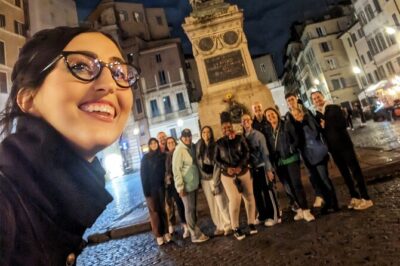


Small Group Rome’s Dark Side – Ghosts & Legends Tour
Read our review →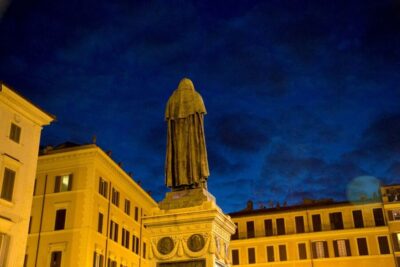
Dark Heart of Rome – Facts, Legend & Mystery Walking Tour
Read our review →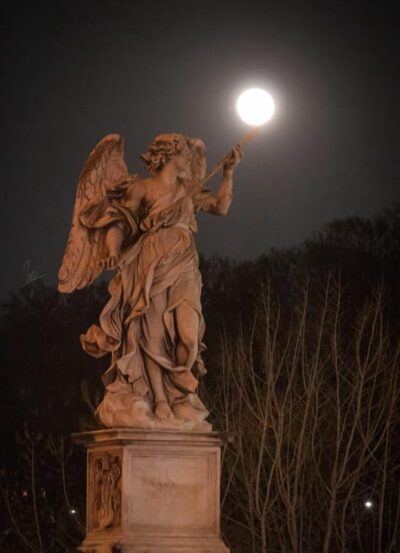
Ghosts, Legends & Mysteries of Rome Tip-Based Walking Tour
Read our review →Browse the lists this tour appears in