
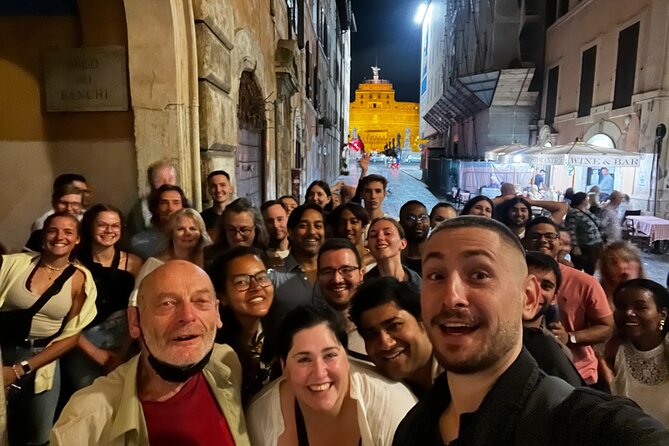
Reviewed · ROME GHOST & LEGEND TOURS
Ghosts Legends and Mysteries of Rome Walking Tour
Rome gets a different mood after sunset. This 90-minute walk moves from Castel Sant’Angelo across the Tiber and through old lanes tied to executions, exorcisms, torture, murder, and strange local legends. I like the mix of real history and spooky storytelling, especially at Santa Maria dell’Orazione e Morte and Campo de’ Fiori. I also like the compact route, which gives you an unusual evening activity without taking up your whole night.
The main thing to understand is the tone. This is not a ghost hunt, haunted house, or theatrical show with actors and jump scares. Some stories are eerie, but much of the material is dark Roman history told with humor and old legends. A few people have found the guide hard to hear in traffic or less dramatic than expected, so stay near the guide and book it for storytelling rather than guaranteed chills.
In This Review
- Key points to know before you book
- Why Rome works so well after dark
- Castel Sant’Angelo begins with power and death
- Ponte Sant’Angelo feels like a bridge between worlds
- Via Paola introduces Rome’s executioner with a softer side
- Arco dei Banchi carries an exorcist’s reputation
- Benvenuto Cellini brings art, violence, and scandal
- Vicolo della Moretta and the poisoner Giulia Tofana
- Corte Savella recalls Beatrice Cenci
- Via Giulia offers a quiet change of pace
- Santa Maria dell’Orazione e Morte is the darkest stop
- Fontana del Mascherone hides a modern crime
- Campo de’ Fiori closes with fire and public memory
- What the $3.63 price really means
- The guide can make or break the evening
- Who should book this Rome night walk
- Useful planning details for the evening
- My verdict on the legends and mysteries walk
- FAQ
- How long does the Ghosts, Legends and Mysteries of Rome Walking Tour last?
- What time does the tour begin?
- Where does the tour start?
- Where does the tour end?
- Is this a ghost hunt or paranormal investigation?
- Is the tour suitable for children?
- Is the tour tip-based?
- Can I cancel for a full refund?
Key points to know before you book
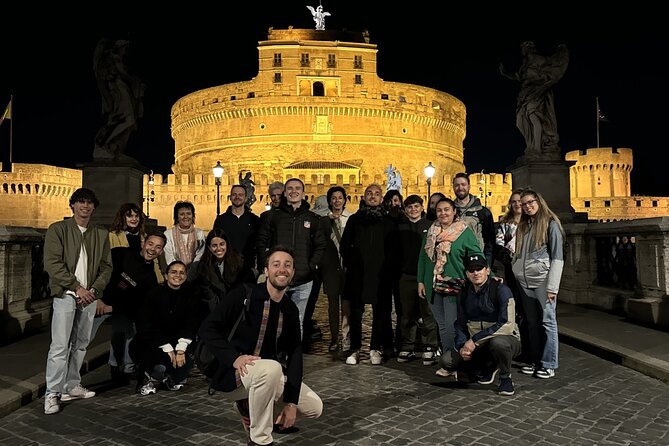
- Castel Sant’Angelo begins the story: Start beside Hadrian’s former mausoleum, later a fortress, papal refuge, and prison.
- The route ends at Campo de’ Fiori: You finish in one of Rome’s best-connected evening squares, surrounded by bars and restaurants.
- This is a storytelling walk, not a ghost hunt: Expect legends, crimes, religious mysteries, and historical anecdotes.
- The tour is tip-based: The listed price is only $3.63 per person, but the guide works from tips, so budget for a fair gratuity.
- The walk is short but full of dark subjects: Torture, executions, murder, sexual violence, and corpses are part of the material.
- Guides bring personality to the tales: Ivan has been praised for jokes, photos, and animated Roman stories, while Simone and Max have also led the walk.
Why Rome works so well after dark
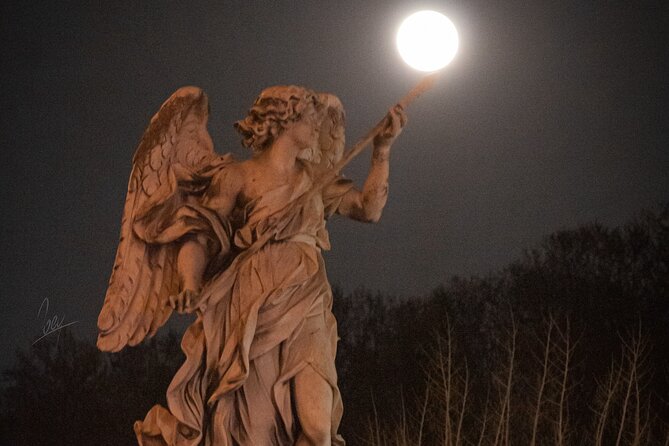
Rome has no shortage of famous monuments, but its darker stories often hide in ordinary streets. A fountain, an arch, or a quiet church can carry more unsettling material than the grand ruins do. That is the appeal here. You are not simply looking at a monument. You are hearing why a place became associated with fear, punishment, scandal, or the supernatural.
The 8 pm start works well for a first evening in Rome or for a night when you want something beyond dinner. The walk is short enough to fit between other plans, and the group format gives you company while moving around the city after dark. The maximum group size is 24 people, so this is not a private walk, but it should remain manageable if everyone stays close.
I would not choose this experience if you want to enter several historic buildings. The route is mainly outdoors, with stories told at street corners and outside landmarks. The value comes from the guide’s narration and the setting, not from special access.
More Rome legends after dark:
- Rome by Night Walking Tour – Legends & Criminal Stories
★ 4.5 · 1,003 reviews - Haunted Rome Ghost Tour – The Original
★ 4.5 · 668 reviews - Rome: Angels and Demons Guided Tour
★ 4.7 · 610 reviews
Castel Sant’Angelo begins with power and death
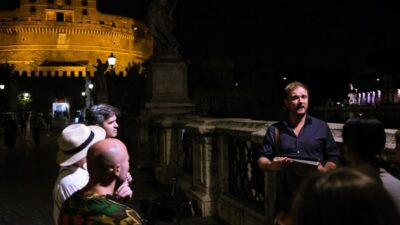
The meeting point is on Lungotevere Castello, 50, beside Castel Sant’Angelo. Try to arrive a little early. The starting area is clear on a map, but finding a guide in a busy evening setting can take a moment. Look for the tour sign and stay alert for the group rather than assuming the first crowd is yours.
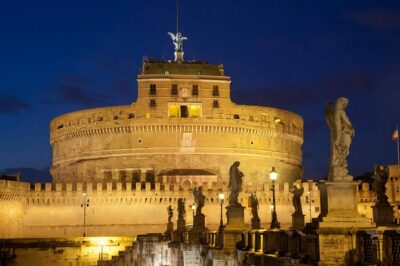
Castel Sant’Angelo gives the walk a strong opening. Emperor Hadrian built the round structure as a mausoleum, but later rulers turned it into a fortress, papal residence, and prison. The great cylinder beside the Tiber already looks like a place built for secrets. The rooftop statue of the Archangel Michael adds a dramatic silhouette, especially at night.
You do not receive an admission ticket or a special interior visit on this walk. That is worth knowing, since the castle itself can take several hours to explore on another day. Here, it serves as the first piece of the tale and a visual anchor for the route.
Ponte Sant’Angelo feels like a bridge between worlds
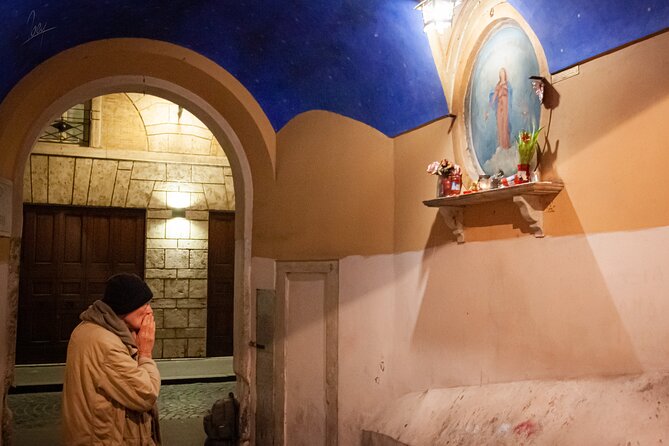
The walk then reaches Ponte Sant’Angelo, the elegant bridge leading toward the castle. Ten angel statues line the bridge, designed by Bernini and his pupils. Each carries an object linked to Christ’s suffering, including symbols of the Passion.
In daylight, the statues are graceful. At night, the same figures can look stern and watchful. Their lowered gazes and the dark water below create the right setting for stories about souls, prisons, refuge, and power. I like this stop because the atmosphere does part of the guide’s work.
The bridge can also be one of the more difficult places to hear. Cars, pedestrians, and the open space beside the river may scatter the guide’s voice. Stay close, face the speaker, and do not hang back for photographs until the story is finished.
Via Paola introduces Rome’s executioner with a softer side
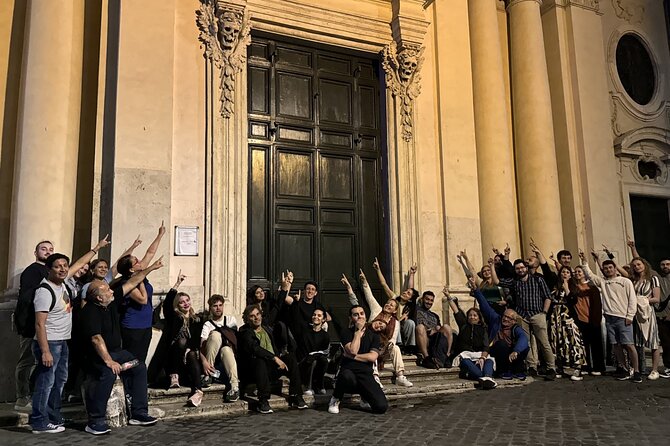
On Via Paola, the guide tells the story of the house of Rome’s kindest executioner. That contrast is exactly the sort of twist that keeps the walk from becoming a simple list of haunted addresses. Executioners are often presented as monsters, but the tale here points to a more complicated human figure.
The stop lasts about ten minutes. You will not spend that time touring a house. Instead, you listen from the street and consider how Rome once viewed public punishment, religious duty, and the people assigned to carry out sentences.
This is a good example of the tour’s approach. The story may sound ghostly in the setting, but the substance is social and historical. If you prefer old scandals and unusual facts to paranormal claims, this stop should suit you.
More walking tours in Rome:
- Rome: Trastevere & Campo de Fiori Street Food Walking Tour
★ 4.9 · 2,768 reviews - Rome: Paranormal Night Walking Tour & Secret Backstreets
★ 4.9 · 1,921 reviews - Rome: Guided City Center Evening Sightseeing Walking Tour
★ 4.4 · 953 reviews - Best of Rome Walking Tour including Trevi Fountain
★ 4.5 · 923 reviews
Arco dei Banchi carries an exorcist’s reputation
The Arco dei Banchi is known here as the Haunted Arch. It is also linked to a controversial Roman exorcist and a place of prayer. The stop is brief, about five minutes, but it adds a religious layer to the walk.
Rome’s ghost stories often sit close to Catholic ritual. Prayer, exorcism, relics, burial, sin, and punishment overlap in ways that can feel unsettling to modern visitors. The guide uses this arch to move from public places of execution toward more personal fears about spirits and possession.
Since the stop is short, do not expect a long exploration of the surrounding area. The point is the story and the oddness of hearing it in a normal city passage after the shops and traffic have quieted.
Benvenuto Cellini brings art, violence, and scandal
At Largo Ottavio Tassoni, 319, the route reaches the former house of Benvenuto Cellini. Cellini is remembered as a major 16th-century artist, but his life also included accusations of rape and murder. That collision between artistic brilliance and brutal conduct gives the stop its force.
I find this type of material useful because it pushes back against the tidy version of Renaissance Rome. Famous artists were not always gentle geniuses. Some lived in a world of rivalry, violence, status, and weak legal protection.
The stop lasts only about five minutes, so the guide cannot give a full biography. You get a sharp portrait of a celebrated man with a disturbing private record. It is another reason to think of this as a dark-history walk with ghostly framing.
Vicolo della Moretta and the poisoner Giulia Tofana
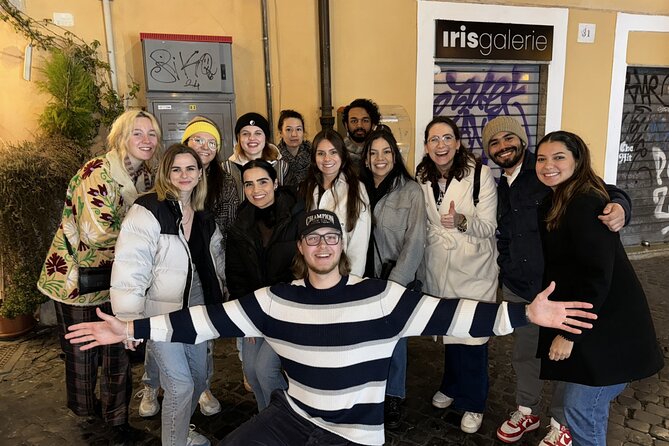
Vicolo della Moretta is associated with the house of Giulia Tofana, described here as a witch, and with stories of the Holy Inquisition. This is one of the more serious sections of the walk because it connects alleged poisoning, gender, fear, and religious authority.
The word witch can hide a lot of history. In Rome and elsewhere, accusations against women could grow from rumor, domestic conflict, medical knowledge, or social suspicion. The Inquisition stories add another layer, showing how institutions tried to control belief and punish people who crossed accepted lines.
This stop lasts about ten minutes, giving the guide more room to explain the legend. Expect disturbing subjects rather than a playful ghost story. The tour specifically includes graphic material and is not recommended for children under 12.
Corte Savella recalls Beatrice Cenci
On Via di Monserrato, you hear about Corte Savella, the only prison in Rome authorized to execute convicts inside its walls. The site is tied to Beatrice Cenci, who was tortured before her execution.
Her story has long held a place in Rome’s darker folklore. The combination of family abuse, legal power, torture, and public punishment has made Beatrice a tragic figure in the city’s memory. The stop lasts about five minutes, but the emotional weight is greater than the time suggests.
You should prepare for frank descriptions. This is not a light ghost walk for young children. It is also not a substitute for a full historical treatment of the Cenci case. The guide gives you a concise, dramatic version that fits into a larger evening route.
Via Giulia offers a quiet change of pace
Via Giulia was designed by Bramante in the early 16th century for Pope Julius II. It is known for Renaissance palaces, ivy-covered facades, courtyards, and a calmer mood than many of Rome’s major streets.
After several stories of violence and punishment, this stretch lets you notice the city itself. The street’s elegant buildings and muted evening character provide a pause before the route becomes darker again. It is a useful reminder that Rome’s past is not only grand churches and famous painters. It is also found in doorways, walls, and narrow lanes.
The stop takes about five minutes. You will hear how Via Giulia once served as an important route for Rome’s aristocratic life, then continue toward one of the walk’s most unsettling churches.
Santa Maria dell’Orazione e Morte is the darkest stop
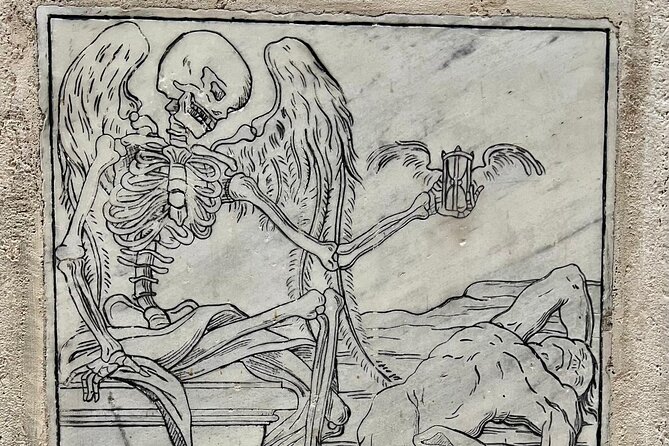
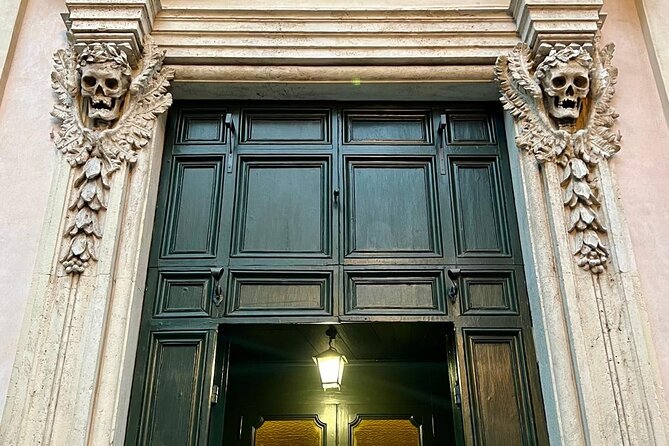
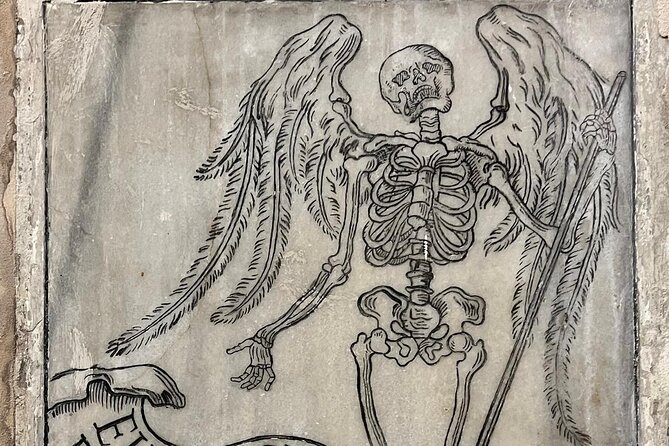
Santa Maria dell’Orazione e Morte translates roughly as Saint Mary of Prayer and Death. The church was built by a secretive confraternity devoted to finding and burying abandoned corpses. Its interior is associated with skulls, bones, and symbols of death.
This is the place where the tour’s title makes the most sense. Even without a supernatural event, a church linked to unidentified and unclaimed dead carries a heavy atmosphere. The setting connects compassion with fear. Someone had to care for bodies that no family claimed, but the work also placed the confraternity close to death every day.
The stop lasts about ten minutes. The supplied details do not promise an interior visit, so expect the guide to explain the church and its macabre decoration rather than assume you will enter. If the building is open, conditions may vary, and the tour should not be booked as a guaranteed church interior tour.
Fontana del Mascherone hides a modern crime
Fontana del Mascherone sits on Via Giulia. Its huge stone mask pours water from a grimacing mouth, making it one of the route’s strangest visual details. The fountain is Baroque, theatrical, and just unsettling enough to fit the evening.
The guide also connects this location to the kidnapping of John Paul Getty III. That detail shifts the tour from old legends to a modern crime scene. It shows that Rome’s darker stories do not stop with medieval prisons or Inquisition trials.
The stop lasts around five minutes. Look carefully at the mask before the story begins. Small details like this are easy to miss during a normal walk through Rome, and the guide gives you a reason to pause.
Campo de’ Fiori closes with fire and public memory
The final stop is Campo de’ Fiori, about ten minutes. During the day, the square is known for produce, flowers, and local goods. At night, restaurants and bars fill the edges, giving the area a lively end point for the walk.
At the center is the statue of Giordano Bruno, the philosopher burned at the stake in 1600. The square was used for executions during the Inquisition, so the modern nightlife sits over a place with a grim past. That contrast makes the ending effective. You finish among ordinary Roman evening activity, but the guide has changed the way you see the square.
The tour ends here rather than returning to Castel Sant’Angelo. That is convenient. Campo de’ Fiori has bus connections and taxi stands, and you can continue with a drink or meal nearby. Keep in mind that the square can be crowded, so arrange a clear meeting plan if your group separates at the end.
What the $3.63 price really means
The advertised price of $3.63 per person is unusually low for a guided Rome walk. It is possible because this is a tip-based tour. The guide works from gratuities rather than a normal fixed tour fee, and tips are not included in the booking price.
Think of the listed amount as a reservation price, not the complete cost of the experience. If the guide keeps the group together, speaks clearly, adds useful context, and makes the stories engaging, you should plan to tip appropriately. Card payments are accepted, which helps if you do not carry enough cash.
This model can offer good value, but it also creates a different expectation. The guide’s energy matters a great deal, and your experience may depend on who leads the group. Ivan has been praised for his jokes, photos, Roman stories, and enthusiasm. Simone has been described as well prepared, witty, and professional, while Max has led a darker, experience-based version of the walk.
The guide can make or break the evening
Storytelling is the heart of this experience. The route itself is pleasant, but you can walk past most of these places without understanding why they matter. A strong guide supplies the connection between the stone, the crime, and the legend.
Ivan’s style includes humor and visual references, including photographs of historical figures. That can help you follow stories about people whose faces and clothing belong to another age. Some guides use jokes to ease the grim material, so do not expect a solemn lecture from start to finish.
Clear sound is important. One criticism of the walk was difficulty hearing a guide in busy streets, along with confusion about the precise meeting point. The practical response is simple: arrive early, keep close to the guide, and ask for a repeat if traffic swallows a sentence. The group can contain up to 24 people, so standing near the front is worthwhile.
Who should book this Rome night walk
I would recommend it to you if you enjoy:
- Roman crime stories and old legends
- Religious mysteries and Inquisition tales
- Short walking tours with several stops
- Seeing familiar places in a new light
- Evening activities that do not require a full night
- Dark subjects presented with some humor
It is especially useful on a first or second night in Rome, when you want an easy introduction to the streets around the Tiber, Via Giulia, and Campo de’ Fiori. It also suits someone who has already seen the major monuments and wants a different theme.
I would skip it if you want a serious paranormal investigation, a theatrical horror performance, or proof of ghosts. You will not be promised apparitions, orbs, or supernatural encounters. The strongest material is often historical rather than frightening.
The walk is also a poor match for children under 12 because it includes graphic subjects. Service animals are allowed, public transportation is nearby, and most people can take part, but you should be comfortable walking outdoors for about 90 minutes.
Useful planning details for the evening
The tour begins at 8 pm and lasts about an hour and a half. Wear shoes suited to Rome’s streets, and bring protection from rain. The walk has continued in heavy rain, so weather can affect comfort even when the tour goes ahead.
The end point is Campo de’ Fiori, not the starting point. That makes the route practical for a late meal or taxi, but it means you should know how you will get back to your lodging. The meeting point is near public transportation, and the final square is well connected.
Mobile tickets are accepted, and confirmation arrives when you book. Free cancellation is available until 24 hours before the start time. Changes or cancellations inside that window are not refunded, and the tour can be canceled if the minimum number of participants is not reached.
My verdict on the legends and mysteries walk
Book this tour if you want Rome’s darker side explained by a guide who can connect famous sites with crimes, punishments, religious fears, and local tales. The strongest moments are the angel-lined bridge, Santa Maria dell’Orazione e Morte, Beatrice Cenci’s prison story, and the final pause beneath Giordano Bruno’s statue.
Do not book it expecting a scare show. The experience succeeds as an atmospheric history walk with gruesome stories and occasional ghostly framing. At the very low upfront price, it can be a worthwhile evening, provided you understand that a fair tip is part of the real cost and that the guide’s delivery is central to the experience.
FAQ
How long does the Ghosts, Legends and Mysteries of Rome Walking Tour last?
The tour lasts approximately 1 hour and 30 minutes.
What time does the tour begin?
The tour begins at 8:00 pm.
Where does the tour start?
The meeting point is Lungotevere Castello, 50, 00193 Roma RM, Italy, near Castel Sant’Angelo.
Where does the tour end?
The walk ends at Campo de’ Fiori, a central square with bus stops and taxi stands.
Is this a ghost hunt or paranormal investigation?
No. It is a storytelling walk about Roman legends, mysteries, ghostly tales, crimes, and dark history. It does not promise paranormal activity or ghost sightings.
Is the tour suitable for children?
The tour is not recommended for children under 12 because it includes graphic information and subjects connected with torture, executions, murder, and corpses.
Is the tour tip-based?
Yes. The listed price is $3.63 per person, but tips are not included. The guides work from tips alone, and card payments are accepted.
Can I cancel for a full refund?
Yes. You can cancel at least 24 hours before the scheduled start time for a full refund. Cancellations or changes made less than 24 hours before the start are not accepted for a refund.
Newest reviews from Rome
- Rome: Vatican Museums & Sistine Chapel Skip-the-Line Ticket★ 4.4 · 148 reviews
- Shared Shuttle Transfer from Rome to Civitavecchia Port★ 5.0 · 148 reviews
- Rome: Crypts & Catacombs After Hours Tour with Bone Chapel★ 4.6 · 149 reviews
- Skip the Line: Vatican and Sistine Chapel with Guided Tour★ 4.0 · 149 reviews
- Tivoli: Villa Gregoriana Entrance Ticket★ 4.7 · 150 reviews
- Pizza and Tiramisu Cooking Class in Rome, Piazza Navona★ 5.0 · 150 reviews
- Rome: Borghese Gallery Skip-the-Line Entry and Guided Tour★ 4.7 · 150 reviews
- Appian Way E-bike Tour with Gourmet Picnic and Catacombs★ 4.5 · 150 reviews
Rome Ghost & Legend Tours, compared.
Rome by Night Walking Tour – Legends & Criminal Stories
Read our review →


Small Group Rome’s Dark Side – Ghosts & Legends Tour
Read our review →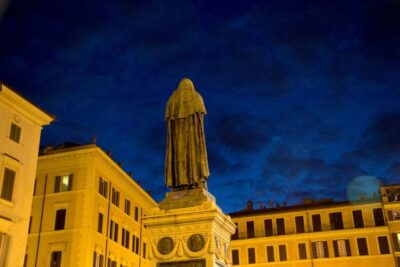
Dark Heart of Rome – Facts, Legend & Mystery Walking Tour
Read our review →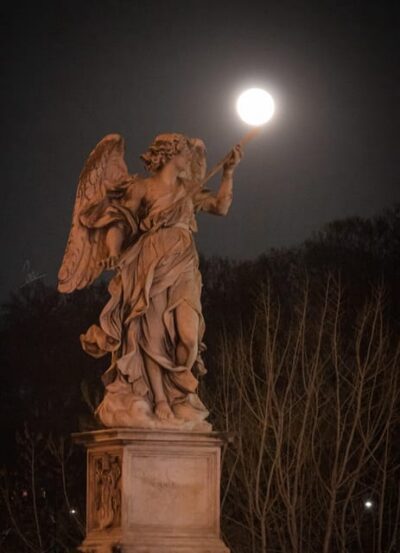
Ghosts, Legends & Mysteries of Rome Tip-Based Walking Tour
Read our review →Browse the lists this tour appears in