
Reviewed · ROME GHOST & LEGEND TOURS
Haunted Rome: Eternal City Night Walking Tour
Rome’s darker side comes alive after sunset, when Campo de’ Fiori, narrow lanes, old churches, and Castel Sant’Angelo make a fitting stage for tales of executions, poisoned cosmetics, suspicious deaths, and restless spirits. This is a history walk with a spooky coat, not a haunted-house show.
I like the modest $17.97 price, which gives you two hours of storytelling and a useful orientation to central Rome. I also like the evening timing: cooler air, fewer sightseeing crowds, and monuments that look entirely different under streetlights. The main drawback is that the tour can feel less spooky than its title suggests, and one outing finished in under 90 minutes because of long toilet stops.
In This Review
- Key points to know before you book
- Why this Rome night walk works
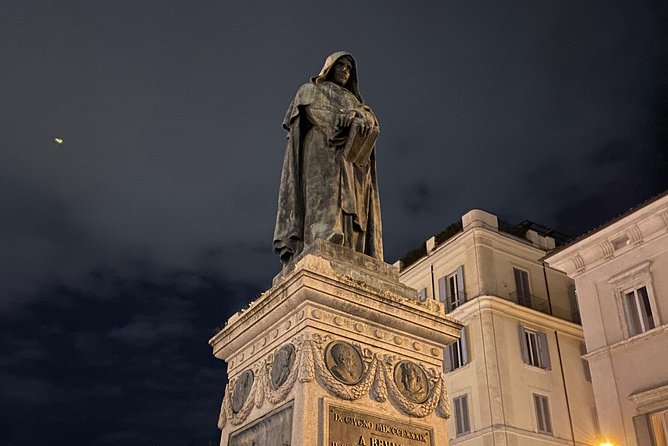
- Campo de’ Fiori begins with executions
- Piazza Farnese and the cost of luxury
- Madonelles, narrow lanes, and local protection
- Ponte Sisto and a deadly fountain
- A church decorated with human remains
- Haunted apartments and a Spanish church
- Via Giulia and cosmetics that kill
- Mastro Titta and Rome’s public punishments
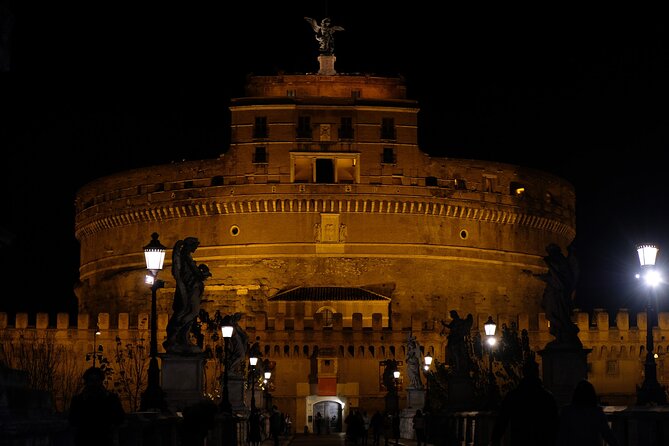
- Castel Sant’Angelo closes the evening
- How the guides shape the experience
- Price, pace, and practical value
- Who should book Haunted Rome
- Should you book it?
- FAQ
- Where does the Haunted Rome walking tour begin?
- Where does the tour end?
- How long does the tour last?
- What language is the tour offered in?
- How much does the tour cost?
- How large is the group?
- Is this a true ghost tour?
- Is the tour suitable for children?
- Can I cancel for a refund?
Key points to know before you book
- More dark history than ghost hunting: Expect crime, executions, scandals, and strange deaths, with only a light touch of the supernatural.
- A useful route through central Rome: You walk from Campo de’ Fiori to Castel Sant’Angelo, passing Piazza Farnese, Via Giulia, Ponte Sisto, and several atmospheric side streets.
- Strong guides make the difference: Simon, Sarah, Diletta, Domenica, Ben, Clara, and others have been praised for clear speech, humor, and lively storytelling.
- Good evening value: At $17.97 per person, this is an inexpensive way to see Rome at night while learning stories you might otherwise miss.
- Small enough to feel manageable: The group limit is 20 people, though street noise can sometimes make it hard to hear without an audio system.
- A walking tour from start to finish: You need to be comfortable walking for about two hours, with the route ending near Castel Sant’Angelo.
Why this Rome night walk works
Rome can feel exhausting in the daytime. The pavement reflects the heat, famous squares fill quickly, and you may spend more time dodging tour groups than looking at the buildings. This experience wisely moves into the evening, when the center feels calmer and the subject matter suits the hour.
The route stays in and around Rome’s centro storico, so you see major landmarks without paying separate entrance fees. The value is not inside access to monuments. It is the guide’s narration, the changing streetscape, and the unusual details that connect familiar places to murder, punishment, religion, and superstition.
I would set your expectations carefully. Several guides, including Sarah, Diletta, Clara, Vanessa, and Simon, have been praised for being funny, clear, and easy to follow. The strongest outings sound like entertaining history lessons with a few eerie moments. If you want actors, costumes, jump scares, or dramatic paranormal investigation, this may feel too mild.
The tour has an overall rating of 4.8 from 38 ratings, with 95 percent recommending it. That is a strong record, but it does not erase the practical cautions. One person found the experience flat, shorter than promised, and interrupted by lengthy toilet stops. Another had difficulty hearing above street noise and suggested guide audio devices. A good guide can adjust position and volume, but a busy Roman street remains a busy Roman street.
More Rome legends after dark:
- Rome by Night Walking Tour – Legends & Criminal Stories
★ 4.5 · 1,003 reviews - Haunted Rome Ghost Tour – The Original
★ 4.5 · 668 reviews - Rome: Angels and Demons Guided Tour
★ 4.7 · 610 reviews
Campo de’ Fiori begins with executions
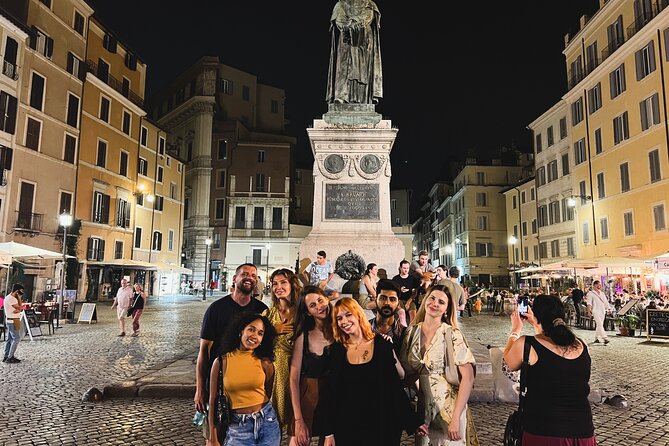
Meet at Piazza Campo de’ Fiori, one of Rome’s best-known squares. By day, its market and cafés make it feel social and ordinary. At night, the square takes on a harder edge when you hear about the deaths that took place on its ground.
This is a smart starting point because it changes your view of a familiar piazza. You are not simply looking at restaurants and outdoor tables. You are being asked to notice how public spaces once served public punishment.
The first stop lasts about 10 minutes and has no admission charge. Arrive with enough time to locate the meeting point, since Campo de’ Fiori can be busy even after dark. The square is open and exposed, so stay alert for the guide among the surrounding activity.
Piazza Farnese and the cost of luxury
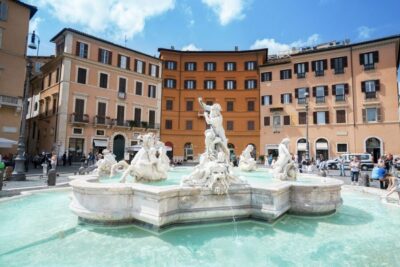
A short walk brings you to Piazza Farnese, an elegant square tied to wealthy Roman families and lavish parties. The story here turns from public death to private excess, with a reminder that power and fortune often bring their own troubles.
This stop helps broaden the tour beyond ghosts. Rome’s darker tales are also about social rank, ambition, secrecy, and the people who could bend the rules. You get about 10 minutes here, enough for a focused story without a long lecture.
The square is also a good place to appreciate the tour’s basic rhythm. You listen, look closely at the setting, then move on through the old streets. Keep your group in sight as you walk. The route is urban, and other evening activity does not pause for the tour.
Madonelles, narrow lanes, and local protection
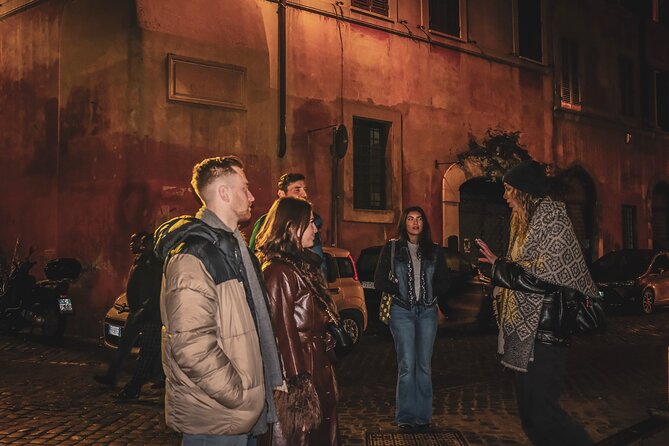
At Via del Mascherone and Vicolo dei Venti, the guide introduces the madonelles, or little Madonna images placed along Rome’s streets. These small religious figures were more than decoration. The stories connect them with crime prevention and the idea that a sacred image could watch over a dangerous corner.
This section offers one of the tour’s more distinctive details. You may have passed tiny religious images in Rome without giving them much thought. Now they become part of a larger story about faith, fear, and neighborhood life.
The lanes also give the walk its atmosphere. Narrow streets are naturally better for ghost stories than broad modern avenues, though they can be harder places to hear. Simon has been praised for noticing street noise and shifting the group so everyone could follow. That sort of practical guide skill matters here.
More walking tours in Rome:
- Rome: Trastevere & Campo de Fiori Street Food Walking Tour
★ 4.9 · 2,768 reviews - Rome: Paranormal Night Walking Tour & Secret Backstreets
★ 4.9 · 1,921 reviews - Rome: Guided City Center Evening Sightseeing Walking Tour
★ 4.4 · 953 reviews - Best of Rome Walking Tour including Trevi Fountain
★ 4.5 · 923 reviews
Ponte Sisto and a deadly fountain
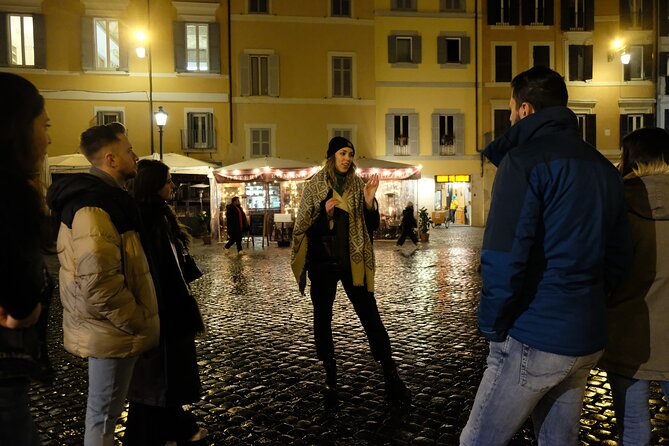
Ponte Sisto is presented as Rome’s oldest bridge, with a past involving accidents, political struggles, theft, and suspicious deaths. Bridges make natural story locations. They are crossings, bottlenecks, and public spaces, which means they have long been tied to movement, escape, and danger.
After the bridge, the route continues to Fontana del Mascherone. The warning is simple: do not drink from Rome’s deadliest fountain. The stop is brief, but it gives the guide a chance to turn an everyday piece of street furniture into a sinister object.
This pair of stops shows the tour’s approach. The emphasis is not on proving that a ghost is present. Instead, the guide takes a real place and explains the unsettling events and beliefs attached to it. If you prefer crime stories and old city customs, you will likely enjoy this more than a strictly supernatural walk.
A church decorated with human remains
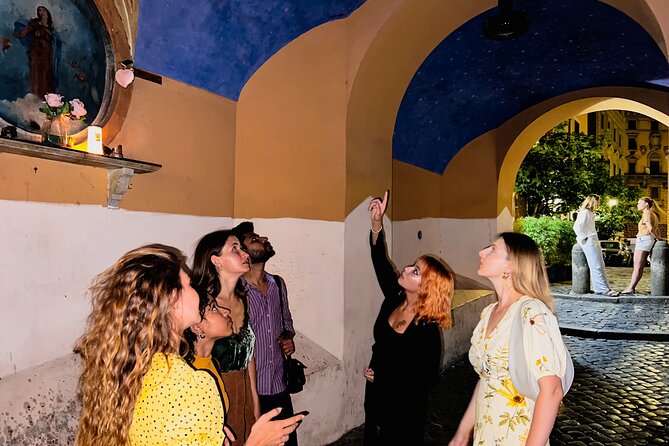
Chiesa di Santa Maria dell’Orazione e Morte is one of the route’s most striking stops. This 17th-century church is decorated with human remains, creating a direct reminder of mortality rather than a vague ghost story.
You should expect to hear about the church and its grim symbolism from outside or in the surrounding area, since the supplied details do not promise entry. Do not assume that every stop includes an interior visit. The tour is primarily a walk through public streets and exterior locations.
This is also where the subject matter may feel more serious than spooky. The church points toward Rome’s long relationship with death, burial, religion, and public memory. Parents should decide for themselves if this tone suits younger children, although one family had a good time with a 12-year-old.
Haunted apartments and a Spanish church
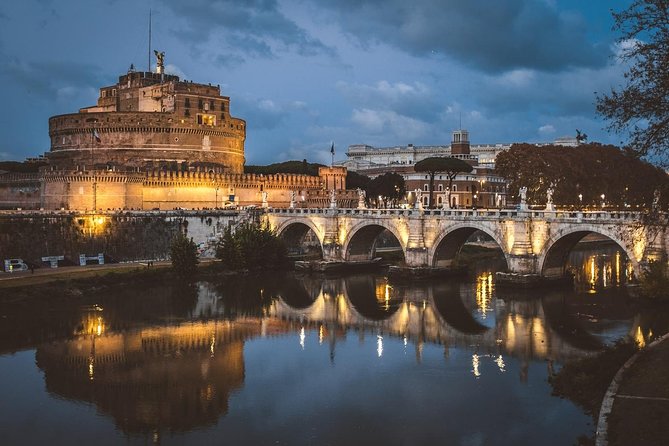
Via di Monserrato brings the focus back to a residential setting. The guide explains why an apartment block is considered one of Rome’s most haunted places. That detail is effective because it places the supernatural in an ordinary building rather than a grand castle or ruined crypt.
Next comes Chiesa di Santa Maria in Monserrato degli Spagnoli. Here, the stories involve scandal and personal drama surrounding the Spanish church. The material sounds more like a historical soap opera than a traditional ghost tale, with church politics and private behavior taking center stage.
This section rewards careful listening. The buildings may look quiet and unremarkable, but the stories give them a different character. Guides such as Domenica, Csemge, and Diletta have been praised for making complicated Italian history easy to follow. Clear English is especially useful when names, relationships, and old scandals begin to pile up.
Via Giulia and cosmetics that kill
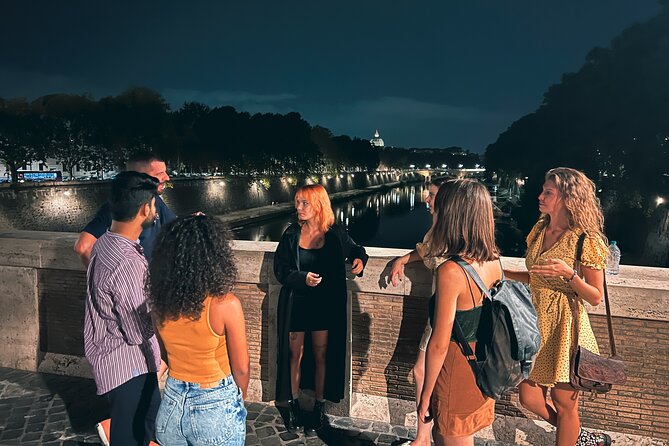
Via Giulia is one of the walk’s best-known streets. The stop focuses on a former beauty shop and the grim idea that cosmetics can kill. The story connects fashion, commerce, poison, and the risks hidden behind ordinary products.
This is one of the tour’s most memorable subjects because it feels both strange and plausible. Beauty products are usually linked with glamour. Here, the guide turns them into evidence of Rome’s darker side.
The story of Aqua Tofana receives particular attention. One person even wore an Aqua Tofana shirt and enjoyed reaching the place connected with the tale. You do not need to know the story in advance, but this stop will appeal to anyone who likes crime history, poisonous recipes, and the secret lives of famous cities.
Mastro Titta and Rome’s public punishments
On Via dell’Arco dei Banchi, you hear about a charming house linked with Mastro Titta, Rome’s most infamous executioner. The contrast is deliberate. A pleasant-looking street and an attractive old house can conceal a brutal past.
Mastro Titta gives the tour a human figure to follow. Instead of hearing only about unnamed deaths, you encounter a person whose work became part of Rome’s public memory. The story also returns to a key theme of the walk: executions were once public events, designed to warn everyone who watched.
This stop is a good example of why the tour works best as a dark history walk. The guide uses macabre details, but the wider subject is how Rome handled crime, punishment, and spectacle. You get a new way to read the old streets.
Castel Sant’Angelo closes the evening
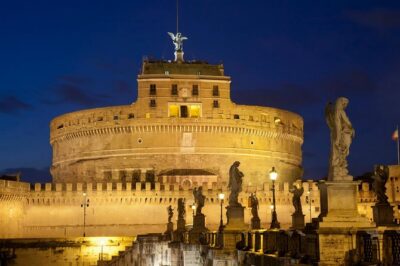
The walk ends near Castel Sant’Angelo after a final stop of about 10 minutes. The bridge leading to the castle once displayed the bodies of executed people as a warning to sinners. Today, statues of angels line the approach, creating a sharp contrast between beauty and death.
The guide also tells the story of the Cenci family and their fatal end. This closing section gathers several themes from the evening: powerful families, violence, punishment, religion, and the way Rome turned terrible events into lasting stories.
Ending at Castel Sant’Angelo is practical. You finish near a major landmark and public transportation, rather than having to retrace the entire route to Campo de’ Fiori. The castle and bridge are especially atmospheric at night, even if the tour does not include admission to the fortress.
How the guides shape the experience
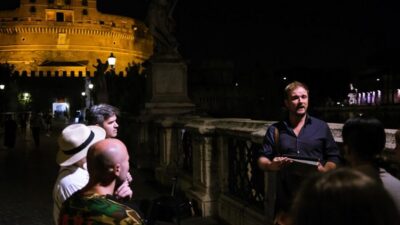
The guide is the most important part of this tour. The route is good, but you can walk through these streets on your own. What you are paying for is the person who connects a fountain, a church, an apartment, and a bridge into one clear evening of storytelling.
Simon has been praised for articulate delivery, humor, and attention to noise. Sarah received similar praise for speaking loudly and clearly while keeping the group interested. Diletta has been described as funny, fluent in English, and especially good with families.
Ben, Clara, Cat, Maham, Ana, Vanessa, Domenica, and Csemge have also been singled out for engaging delivery and strong command of the material. The exact guide is not guaranteed, so you should book for the route and subject rather than for one particular person.
Street noise remains the main weakness. One guide may have to raise her voice, and you may need to stand close to hear every detail. The maximum group size is 20, which is more manageable than a huge city tour, but it does not guarantee perfect sound. Stay near the guide and avoid drifting behind at crossings.
Price, pace, and practical value
At $17.97 per person, this is inexpensive by Rome tour standards. You are not paying for museum entry or transport. You are paying for an English-speaking guide, a two-hour route, and stories that help you notice the city differently.
The tour is offered in English and allows mobile tickets. Group discounts are available, and confirmation is provided when you book. Service animals are allowed, and the route is near public transportation. Most people can participate, but you do need to walk for roughly two hours.
The stated duration is approximately two hours, but allow for some variation. One outing lasted less than 90 minutes after two long toilet stops and an early finish. That may be unusual, but it is worth knowing if you have a tight dinner reservation or a late-night train.
The route begins at Campo de’ Fiori and ends at Lungotevere Castello near Castel Sant’Angelo. Wear comfortable shoes, keep water with you, and arrive ready to walk rather than stand in one square for the entire evening. Since the experience requires good weather, poor conditions may lead to a new date or a full refund.
Free cancellation is available up to 24 hours before the start time. Inside that 24-hour window, you receive no refund, and changes are not accepted.
Who should book Haunted Rome
I would recommend this walk to you if you enjoy old crimes, executions, religious oddities, scandals, and local legends. It works particularly well on your first evening in Rome, when you want a gentle orientation to the center without committing to a formal monument tour.
Families can enjoy it, especially with older children who like spooky stories. One 12-year-old had a good time, and the route offers a change from standard ancient Rome sightseeing. Still, the material includes death and human remains, so consider your child’s comfort level.
History fans will probably get the most from it. You will hear about public punishment, powerful families, poisonous cosmetics, religious images, and famous Roman figures. People seeking a genuinely frightening ghost experience should lower their expectations. The tour is usually creepy, curious, and occasionally chilling, but not consistently scary.
Should you book it?
Book this tour if you want a low-cost evening walk that mixes Rome’s landmarks with crime, superstition, and scandal. The strongest guides turn the route into a lively story session, and the nighttime setting adds atmosphere without adding a large price.
Skip it if you need guaranteed ghost encounters, interior access to every church, or a strict two-hour schedule. Also think twice if street noise frustrates you or if walking is difficult.
For most people, the value is clear: a small-group introduction to Rome’s darker stories, ending beside Castel Sant’Angelo for less than the cost of many café meals. Just treat the title as a promise of mood, not proof of paranormal activity.
FAQ
Where does the Haunted Rome walking tour begin?
The tour begins at Piazza Campo de’ Fiori in Rome, at P.za Campo de’ Fiori, 00186 Roma RM, Italy.
Where does the tour end?
The walk ends at Castel Sant’Angelo, at Lungotevere Castello 50, 00193 Roma RM, Italy.
How long does the tour last?
The stated duration is approximately two hours. The actual pace can vary, and one outing finished in less than 90 minutes.
What language is the tour offered in?
The tour is offered in English.
How much does the tour cost?
The listed price is $17.97 per person. Group discounts are available.
How large is the group?
The experience allows a maximum of 20 people.
Is this a true ghost tour?
It includes ghost stories and haunted places, but much of the content focuses on Rome’s darker history, including crime, executions, scandals, and suspicious deaths.
Is the tour suitable for children?
Most people can participate, and one person enjoyed the tour with a 12-year-old. The subject includes death, executions, and human remains, so parents should decide if that material is suitable.
Can I cancel for a refund?
You can cancel up to 24 hours before the start time for a full refund. Cancellations or changes made less than 24 hours before the experience are not refunded or accepted. If poor weather causes the tour to be canceled, you will be offered another date or a full refund.
More Evening Experiences in Rome
- Rome: City Highlights Open-Top Bus Night Tour
★ 4.1 · 2,038 reviews - Vespa Sidecar Tour By Night with Pickup
★ 5.0 · 1,803 reviews - Rome by Night – Ebike Small Group Tour – Food and Wine (Option)
★ 5.0 · 1,275 reviews - Colosseum Sunset Tour with Entry
★ 4.5 · 1,230 reviews
Newest reviews from Rome
- ROME:Colosseum & Ancient Rome – private/small group TOUR★ 5.0 · 24 reviews
- Off the Beaten Track in Rome: Rione VI Parione Private Tour★ 5.0 · 24 reviews
- Cinematic Photoshoot in Rome★ 5.0 · 24 reviews
- Rome: Best of Colosseum and Roman Forum Small Group Guided Tour★ 4.5 · 24 reviews
- The Labyrinth of Rome between catacombs and ancient quarries★ 4.5 · 24 reviews
- Vatican and Trionfale Market Tour with Wine and Food Tasting★ 5.0 · 24 reviews
- private tour: Vatican Museums, Sistine Chapel, St. Peter’s Basilica★ 4.5 · 24 reviews
- Skip the Line: Vatican Wheelchair Accessible Private Tour★ 5.0 · 24 reviews
Rome Ghost & Legend Tours, compared.
Rome by Night Walking Tour – Legends & Criminal Stories
Read our review →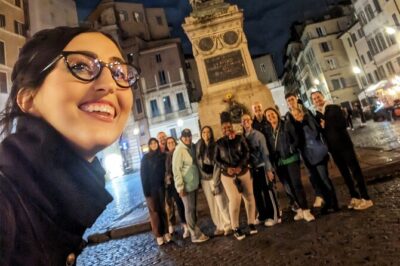


Small Group Rome’s Dark Side – Ghosts & Legends Tour
Read our review →
Dark Heart of Rome – Facts, Legend & Mystery Walking Tour
Read our review →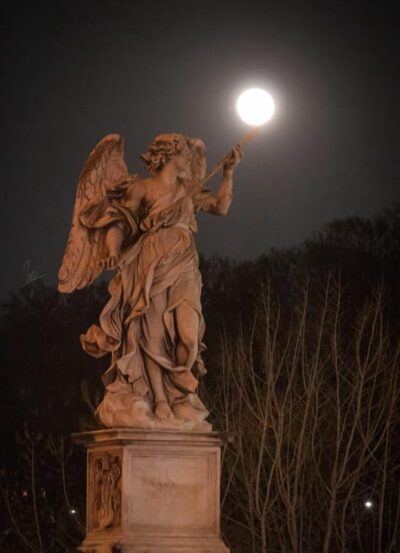
Ghosts, Legends & Mysteries of Rome Tip-Based Walking Tour
Read our review →Browse the lists this tour appears in