
Reviewed · WORKSHOPS
Micromosaic Jewelry Workshop in Rome, Italy
Micromosaic is Rome’s tiny art with a big payoff: you cut slender pieces of colored glass and set them into a silver pendant you can wear home. The class takes place at Studio Cassio in Monti, a lively neighborhood close to the ancient center, and connects your small project to mosaic work made for churches, monuments, and Vatican restoration.
I like the maximum group of seven, which gives Juliana, Sara, and the other studio artists time to help without turning the class into a factory line. I also like that the $142.97 fee covers the pendant frame, chain, glass, tools, drinks, and jewelry box. The main catch is simple: this is very fiddly work, and the final piece may reflect your patience, eyesight, and steady hands.
In This Review
- Key points to know before booking
- Why micromosaic is such a Roman souvenir
- Arriving at Studio Cassio in Monti
- The opening lesson: from Trajan’s Market to Vatican restoration
- Choosing your silver frame and design
- Cutting glass is the hard part
- Coffee, tea, and a relaxed working pace
- Finishing the pendant and packing it home
- How the $142.97 price holds up
- Who will enjoy this class most
- Booking advice and the cancellation window
- Should you book the micromosaic workshop?
- FAQ
- Where does the micromosaic workshop take place?
- What time does the workshop start?
- How long does the workshop last?
- How many people can join the class?
- Is the workshop offered in English?
- What do I take home?
- What is included in the price?
Key points to know before booking
- A family craft with Roman roots: Studio Cassio traces its micromosaic practice to the Cassio family workshop at Trajan’s Market in the 19th century.
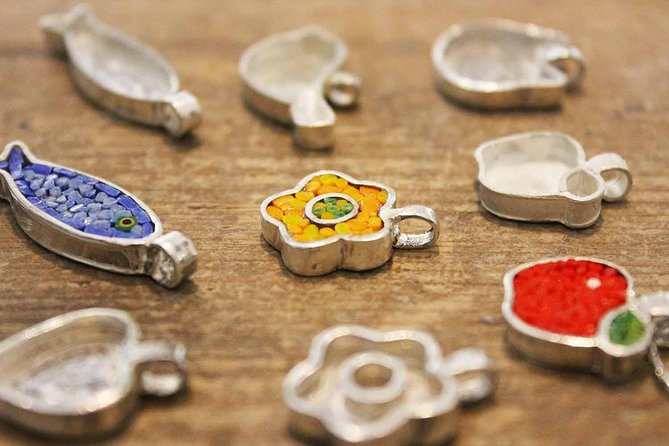
- Your souvenir is genuinely made by you: You choose a pendant or other jewelry shape, cut the glass, and place the pieces yourself with guidance.
- Small English-language class: The group is limited to seven people, with a listed 10:00 a.m. start and a total length of about two and a half hours.
- Monti adds a pleasant setting: The studio is on Via Urbana, near restaurants, small shops, and gelato spots.
- Expect detailed handwork: Strong eyesight, patience, and concentration matter more here than artistic training.
- The price covers the working materials: You receive a high-quality silver frame and chain, premium glass, tools, refreshments, and a box.
Why micromosaic is such a Roman souvenir
Rome is full of souvenirs made somewhere else. This workshop gives you a different option: a small piece of wearable art that you help create from start to finish.
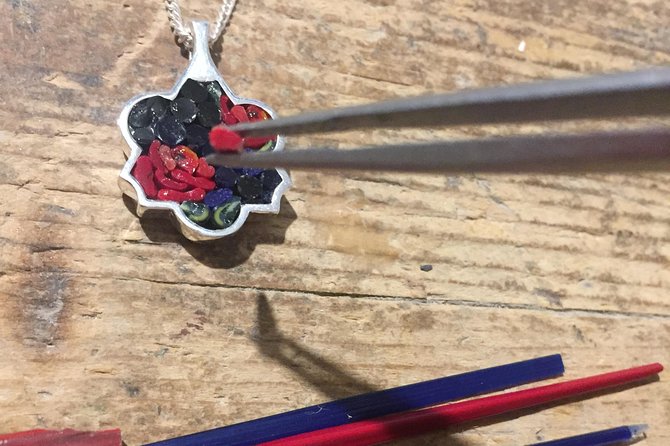
Micromosaic uses tiny pieces of colored glass, often called tesserae, arranged closely enough to form a pattern. At this scale, the work becomes closer to jewelry making than to the broad tile mosaics you may see on floors and walls. A small gap, uneven cut, or loose fragment can change the look of the entire design.
That is part of the appeal. You are not simply buying a pendant from a display case. You are learning why the craft demands such care, then taking home an imperfect but personal reminder of Rome. The finished result can be beautiful, but it also carries the marks of your own hand.
The Cassio family connection gives the class useful context. Their workshop tradition began at Trajan’s Market in the 19th century, when Roman micromosaic was made to suit the era’s taste for finely worked decorative objects. The studio also works with mosaic restoration and has connections to major Roman art, including work associated with the Vatican. That background helps you see the craft as more than a casual craft activity.
More Rome tours worth comparing
- 3 in 1 Cooking Class near Navona: Fettuccine, Ravioli & Tiramisu
★ 5.0 · 7,376 reviews - Rome: Pasta & Tiramisu Class with Fine Wine by the Vatican
★ 4.9 · 4,852 reviews - Rome: Pasta Making Class with Wine, Limoncello, and Dessert
★ 4.9 · 3,177 reviews
Arriving at Studio Cassio in Monti
The meeting point is Studio Cassio, Arte del Mosaico, at Via Urbana 98, 00184 Rome. The workshop ends at the same address, and transportation to or from the studio is not included, so plan your route before the 10:00 a.m. start.
Monti is a good neighborhood for this kind of morning. It has an artsy feel, with independent shops, restaurants, bistros, and places to stop for gelato. You can pair the class with a walk through the neighborhood or use it as a hands-on break from Rome’s major sights.
The studio itself is described as a working art space rather than a polished tourist showroom. You might see other mosaic projects in progress, including more advanced work. That matters because it gives you a clearer view of the skill behind the small piece you are making.
The class is offered in English. The instructors explain the process and give individual help during the work period. The small group limit is especially useful here. Micromosaic requires close attention, and you will likely have questions once you begin cutting and placing the glass.
The opening lesson: from Trajan’s Market to Vatican restoration
The workshop begins with an introduction to Roman mosaic techniques and their place in Roman art. This is not filler before the hands-on portion. It explains why certain materials are used, why pieces must fit tightly, and how small-scale mosaic developed into a form of luxury jewelry.
You also hear about the Cassio family’s work across generations. The connection to Trajan’s Market gives the lesson a strong sense of place, while references to restoration work help you understand that mosaic is both an art form and a preservation skill.
I would schedule this class before a visit to the Vatican if your plans allow. The lesson can sharpen your eye for mosaic work in churches and museums, and one participant specifically found the background useful before a Vatican visit. You may notice patterns, materials, and tiny pieces of glass that would otherwise blend into the larger decoration.
The instruction remains introductory. In about two and a half hours, you will not become a professional mosaicist. You will, however, gain a practical sense of how much control the craft requires.
Choosing your silver frame and design
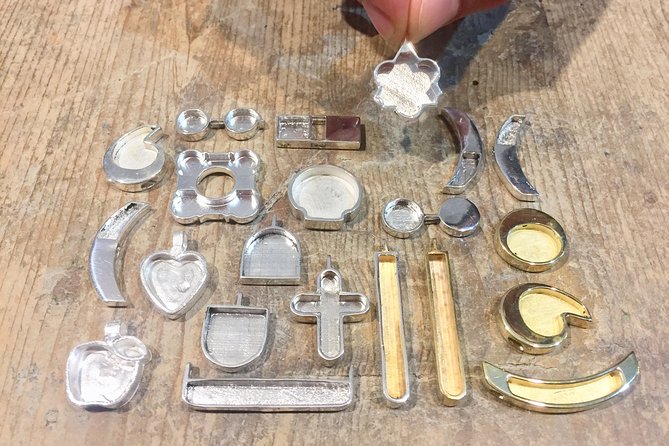
You choose a high-quality silver pendant frame with a chain. The available shapes can include several pendant or ring forms, though the included package specifically promises a silver pendant frame and chain.
This choice is important because the frame sets the limits of your design. You are working in a small area, so a simple pattern usually makes more sense than an ambitious picture. Strong color blocks, stripes, or basic geometric arrangements are more realistic than a highly detailed scene.
The instructors help you decide what will work. Juliana is singled out for her patient, warm teaching, and Sara is also named as one of the welcoming hosts. The studio team encourages you to make your own choices, while stepping in when the material becomes difficult.
That balance can vary depending on the moment. The glass pieces must be packed tightly or they can loosen later. One participant felt the instructor took over too much of the design after a tool problem, leaving an uneven piece that did not feel fully personal. The studio apologized and explained that loose pieces can come out after the class. This is a fair concern to keep in mind: if you have a firm design in mind, tell the instructor early that you want guidance but also want to do the work yourself.
A completely different way to spend the day in Rome:
- Vatican: Museums & Sistine Chapel Entrance Ticket
★ 4.5 · 144,003 reviews - Vatican Museums & Sistine Chapel Tour with Optional Basilica
★ 4.3 · 67,413 reviews - Vatican Museums, Sistine Chapel & St Peter’s Basilica Guided Tour
★ 4.5 · 39,149 reviews - Rome: Colosseum, Palatine Hill and Roman Forum Guided Tour
★ 4.8 · 32,814 reviews
Cutting glass is the hard part
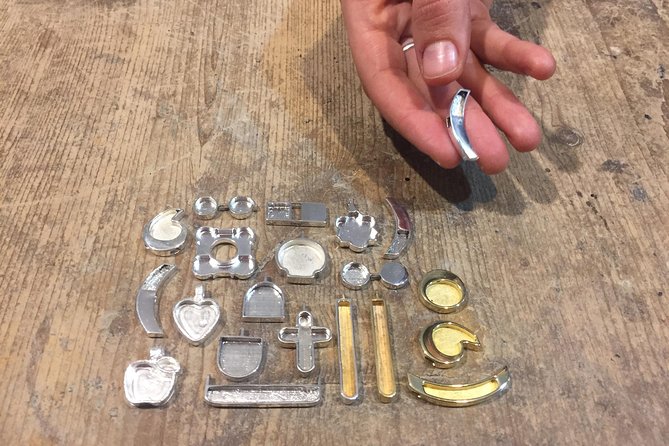
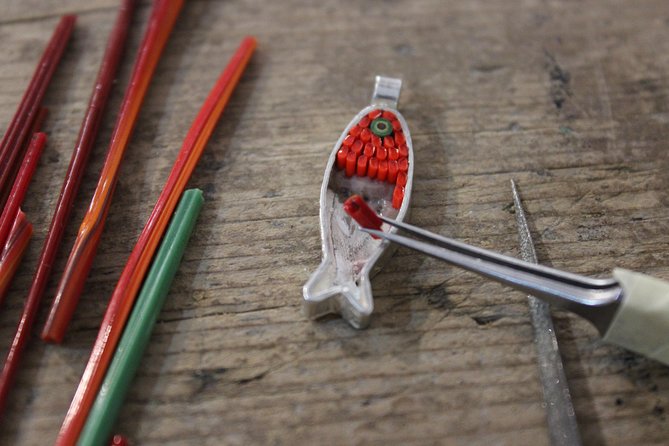
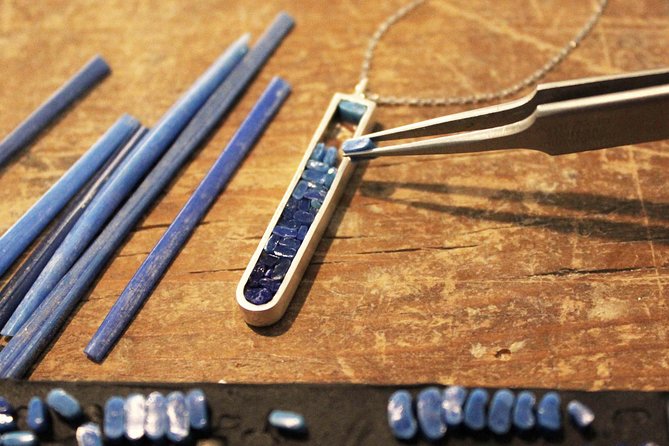
The central task is cutting the micromosaic glass. You use the supplied tools to shape small pieces, then place them into the pendant frame. This is careful work, not a quick glue-and-go project.
Several practical points follow from that. Bring your glasses if you use them. One participant advised bringing your best pair, and that is sound advice. The pieces are small, and good light and close vision will make the process less tiring.
You also need patience. The first attempts can feel awkward, especially when the glass does not break along the line you expect. The tools are meant for fine work, but one participant reported receiving a file that was not as useful as the instructor’s. If a tool is not working, say so right away and ask for another one. The studio has multiple tools and files, according to the provider’s response to that concern.
You should expect the instructors to correct placement and explain how to keep the pieces tight. That help is part of the value of the class. At the same time, you can ask for a smaller or simpler design if your first idea proves too hard. A modest pattern that you complete yourself may be more satisfying than a complex one finished largely by someone else.
Coffee, tea, and a relaxed working pace
The workshop includes bottled water and coffee or tea. The instructors have also offered cappuccinos from a cafe across the walkway, which adds a friendly Roman touch to the morning.
These small comforts matter because the work takes concentration. You are not rushing from one sight to the next. You sit, handle the glass, listen to advice, and gradually fill the frame. Classical music has been part of the studio atmosphere during some classes, adding to the calm, focused feel.
The class length is listed at about two hours and thirty minutes, with some descriptions of the experience putting it closer to three hours. Leave enough room in your day for a slightly flexible finish. It is not the right activity to squeeze between two timed museum entries.
A morning class also works well in a Rome itinerary. Afterward, you can eat in Monti, walk toward the Roman Forum, or continue to another appointment. Just avoid booking something immediately afterward if you want to take your time with the final steps.
Finishing the pendant and packing it home
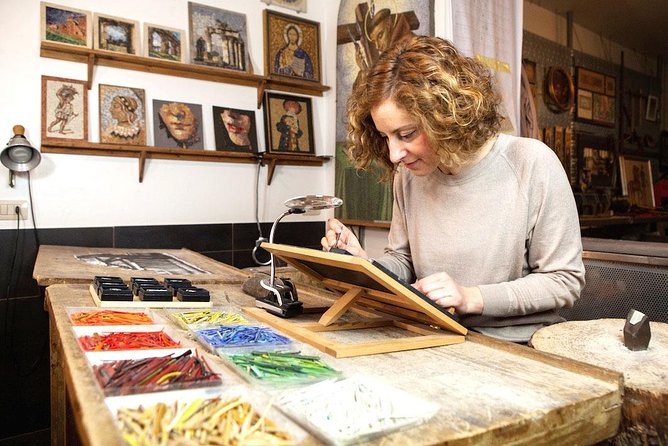
Once the glass pieces are placed and secured, the studio helps complete the jewelry. You leave with your own finished piece on a silver chain, stored in a sturdy jewelry box.
The final pendant is the practical reward. It is small enough to pack easily and useful enough to wear, unlike many decorative souvenirs that sit in a drawer. You can also select the colors for your design, making it more personal than a standard shop purchase.
Do not expect every piece to look like the studio’s polished examples. The artisans have years of practice, while you have a single morning. Your pendant may have small irregularities, and that is normal for a first attempt at a demanding craft.
The instructors do try to make sure the pieces are stable before you leave. This is where their intervention can be helpful, even if you prefer to control the design. Ask them to explain any changes they recommend. You will understand the reason for the adjustment and remain more involved in the final result.
How the $142.97 price holds up
At $142.97 per person, this is not a low-cost souvenir activity. The value depends on what you want from your Rome day.
The fee includes the silver pendant frame, chain, glass, tools, instruction, refreshments, and jewelry box. You are also paying for a small class with a maximum of seven people and access to a family studio connected to Roman mosaic work. If you compare the price with an ordinary jewelry purchase, it may seem high. If you compare it with a private craft lesson and a handmade object, the cost is easier to justify.
I think it suits someone who values process as much as the finished item. You are paying for the story, the instruction, and the chance to make decisions along the way. It is also a good gift experience for a parent and adult child, a couple, or a family with older children.
The price may not work for you if you mainly want a flawless pendant or if you dislike detailed handwork. In that case, buying a finished micromosaic piece may be simpler. The point here is not perfect production. It is learning enough to appreciate why the finished craft costs what it does.
Who will enjoy this class most
The minimum age is 12, and children must be accompanied by an adult. Families have used the class with teenagers, including children around 12 to 14, and older teens and college-age family members can take part together.
Artists, jewelry makers, and crafters will likely get the most from the technical side. You can ask sharper questions, test your own ideas, and better appreciate the difficulty of cutting and fitting the glass.
You do not need an art background. The instructors teach the process step by step and provide help when you struggle. Still, you should enjoy quiet concentration. This is not a loud, fast activity, and it is not a broad tile class where you can work with larger pieces.
The class also suits someone who wants a personal keepsake without spending an entire day in a workshop. If you have already taken a larger tile mosaic class, the micromosaic session makes a natural follow-up because it shows how the same basic idea changes when the materials become tiny.
Service animals are allowed, and the studio is near public transportation. Most people can participate, but the fine work may be tiring if close-up handwork is difficult for you.
Booking advice and the cancellation window
The experience is often booked about 31 days ahead, so I would reserve early if you have fixed dates. The group limit of seven means popular mornings can fill faster than a large walking tour.
Confirmation is provided when you book. The listed start time is 10:00 a.m., and the activity is offered in English.
Free cancellation is available up to 24 hours before the start time for a full refund. Changes or cancellations made inside that 24-hour window are not accepted for a refund, with cut-off times based on Rome’s local time. Keep that in mind if your itinerary includes flights, train connections, or another timed booking.
Should you book the micromosaic workshop?
Book it if you want a Roman souvenir with a story attached, enjoy making things with your hands, and can give two and a half to three hours to slow down. The small group, attentive instruction, family connection, and included silver chain make the price reasonable for the right person.
Go in with realistic expectations. The glass is tiny, the work can be frustrating, and your pendant may not look like a professional studio sample. Bring good glasses, choose a manageable design, speak up if a tool is not working, and ask for help without giving up ownership of the piece.
I would especially recommend it for couples, families with children aged 12 and older, and anyone planning to visit the Vatican or other mosaic-filled churches afterward. Skip it if you want a quick, effortless souvenir. Choose it if you want to understand a demanding Roman craft and leave with something only you could have made.
FAQ
Where does the micromosaic workshop take place?
The workshop takes place at Studio Cassio, Arte del Mosaico, Via Urbana 98, 00184 Rome, in the Monti neighborhood.
What time does the workshop start?
The listed start time is 10:00 a.m.
How long does the workshop last?
The activity lasts about two hours and thirty minutes, though some descriptions place the working time closer to three hours.
How many people can join the class?
The maximum group size is seven participants.
Is the workshop offered in English?
Yes. The experience is offered in English.
What do I take home?
You make a micromosaic jewelry piece and receive a high-quality silver pendant frame with a chain. A sturdy jewelry box is also included for storing it.
What is included in the price?
The price includes the pendant frame and chain, premium glass micromosaic materials, tools, instruction, bottled water, and coffee or tea. Transportation to and from the studio is not included.
Newest reviews from Rome
- ROME:Colosseum & Ancient Rome – private/small group TOUR★ 5.0 · 24 reviews
- Off the Beaten Track in Rome: Rione VI Parione Private Tour★ 5.0 · 24 reviews
- Cinematic Photoshoot in Rome★ 5.0 · 24 reviews
- Rome: Best of Colosseum and Roman Forum Small Group Guided Tour★ 4.5 · 24 reviews
- The Labyrinth of Rome between catacombs and ancient quarries★ 4.5 · 24 reviews
- Vatican and Trionfale Market Tour with Wine and Food Tasting★ 5.0 · 24 reviews
- private tour: Vatican Museums, Sistine Chapel, St. Peter’s Basilica★ 4.5 · 24 reviews
- Colosseum guided tour with Virtual Reality★ 5.0 · 24 reviews
Workshops, compared.
3 in 1 Cooking Class near Navona: Fettuccine, Ravioli & Tiramisu
Read our review →
Pasta & Tiramisu Class with Fine Wine by the Vatican
Read our review →
Pasta Making Class with Wine, Limoncello, and Dessert
Read our review →
3-in-1 Fettuccine, Ravioli, and Tiramisu Cooking Class
Read our review →
Fettuccine Pasta Cooking Class in Rome’s City Center
Read our review →
Traditional Pasta with Cocktails Cooking Class
Read our review →
Become a Masterchef in Rome: Pasta, Ravioli and Tiramisù Class
Read our review →
Fettuccine and Tiramisu Cooking Class with Wine
Read our review →Browse the lists this tour appears in