
Reviewed · GELATO & TIRAMISU CLASSES
Pasta Fettuccine, Ravioli and Tiramisu MasterClass
The best part of this Rome cooking class is that you do not just watch a chef toss pasta in a pan. You work with the dough, shape ravioli, prepare tiramisu, and then sit down to eat what you made. Giuseppe and Danilo are the instructors most often associated with the class, and both bring patience, humor, and clear English instruction.
I like the small maximum of 14 people, which keeps the lesson social without turning it into a crowded kitchen show. I also like the sensible three-course lineup: fettuccine, ravioli, and tiramisu give you several useful skills in one evening, with a glass of prosecco at the start and wine or a soft drink with the meal.
The main thing to know is that the pasta sauce is prepared by the chef, so you are learning the pasta and dessert rather than every part of the meal from scratch. That is a fair trade for a three-hour class, but serious sauce students should adjust their expectations.
In This Review
- Key things to know before booking
- What the three-hour class is really about
- Starting with prosecco and introductions
- Making fettuccine by hand
- Shaping ravioli with butter and sage
- Preparing tiramisu without an oven
- Eating the food you prepared
- The teaching style and group atmosphere
- Is $71.38 a good value?
- Timing, meeting point, and cancellation
- Who should book this Rome cooking class?
- Should you book it?
- FAQ
- Where does the cooking class begin and end?
- How long does the experience last?
- What dishes will I make?
- Is the sauce made during the class?
- Is the class taught in English?
- What drinks are included?
- How many people can join the class?
Key things to know before booking
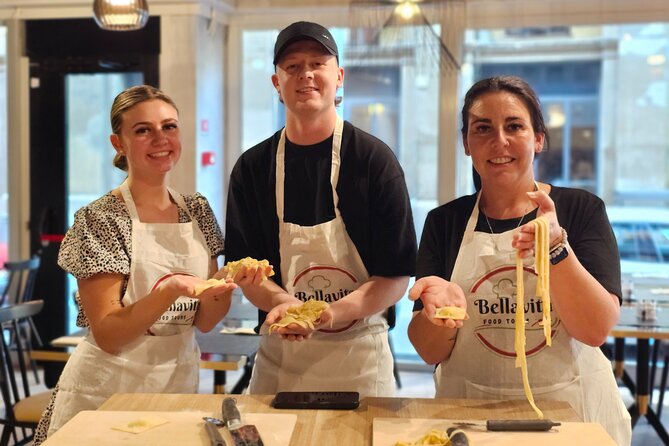
- Three classic dishes in about three hours: Make fettuccine, ravioli, and tiramisu, then eat the finished meal.
- An English-speaking chef leads the work: Giuseppe and Danilo are praised for patience, humor, clear instruction, and practical tips.
- A central Rome meeting point: Begin and end at iQ Hotel Roma, Via Firenze 8, near public transportation.
- A sociable class size: The group is capped at 14 people, with recipes and techniques to use at home.
- A relaxed meal is part of the lesson: Prosecco welcomes you, wine or a soft drink accompanies the food, and coffee or limoncello follows tiramisu.
- Sauce preparation is not included: The chef prepares the sauce in advance, while you focus on pasta shaping, filling, cooking, and dessert.
What the three-hour class is really about
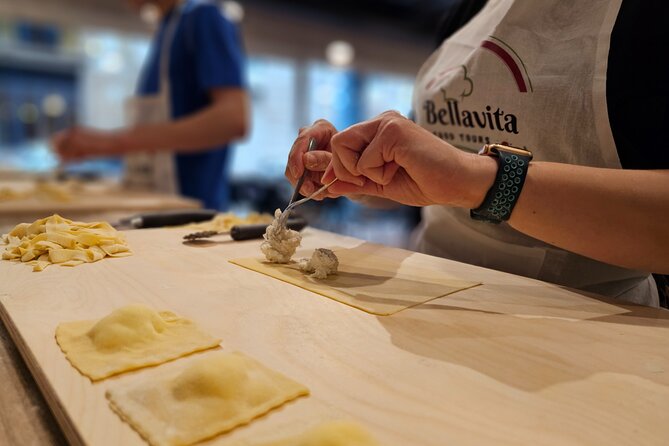
This is a hands-on pasta lesson with a meal attached, not a formal restaurant dinner and not a quick demonstration. You spend the session learning how Italian pasta is made, then taste the results while the chef handles the final cooking and presentation.
The class covers two pasta styles. Fettuccine gives you practice with rolling and cutting long ribbons, while ravioli adds another skill: placing filling, sealing the dough, and shaping individual pieces without trapping too much air. Tiramisu rounds out the lesson with a dessert that does not require an oven.
That mix makes the class useful for different kinds of cooks. If you already make pasta, you may value the chef’s tips and the chance to compare techniques. If you are starting from zero, you get a manageable introduction without having to master an entire Italian menu in one sitting.
The setting is central Rome, at iQ Hotel Roma on Via Firenze. You meet and finish at the same place, which keeps the evening simple. There is no extra transfer to a distant kitchen, and the location is near public transportation, useful if you are fitting the class between sightseeing stops.
Two start times are offered, although the specific times should be checked when you book. That choice matters in Rome, where an afternoon spent at the Colosseum, the Roman Forum, or the Vatican can easily run long. Pick the slot that leaves you enough breathing room, since rushing into a cooking class is a poor way to enjoy it.
More gelato and tiramisu classes:
- 3 in 1 Cooking Class near Navona: Fettuccine, Ravioli & Tiramisu
★ 5.0 · 7,376 reviews - Rome: Pasta & Tiramisu Class with Fine Wine by the Vatican
★ 4.9 · 4,852 reviews - Rome: 3-in-1 Fettuccine, Ravioli, and Tiramisu Cooking Class
★ 4.9 · 2,704 reviews
Starting with prosecco and introductions
The class begins with a welcome glass of prosecco. It is a small touch, but it sets the right mood for a social cooking session, especially if you are joining on your own or with people who have different pasta-making experience.
You can expect an informal group rather than a private lesson by default. With a maximum of 14 people, the class has enough space for conversation and shared work while remaining small enough for the chef to answer questions.
The instructors are a major part of the experience. Giuseppe is repeatedly singled out for being patient, funny, attentive, and generous with practical advice. Danilo is also described as calm and encouraging, including with children. The strongest praise goes not only to their cooking ability but to how they teach.
That distinction matters. A talented chef can make a poor instructor if the pace is too fast or the directions are vague. Here, the useful quality is the ability to explain each step, correct mistakes without fuss, and keep the room relaxed. The class is meant to be fun, but it still teaches proper technique.
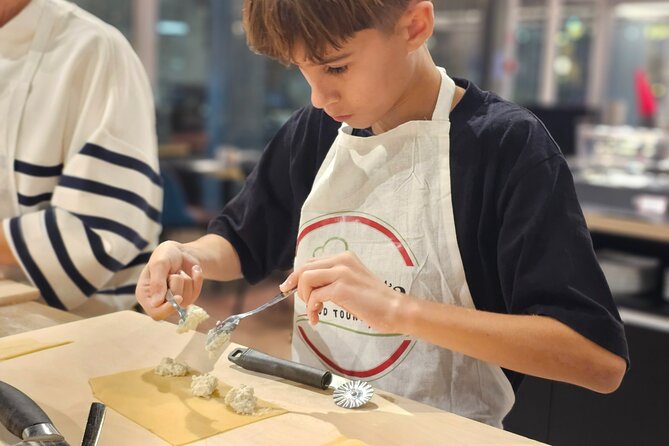
Families should pay attention to this point. The class has worked well for parents and children because the work is hands-on and the chef keeps the tone friendly. Children still need to follow kitchen instructions, of course, but this is more engaging than sitting through a long food demonstration.
Making fettuccine by hand
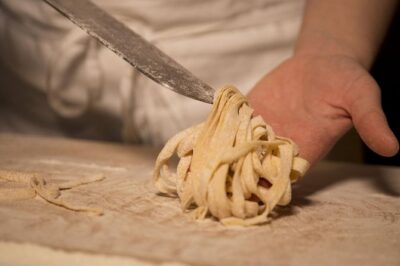
Fettuccine is the first major pasta project. You learn to work the dough, roll it, and cut it into the broad ribbons associated with Roman and central Italian cooking.
The value here is repetition and correction. Written recipes can tell you the amounts, but they cannot easily show you what the dough should feel like or how thin it needs to be. An experienced chef can point out these details as you work, giving you a better chance of recreating the pasta at home.
Your fettuccine comes with a choice of sauce. The available information does not specify every sauce option, so you should ask the chef on the day if your choice matters. The important limitation is that the sauce is prepared in advance. You make the pasta, but you do not make the sauce itself.
That is the clearest compromise in the class. Someone hoping to learn a complete sauce from ingredients to final seasoning will not get that full lesson here. On the other hand, preparing the sauce ahead of time allows the class to concentrate on pasta technique and keeps the meal moving within the three-hour schedule.
The payoff comes when the pasta is cooked and served. Fresh pasta has a different texture from dried supermarket pasta, and making it yourself helps you understand why thickness, shape, and cooking time matter. You are not just collecting a plate of food. You are learning what to watch for the next time you cook.
Shaping ravioli with butter and sage
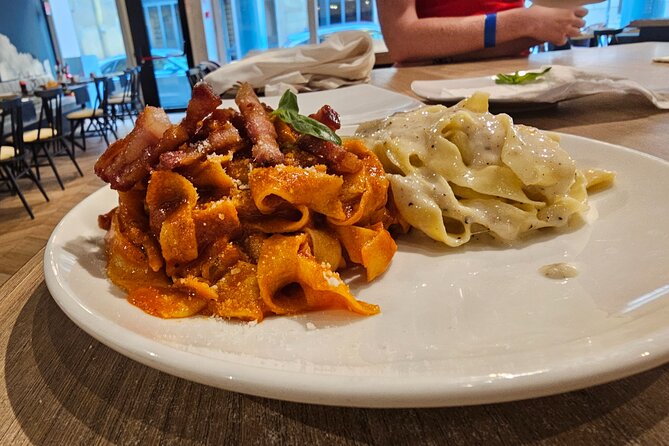
The second pasta dish is ravioli served with butter and sage. Ravioli is a useful follow-up to fettuccine because it asks you to handle the same dough in a more precise way.
You will work with filling and learn how to close the pasta securely. The goal is a neat seal that keeps the filling inside during cooking. This is the kind of task that seems easy when watching a professional and becomes more instructive when your own first pieces are not perfectly uniform.
Do not worry about producing restaurant-perfect shapes. The class is designed around learning, and the chef can show you how to correct common problems. The practical lesson is knowing how much filling to use, where to press, and how to avoid leaving gaps around the edge.
The butter and sage preparation is simple and traditional. Since the sauce work is not part of the hands-on portion, your attention stays on the ravioli itself. That makes this section less useful for someone seeking advanced sauce training, but more manageable for a first cooking class.
One of the pleasures of the class is the shared table afterward. You get to compare the different pasta shapes made by the group, then eat the food together. It is a social finish to work that can otherwise feel solitary.
More Rome tours worth comparing
- Rome: Pasta Making Class with Wine, Limoncello, and Dessert
★ 4.9 · 3,177 reviews - Rome: Fettuccine Pasta Cooking Class in Rome’s City Center
★ 4.8 · 2,414 reviews - Rome: Traditional Pasta with Cocktails Cooking Class
★ 5.0 · 2,374 reviews - Learn to Make Pasta & Tiramisu with Wine and Limoncello Included
★ 5.0 · 2,345 reviews
Preparing tiramisu without an oven
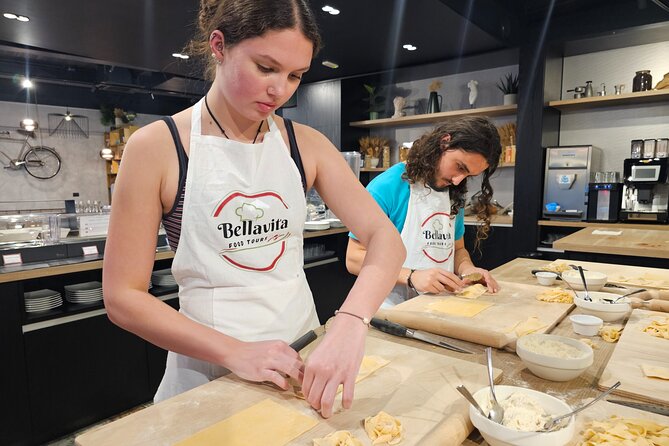
Tiramisu gives the class a change of pace. After handling pasta dough, you prepare a dessert with a different set of techniques and textures.
The dish is made during the class and served at the end of the meal. Because tiramisu does not need baking, it fits neatly into a three-hour format. You learn a recipe that is practical for a home kitchen and easy to repeat for family or friends.
The class includes recipes to take home, according to the information provided. That is one of its strongest long-term benefits. You may forget a small detail from a spoken explanation, but a written recipe gives you a starting point when you try the dishes again.
The dessert also helps make the class feel like a full meal rather than a pasta workshop followed by a separate dinner. You create three courses, then enjoy them in order. Coffee or limoncello follows the tiramisu, providing a distinctly Italian finish.
If you do not drink alcohol, a soft drink and bottled water are available. A glass of wine is also included with the meal. The prosecco, wine, water, and after-dinner drink are part of the stated inclusions, though you should not read this as an open bar.
Eating the food you prepared
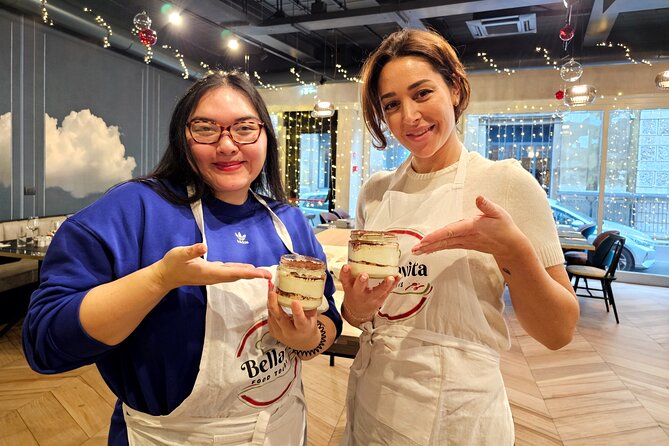
At the end, the chef cooks the pasta and you sit down to eat. This division of work is worth noting. You prepare the dough and ravioli, while the chef manages the final cooking so the dishes arrive properly timed and ready for the table.
That approach has both advantages and limits. It means you can focus on making the food without juggling a crowded cooking station and a finished meal. It also means you may not personally handle every last step, especially the final sauce work.
The menu includes fettuccine with your choice of sauce, ravioli with butter and sage, and tiramisu. Bottled water is included, along with a glass of wine or soft drink. The meal is not a tasting of tiny portions. It is the food produced during the lesson, served so you can enjoy the results of your work.
Many people leave with a better sense of how Italian food is prepared and why fresh pasta takes care. The class is especially satisfying if you like the connection between making and eating. You do not simply receive a plate. You have a hand in creating it.
The teaching style and group atmosphere
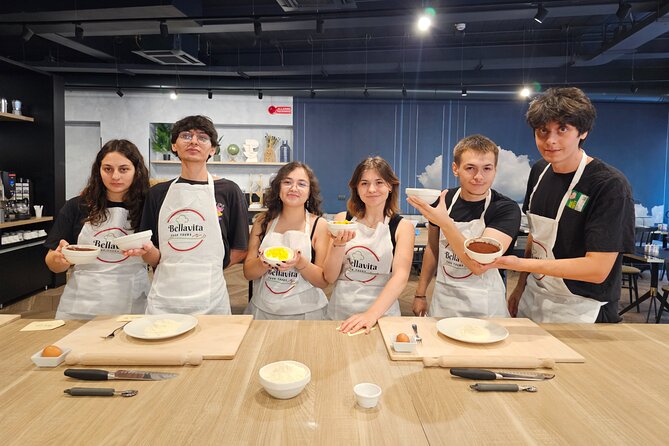
The clearest strength of this experience is the instruction. Giuseppe is described as an excellent teacher who explains steps in detail, answers questions, and shares stories about Italian food. His patience is particularly useful if your pasta looks uneven or your first ravioli need a little help.
Danilo receives similar praise for being nice, patient, and easy to learn from. The names appear in connection with different class dates, so the exact chef depends on the session you book. Either way, you are signing up for an English-speaking chef-led class rather than an unguided kitchen activity.
The mood is social. You may make new friends while working, and the shared meal gives everyone a natural chance to talk. A couple once had a particularly small session and received much more individual attention, but you should not assume every booking will be that intimate. The stated maximum is 14 people.
The clean, comfortable setup and air conditioning are practical advantages, especially during a warm Roman day. These details may sound minor, but three hours in a hot kitchen can change the feel of an activity. A comfortable room lets you concentrate on the food instead of the temperature.
Is $71.38 a good value?
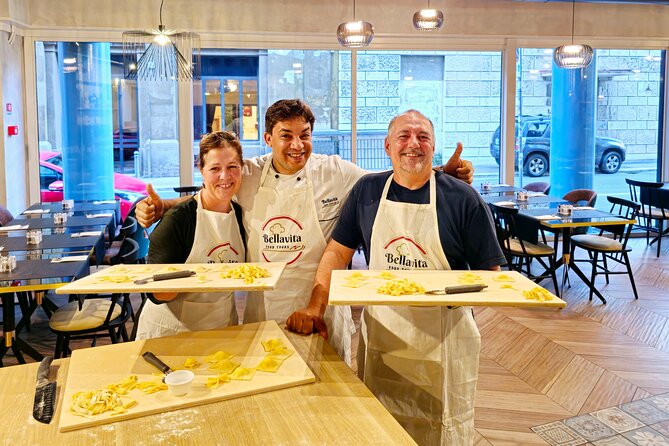
At $71.38 per person, this is not the cheapest meal you can buy in Rome. It can still be good value if you want instruction, entertainment, drinks, and dinner in one package.
You are paying for about three hours of guided activity, ingredients for three dishes, the use of the cooking space, an English-speaking chef, a sit-down meal, bottled water, and drinks. You also leave with recipes and techniques that can be used again. That makes the price easier to justify than a standard restaurant meal, especially for families and couples who want an activity as part of their evening.
The value is weaker if your only goal is to eat excellent pasta. Rome has many restaurants, and a restaurant dinner requires no rolling, shaping, or cleanup from you. Choose this class because you want to take part in the meal, not simply because you expect the lowest-cost way to eat.
The prepared sauce is the one factor to weigh carefully. If you want to learn pasta, ravioli, and tiramisu, the price is reasonable. If you want a complete course in Italian sauces as well, this class may leave a gap.
Timing, meeting point, and cancellation
The class starts and ends at iQ Hotel Roma, Via Firenze 8, 00184 Rome. The central location and nearby public transportation make it practical to reach from other parts of the city, though you should still allow time to find the entrance and arrive ready for the start.
Confirmation is provided at booking, and the activity accepts a mobile ticket. The group can include up to 14 people. Since two start times are offered, check the selected time closely before planning dinner or evening sightseeing afterward.
Free cancellation is available if you cancel at least 24 hours before the local start time. Cancellations or changes made inside that 24-hour window are not accepted for a refund, so do not leave this booking until your schedule is uncertain.
Who should book this Rome cooking class?
I would recommend it to couples looking for a relaxed evening, families wanting an activity that includes dinner, and solo visitors who enjoy meeting people around a shared table. It also suits anyone who wants to return home with a few real Italian recipes rather than just food photographs.
It is a good choice for first-time pasta makers because the chef guides you step by step. Children can enjoy it too, particularly with an instructor such as Danilo or Giuseppe who is comfortable keeping younger participants involved.
Experienced home cooks may still enjoy the class, especially if they want tips on fresh pasta and ravioli shaping. Just remember that the sauces are prepared ahead of time. If sauce-making is your main goal, choose a different class or ask in advance exactly what will be demonstrated.
Should you book it?
Book this class if you want to make your own fettuccine, ravioli, and tiramisu, then eat a complete Italian meal in a central Rome setting. The combination of hands-on work, patient English-speaking chefs, drinks, recipes, and a maximum group of 14 makes it a strong choice for a social evening.
Skip it if you prefer a quiet restaurant dinner or need a lesson covering every component of the meal from scratch. For most people who want food, conversation, and useful kitchen skills in one activity, the $71.38 price is justified. Pick a start time that fits your sightseeing plans, arrive ready to work with your hands, and expect the pasta-making portion to be the heart of the evening.
FAQ
Where does the cooking class begin and end?
The class begins at iQ Hotel Roma, Via Firenze 8, 00184 Rome, Italy. It ends back at the same meeting point.
How long does the experience last?
The cooking class lasts approximately three hours.
What dishes will I make?
You will make fettuccine, ravioli, and tiramisu. The fettuccine comes with your choice of sauce, and the ravioli is served with butter and sage.
Is the sauce made during the class?
No. The sauce is prepared in advance by the chef. The hands-on lesson focuses on making the pasta, shaping the ravioli, and preparing tiramisu.
Is the class taught in English?
Yes. The class is offered in English and is led by an experienced English-speaking chef. Giuseppe and Danilo are among the chefs associated with the experience.
What drinks are included?
The experience includes a welcome glass of prosecco, bottled water, and a glass of wine or soft drink. After tiramisu, you receive limoncello or coffee.
How many people can join the class?
The activity has a maximum of 14 people. Two start times are offered, and confirmation is provided when you book.
Newest reviews from Rome
- Rome: Vatican Museums & Sistine Chapel Skip-the-Line Ticket★ 4.4 · 148 reviews
- Shared Shuttle Transfer from Rome to Civitavecchia Port★ 5.0 · 148 reviews
- Rome: Crypts & Catacombs After Hours Tour with Bone Chapel★ 4.6 · 149 reviews
- Ghosts Legends and Mysteries of Rome Walking Tour★ 5.0 · 149 reviews
- Skip the Line: Vatican and Sistine Chapel with Guided Tour★ 4.0 · 149 reviews
- Tivoli: Villa Gregoriana Entrance Ticket★ 4.7 · 150 reviews
- Pizza and Tiramisu Cooking Class in Rome, Piazza Navona★ 5.0 · 150 reviews
- Rome: Borghese Gallery Skip-the-Line Entry and Guided Tour★ 4.7 · 150 reviews
Gelato & Tiramisu Classes, compared.
3 in 1 Cooking Class near Navona: Fettuccine, Ravioli & Tiramisu
Read our review →
Pasta & Tiramisu Class with Fine Wine by the Vatican
Read our review →
3-in-1 Fettuccine, Ravioli, and Tiramisu Cooking Class
Read our review →
Learn to Make Pasta & Tiramisu with Wine and Limoncello Included
Read our review →
Fettuccine and Tiramisu Cooking Class with Wine
Read our review →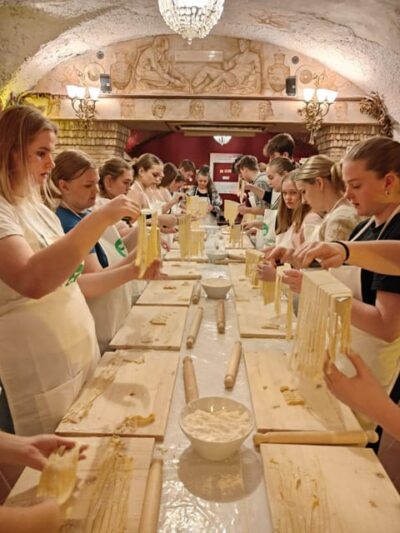
Pasta & Tiramisu Cooking Class near the Spanish Steps
Read our review →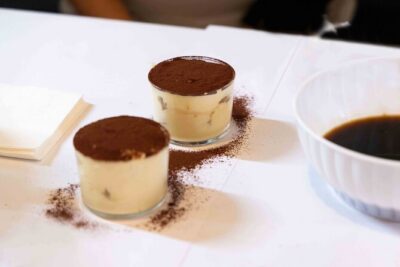
Cooking Class in the Heart of Rome: Pizza and Tiramisu Making
Read our review →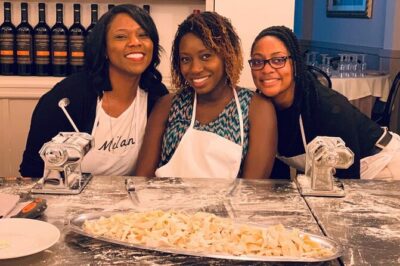
Rome Pasta and Tiramisu Class: Ravioli, Fettuccine & Fine Wine 5*
Read our review →Browse the lists this tour appears in