
Reviewed · COOKING CLASSES
Private Cooking Classes in Rome!
The best part of this Rome cooking class is that you do not simply watch a chef prepare dinner. You make the meal yourself, working at an individual station while Chef Matteo guides you through pasta, sauces, and tiramisu. You finish by eating what you cooked, with wine and espresso included.
I like the one-on-one format and the practical tips, including why you should not add oil to pasta water or brush ravioli with egg wash. I also like that children and non-cooks can take part without being left behind. The main consideration is the price, $170.68 per person, which makes the class a better fit for a special activity than a cheap meal.
In This Review
- Key Points to Know
- What This Roman Cooking Class Is Really Like
- Starting with Prosecco and Homemade Pizza
- Handmade Ravioli from Scratch
- Fresh Tomato Sauce and Roman Simplicity
- Fettuccine Cacio e Pepe
- Traditional Tiramisu to Finish
- Eating What You Cooked
- Chef Matteo’s Teaching Style
- Is $170.68 Per Person Good Value?
- Location, Timing, and Planning Advice
- Who Should Take This Class?
- Should You Book Private Cooking Classes in Rome?
- FAQ
- How long does the cooking class last?
- Where does the experience begin?
- Where does the experience end?
- Is the cooking class private?
- What dishes will I prepare?
- Are drinks and food included?
- Is a vegetarian option available?
- What do I receive after the class?
Key Points to Know
- Private instruction with Chef Matteo: Your booking is for your group, with a maximum of eight people.
- Your own cooking station: Each person works individually with a cooktop and follows the chef step by step.
- A full Roman menu: Make handmade ravioli, fresh tomato sauce, fettuccine cacio e pepe, and traditional tiramisu.
- A sociable welcome: Start with prosecco and snacks, including homemade pizza or focaccia, then enjoy wine with the meal.
- Useful take-home skills: Recipes and video recipes are sent by email so you can repeat the dishes at home.
- Three hours at Viale Carlo Felice: The class begins and ends at the same Rome meeting point.
What This Roman Cooking Class Is Really Like
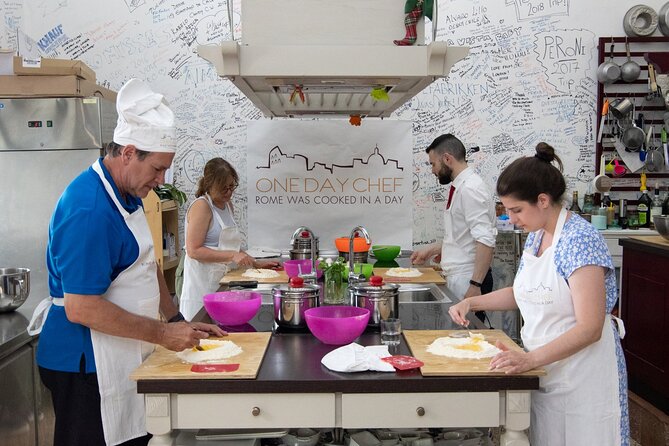
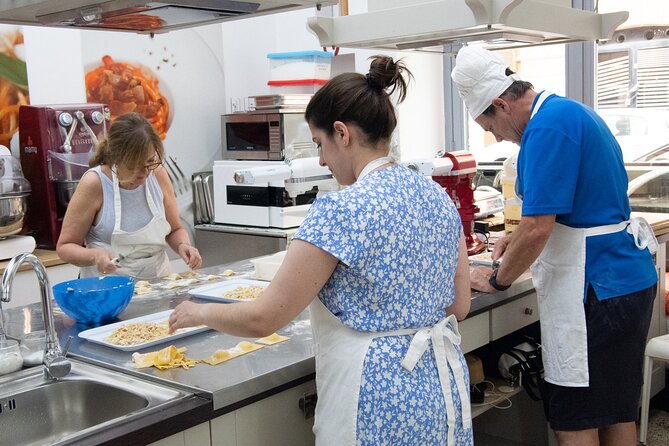
This is a cooking lesson built around participation, not a chef’s demonstration with a few token tasks. You get your own work area and cook your own food. Chef Matteo gives instructions in stages, then lets you knead, shape, stir, season, and assemble.
That setup matters. In a large class, you may spend much of your time watching someone else roll pasta. Here, you are expected to work. If you already cook, you can focus on Roman technique. If you rarely enter the kitchen, you have room to ask basic questions and move at your own pace.
The class is described as private, with only your booking taking part, though bookings can include up to eight people. That makes it useful for couples, families, and small groups of friends. A private format also gives you more freedom to ask about ingredients, cooking habits, and ways to repeat the recipes at home.
The total time is about three hours. That is long enough to make a real meal, but short enough to fit between sightseeing plans. You should still protect the full time rather than trying to squeeze in a major museum visit immediately afterward.
More cooking classes in Rome:
- 3 in 1 Cooking Class near Navona: Fettuccine, Ravioli & Tiramisu
★ 5.0 · 7,376 reviews - Rome: Pasta Making Class with Wine, Limoncello, and Dessert
★ 4.9 · 3,177 reviews - Rome: 3-in-1 Fettuccine, Ravioli, and Tiramisu Cooking Class
★ 4.9 · 2,704 reviews
Starting with Prosecco and Homemade Pizza
The class begins with a welcome glass of prosecco and snacks. Homemade pizza or focaccia is included as part of the opening food, giving you something to taste before the hands-on work starts.
This first stage helps set the tone. You are not rushing straight into a bowl of flour. You have time to meet Chef Matteo, settle in, and get comfortable in the cooking space. Water is included, along with alcoholic drinks and wine tasting.
The opening food is also useful from a practical point of view. It takes the edge off your hunger while you cook. That is important because fresh pasta and tiramisu take time, and the meal comes at the end rather than immediately.
You should tell the provider about dietary needs when you book. A vegetarian option is available, but it must be requested in advance. The supplied information does not list every possible substitution, so specific allergies or restrictions should be explained clearly before the class.
Handmade Ravioli from Scratch
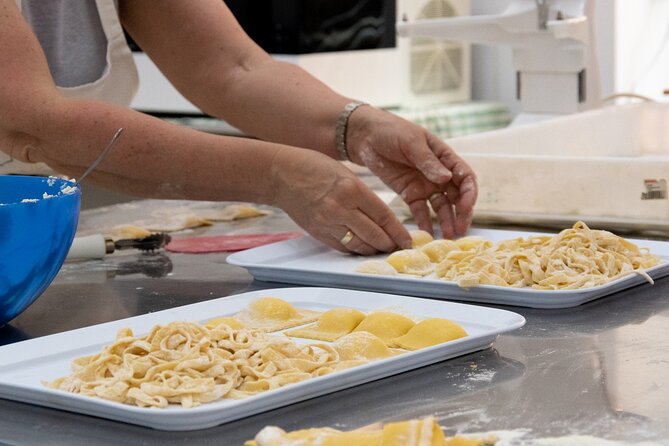
The central skill is fresh pasta. You make ravioli from scratch, learning how to prepare and handle the dough before shaping the filled pasta.
For many people, this will be the most useful part of the lesson. Fresh pasta can look intimidating, but the individual station gives you a chance to repeat each motion yourself. Chef Matteo demonstrates the process and then guides you through it, correcting technique as needed.
One especially useful lesson concerns ravioli preparation. You learn that egg wash is not required to seal the pasta. That kind of detail is more valuable than a long list of ingredients. It corrects a common habit and gives you a cleaner understanding of how the dough works.
The class also covers kneading. You learn how the dough should feel and why simple handling matters. These are skills you can use with other filled pastas later, not just the ravioli made during the class.
There is a minor tradeoff in any hands-on pasta class: your finished pieces may not all look identical. That is part of the point. You are practicing a real kitchen skill, not receiving factory-perfect pasta.
Fresh Tomato Sauce and Roman Simplicity
The ravioli is paired with fresh tomato sauce made from scratch. The sauce gives you a lesson in restraint, too. Roman cooking often depends on a few good ingredients handled with care rather than a long list of extras.
Chef Matteo’s approach includes modern kitchen tools while keeping the recipes traditional. That is useful for a home cook because you learn both the old-school principle and a practical way to manage the work in a modern kitchen.
The sauce also shows how separate parts of a meal come together. You are not only making pasta dough, then waiting for someone else to finish dinner. You prepare the sauce and later eat the complete result.
I would pay attention to seasoning here. Simple sauces leave little room to hide mistakes. The class gives you a chance to see how texture, heat, and balance affect the final dish.
More Rome tours worth comparing
- Rome: Pasta & Tiramisu Class with Fine Wine by the Vatican
★ 4.9 · 4,852 reviews - Rome: Fettuccine Pasta Cooking Class in Rome’s City Center
★ 4.8 · 2,414 reviews - Rome: Traditional Pasta with Cocktails Cooking Class
★ 5.0 · 2,374 reviews - Become a Masterchef in Rome: Pasta, Ravioli and Tiramisù Class
★ 5.0 · 2,156 reviews
Fettuccine Cacio e Pepe
The second pasta dish is fettuccine cacio e pepe, one of Rome’s most famous combinations. Its ingredients are basic, but the technique requires care. Cheese, pepper, and pasta water must come together into a smooth sauce rather than a clumpy one.
A practical rule covered in the class is not to add oil to the pasta water. It is a small point, but it changes how you cook pasta at home. The lesson focuses on why traditional methods work, not just on asking you to copy a rule without understanding it.
This is a good dish for learning the value of simplicity. You are working with a short ingredient list, so the texture of the pasta and the handling of the sauce matter. If you want to understand why Roman food can taste satisfying without heavy sauces, this part of the class makes the point at the stove.
You may also notice that the class moves between different tasks rather than preparing one dish from beginning to end. That is how a real meal comes together. Dough rests while sauce is prepared, and dessert can be assembled while other items are cooking.
Traditional Tiramisu to Finish
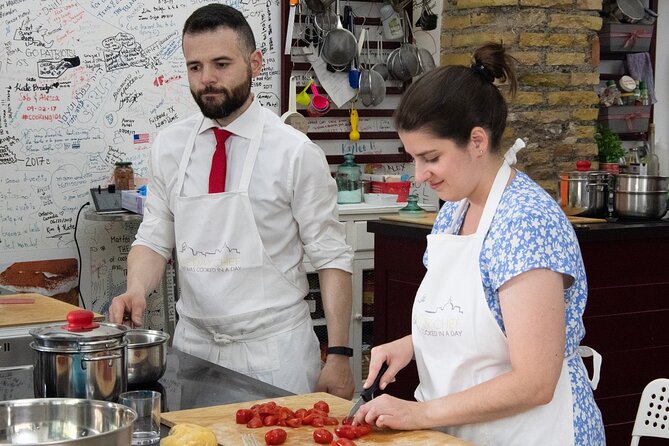
Dessert is traditional tiramisu. It gives the class a sweet finish and adds a different set of skills to the menu.
Tiramisu is also a smart choice for a cooking lesson because it can be prepared as the rest of the meal comes together. You get to see how an Italian menu is planned, rather than treating dessert as an afterthought.
The menu is substantial. You make ravioli, tomato sauce, fettuccine cacio e pepe, and tiramisu, then sit down to eat. Some people may find the amount of food generous, and the portions can leave you with leftovers. Plan accordingly, especially if you have a big dinner reservation later that evening.
Eating What You Cooked
At the end, you eat the meal you prepared. That gives the class a satisfying finish, but it also lets you judge your own work.
There is a difference between eating a plate prepared by a professional and eating pasta you shaped yourself. Your ravioli may vary in size, and your sauce may not look exactly like Matteo’s. Still, the meal becomes more memorable because you understand the work behind it.
Wine is served with the meal, and coffee or tea is included. Espresso provides the classic end to an Italian lunch or dinner. Bottled water is also provided.
The food is the reward, but the real value is the repetition you can do later. Recipes are emailed to you, and video recipes are included. That helps turn the class into something more than a three-hour holiday activity. You can try the dishes again at home while the steps are still familiar.
Chef Matteo’s Teaching Style
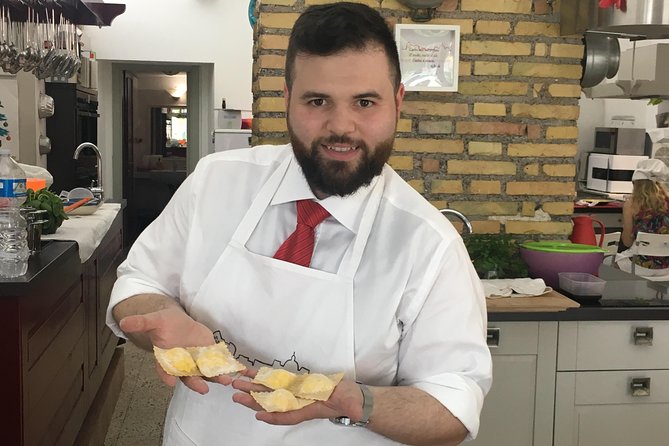
Chef Matteo’s strongest quality is patience. He works with experienced home cooks, complete beginners, and children. That range matters because a cooking group rarely has one shared skill level.
If you are the person in your group who never cooks, you should not assume you will simply watch from the side. The class is designed for each person to take part. One non-cook expected to go through the motions but ended up preparing and eating a meal independently.
Families also get a lot from the format. Children as young as 11 have enjoyed making pasta and tiramisu, while older children have been able to take on more tasks. You should still consider your child’s interest in cooking and ability to follow kitchen instructions, since this is a real hands-on lesson rather than a short entertainment show.
Matteo is also described as funny and easy to talk with without overwhelming the room. His English is reported as excellent, which helps if you want explanations rather than silent demonstrations. He answers questions and shares small kitchen rules that can change how you cook at home.
Is $170.68 Per Person Good Value?
At $170.68 per person, this is not the budget way to eat pasta in Rome. You can find a less expensive meal in the city. The price needs to be judged against the private instruction, food, drinks, cooking equipment, and materials included.
You receive about three hours with a professional Roman chef. You also receive prosecco, snacks, wine, water, coffee or tea, and a three-course meal. Each person has a separate cooking station, and recipes and video recipes are sent afterward.
For a couple or a small family, the price can make sense if you value personal instruction and a memorable activity. You are paying for time, participation, and skills, not only for the finished plate.
The value is weaker if you mainly want a quick dinner or if you dislike structured activities. It is also less appealing for someone who already takes frequent pasta classes and wants something more advanced. The class is welcoming to beginners, so experienced cooks may find the material familiar, though the Roman technique tips can still be useful.
Group discounts are available, which may improve the cost for a larger private booking. Since the maximum is eight people, ask about the current group rate when arranging the experience.
Location, Timing, and Planning Advice
The meeting point is Viale Carlo Felice, 25, 00185 Rome. The activity returns to the same meeting point at the end, so you do not need to arrange separate transport from a different neighborhood.
The location is in Rome, but the supplied details do not specify a hotel pickup service or transportation. You should plan to reach Viale Carlo Felice on your own and allow extra time to find the exact entrance.
The class is often reserved about three weeks ahead, with an average booking lead time of 21 days. That is a useful sign for planning. If you want a particular date during a busy Rome visit, book before arriving rather than waiting until the last minute.
Confirmation is provided when you book. Cancellation is free if you cancel at least 24 hours before the local start time. Inside that 24-hour window, you do not receive a refund, and changes are not accepted.
Wear something comfortable for standing and kitchen work, though no special clothing requirement is listed. Tell the provider about dietary requirements when booking. Vegetarian cooking is available if requested ahead of time.
Who Should Take This Class?
I would recommend it most strongly to:
- Couples who want a shared Rome memory beyond restaurant meals.
- Families with children who enjoy cooking and can follow instructions.
- Beginners who want patient guidance without embarrassment.
- Small groups seeking a private activity with food and drinks included.
- Home cooks interested in fresh pasta and Roman technique.
- Visitors who want recipes they can use after returning home.
I would think twice if you have a very tight schedule, do not want a full meal, or prefer a purely sightseeing-focused day. The three hours are active and food-centered. You should come ready to participate, not simply observe.
It is also worth noting that the class centers on a set Roman menu. If you want to learn a wide range of regional Italian dishes, this experience may feel narrow. Its strength is learning a few classic preparations well enough to repeat them.
Should You Book Private Cooking Classes in Rome?
Yes, if you want to work with the food rather than only eat it. Chef Matteo’s patient instruction, individual stations, Roman recipes, and take-home video recipes give the class lasting value.
I especially like the practical corrections: no oil in the pasta water, no egg wash needed for ravioli, and a focus on simple cooking. Those details can improve your results long after the trip.
The price is the main hurdle, and the class is not the right choice for a rushed schedule or a low-cost meal. But for a couple, family, or small group willing to spend three hours cooking and eating together, this is a well-rounded Rome experience with real skills to take home.
FAQ
How long does the cooking class last?
The class lasts approximately three hours.
Where does the experience begin?
It begins at Viale Carlo Felice, 25, 00185 Rome, Italy.
Where does the experience end?
The activity ends back at the same meeting point.
Is the cooking class private?
Yes. Only your group participates. A maximum of eight people is allowed per booking.
What dishes will I prepare?
You will make handmade ravioli from scratch, fresh tomato sauce, fettuccine cacio e pepe, and traditional tiramisu.
Are drinks and food included?
Yes. Prosecco, snacks, homemade pizza or focaccia, wine, bottled water, coffee or tea, and the meal are included.
Is a vegetarian option available?
Yes. A vegetarian option is available, but you must request it when booking.
What do I receive after the class?
Recipes and video recipes are sent to you by email. A certificate and free Wi-Fi are also included.
Newest reviews from Rome
- ROME:Colosseum & Ancient Rome – private/small group TOUR★ 5.0 · 24 reviews
- Off the Beaten Track in Rome: Rione VI Parione Private Tour★ 5.0 · 24 reviews
- Cinematic Photoshoot in Rome★ 5.0 · 24 reviews
- Rome: Best of Colosseum and Roman Forum Small Group Guided Tour★ 4.5 · 24 reviews
- The Labyrinth of Rome between catacombs and ancient quarries★ 4.5 · 24 reviews
- Vatican and Trionfale Market Tour with Wine and Food Tasting★ 5.0 · 24 reviews
- private tour: Vatican Museums, Sistine Chapel, St. Peter’s Basilica★ 4.5 · 24 reviews
- Colosseum guided tour with Virtual Reality★ 5.0 · 24 reviews
Cooking Classes, compared.
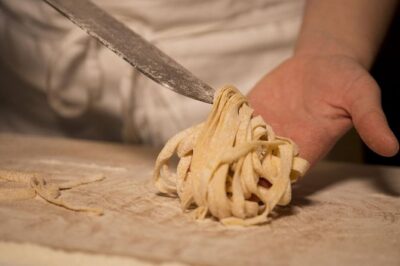
3 in 1 Cooking Class near Navona: Fettuccine, Ravioli & Tiramisu
Read our review →
Pasta Making Class with Wine, Limoncello, and Dessert
Read our review →
3-in-1 Fettuccine, Ravioli, and Tiramisu Cooking Class
Read our review →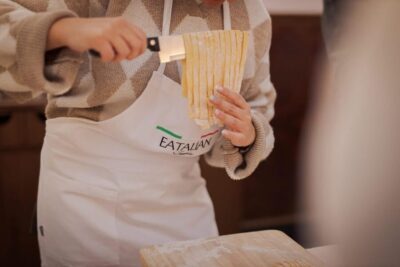
Fettuccine Pasta Cooking Class in Rome’s City Center
Read our review →
Traditional Pasta with Cocktails Cooking Class
Read our review →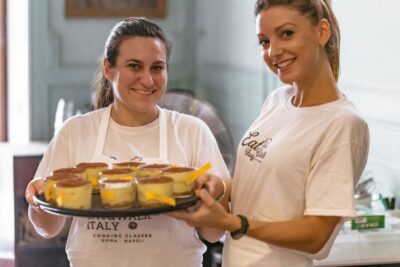
Fettuccine and Tiramisu Cooking Class with Wine
Read our review →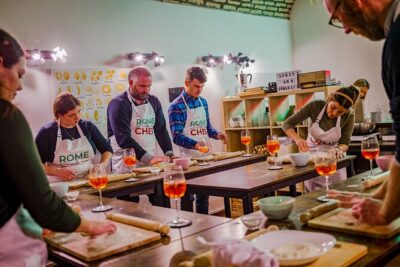
Pasta Cooking Class Near the Colosseum with 3 Spritz Cocktails
Read our review →
Enjoy Spritz and Pasta Making in Piazza Navona
Read our review →Browse the lists this tour appears in