
Reviewed · TOURS
Renaissance Scarlet Ladies Tour: Caravaggio’s and Borgia’s Women
Rome’s Renaissance story changes when you stop looking only at popes, painters, and emperors. This three-hour walk follows women such as Lady Lucrezia, Anna Bianchini, Vannozza Cattanei, and Giulia Farnese, showing how courtesans, models, and powerful companions shaped the city’s art and politics.
I like the way Massimo uses humor and clear dates to make complicated stories stick. I also like the route itself: churches and palace courtyards give you real places to connect with the people you’re hearing about, including Caravaggio’s Virgin Mary and the Pilgrims. The main drawback is that this is a walking tour with several stops, and some stories deal frankly with sex, status, and hard choices.
In This Review
- Key things to know
- Rome’s women take the lead
- Beginning beside Lady Lucrezia at San Marco
- Anna Bianchini and Caravaggio at Villa Doria Pamphilj
- Santa Maria sopra Minerva and Europe’s leading courtesan
- Caravaggio’s Mary at Sant’Agostino
- Via dei Coronari turns streets into evidence
- Vannozza Cattanei and the Borgia family at Campo de’ Fiori
- Giulia Farnese brings the walk to Piazza Farnese
- Why the small group matters
- What $47.07 buys you
- Who should book this Rome walking tour
- Should you book the Scarlet Ladies Tour?
- FAQ
- How long is the Renaissance Scarlet Ladies Tour?
- What time does the tour begin?
- Where does the tour start?
- Where does the tour end?
- Is the tour offered in English?
- How large is the tour group?
- What is the cancellation policy?
Key things to know
- Lady Lucrezia starts the story beside a huge statue at Basilica San Marco Evangelista.
- Caravaggio’s models take center stage at Villa Doria Pamphilj and Sant’Agostino.
- The route uses overlooked churches and old streets, not only Rome’s famous monuments.
- Vannozza Cattanei’s Borgia connection gives the Campo de’ Fiori stop extra drama.
- The group is limited to 18 people, making it easier to ask Massimo questions.
- The tour costs $47.07 and lasts about three hours, with a 2:30 pm start and free cancellation up to 24 hours ahead.
Rome’s women take the lead
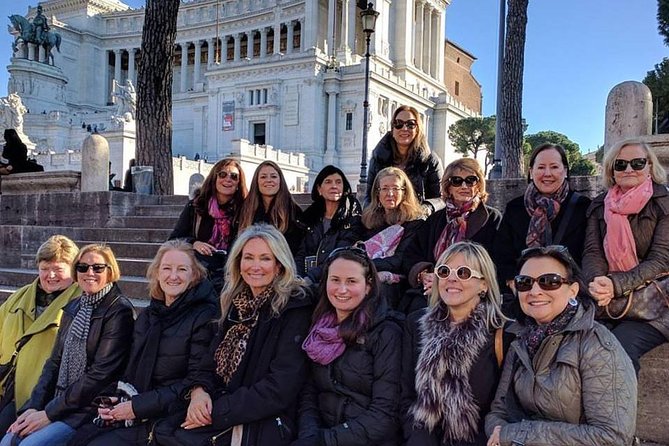
This is not a standard Rome walk with a few women added as an afterthought. The women are the main subject, and the city’s buildings become the setting for their lives.
You move through central Rome while hearing about courtesans, artists’ models, and women tied to the Borgia and Farnese families. Some were famous in their own time. Others were recorded mainly because a male artist, ruler, or church official crossed paths with them. The tour works best when it shows how much of Rome’s public story depended on women whose names were later pushed aside.
I especially like this approach for anyone who already knows the usual Rome route. You are not spending the afternoon at the Colosseum, Trevi Fountain, or Vatican Museums. Instead, you enter churches and courtyards that can be easy to pass without understanding why they matter.
Massimo is the guide named for this experience, and his role is central. The strongest praise focuses on his humor, timing, clear explanation of dates, and gift for turning research into a story you can follow. That matters here because the material includes several women with similar connections to artists, cardinals, and powerful families.
More Bernini and Caravaggio art walks:
- Rome Art Walking Tour Who Killed Caravaggio
★ 5.0 · 61 reviews - Caravaggio Art Walking Tour of Rome with Pantheon Visit
★ 4.5 · 35 reviews - Rome’s Baroque Art Walking Tour: Who Killed Caravaggio?
★ 5.0 · 27 reviews
Beginning beside Lady Lucrezia at San Marco
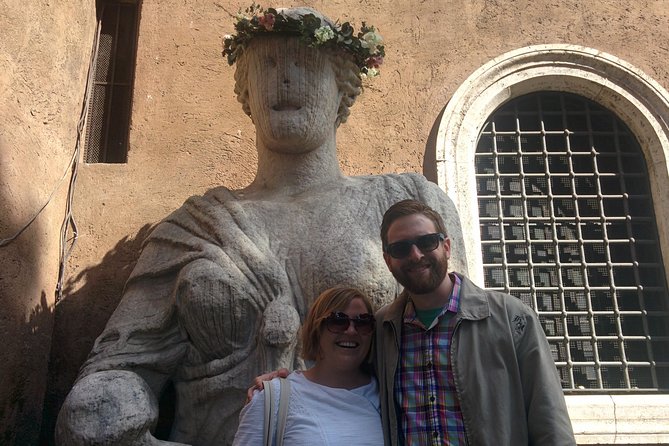
The walk starts at Basilica San Marco Evangelista, at Piazza di San Marco 48, near Palazzo Venezia. The first subject is introduced through a massive statue known today as Lady Lucrezia.
The statue was given its famous name in 1477 and provides an immediate sense of the tour’s method. Rather than beginning with a long lecture, Massimo uses one object and one location to open the life of a woman who lived in a world of reputation, money, influence, and public attention.
This first stop lasts about 20 minutes and has no separate admission charge. It is a useful opening because it places a woman in the physical heart of Rome, not in a museum case or footnote. You begin by asking who gets remembered, who gets mocked, and who gets turned into a symbol.
The exact character of Lady Lucrezia’s story is part of the tour’s appeal. You should expect adult subject matter and a candid look at the social position of courtesans. This is not a family-style history lesson designed to smooth away the uncomfortable parts.
Anna Bianchini and Caravaggio at Villa Doria Pamphilj
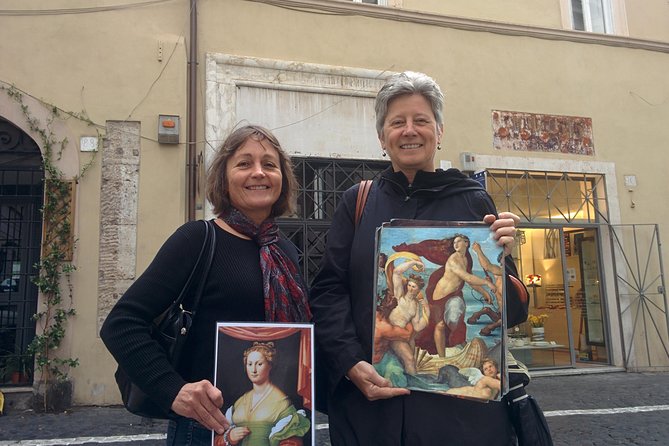
The next stop is the courtyard of Villa Doria Pamphilj, where the focus shifts to Anna Bianchini. She was Caravaggio’s first model and modeled for him more often than any other woman discussed on the tour.
The courtyard gives Massimo a place to connect a real person with a painter whose work is usually taught through technique and drama. You hear about Anna as a person, not simply as an anonymous face in a painting. That change in focus helps explain the economic and social realities behind Renaissance and early Baroque art.
This stop takes about 20 minutes. Admission is included because there is no separate ticket listed for the stop, though the tour fee covers the guided walk rather than a special museum entry.
I like this section for art lovers who have seen Caravaggio’s work but have not considered the lives of the people who posed for him. The discussion also helps you read familiar paintings with more care. A model was not just a visual tool. She had a job, a reputation, and a place in Rome’s difficult social order.
Santa Maria sopra Minerva and Europe’s leading courtesan
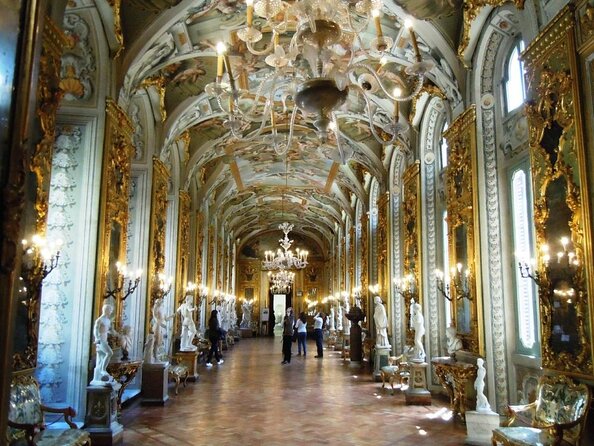
At Chiesa di Santa Maria sopra Minerva, the tour enters one of Rome’s most important churches. You spend about 25 minutes here hearing the story of the woman described as the most successful courtesan in Europe in the early sixteenth century.
The church is filled with important art, so this is one place where the surroundings can compete with the story. That is not entirely a problem. The setting helps you see how women connected to wealth and influence moved through the same religious and political world as cardinals, artists, and noble families.
This stop shows that a courtesan’s position could involve far more than private relationships. Education, conversation, patronage, social access, and financial independence could all matter. The tour does not treat the subject as gossip alone. It places her success within the systems that governed status in Renaissance Rome.
Give yourself a moment to look around the church, but keep your attention on the guide. The value here lies in the link between the art, the building, and the woman’s unusual position.
A completely different way to spend the day in Rome:
- Vatican: Museums & Sistine Chapel Entrance Ticket
★ 4.5 · 144,003 reviews - Vatican Museums & Sistine Chapel Tour with Optional Basilica
★ 4.3 · 67,413 reviews - Vatican Museums, Sistine Chapel & St Peter’s Basilica Guided Tour
★ 4.5 · 39,149 reviews - Rome: Colosseum, Palatine Hill and Roman Forum Guided Tour
★ 4.8 · 32,814 reviews
Caravaggio’s Mary at Sant’Agostino
Basilica Sant’Agostino adds another church and another Caravaggio connection. The building has many stories tied to women, but the main artistic highlight is the original Virgin Mary and the Pilgrims canvas.
This is a valuable stop for anyone who wants to understand why Caravaggio’s work caused such strong reactions. The painting’s ordinary human presence feels different when you hear about the people and social world that shaped the artist’s choices.
The visit lasts about 20 minutes. There is no separate admission charge listed, and the church gives the walk a quiet change of pace after the earlier discussion of courtesans and social power.
I would not book this tour solely as a substitute for a full Caravaggio art tour. The focus remains on the women and their stories, with paintings serving as evidence and context. Still, if you already admire Caravaggio, this stop can add a useful human angle to a familiar work.
Via dei Coronari turns streets into evidence
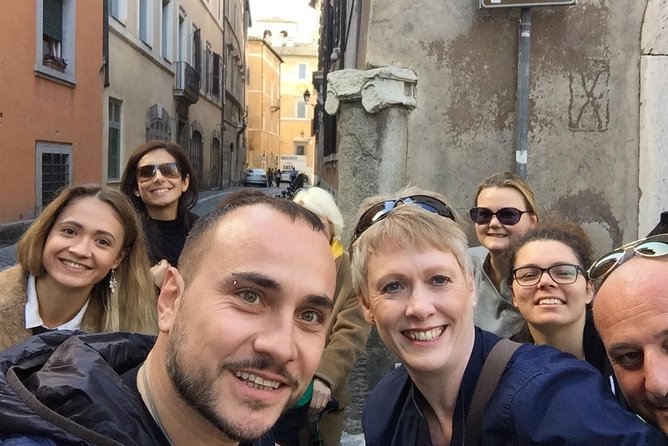
At Via dei Coronari, the tour leaves the churches and walks among fifteenth and sixteenth-century buildings once owned by courtesans. The stop is brief, about 10 minutes, but it may be one of the most effective parts of the route.
Here you are not only listening to a story. You are looking at the type of street where these women lived and worked. Buildings, doorways, and the close urban setting help make daily life more concrete than a timeline ever could.
The tour’s value comes from this connection between place and biography. A courtesan is no longer an abstract historical figure. You can picture her moving through the same narrow streets, dealing with clients, landlords, servants, rivals, and the pressures of public reputation.
Because the stop is short, it will not provide a full architectural tour of Via dei Coronari. Think of it as a visual bridge between the stories. It puts the people you have heard about into a real neighborhood before the final political and family dramas.
Vannozza Cattanei and the Borgia family at Campo de’ Fiori
Campo de’ Fiori brings the Borgia family into the foreground through Vannozza Cattanei, the mother of Cesare and Lucrezia Borgia. This is one of the tour’s most dramatic stories, and the location gives it a broad public setting.
Vannozza is more than a supporting character in the familiar Borgia tale. Her connection to Cesare and Lucrezia opens a discussion about motherhood, family power, reputation, and the limited choices available to women close to political authority.
The stop lasts around 20 minutes. Campo de’ Fiori is also a practical point in the walk because it is a lively central square and close to the finish at Piazza Farnese. If you want a snack, the tour may pause at a snack bar halfway through the walk, but the cost is not included.
You should plan to buy food only if you want it. The experience is priced as a guided tour, not as a food walk, and the snack stop is an optional convenience rather than part of the admission.
Giulia Farnese brings the walk to Piazza Farnese
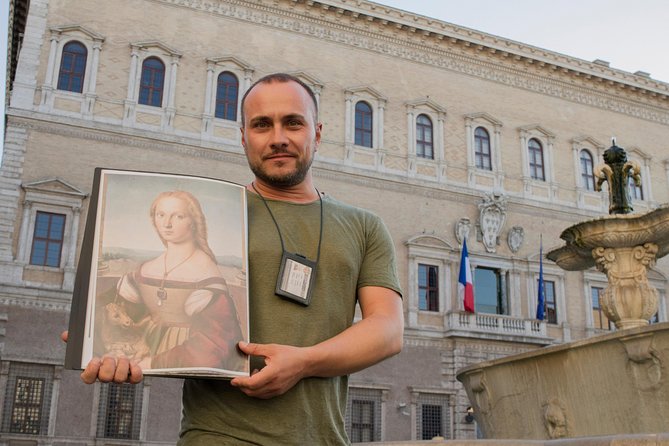
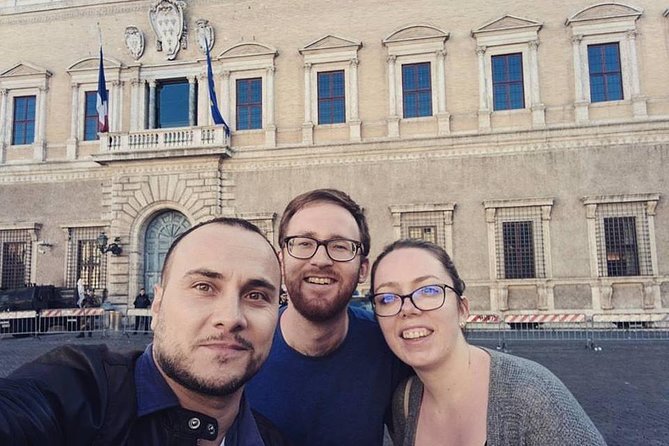
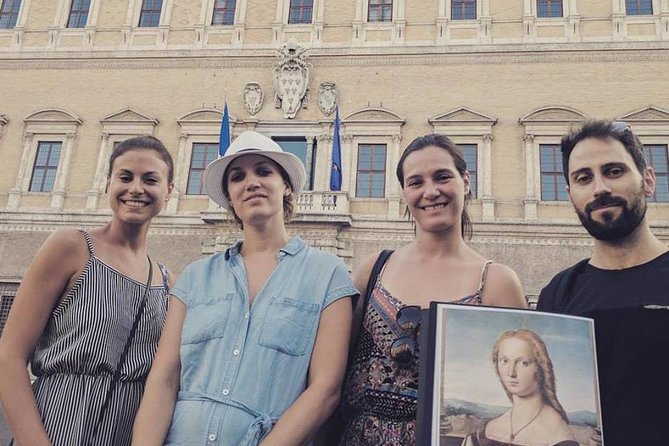
The tour ends in Piazza Farnese, beside Palazzo Farnese, the grand building designed by Michelangelo that now houses the French Embassy. The final story concerns Giulia Farnese and is described as a sad and moving ending.
This is a smart place to finish. The square gives the story a strong sense of power and display, while the nearby streets keep you close to the ordinary city where much of the earlier action took place.
The final stop lasts about 20 minutes. You finish in a central area beside Campo de’ Fiori and fairly close to Piazza Navona. A taxi stand and several bus stops are nearby, so you can continue sightseeing or head back to your hotel without much trouble.
I like tours that end somewhere useful rather than in an isolated meeting point. Piazza Farnese works well for an evening meal, more walking, or a short route toward other central sights. The emotional tone may be heavier than the opening, so do not expect a light, comic finish.
Why the small group matters
The maximum group size is 18 people. That is not a private tour, but it is small enough to make questions practical and keep the guide’s voice within reach.
This matters more than usual because the tour depends on storytelling. If you cannot hear the dates, names, and relationships, the experience becomes confusing quickly. A smaller group also gives you a better chance to ask about a painting, a building, or a particular woman’s role.
The walk lasts about three hours, with seven stops. The listed times add up to about two hours and 15 minutes, leaving the rest for walking between locations and possible time at a snack bar. You should wear comfortable shoes and expect a steady afternoon on foot, though the distance is described as manageable rather than excessive.
Start time is 2:30 pm. That timing leaves the morning free for another major sight, but remember that Rome’s churches can have changing access conditions. The tour information confirms the church visits, so you should still arrive on time and follow Massimo’s instructions at each site.
What $47.07 buys you
At $47.07 per person, this tour is priced above a casual free walk but below many private Rome experiences. The real value is the subject and the guide rather than tickets, since the listed stops have no separate admission charges.
I think the price is fair if you want a focused story instead of a broad introduction to Rome. You are paying for about three hours of research, route planning, and explanation that connects women, paintings, churches, and streets into one subject.
It is less compelling if your main goal is to enter major paid monuments or see a long list of famous sights. This is a specialist walk. Its success depends on your interest in social history, art, women’s lives, and the less polished side of Renaissance Rome.
The tour is offered in English, uses a mobile ticket, and confirmation arrives at booking. Free cancellation is available up to 24 hours before the start time. If the minimum number of people is not reached and the experience is canceled, you are offered another date or experience, or a full refund.
Who should book this Rome walking tour
I would recommend it to you if you have already seen Rome’s standard sights and want a different lens. It also suits solo visitors and couples who enjoy stories with social detail, as well as art lovers who want more context around Caravaggio.
The tour can work for people who know little about the Borgia family or Renaissance Rome. Massimo’s clear use of dates helps keep the story in order, and the route gives you visual reminders as the afternoon progresses.
It may not suit you if you dislike walking, adult themes, or stories that question the usual heroic version of art and politics. It is also not the best choice if you want a quiet church tour with long time for private viewing. The guide’s storytelling is the point, so you will spend most of the stops listening.
Should you book the Scarlet Ladies Tour?
Book it if you want Rome to feel more human and less like a list of monuments. The strongest reasons are Massimo’s lively presentation, the focus on women often left out of standard tours, and the chance to see where these stories unfolded.
The route is compact, the group is limited to 18, and the finish at Piazza Farnese makes the afternoon easy to extend. At $47.07, it offers good value for a specialized three-hour walk, especially if Caravaggio, the Borgias, and Renaissance social life interest you.
Skip it if your priority is major monument entry or a general overview of ancient Rome. But if you want overlooked churches, old courtesan houses, difficult choices, and art explained through the lives behind it, this is a strong pick.
FAQ
How long is the Renaissance Scarlet Ladies Tour?
The tour lasts approximately three hours.
What time does the tour begin?
The tour starts at 2:30 pm.
Where does the tour start?
It begins at Basilica of St Mark Evangelist at Campidoglio, Palazzo Venezia, Piazza di San Marco 48 in Rome.
Where does the tour end?
The walk ends at Piazza Farnese 44, near Campo de’ Fiori and close to Piazza Navona.
Is the tour offered in English?
Yes. The experience is offered in English.
How large is the tour group?
The maximum group size is 18 people.
What is the cancellation policy?
You can cancel up to 24 hours before the start time for a full refund. Changes or cancellations made less than 24 hours before the start time are not accepted for a refund.
Newest reviews from Rome
- Rome: Vatican Museums & Sistine Chapel Skip-the-Line Ticket★ 4.4 · 148 reviews
- Shared Shuttle Transfer from Rome to Civitavecchia Port★ 5.0 · 148 reviews
- Rome: Crypts & Catacombs After Hours Tour with Bone Chapel★ 4.6 · 149 reviews
- Ghosts Legends and Mysteries of Rome Walking Tour★ 5.0 · 149 reviews
- Skip the Line: Vatican and Sistine Chapel with Guided Tour★ 4.0 · 149 reviews
- Tivoli: Villa Gregoriana Entrance Ticket★ 4.7 · 150 reviews
- Pizza and Tiramisu Cooking Class in Rome, Piazza Navona★ 5.0 · 150 reviews
- Rome: Borghese Gallery Skip-the-Line Entry and Guided Tour★ 4.7 · 150 reviews
Tours, compared.
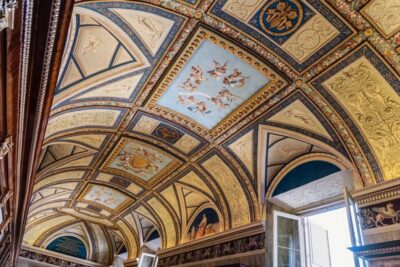
Vatican Museums & Sistine Chapel Tour with Optional Basilica
Read our review →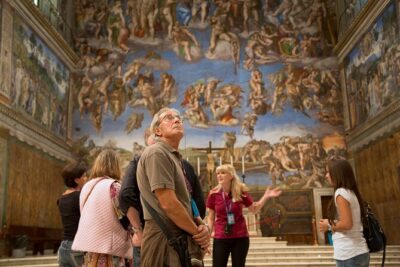
Vatican Museums, Sistine Chapel & St Peter’s Basilica Guided Tour
Read our review →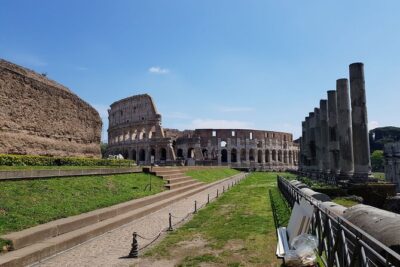
Colosseum, Palatine Hill and Roman Forum Guided Tour
Read our review →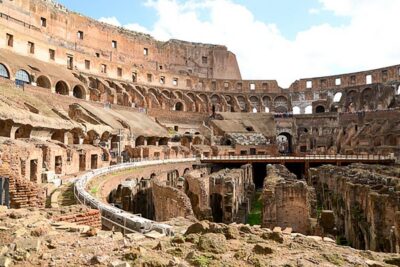
Guided Tour of Colosseum, Roman Forum & Palatine Hill
Read our review →
Colosseum, Roman Forum and Palatine Hill Guided Tour
Read our review →
Vatican Museums, Sistine Chapel & Basilica Tour
Read our review →
Colosseum, Forum & Palatine Hill Tour & Optional Arena
Read our review →