
Reviewed · TREVI FOUNTAIN & PANTHEON WALKS
Caravaggio Art Walking Tour of Rome with Pantheon Visit
Caravaggio’s Rome comes alive inside working churches, not behind museum glass. This three-hour walk takes you from Piazza del Popolo through Campo Marzio to the Pantheon, pairing his paintings with stories of crime, faith, artists, and the city streets that shaped his work.
I like the small-group format, capped at 15 people, and the way the tour links Caravaggio with Raphael and Rome’s religious architecture. I also like the included aperitivo, which turns the final discussion into a relaxed taste of Roman life.
The main drawback is the amount of walking, with much of it outdoors. A second consideration is that church access and weather can affect the experience, so comfortable shoes and a little flexibility help.
In This Review
- Key points to know before booking
- Why Caravaggio works best as a walking tour
- Santa Maria del Popolo: two powerful openings
- Campo Marzio and Via Ripetta: Caravaggio’s rougher Rome
- Santa Maria della Pace and Raphael’s graceful contrast
- Sant’Agostino and San Luigi dei Francesi
- The Pantheon: a strong final stop
- The aperitivo makes the afternoon feel complete
- Walking distance, timing, and group size
- What the price includes, and where it earns its keep
- Who should book this Caravaggio walk?
- Should you book it?
- FAQ
- How long does the Caravaggio Art Walking Tour last?
- What time does the tour start?
- Where does the tour begin?
- Where does the tour end?
- Which Caravaggio paintings are included?
- Is the Pantheon entry included?
- Is food or drink included?
- What is the maximum group size?
Key points to know before booking
- Caravaggio’s major Roman paintings: See the Crucifixion of Saint Peter, Conversion on the Way to Damascus, Madonna del Loreto, and the Saint Matthew paintings at San Luigi dei Francesi.
- A tour built around real settings: The art remains in the churches for which it was commissioned, giving you a better sense of scale, purpose, and placement.
- Raphael adds another layer: Santa Maria del Popolo, Santa Maria della Pace, and the Pantheon connect Caravaggio’s work with the Renaissance artist who came before him.
- A late-afternoon schedule: The 4 p.m. start leads naturally into an aperitivo and an evening in central Rome.
- A small group with headsets: The maximum is 15 people, and headsets help you follow the guide in busy streets and large churches.
- A $65.17 experience: The price includes church and Pantheon visits, guiding, headsets, and wine-bar food and drink, but not hotel transport.
Why Caravaggio works best as a walking tour
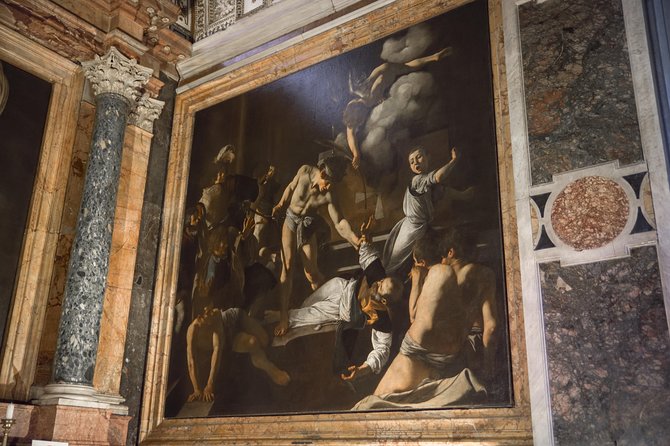
Caravaggio is not an artist you understand fully from a quick list of paintings. His work depends on setting. A saint falls in a cramped space. A beam of light cuts across ordinary faces. Bare feet, dirty knees, rough hands, and startled expressions make holy stories feel startlingly immediate.
This walk lets you see that drama where it belongs. The paintings are in churches, often among other works and architectural details that help explain how people in Rome first encountered them. Your guide can point out who paid for each chapel, why a painting caused trouble, and how Caravaggio’s use of common-looking models challenged the polished religious art of his day.
The human story matters, too. Caravaggio spent much of his career in Rome during the late 1500s and early 1600s, but his temper and violent behavior brought legal trouble and a life on the run. The tour connects that difficult character with the intensity of the paintings without reducing the artist to a simple bad-boy tale.
The best guides make the subject accessible even if you do not normally seek out art tours. Jeanette, Jeannette, Maria, Giuseppe, Valentina, Barbara, and Ginette are among the guides named in the tour feedback. Names and assignments can change, but the strongest descriptions point to guides who explain art through social history, psychology, and everyday Roman life.
More Trevi and Pantheon walks:
- Rome: Pantheon Timeless Marvel Guided Tour with Entry Ticket
★ 4.9 · 4,002 reviews - Rome: Pantheon Priority Entry Ticket & Audio Guide App
★ 4.1 · 3,234 reviews - Enjoy Spritz and Pasta Making in Piazza Navona
★ 5.0 · 1,681 reviews
Santa Maria del Popolo: two powerful openings
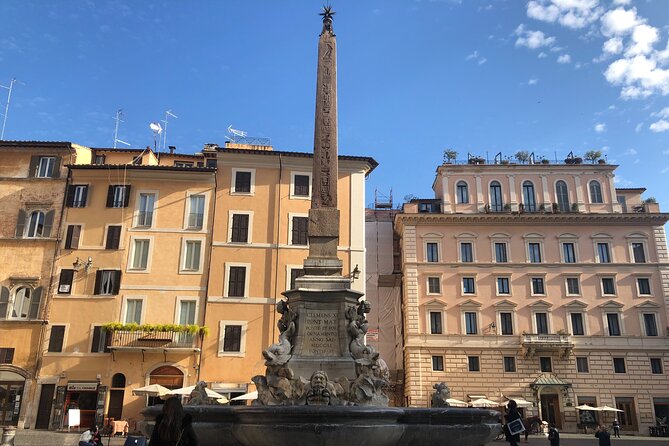
The meeting point is Piazzale Flaminio, by Piazza del Popolo and the Basilica of Santa Maria del Popolo. This is a practical starting place near public transportation, and the broad square gives your group room to gather before heading inside.
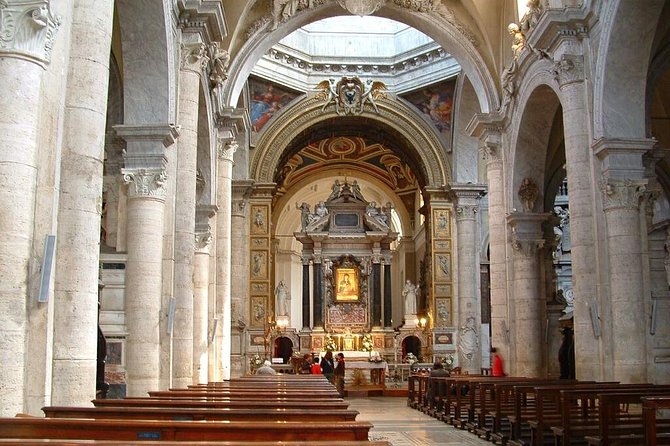
The basilica contains two of Caravaggio’s best-known Roman works. The Crucifixion of Saint Peter shows the saint being raised onto a cross, while the Conversion on the Way to Damascus captures the moment when Saul falls from his horse and begins his transformation into Saint Paul.
These paintings reward close looking. Caravaggio does not fill every inch with decoration. Instead, he uses darkness, sharply directed light, and bodies that seem to press toward the viewer. Your guide can help you notice how the figures are arranged and why the scenes feel less like distant Bible stories and more like events unfolding in front of you.
Santa Maria del Popolo also brings Raphael into the picture. The church is topped by a dome designed and frescoed by Raphael, and the comparison is useful. Raphael represents a controlled Renaissance ideal, while Caravaggio brings physical weight and emotional shock.
The planned visit here lasts about 45 minutes, including admission. Churches can be quiet places, so the headset is useful when the guide is explaining details while other services or visitors are nearby.
Campo Marzio and Via Ripetta: Caravaggio’s rougher Rome
After the basilica, the route continues through Campo Marzio, including streets around Via Ripetta. This part gives the tour a welcome change of pace. You are no longer looking only at paintings. You are walking through the kind of urban world that fed Caravaggio’s imagination.
The tour discusses the prostitutes who lived and worked along Via Ripetta and the role they played as models for artists. That detail helps explain why Caravaggio’s sacred figures often look like people from the street rather than idealized figures from heaven.
The walk also includes narrow central streets such as Via Condotti and Via Margutta, with a stop near the Spanish Steps for photographs. This is not a sightseeing bus route that jumps between isolated monuments. You move through the historic center on foot, with the streets themselves forming part of the lesson.
I would pay attention to the route rather than rushing from one church to the next. The walking time gives your guide space to discuss Caravaggio’s patrons, his rivals, the social life of Rome, and his nonconformist tendencies. It also means you should not book this if you want a seated art lecture.
The tour information allocates about 45 minutes to Campo Marzio. Some of that time is spent walking, and the distance can feel tiring in hot weather or rain. One guide continued through a spring downpour, while another account found the rain uncomfortable because the group had to listen outdoors. A weather plan is not clearly provided, so bring suitable clothing.
Santa Maria della Pace and Raphael’s graceful contrast
Santa Maria della Pace is another church stop, scheduled for about 30 minutes. The focus here shifts toward Raphael, whose fresco of the Sibyls brings a more graceful and ordered mood than Caravaggio’s tense scenes.
This stop matters because it prevents the tour from becoming a single-artist checklist. You get a clearer sense of the artistic world Caravaggio entered, including the Renaissance standards that shaped expectations for beauty, balance, and religious painting.
The church also gives you a break from the larger attractions. Santa Maria della Pace is not presented as a major museum visit, and the appeal lies in seeing art in a functioning Roman church. Your guide can explain how the fresco and surrounding architecture work together rather than treating the painting as an isolated object.
Admission is included for this stop. Since churches may have their own opening conditions or quiet periods, the exact time inside can vary. The tour description promises the visit, but you should not expect the same long viewing time given to Santa Maria del Popolo or the Pantheon.
More Bernini and Caravaggio art walks:
- Renaissance Scarlet Ladies Tour: Caravaggio’s and Borgia’s Women
★ 5.0 · 65 reviews - Rome Art Walking Tour Who Killed Caravaggio
★ 5.0 · 61 reviews - Rome’s Baroque Art Walking Tour: Who Killed Caravaggio?
★ 5.0 · 27 reviews
Sant’Agostino and San Luigi dei Francesi
The next section brings you to Sant’Agostino, where you see Caravaggio’s Madonna del Loreto in the Cavaletti Chapel. The painting is also known as the Madonna dei Pellegrini, and its force comes from the contrast between the sacred subject and the ordinary, unpolished appearance of the figures.
The Virgin and child meet pilgrims who look like real people, with worn feet and humble clothing. That directness could seem shocking in a church setting, but it is exactly the point. Caravaggio makes the holy encounter feel possible in the physical world around you.
Sant’Agostino also contains work by Raphael, giving you another chance to compare the two artists. The church visit is listed at about 30 minutes, and admission is included in the overall experience, though the itinerary describes the following San Luigi dei Francesi visit separately.
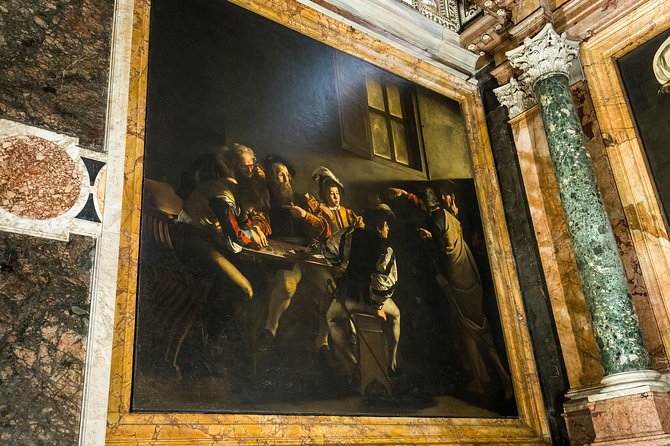
At San Luigi dei Francesi, the tour turns to Caravaggio’s Saint Matthew cycle. The three paintings in the Contarelli Chapel are among his most intense works, especially the Calling of Saint Matthew, where a shaft of light and a pointing hand direct the action.
These paintings are a high point for many people on the walk. They show Caravaggio handling a large religious commission while keeping his figures grounded in the world of taverns, workrooms, money, and ordinary clothing. The drama is not only in the subject. It is in the moment of decision, the hesitation, and the sudden recognition.
The supplied schedule lists Sant’Agostino as a free-admission stop, while the wider tour description includes San Luigi dei Francesi as part of this portion. Since the churches can have different access arrangements, listen carefully to the meeting instructions and allow the guide to manage the order.
The Pantheon: a strong final stop
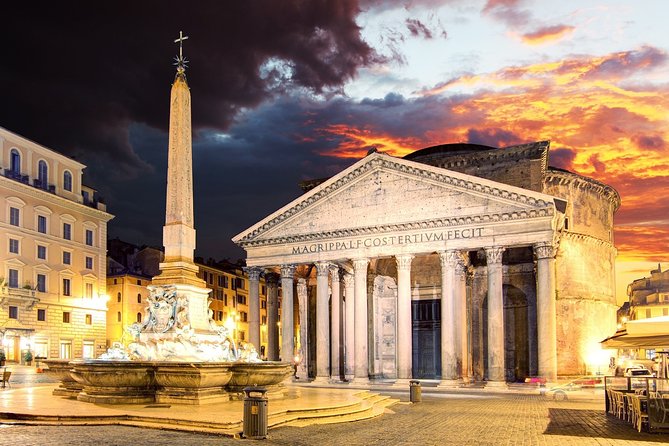
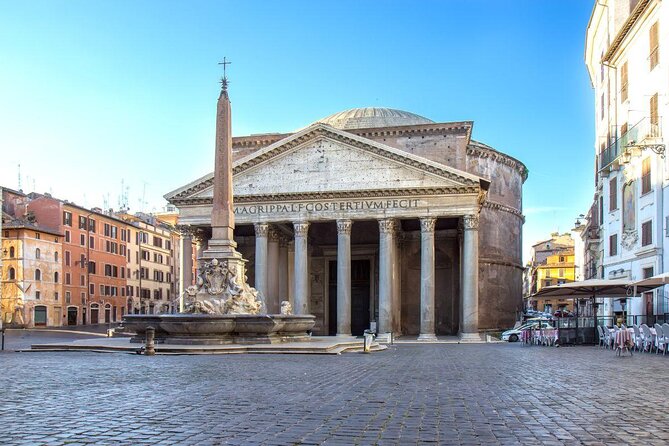
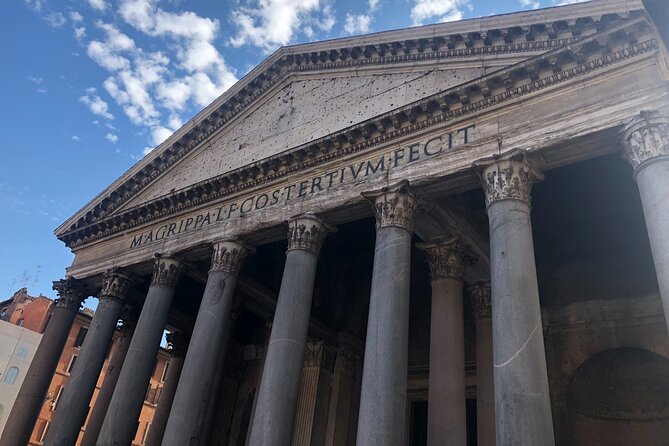
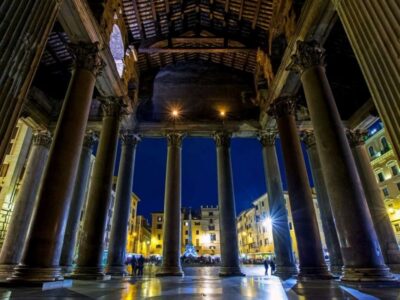
The final major visit is the Pantheon, with about 30 minutes inside. Its vast dome and central opening provide a sharp contrast to the smaller chapels visited earlier.
The Pantheon began as a pagan temple and was later converted to Christianity. Today it contains the tombs of Italy’s first two kings, placed there after unification in 1861, as well as the tomb of Raphael. That makes it an effective final stop: the building connects ancient Rome, Christian Rome, modern Italy, and the Renaissance artist already discussed during the walk.
Your ticket includes the internal visit. The tour ends in Piazza della Rotonda, so you finish in a useful part of central Rome rather than being returned to your hotel or starting point. From there, you can continue your evening on foot, though hotel pickup and drop-off are not included.
The Pantheon visit is not a substitute for a full architectural tour. The allotted time is fairly short, especially if you want to look closely at the tombs, dome, floor, and side chapels. Its value here is as a grand closing chapter and a place to pull together the artistic and religious themes of the afternoon.
The aperitivo makes the afternoon feel complete
An included aperitivo is one of the strongest practical features of this tour. After several churches and a fair amount of walking, you finish with wine and small bites at a local wine bar or restaurant.
The venue described by the tour is Casa Coppelle, in the area of the final meeting point. The amount of food can be more generous than the word aperitivo suggests. Past participants describe Prosecco, wine, and enough food for a light dinner, not just a token snack.
This is also where the social side of a small group works well. You can ask follow-up questions, compare your impressions of the paintings, and hear your guide explain more about Caravaggio’s life without standing in a church doorway.
The meal is not a replacement for booking a full Roman dinner. Still, it adds real value to a $65.17 tour, especially if you enjoy wine and want a relaxed end to the afternoon. One particularly useful detail is that the restaurant is not simply a stop-and-go tasting venue. A participant returned later for dinner, which suggests the location can be useful beyond the tour itself.
Walking distance, timing, and group size
The tour begins at 4 p.m. and lasts about three hours. That timing works well for an afternoon in Rome. You avoid the hottest part of the day in summer, see the city as the light changes, and finish in time for dinner.
You should expect a genuine walking tour, not a short stroll between parked vehicles. The route links Piazza del Popolo, Campo Marzio, the Spanish Steps area, Sant’Agostino, San Luigi dei Francesi, and the Pantheon. One account specifically warned that the amount of walking may feel daunting for some people.
Wear shoes you can use on hard city streets. The tour is near public transportation, but there is no hotel pickup or drop-off, so plan your route to Piazzale Flaminio and your return from Piazza della Rotonda.
The maximum group size is 15 people. Several sessions were much smaller, including a group of two and a private-feeling group of four, while another had 16 people. A small group makes it easier to ask questions, but you should not assume every departure will feel private.
Headsets are included. They matter when the guide is speaking in busy squares or when the group has to spread out inside a church. Luggage storage is not available, so arrive with only what you can carry comfortably.
What the price includes, and where it earns its keep
At $65.17 per person, this is not the cheapest way to see Rome’s churches. The value depends on how much you want interpretation rather than simple entry.
Your fee includes:
- An expert local guide
- Headsets
- Admission for the internal Pantheon visit
- Included church visits described in the route
- An aperitivo with wine and food
The biggest saving is time. You could visit several of these churches on your own, but you would need to research Caravaggio’s commissions, locate the paintings, understand the Raphael connections, and build the route. You would also miss the conversation that ties the street scenes to the paintings.
The tour is a particularly good deal if you enjoy art but do not feel confident reading it on your own. Guides such as Jeanette and Giuseppe are praised for connecting painting with psychology, social life, and Roman history. That kind of explanation is what turns a collection of famous images into a coherent afternoon.
The price is less appealing if you want only the Pantheon or already know Caravaggio’s Roman work well. You are paying for the walking, the guide, and the social aperitivo as much as for admission.
Who should book this Caravaggio walk?
I would recommend it to people who want a focused theme but do not want to spend a full day inside a museum. It suits couples, friends, solo visitors, and families with older children who can manage several hours on foot.
You do not need an art degree. The best part of the experience is the way a good guide can make the pictures readable for people who normally feel lost in front of paintings. You will still get plenty from it if you mainly enjoy history, architecture, food, or stories about unusual characters.
It is less suitable for anyone with limited walking stamina, anyone carrying large luggage, or anyone who prefers a private and fully predictable schedule. Rain can make the outdoor explanations less pleasant, and church access may shape the order of the route.
Free cancellation is available if you cancel at least 24 hours before the 4 p.m. start. A minimum group size is required, so a cancellation by the operator can lead to a different date or a full refund.
Should you book it?
Book this tour if you want to understand why Caravaggio still feels so immediate, and if you like the idea of seeing his work in the churches where it was meant to be experienced. The combination of Santa Maria del Popolo, Sant’Agostino, San Luigi dei Francesi, Raphael’s work, the Pantheon, and an aperitivo gives you more than a single-artist lecture.
I would skip it if you want a short, low-effort sightseeing outing. The walking is real, the weather can matter, and the final Pantheon visit is brief. For art lovers, first-time Rome visitors, and anyone curious about the city’s more dramatic characters, the price is fair and the late-afternoon format is smart.
FAQ
How long does the Caravaggio Art Walking Tour last?
The tour lasts approximately three hours.
What time does the tour start?
The scheduled start time is 4 p.m.
Where does the tour begin?
The meeting point is Piazzale Flaminio in Rome, near Piazza del Popolo and Santa Maria del Popolo.
Where does the tour end?
The tour ends at the Pantheon, in Piazza della Rotonda.
Which Caravaggio paintings are included?
You can see the Crucifixion of Saint Peter and Conversion on the Way to Damascus at Santa Maria del Popolo, the Madonna del Loreto at Sant’Agostino, and the Saint Matthew trilogy at San Luigi dei Francesi.
Is the Pantheon entry included?
Yes. The internal visit to the Pantheon is included.
Is food or drink included?
Yes. The tour includes an aperitivo with wine and food at a local wine bar or restaurant.
What is the maximum group size?
The tour has a maximum of 15 participants.
More Walking Tours in Rome
- Rome: Trastevere & Campo de Fiori Street Food Walking Tour
★ 4.9 · 2,768 reviews - Rome: Paranormal Night Walking Tour & Secret Backstreets
★ 4.9 · 1,921 reviews - Rome by Night Walking Tour – Legends & Criminal Stories
★ 4.5 · 1,003 reviews - Rome: Guided City Center Evening Sightseeing Walking Tour
★ 4.4 · 953 reviews
Newest reviews from Rome
- Rome: Vatican Museums & Sistine Chapel Skip-the-Line Ticket★ 4.4 · 148 reviews
- Shared Shuttle Transfer from Rome to Civitavecchia Port★ 5.0 · 148 reviews
- Rome: Crypts & Catacombs After Hours Tour with Bone Chapel★ 4.6 · 149 reviews
- Ghosts Legends and Mysteries of Rome Walking Tour★ 5.0 · 149 reviews
- Skip the Line: Vatican and Sistine Chapel with Guided Tour★ 4.0 · 149 reviews
- Tivoli: Villa Gregoriana Entrance Ticket★ 4.7 · 150 reviews
- Pizza and Tiramisu Cooking Class in Rome, Piazza Navona★ 5.0 · 150 reviews
- Appian Way E-bike Tour with Gourmet Picnic and Catacombs★ 4.5 · 150 reviews
Trevi Fountain & Pantheon Walks, compared.
Pantheon Timeless Marvel Guided Tour with Entry Ticket
Read our review →
Pantheon Priority Entry Ticket & Audio Guide App
Read our review →
Enjoy Spritz and Pasta Making in Piazza Navona
Read our review →
Pantheon Elite Guided Tour – Rome’s Iconic Ancient Temple
Read our review →
Pasta & Tiramisu Cooking Class near the Spanish Steps
Read our review →
Traditional Pizza Cooking Class near Piazza Navona
Read our review →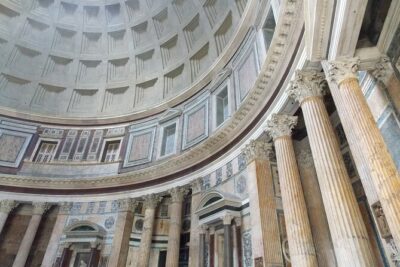
Rome’s Iconic Temple: Pantheon Audio Guided Tour with Fast Access
Read our review →Browse the lists this tour appears in