
Reviewed · WALKING TOURS
Rome’s Baroque Art Walking Tour: Who Killed Caravaggio?
Caravaggio’s paintings are famous for their harsh light, dirty feet, and lifelike faces. His life was just as dramatic. This two-hour walk turns Rome into a crime scene, tracing street fights, powerful patrons, rival artists, and the unanswered questions around the painter’s final days.
I like the way the tour joins art and true crime instead of treating paintings as silent museum objects. I also like the stops inside working churches, where you can see major works by Caravaggio and other artists without paying a separate museum admission. The main thing to consider is the tip-based price: the advertised booking cost is low, but you should budget a meaningful tip if the guide delivers the promised depth.
In This Review
- Key points to know
- Caravaggio turns Rome into a crime story
- Starting beneath the elephant in Piazza della Minerva
- The Pantheon and the art of looking up
- Three Caravaggio paintings at Saint Louis of the French
- Saint Augustine and the value of free church art
- The unnamed stops that keep the mystery moving
- Palazzo Borghese and the final chapter
- Ivan, Jacobo, and the guide’s storytelling style
- Why two hours is the right length
- What the tip-based price really means
- Who should book this Rome art walk
- Booking details worth knowing before you go
- Should you book Who Killed Caravaggio?
- FAQ
- Where does the tour begin?
- Where does the tour finish?
- How long does the walking tour last?
- What language is the tour in?
- Is the tour suitable in rainy weather?
- What paintings and artists will I learn about?
- How does the payment work?
Key points to know
- Caravaggio’s final mystery: Follow the evidence and theories surrounding the painter’s unexplained death.
- Free church art: See important paintings by Caravaggio, Rafael, and Plautilla Bricci in Roman churches.
- Strong storytelling: Guides such as Ivan and Jacobo use biography, politics, and dark humor to make the art easier to read.
- Weather-friendly route: The walk mixes sunny piazzas with cool churches, shaded spots, shelter, and places to sit.
- Short, focused format: Two hours gives you a sharp introduction without taking up an entire day.
- Tip-based cost: You reserve your place, then decide what the guide’s work was worth at the end.
Caravaggio turns Rome into a crime story
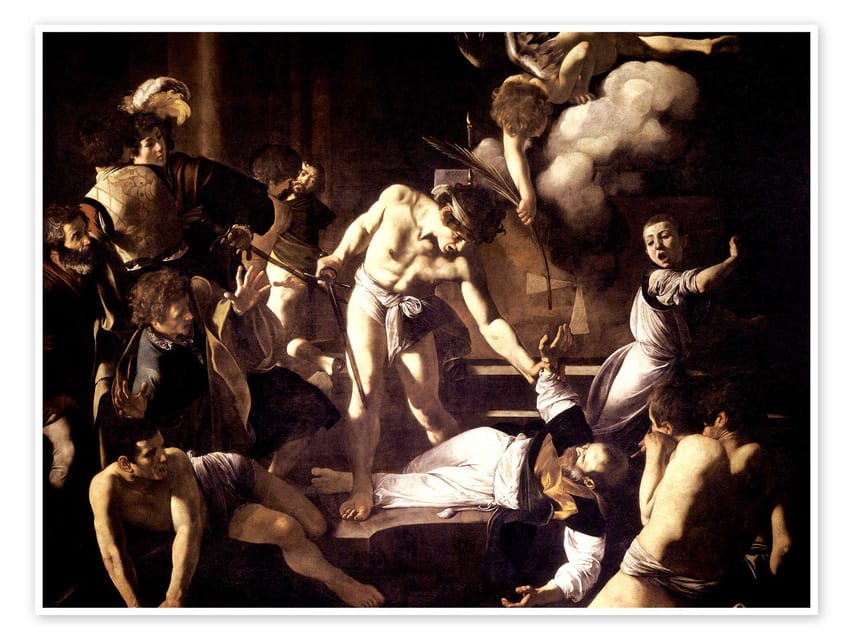
The clever idea here is not simply to show you famous paintings. It is to ask what kind of man made them, who helped him succeed, who wanted him punished, and why his death still invites suspicion.
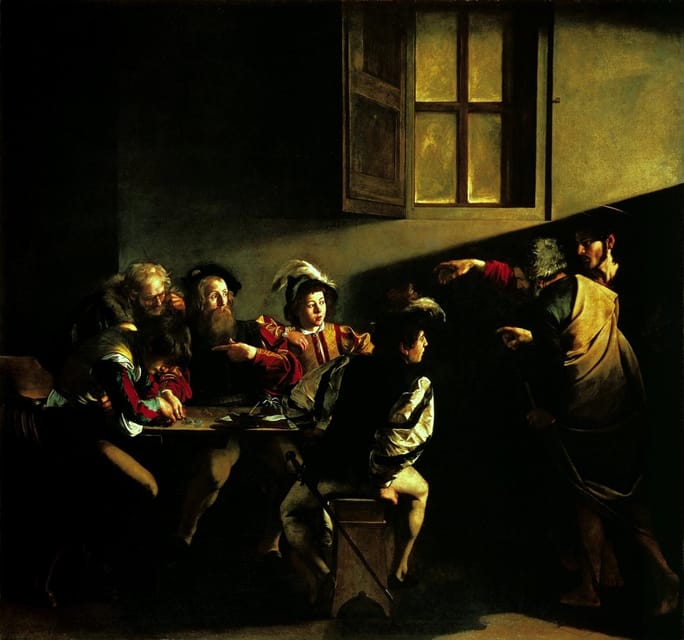
Michelangelo Merisi, known as Caravaggio, changed painting with intense realism and theatrical light. His saints look like people from the street. His scenes feel close enough to touch. That directness helped make him famous, but his temper and violent behavior created serious trouble.
Your guide connects the art to the social world around it. Patrons could protect a painter, but they could also control his choices. Rival artists competed for commissions. Criminal enemies and street conflicts made Rome a dangerous place for someone already prone to fights.
The murder-mystery angle gives you a reason to pay attention. You are not only asking what a painting means. You are also weighing clues, eyewitness accounts, historical records, and modern theories about Caravaggio’s final days.
This approach works best if you enjoy a story with uncertainty. You should not expect a neat solution at the end. The appeal is in examining what is known, what is disputed, and how much of the legend grew after Caravaggio’s death.
More Bernini and Caravaggio art walks:
- Renaissance Scarlet Ladies Tour: Caravaggio’s and Borgia’s Women
★ 5.0 · 65 reviews - Rome Art Walking Tour Who Killed Caravaggio
★ 5.0 · 61 reviews - Caravaggio Art Walking Tour of Rome with Pantheon Visit
★ 4.5 · 35 reviews
Starting beneath the elephant in Piazza della Minerva
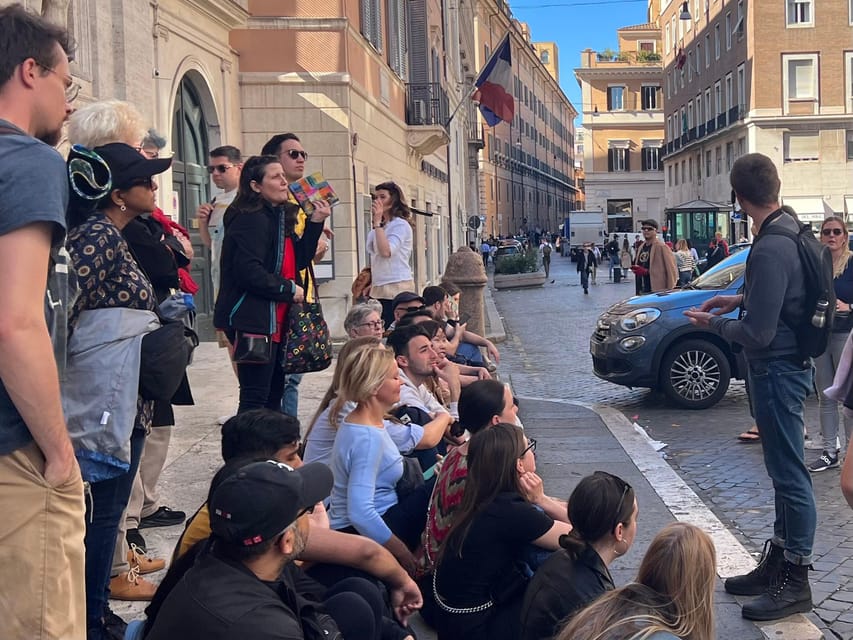
The meeting point is easy to identify: Piazza della Minerva, beside the small elephant carrying an obelisk. Look for the guide holding a sign with the tour name.
This square is a fine opening because it immediately shows Rome’s habit of placing grand history in compact spaces. The setting combines ancient Egyptian symbolism, Baroque design, and the nearby church of Santa Maria sopra Minerva. You get a sense of how much art and politics are packed into the center of Rome before the walk properly begins.
Allow a few minutes to find the elephant statue and settle in. The route is on foot, and the two-hour schedule includes several stops, so comfortable shoes make sense. Churches are part of the experience, and you should dress appropriately for entry. Bare shoulders or very short clothing can cause problems at religious sites.
The square can be bright and exposed. That is balanced later by church interiors, but a hat and water are sensible in hot weather. If rain arrives, the route still has indoor stops, which gives this tour an advantage over a walk that stays entirely outdoors.
The Pantheon and the art of looking up
From Piazza della Minerva, the group walks about five minutes to the Pantheon. The stated schedule treats this as a short walking connection rather than a long visit, so do not book the tour expecting an extended guided tour inside the monument.
The Pantheon matters here as part of the visual and historical setting. Its enormous presence helps explain the scale of Rome’s public spaces and the way artists worked in a city filled with ancient monuments, churches, noble palaces, and competing patrons.
This short section also helps keep the tour moving. Two hours is enough time for several important works, but not enough for every building on the route. The guide’s job is to focus your attention rather than give a full architectural lecture at each stop.
If you have never visited the Pantheon, you may want to return separately. The tour’s main subject is Caravaggio and Baroque art, not a complete account of the monument.
Three Caravaggio paintings at Saint Louis of the French
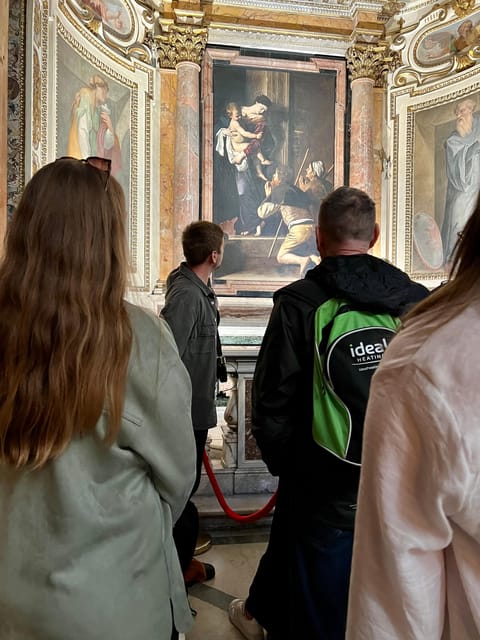
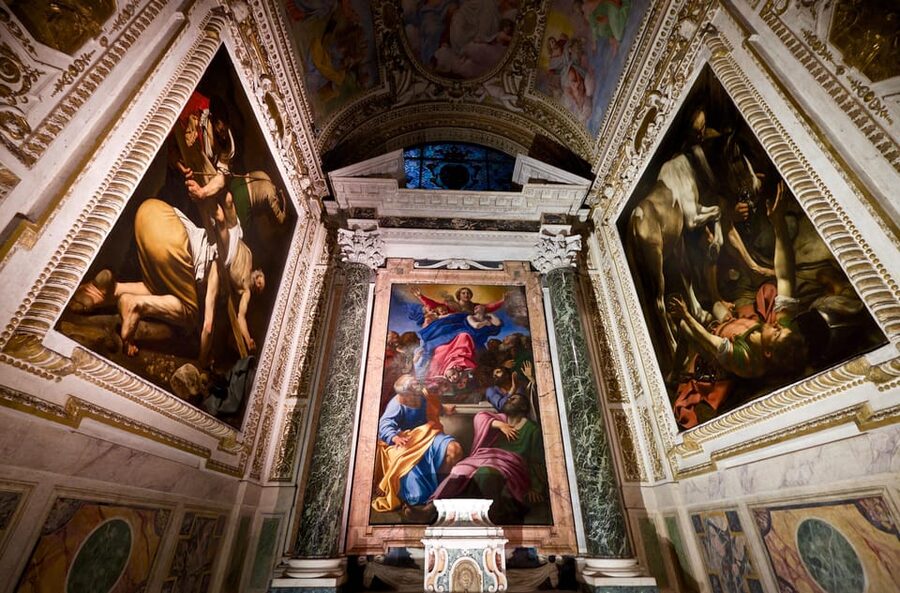
The Church of St. Louis of the French is one of the key stops. You spend about 15 minutes here for a visit, explanation, and sightseeing.
This is where the tour’s method becomes clear. Instead of viewing a painting in isolation, you hear about the artist’s career, the people who commissioned his work, and the choices that made his pictures so startling. Caravaggio’s religious scenes were not polished visions detached from ordinary life. Their force comes from physical presence, strong contrasts of light and shadow, and faces that feel recognizably human.
A church is also a useful place to see how art was meant to function. These pictures were commissioned for worship, public memory, and prestige. They were not created simply to hang in a gallery. Their location, lighting, and audience all affect how you read them.
The stop may be busy, and church visits are not always quiet or leisurely. You will have limited time, so listen closely when the guide points out a detail. A small pair of binoculars or a phone camera, used only where permitted, can help you inspect works in dim interiors. Follow the church’s rules, since this remains a place of worship.
More walking tours in Rome:
- Rome: Trastevere & Campo de Fiori Street Food Walking Tour
★ 4.9 · 2,768 reviews - Rome: Paranormal Night Walking Tour & Secret Backstreets
★ 4.9 · 1,921 reviews - Rome by Night Walking Tour – Legends & Criminal Stories
★ 4.5 · 1,003 reviews - Rome: Guided City Center Evening Sightseeing Walking Tour
★ 4.4 · 953 reviews
Saint Augustine and the value of free church art
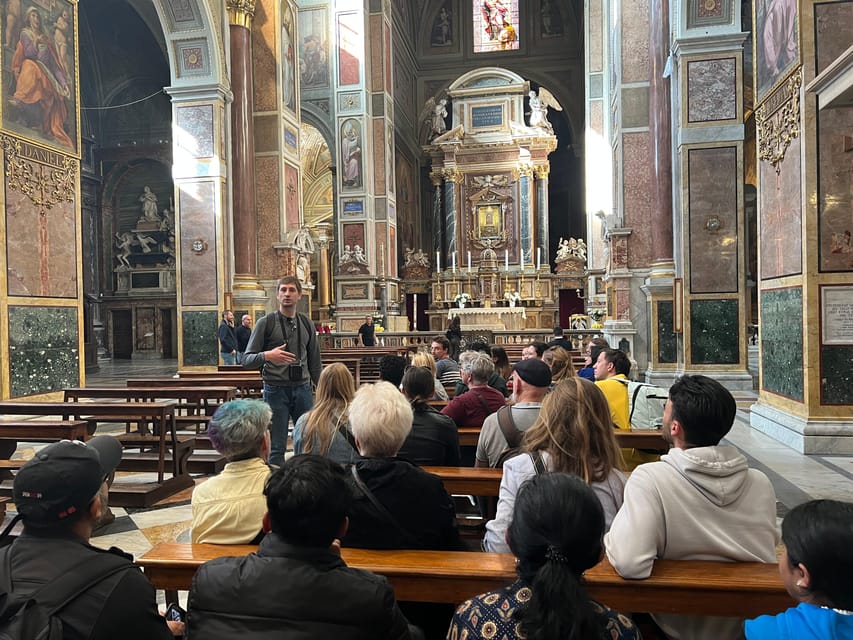
The Basilica of St. Augustine is another 15-minute visit. It adds range to the story by placing Caravaggio among other major artists and commissions in central Rome.
One of the tour’s strongest practical benefits is the chance to see important art in churches without adding several museum tickets to your budget. You still need to respect opening conditions and church behavior, but the basic access to these works is part of Rome’s great cultural bargain.
This stop also helps show that Baroque Rome was not built by one painter alone. Caravaggio changed the language of painting, yet he worked in a city full of artists, patrons, architects, and religious institutions. The tour includes paintings by Rafael and Plautilla Bricci, giving you a broader view of the artistic world around Caravaggio.
Plautilla Bricci is especially worthwhile because her work offers a reminder that Rome’s artistic story includes women who have often received less attention. Her presence on the route gives the walk more depth than a simple parade of famous male painters.
The church interior offers shade and a place to pause. That matters in summer, when two hours of Roman paving stones can feel longer than expected. It also helps if the weather turns wet.
The unnamed stops that keep the mystery moving
The published route includes two additional visits, one lasting about 10 minutes and another about five minutes, but their names are not specified. One includes a photo stop, and both include guided sightseeing.
Rather than treating these as major destination stops, think of them as links in the investigation. They give the guide space to add evidence, explain another artistic connection, or move the story from Caravaggio’s career toward his troubles and death.
The lack of full detail is a small planning drawback. If you want a precise list of every church and piazza before booking, you may need to confirm the day’s route with the provider. The main locations are clear, but these intermediate stops are not identified in the available details.
That uncertainty can also be part of the appeal. The tour is built around storytelling, and the exact order may depend on access, timing, or the guide leading your group. Just keep your expectations realistic: this is a compact walking experience, not a complete survey of every Caravaggio site in Rome.
Palazzo Borghese and the final chapter
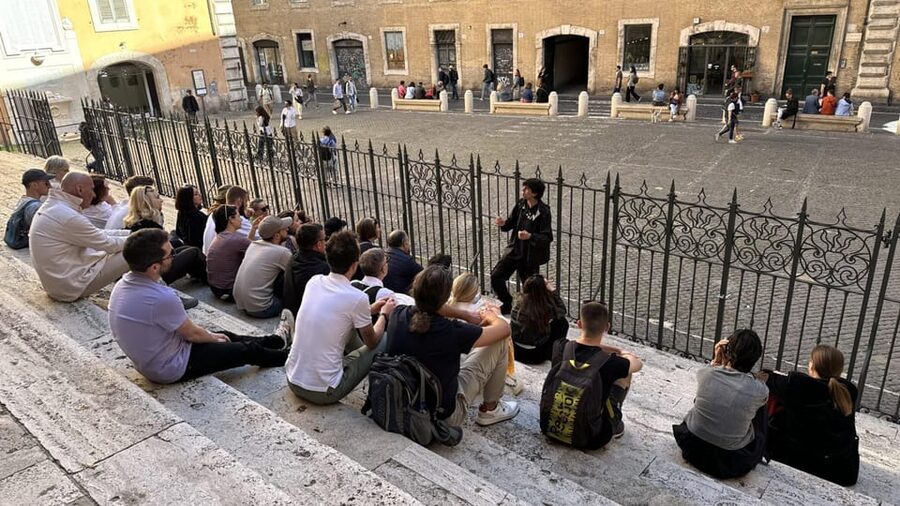
The walk ends at Palazzo Borghese after a 15-minute visit and sightseeing stop. This gives the tour a strong closing setting, since noble Roman palaces help explain the role of status and patronage in the art world.
A painter’s career could rise quickly when a powerful supporter took notice. The same network could also create enemies, pressure, and political complications. The palace setting makes that system easier to picture than a purely classroom-style lecture would.
The tour’s final theme concerns Caravaggio’s death. His final days remain surrounded by uncertainty, and the guide uses historical evidence, eyewitness accounts, and later theories to examine what may have happened.
You should expect questions rather than a solved case. That is a good fit for anyone who likes history with room for debate. If you prefer firm answers and a conventional art lecture, the darker storytelling style may feel less satisfying.
The finish at Palazzo Borghese is useful for the rest of your day. You can continue exploring central Rome from there, although the experience does not include transportation back to the starting point.
Ivan, Jacobo, and the guide’s storytelling style
Guide quality matters a great deal on a tour like this. The experience depends less on covering a long list of sites and more on how well the guide connects the paintings and evidence.
Ivan is specifically praised for passionate storytelling and for researching lesser-known details in archives and books. Jacobo is described as an art historian who explains Rome’s paintings and Caravaggio’s life in an engaging way. The assigned guide may vary, so you should not assume one particular person will lead every departure.
The planned tone includes dark humor and politically incorrect jokes. That can make a difficult subject memorable, but it is not for everyone. If you want a solemn church tour with a formal academic tone, this may not be your best choice.
I would choose this walk if you like a guide who tells a story with energy and personality. I would also suggest listening for the evidence beneath the jokes. The humor is a delivery style, while the useful part is the connection between documents, paintings, patrons, and the city.
Why two hours is the right length
Two hours is enough for a concentrated introduction to Caravaggio and Roman Baroque art. You see several major locations, enter churches, and walk between them without giving up a whole morning or afternoon.
The route includes approximately 15-minute blocks at Piazza della Minerva, Saint Louis of the French, Saint Augustine, and Palazzo Borghese, plus shorter stops and walking connections. That pace means the guide must keep explanations focused.
You will not get every detail about every painting. Instead, you get a structure that helps later visits make more sense. After this tour, you can return to a church and look again at the light, gestures, faces, and placement of the figures.
The format suits first-time visitors who want an art introduction that feels lively rather than technical. It also suits repeat visitors who have seen the central sights but want a new story connecting them.
What the tip-based price really means
The advertised price is $3.77 per person, but that is not the full expected cost. This is a pay-what-you-want tour, so the guide works for tips and you decide the final amount at the end. The stated usual range is 10 euros to 50 dollars.
That makes the booking price attractive, especially for a short cultural walk that includes a local guide and access to major art in churches. But you should not treat the tour as a nearly free activity. If the guide gives you a well-researched, two-hour presentation, plan your budget around a proper tip.
The model can offer good value because you pay according to your judgment. It also places responsibility on you to understand the arrangement before joining. Bring enough cash or confirm the accepted payment method if that matters to you, since the available details only explain the tip structure, not the exact payment process.
At its best, this format rewards a strong guide and keeps the initial booking barrier low. It is less appealing if you want one fixed, all-inclusive price.
Who should book this Rome art walk
I would recommend it to you if you:
- Like Caravaggio, Baroque art, or unusual biographies
- Want art explained through politics, crime, and personal conflict
- Prefer short walks with several indoor stops
- Enjoy guides who use humor and dramatic storytelling
- Want to see important paintings in churches rather than only in museums
- Are comfortable deciding the final price through a tip
You may want another type of tour if you need a highly formal art-history lesson, a fully named route in advance, or a quiet experience without edgy jokes. The church stops also require suitable clothing, so pack with religious sites in mind.
The English-only format is clear and simple, but it will not suit you if you need another language. The route includes walking between stops, though the provided schedule does not state the total distance or group size.
Booking details worth knowing before you go
You can cancel up to 24 hours before the experience for a full refund, and you can reserve now while paying later. The duration is two hours, with departure times shown according to availability.
Meet beside the elephant statue and obelisk in Piazza della Minerva. Arrive early enough to identify the sign and avoid starting the tour rushed.
Wear clothing suitable for church entry and shoes for Roman streets. Since the route works in sun, shade, and rain, it is a practical choice in changing weather, but you should still prepare for outdoor walking.
Should you book Who Killed Caravaggio?
Book this tour if you want Rome’s art to feel personal, tense, and a little dangerous. The combination of Caravaggio’s paintings, free church access, lesser-known artistic figures, and an unsolved death gives you more than a standard list of monuments.
The value is strongest when Ivan, Jacobo, or another strong guide brings the research and storytelling to life. Just remember that the $3.77 booking price is only the starting point. The real payment is your tip, and you should allow roughly 10 euros to 50 dollars according to the quality of the experience.
For art lovers, curious first-time visitors, and anyone who likes history with a crime-story edge, I would book it. If you want a quiet, predictable, traditional art tour, choose a different format.
FAQ
Where does the tour begin?
The meeting point is in Piazza della Minerva, beside the elephant statue with the obelisk. The guide will hold a sign with the tour name.
Where does the tour finish?
The tour finishes at Palazzo Borghese.
How long does the walking tour last?
The experience lasts two hours.
What language is the tour in?
The live tour guide leads the experience in English.
Is the tour suitable in rainy weather?
Yes. The route combines open piazzas with cool churches, shade, shelter, and places to sit, so it is designed for different weather conditions.
What paintings and artists will I learn about?
The experience focuses on Caravaggio and also includes priceless paintings connected with Rafael and Plautilla Bricci.
How does the payment work?
It is a tip-based, pay-what-you-want tour. You reserve your place, then decide what to give the guide at the end. The usual stated tip range is 10 euros to 50 dollars.
Newest reviews from Rome
- Rome: Vatican Museums & Sistine Chapel Skip-the-Line Ticket★ 4.4 · 148 reviews
- Shared Shuttle Transfer from Rome to Civitavecchia Port★ 5.0 · 148 reviews
- Rome: Crypts & Catacombs After Hours Tour with Bone Chapel★ 4.6 · 149 reviews
- Ghosts Legends and Mysteries of Rome Walking Tour★ 5.0 · 149 reviews
- Skip the Line: Vatican and Sistine Chapel with Guided Tour★ 4.0 · 149 reviews
- Tivoli: Villa Gregoriana Entrance Ticket★ 4.7 · 150 reviews
- Pizza and Tiramisu Cooking Class in Rome, Piazza Navona★ 5.0 · 150 reviews
- Appian Way E-bike Tour with Gourmet Picnic and Catacombs★ 4.5 · 150 reviews
Walking Tours, compared.
Trastevere & Campo de Fiori Street Food Walking Tour
Read our review →
Paranormal Night Walking Tour & Secret Backstreets
Read our review →
Rome by Night Walking Tour – Legends & Criminal Stories
Read our review →
Guided City Center Evening Sightseeing Walking Tour
Read our review →
Best of Rome Walking Tour including Trevi Fountain
Read our review →

Forbidden History Walking Tour & Pub Crawl with Drinks
Read our review →
Guided Small Group Walking Tour of City Highlights
Read our review →Browse the lists this tour appears in