
Reviewed · WORKSHOPS
Rome: Ancient Mosaic Making Workshop
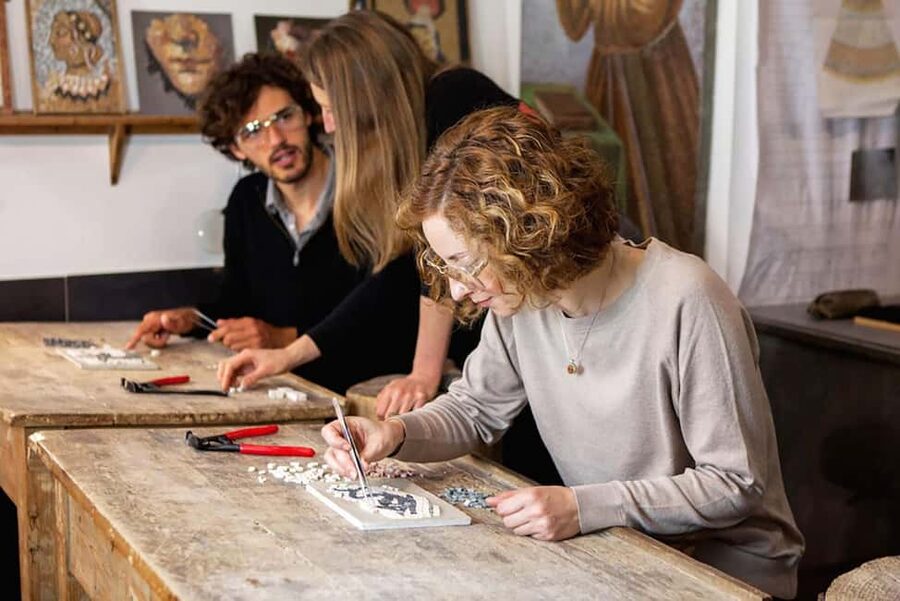
Rome’s ancient mosaics are usually admired from behind a rope. This workshop lets you handle the tools, cut local marble, and build a small Roman-style design with guidance from a working mosaic artist. In about 2.5 hours, you leave with a handmade piece, not just another photograph.
I especially like the family-owned studio in the Monti neighborhood and the chance to work with natural local marble. I also like the small groups, which can be as few as two people and never exceed nine. The main consideration is age: this is practical craft work, so children under 12 cannot take part.
- Cut real marble by hand: Practice the traditional methods of shaping small stone tiles.
- Work beside practicing artists: The studio gives you a look at an active mosaic workplace, not just a classroom.
- Create a 7-by-5-inch keepsake: Your finished artwork is framed, boxed, and ready for the trip home.
- Meet near the Colosseum: The studio is a two-minute walk from Cavour Metro station on Line B.
- Learn the Roman method: Texture, composition, and stone placement matter as much as the final picture.
- Take a break from sightseeing: This calm, hands-on class makes a useful change after museums and ruins.
In This Review
- A Roman craft lesson in the Monti neighborhood
- The opening lesson: how Roman mosaics work
- Cutting local marble and shaping your design
- A small artwork that is practical to take home
- Why the two and a half hours are well spent
- The value of the $106 price
- Who will enjoy Studio Cassio most
- A welcoming studio with a personal touch
- Practical details before you book
- Should you book this mosaic workshop?
- FAQ
- Where does the Roman mosaic workshop take place?
- How long does the activity last?
- What age is suitable for the workshop?
- What languages are available?
- What will I make during the class?
- Are tools and materials included?
- Is transportation included?
A Roman craft lesson in the Monti neighborhood
Studio Cassio sits near the Colosseum, in Rome’s historic Monti district. From Cavour station on Metro Line B, the walk takes about two minutes, so reaching the workshop is simple even if you are planning it between major sights.
The setting matters. You are not in a hotel conference room with a few plastic tiles spread across a table. You work inside a professional, family-owned mosaic studio, where artists also create their own pieces. One particularly appealing detail is the chance to watch the artists working on a real project while you make your own.
The workshop is conducted in English or Italian. Instructors have included Alex, Julia, Hope, and Ellie, and the teaching style described by the studio is friendly, relaxed, and practical. Alex is especially good at explaining both the craft and the story behind Roman mosaics, while Julia, Hope, and Ellie have helped participants with their designs and encouraged them through the hands-on work.
The group limit of nine is useful here. Mosaic work needs table space, tools, and individual help. A large class would make the experience feel hurried or impersonal. With a smaller group, you have a better chance to ask questions, get help with a difficult cut, and make design choices instead of simply copying an example.
The opening lesson: how Roman mosaics work
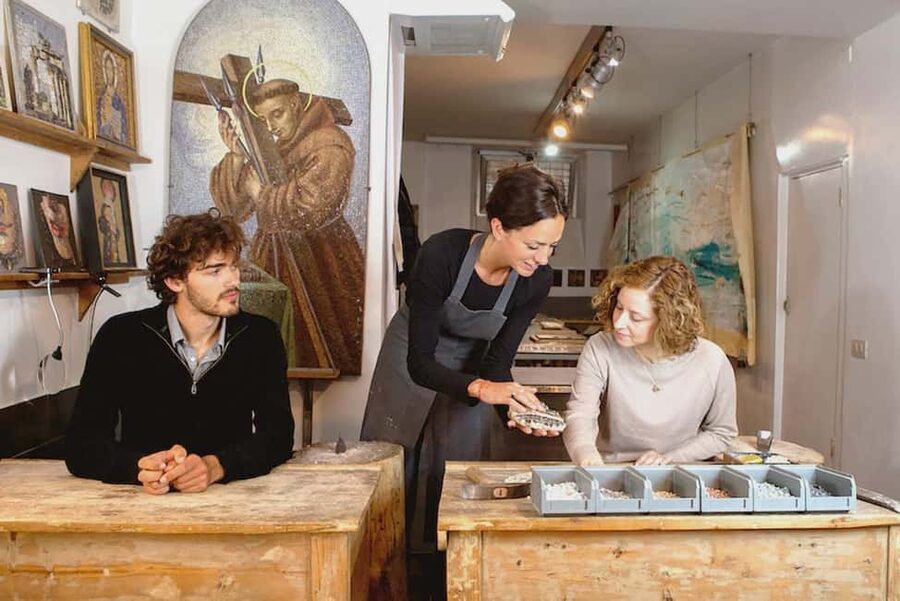
The first part introduces the history and techniques of Roman mosaic making. This is not a long academic lecture. It gives you the background you need to understand why the work is done in a particular way.
You learn about the role of texture, composition, and color. A mosaic is not simply a drawing made from tiny squares. The shape and direction of each piece affect the way the finished image reads. The gaps between tiles, the angle of the marble, and the flow of the pattern all matter.
The lesson also gives you a better eye for mosaics elsewhere in Rome. After seeing the ancient floors and walls at places such as the Vatican, you may notice how carefully artists use small pieces of stone to suggest movement, shading, or form. This workshop makes those grand works less mysterious because you get to deal with the same basic problems on a much smaller scale.
The studio also uses specific tools associated with mosaic work. Handling them is part of the point. You are learning a craft with physical steps, not just assembling a souvenir from ready-cut parts.
More Rome tours worth comparing
- 3 in 1 Cooking Class near Navona: Fettuccine, Ravioli & Tiramisu
★ 5.0 · 7,376 reviews - Rome: Pasta & Tiramisu Class with Fine Wine by the Vatican
★ 4.9 · 4,852 reviews - Rome: Pasta Making Class with Wine, Limoncello, and Dessert
★ 4.9 · 3,177 reviews
Cutting local marble and shaping your design
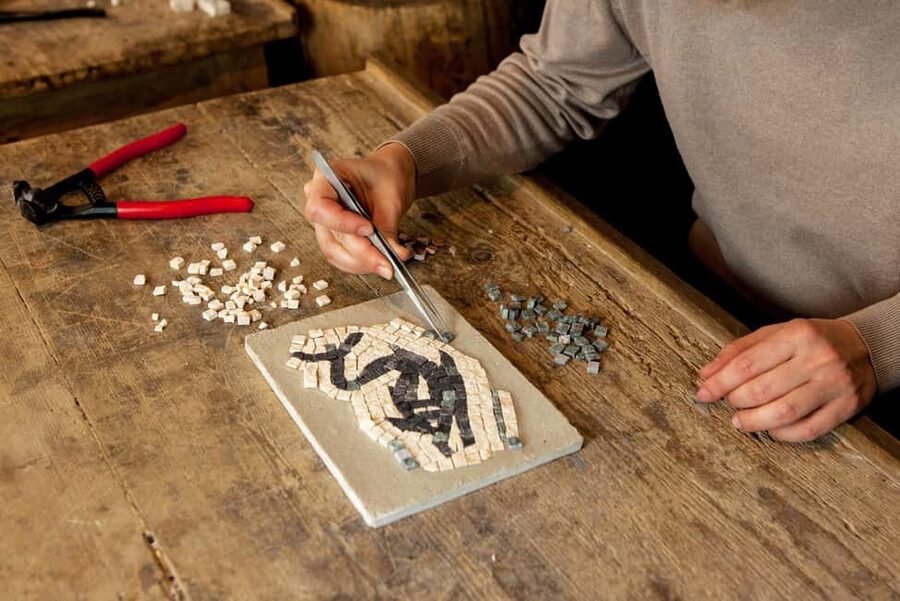
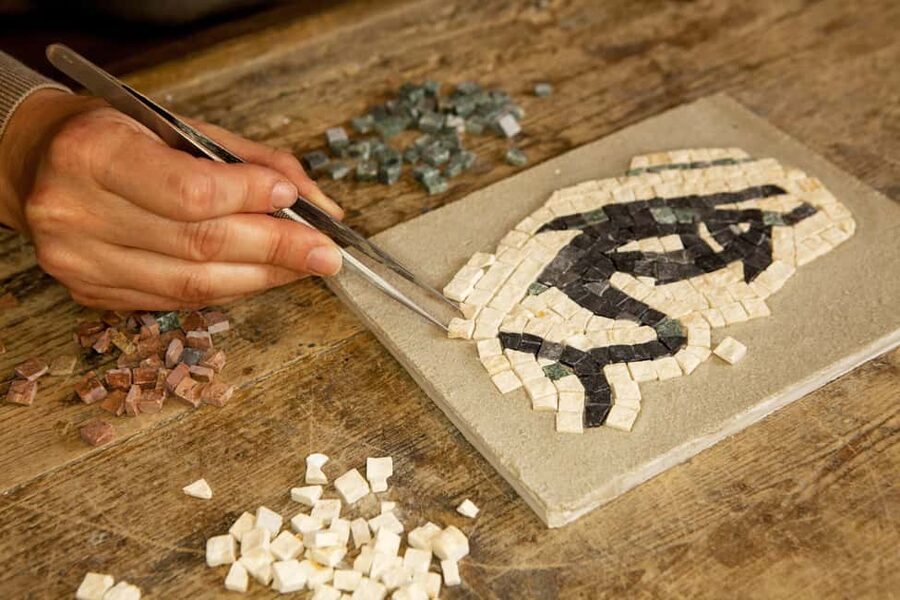
After the introduction, you begin the practical portion. You work with high-quality natural marble from the local area and learn how to cut it into the pieces needed for your design.
This is where the class becomes more than a decorative craft session. Cutting stone requires care and patience. Your pieces may not all come out identical, and that is part of the character of a handmade mosaic. The instructor helps you understand how to work with the material rather than forcing every piece into a perfect modern shape.
You practice arranging the marble inside a frame. Composition becomes a real problem at this stage. A design that looks balanced on paper may need adjustment once the stone pieces are in front of you. The instructor can help you decide how to fill spaces, adjust the pattern, and use different textures.
One review described a daughter designing her own sketch, which points to an important strength of the class: you are not limited to a single pre-made result. The amount of design freedom may depend on your confidence and the time available, but the finished piece is intended to be your own personal mosaic.
If you are artistic, you will enjoy making decisions about pattern and balance. If you are not, do not worry too much. The instructors are there to help, and the activity is presented as a lesson in ancient technique rather than a test of drawing ability.
A small artwork that is practical to take home
The completed mosaic measures about 7 by 5 inches and weighs roughly 14 ounces. That is large enough to feel like a proper handmade souvenir, but small enough to fit in luggage without creating a packing crisis.
A frame is included, and the studio provides a sturdy box to protect the finished work. That packaging is a useful detail. Handmade stone can be awkward to carry, and a fragile unboxed item would be a poor match for a busy trip through Italy.
The value of the souvenir goes beyond its size. You know which part of it you made because you cut and arranged the marble yourself. It is a more personal reminder of Rome than a mass-produced magnet, while still being manageable to transport.
The final object will not look like a flawless ancient floor from the Colosseum. You are creating a small piece during one class, not training for years as a mosaicist. The appeal is in the process and the personal marks of the maker. If you want a perfectly polished decorative object, buying one from an established artist may suit you better. If you want to understand the work by doing it, this class makes more sense.
Why the two and a half hours are well spent
The session lasts 2.5 hours. That is enough time for an introduction, instruction, cutting, arranging, and finishing without taking an entire day from Rome’s major sights.
I would place it after a morning at the Colosseum, the Roman Forum, or nearby Monti. The studio is close to the Colosseum, and the calm pace gives you a change from standing in queues, walking over ancient stone, and taking in large crowds.
The workshop can also help on a hot day. A July participant found it a good way to escape the heat, while another used the afternoon after seeing most of Rome’s major sights. The timing works particularly well when you want a meaningful indoor activity but do not want another formal museum.
Do not book it if you need a quick 45-minute stop. Cutting and arranging marble take time, and rushing would work against the lesson. You should be ready to sit, concentrate, and accept that the creative process may move more slowly than sightseeing.
Coffee, tea, and bottled water are included. They are modest additions, but useful during a hands-on class, especially if you have come directly from a long morning of walking.
A completely different way to spend the day in Rome:
- Vatican: Museums & Sistine Chapel Entrance Ticket
★ 4.5 · 144,003 reviews - Vatican Museums & Sistine Chapel Tour with Optional Basilica
★ 4.3 · 67,413 reviews - Vatican Museums, Sistine Chapel & St Peter’s Basilica Guided Tour
★ 4.5 · 39,149 reviews - Rome: Colosseum, Palatine Hill and Roman Forum Guided Tour
★ 4.8 · 32,814 reviews
The value of the $106 price
At $106 per person, this is not the cheapest activity in Rome. The price makes more sense when you consider what is included: a 2.5-hour lesson, instruction from working mosaic artists, natural local marble, tools, a frame, protective packaging, and a finished piece you make yourself.
You are also paying for access to a professional studio and for guidance that would be difficult to get by buying materials alone. A casual craft kit might cost less, but it would not give you the same connection to Roman mosaic technique or the chance to work with an artist in an actual workshop.
The small group helps justify the cost. A class limited to nine can offer more individual attention than a mass activity, and the group may be much smaller. One booking had only two people, which would be ideal if you prefer a quieter lesson and more direct help.
The value depends on what you want from a souvenir. If you collect inexpensive gifts, the price may feel high for a small object. If you want an activity tied closely to Rome’s artistic past, and you care about making rather than simply buying, the price is easier to defend.
Who will enjoy Studio Cassio most
This is a good fit for adults, couples, families with teenagers, and anyone who wants to add a creative hour to a sightseeing-heavy trip. The minimum age is 12, and the activity has worked well for a parent and teenage daughter.
It also suits repeat visitors who have already seen many of Rome’s headline sights. One participant chose it specifically after covering most of the standard attractions. The workshop gives you a different way to spend an afternoon without leaving central Rome.
You do not need prior art experience. The class focuses on ancient methods, and instructors help with the technical steps. Still, you should enjoy hands-on work and be comfortable handling tools under supervision.
This may not suit very young children, people looking for a passive demonstration, or anyone with only a short gap between reservations. The class is also less appealing if your main goal is to buy a large or highly finished art piece. The result is personal and modest in scale.
A welcoming studio with a personal touch
The strongest praise for the experience centers on the instructors and the atmosphere. The teaching is described as friendly, humorous, laid-back, and encouraging. That combination matters because cutting stone can feel intimidating at first.
The studio team also seems willing to make the session personal. One birthday pair received a small cake, a thoughtful touch that turned a scheduled activity into a memorable occasion. That is not something you should book the class expecting, but it gives you a sense of the warm style reported at the workshop.
You may also hear about the artists’ working lives and the studio’s history. That conversation adds something a standard demonstration often lacks. You are not only learning how a tile is cut. You are meeting people who have made mosaic work part of daily life.
Because the studio is family-owned, the setting has a more personal feel than a large commercial attraction. The trade-off is that the experience may retain the informal rhythm of a working art space. Go in ready to listen, ask questions, and let the instructors guide you rather than expecting a tightly scripted show.
Practical details before you book
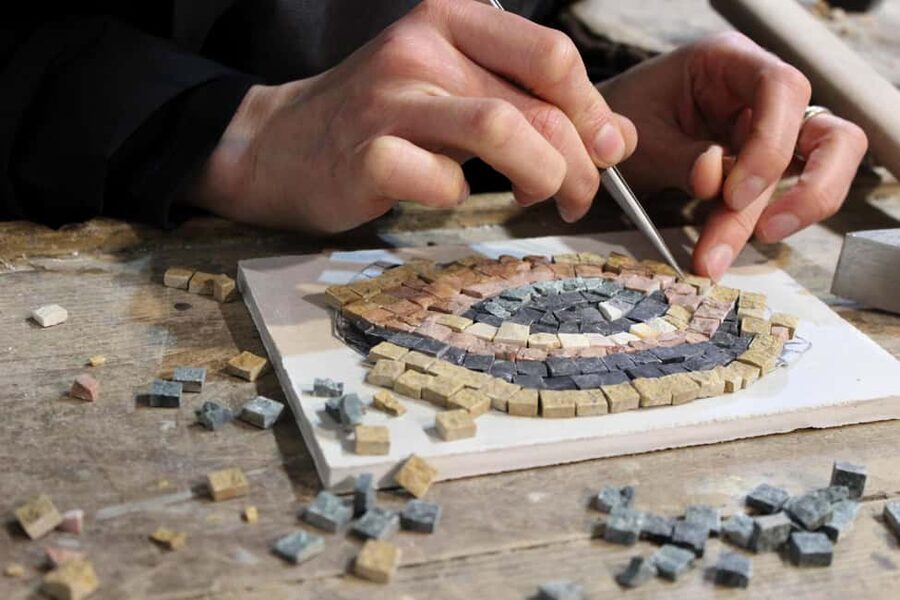
The meeting point is near the Colosseum and two minutes from Cavour station on Metro Line B. Transportation to and from the studio is not included, so you need to make your own way there. The central location makes public transit the sensible option.
English and Italian are available. The group size is limited to nine participants, and starting times vary, so you need to check availability for the date of your visit.
You can cancel up to 24 hours in advance for a full refund. The reserve-now, pay-later option also helps if you are arranging several Rome plans before your schedule is fixed.
Wear something you can work comfortably in, although the supplied information does not set a dress code. The important preparation is mental rather than technical: expect to use tools, handle stone, and spend much of the session focused on a small design.
The finished mosaic is approximately 7 by 5 inches and weighs about 14 ounces. It comes with a frame and a sturdy box, so you do not need to arrange separate protection for the trip home.
Should you book this mosaic workshop?
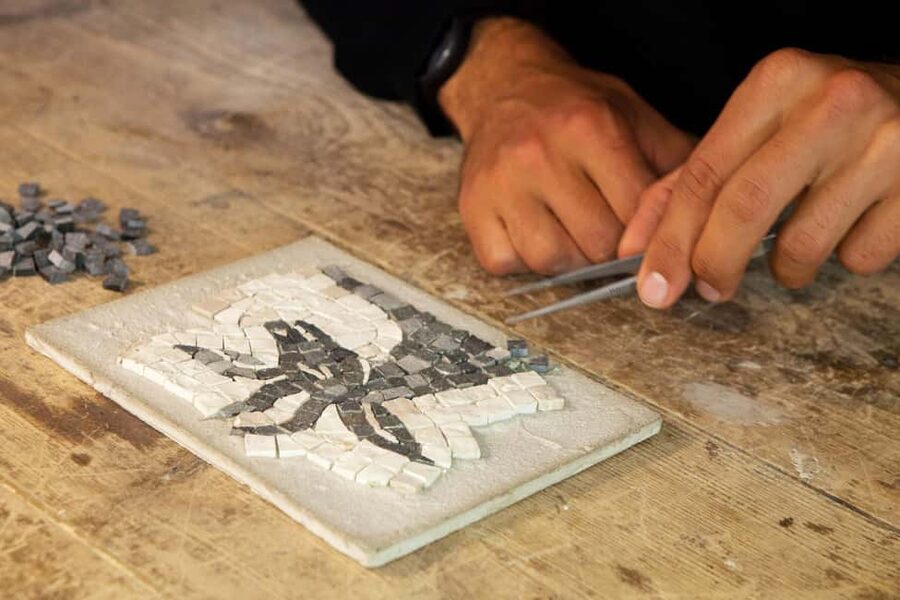
I would book Studio Cassio if you want a hands-on Roman souvenir and enjoy learning by doing. The location near the Colosseum, small groups, local marble, and direct help from artists give the class a clear purpose.
The activity is especially worthwhile after you have seen major Roman mosaics in churches, museums, or ancient sites. You begin to notice the craft in those grand works once you have struggled with a few small pieces yourself.
Skip it if you want a fast stop, a child-friendly activity for under-12s, or a large finished artwork. For everyone else, the $106 price buys more than a trinket. It buys time in a real studio, a lesson in an art form strongly tied to Rome, and a piece you can point to and say you made it yourself.
FAQ
Where does the Roman mosaic workshop take place?
It takes place at Studio Cassio in Rome’s historic Monti neighborhood, near the Colosseum and about a two-minute walk from Cavour station on Metro Line B.
How long does the activity last?
The workshop lasts 2.5 hours. Starting times vary, so you need to check availability for your chosen date.
What age is suitable for the workshop?
The experience is recommended for ages 12 and up. Children under 12 are not permitted to participate for safety reasons.
What languages are available?
Instruction is available in English and Italian.
What will I make during the class?
You will create your own Roman-style mosaic using local natural marble. The finished piece is approximately 7 by 5 inches and weighs about 14 ounces.
Are tools and materials included?
Yes. The workshop includes local marble, all necessary tools, a frame for the artwork, and a sturdy box for protecting it.
Is transportation included?
No. You are responsible for getting to and from the workshop. The studio is close to Cavour Metro station and the Colosseum.
Newest reviews from Rome
- ROME:Colosseum & Ancient Rome – private/small group TOUR★ 5.0 · 24 reviews
- Off the Beaten Track in Rome: Rione VI Parione Private Tour★ 5.0 · 24 reviews
- Cinematic Photoshoot in Rome★ 5.0 · 24 reviews
- Rome: Best of Colosseum and Roman Forum Small Group Guided Tour★ 4.5 · 24 reviews
- The Labyrinth of Rome between catacombs and ancient quarries★ 4.5 · 24 reviews
- Vatican and Trionfale Market Tour with Wine and Food Tasting★ 5.0 · 24 reviews
- private tour: Vatican Museums, Sistine Chapel, St. Peter’s Basilica★ 4.5 · 24 reviews
- Colosseum guided tour with Virtual Reality★ 5.0 · 24 reviews
Workshops, compared.
3 in 1 Cooking Class near Navona: Fettuccine, Ravioli & Tiramisu
Read our review →
Pasta & Tiramisu Class with Fine Wine by the Vatican
Read our review →
Pasta Making Class with Wine, Limoncello, and Dessert
Read our review →
3-in-1 Fettuccine, Ravioli, and Tiramisu Cooking Class
Read our review →
Fettuccine Pasta Cooking Class in Rome’s City Center
Read our review →
Traditional Pasta with Cocktails Cooking Class
Read our review →
Become a Masterchef in Rome: Pasta, Ravioli and Tiramisù Class
Read our review →
Fettuccine and Tiramisu Cooking Class with Wine
Read our review →Browse the lists this tour appears in