
Reviewed · ROME GHOST & LEGEND TOURS
Rome: Angels and Demons Tour Half-Day Semi-Private
The best part of this Rome tour is the way it turns familiar monuments into a story. You follow Dan Brown’s Angels and Demons from Bernini’s dramatic chapel to the grand approach to St. Peter’s, while your guide explains the real Roman art, politics, and church history behind the plot. You do not need to have read the book, though fans will catch more of the clues.
I like the small-group format, which can make a big difference on narrow streets and inside busy churches. I also like the mix of fiction and serious art, especially the chance to see Bernini, Caravaggio, Raphael, and the Pantheon in a single route. The main caution is simple: this is a walking tour, not a relaxed vehicle outing. Heat, uneven paving, church closures, and a quick guide can change the experience.
In This Review
- Key things to know before you book
- Why the Angels and Demons theme works in Rome
- Santa Maria della Vittoria and Bernini’s theatrical chapel
- Santa Maria del Popolo and Rome’s great art mix
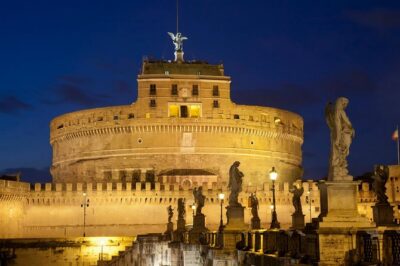
- Castel Sant’Angelo, a fortress beside the Vatican
- The Pantheon and the value of an outside explanation
- St. Peter’s Basilica and the finish at Vatican City
- How much walking should you expect?
- The guide can make or break the outing
- Is $76.89 a fair price?
- Who should choose this tour?
- Should you book it?
- FAQ
- How long is the Angels and Demons tour?
- What language is the tour offered in?
- Where does the tour begin?
- Where does the tour end?
- Is transportation included?
- Does the tour enter the churches?
- Is admission to Castel Sant’Angelo included?
- How large is the group?
- Is the tour suitable for children?
- Can I cancel for a full refund?
Key things to know before you book
- Bernini’s Ecstasy of Saint Teresa: The opening stop at Santa Maria della Vittoria gives the tour its strongest art moment, even if the novel is not your main interest.
- A route across central Rome: You finish near St. Peter’s Basilica after covering several districts, so comfortable shoes are essential.
- Mostly outside viewing: Castel Sant’Angelo, the Pantheon, and St. Peter’s Basilica are described from outside, with history from the guide rather than included interior entry.
- Guide quality matters: Guides including Luisa, Felice, Chiara, Victoria, and Flaminia have been praised for storytelling, flexibility, and personal attention.
- Church schedules can disrupt the plan: Sunday Masses, weddings, and temporary closures have prevented entry at Santa Maria della Vittoria and Santa Maria del Popolo.
- A modest price for personal guiding: At $76.89 per person, the value rests on the guide and the small group, not on included tickets or transportation.
Why the Angels and Demons theme works in Rome
Rome is a natural setting for a mystery built around symbols, churches, fountains, and power. Dan Brown’s story sends its characters through real places, but the tour also shows you why those places mattered long before the novel appeared.
That is the key to enjoying this experience. It is not simply a movie-location checklist. At its best, it uses the book as a thread through Rome’s art and architecture. A guide might point out a Bernini sculpture, explain the role of a church, then connect the details to the fictional clues.
I would book this for someone who likes a story attached to sightseeing. You get more than a standard walk through monuments, but less than a full art-history tour or a ticketed interior tour. If your group includes someone who loves Angels and Demons and someone who has never opened the book, the historical material helps keep both of you involved.
The tour is offered in English and lasts about three hours, though some outings have stretched to three and a half or four hours. The route involves a lot of walking. One account described more than 10 kilometers over four hours, and another noted nonstop walking on uneven streets with plenty of up and down.
That makes the advertised advice to wear comfortable shoes more important than it sounds. In summer, the heat can be a serious factor. A guide named Federico adjusted the pace for a couple dealing with high temperatures, while another guide reportedly walked too fast for one participant. Ask for a slower pace at the start if needed.
More Rome legends after dark:
- Rome by Night Walking Tour – Legends & Criminal Stories
★ 4.5 · 1,003 reviews - Haunted Rome Ghost Tour – The Original
★ 4.5 · 668 reviews - Rome: Angels and Demons Guided Tour
★ 4.7 · 610 reviews
Santa Maria della Vittoria and Bernini’s theatrical chapel
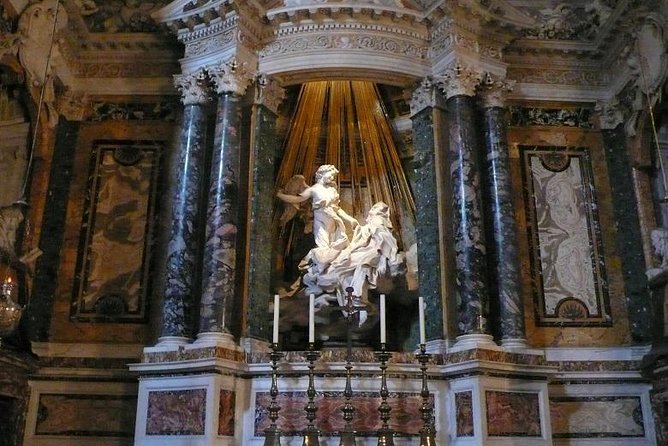
The tour begins at the Church of Santa Maria della Vittoria on Via Venti Settembre. The church is known for Bernini’s Ecstasy of Saint Teresa, located in the Cornaro Chapel.
This is a powerful first stop because the sculpture does not feel like a quiet, distant museum piece. Bernini arranged the chapel as a kind of stage, with Saint Teresa at the center and observers carved into side boxes. The work is a fine example of how Baroque artists used light, movement, facial expression, and architecture to stir emotion.
The church gained a new audience after its appearance in Angels and Demons. Your guide connects the chapel to the novel while also explaining the actual art. That balance matters. If you only hear the fictional plot, you may miss the reasons this chapel is one of Rome’s memorable Baroque interiors.
Admission is listed as free, but entry is not guaranteed. A wedding, service, or temporary closure can block access. One outing had to skip the church because it was unavailable, and another found two planned churches closed on the same day. Sunday can be especially awkward because Mass may limit visits.
If seeing the sculpture is your main reason for booking, check the church schedule close to your tour date and keep expectations flexible. The guide may substitute another church or explain the site from outside, but that is not the same as standing in front of Bernini’s work.
Santa Maria del Popolo and Rome’s great art mix
Santa Maria del Popolo is the second named church stop. Located near Piazza del Popolo, it contains work associated with Raphael, Bernini, Caravaggio, Pinturicchio, Bramante, and other major artists.
For many people, this is the art highlight after Santa Maria della Vittoria. Caravaggio’s paintings in the Cerasi Chapel are especially important, and the church gives you a compact lesson in the artistic competition that shaped Renaissance and Baroque Rome.
The Angels and Demons connection adds a puzzle element. Guides have used clues and visual details to make the visit interactive, asking participants to identify symbols or locate features linked to the story. That approach seems more engaging than simply stopping, listening to dates, and moving on.
Again, access depends on the church’s schedule. Sunday services and special events have caused delays or prevented entry. A guide named Luisa handled one closure by taking the group to another church with useful historical material. That kind of flexibility is a real benefit in Rome, where active churches can change their visitor arrangements without much warning.
Do not expect a long interior visit here. The tour has several major stops and must cross a wide section of the city. The guide’s explanation is likely to be more valuable than an unhurried examination of every chapel.
Castel Sant’Angelo, a fortress beside the Vatican
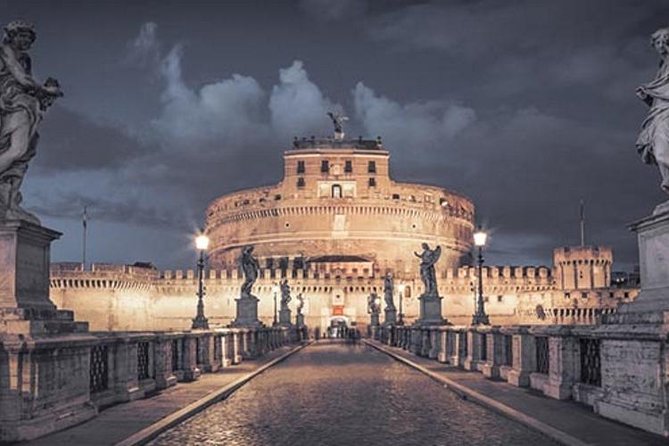
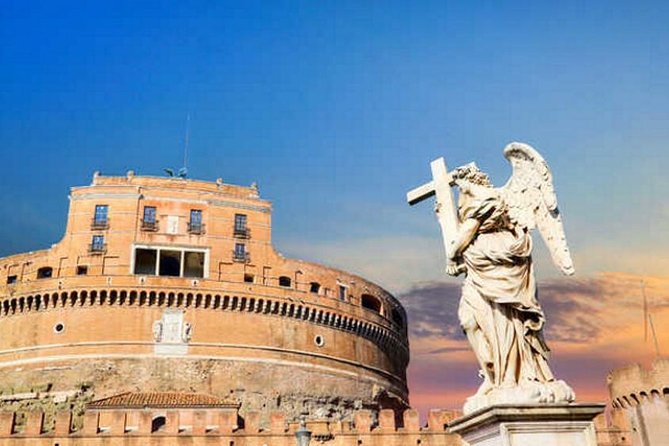
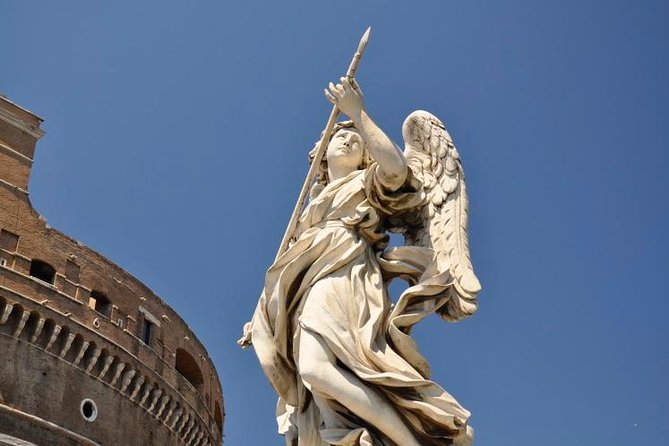
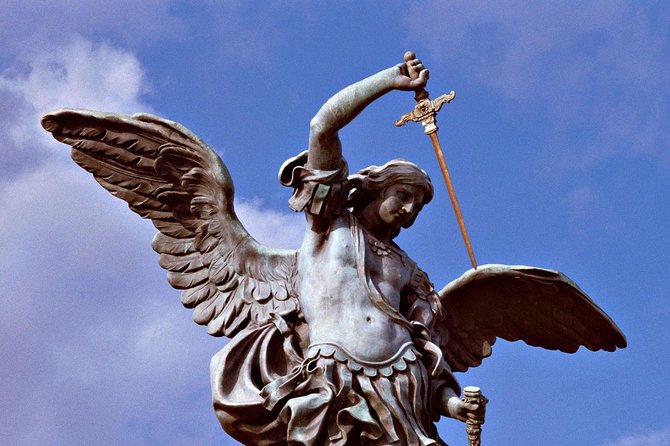
Castel Sant’Angelo is a striking stop because its appearance has changed so much over time. Emperor Hadrian began the building in AD 135 as a mausoleum for himself and his family. Later popes used it as a fortress and castle. It is now a museum.
This tour views Castel Sant’Angelo from outside. You do not enter the museum, and admission is not included. That distinction is important because the fortress has enough interior rooms, ramps, terraces, and views to fill a separate visit.
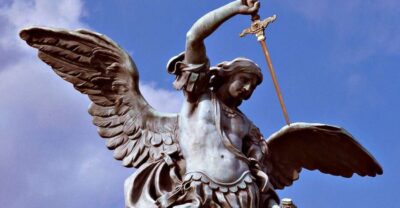
From the exterior, your guide can explain how the building shifted from imperial tomb to papal stronghold. The castle also makes sense as part of the Angels and Demons route because it sits close to the Vatican and carries the atmosphere of old Rome: thick walls, defensive history, and a direct connection to papal power.
The stop works best as a short explanation rather than a full castle visit. If you want the rooftop views or museum interiors, plan another time and budget a separate ticket.
More Rome tours worth comparing
- Hadrian’s Villa and Villa d’Este Half-Day Trip from Rome
★ 3.5 · 808 reviews - Rome Golf Cart Tour : Half-Day Private or Small Group Sightseeing
★ 5.0 · 528 reviews - From Rome: Ostia Antica Guided Half-Day Trip by Train
★ 4.8 · 486 reviews - Catacombs and Roman Countryside Half-Day Walking Tour
★ 4.5 · 411 reviews
The Pantheon and the value of an outside explanation
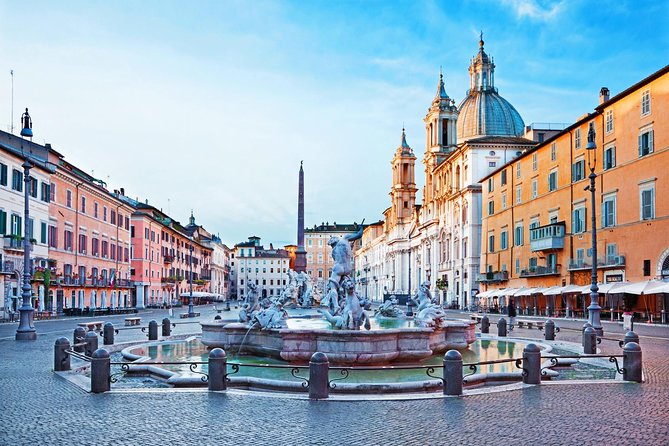
The Pantheon is one of Rome’s best-preserved ancient monuments. Its massive portico and unusual dome still dominate Piazza della Rotonda, and its later life as a Christian church helped preserve the building.
The site also contains the tombs of Italian kings Victor Emmanuel II and Umberto I, as well as the tomb of Raphael. Your guide can use the Pantheon to explain how Rome repeatedly reused older sacred buildings instead of treating them as isolated ruins.
On this tour, you see the Pantheon from outside. That means you will not walk beneath the famous dome or inspect the opening at its center as part of the included experience. The exterior is still impressive, but you should know that the visit is an orientation stop, not an interior tour.
The Pantheon is also a useful place to understand the route’s rhythm. You move between churches, public squares, and major monuments, often with the guide explaining details while the group walks. That creates a lively day, but it also means you need to listen in noisy streets and keep close to the group.
One guide, Vittoria, was described as soft-spoken, making it difficult to hear while walking. A headset or personal listening device is not listed as included, so ask about this if your hearing is not strong or your group is larger.
St. Peter’s Basilica and the finish at Vatican City
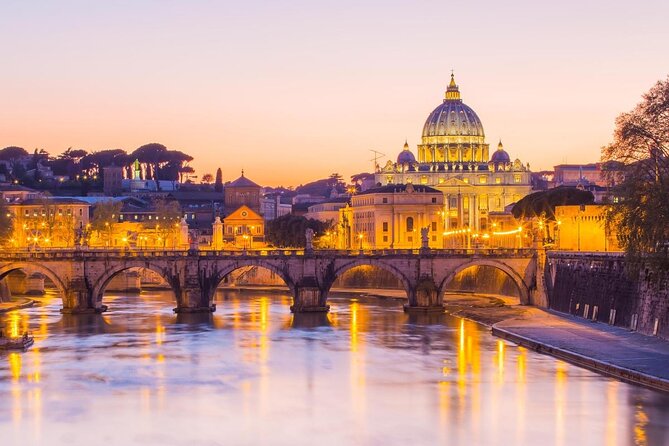
The tour ends at St. Peter’s Basilica in Piazza San Pietro. You view the basilica from outside while the guide explains its place in Renaissance architecture and Catholic history.
St. Peter’s brings the story to its grandest setting. Bramante, Michelangelo, Carlo Maderno, and Bernini all shaped the building, and the vast square gives you a sense of the Vatican’s scale. Even from the outside, the colonnade and facade make a strong final impression.
But do not confuse this stop with a Vatican entry tour. Interior admission is not included, and the stated end point is Saint Peter’s Basilica in Vatican City. If you want to go inside afterward, you need to arrange that separately and account for lines, security, and opening conditions.
Ending here has a practical effect. You are not returned to your hotel, and pickup and drop-off are not included in the official details. Some guides have arranged or provided hotel pickup in particular cases, and one guide helped a tired group find a taxi, but you should not count on either service.
From St. Peter’s Square, you can continue with your own plans or make your way back by public transport or taxi. Build a little time into your schedule rather than booking a tight appointment immediately afterward.
How much walking should you expect?
The word semi-private may suggest a gentle outing. It is not. This is a point-to-point walking route across Rome, with some vehicle use reported in certain arrangements but no transportation included in the stated package.
The exact distance can vary. Some guides have used cars to reduce walking in extreme heat, while other groups walked almost continuously. One group had to walk roughly two miles to reach its first waypoint, and another described more than 10 kilometers over four hours.
I would treat the maximum time as four hours, not three, especially if the group moves slowly, a church is closed, or the guide has to adjust the route. Rome’s paving can be uneven, and the route includes stairs, slopes, and crowded streets.
This is not a good pick for someone who tires easily, struggles in hot weather, or expects to ride between stops. It can work well for active visitors who want to cover several central sights in one outing. Tell the guide early if your group needs a slower pace. The best guides have adapted for children, older adults, heat, and tired people arriving after a long flight.
The guide can make or break the outing
The strongest part of this experience is the human element. Guides such as Irene, Felice, Luisa, Chiara, Victoria, Angelica, Flaminia, and Vittoria have been singled out for warmth, energy, flexibility, and storytelling.
A good guide does three jobs at once. First, the guide links the fictional clues to the real sites. Second, the guide supplies Roman history that you would miss while taking photos. Third, the guide manages the practical problems: a closed church, a tired participant, a changed route, or a group that wants more time at one stop.
The best accounts describe the tour as interactive, with participants looking for angels, symbols, and details instead of passively following a lecture. One guide turned the clues into a small game, which helped a family stay interested during the long walk.
Quality is not guaranteed every time. A few outings had guides who walked too fast, seemed disengaged, or lost their way. One group reported an absent guide at the meeting point and had to pursue a refund. That appears to be an operational failure rather than a normal feature, but it is worth knowing before you commit your limited Rome time.
The group size is also described inconsistently. The included information says a maximum of 14 people, while the additional details say the activity has a maximum of eight. It may operate with different limits depending on the departure, so confirm the expected size when booking. Some departures become effectively private when only one family or couple books.
Is $76.89 a fair price?
At $76.89 per person, this is not the cheapest way to see the sites. You can walk past the Pantheon, Castel Sant’Angelo, and St. Peter’s Square on your own, and church entry is generally listed as free when the buildings are open.
The price pays mainly for the guide, the route planning, and the Angels and Demons focus. It also gives you a chance to ask questions and hear connections that are easy to miss when you move around Rome independently.
The value is strongest for a small group that wants a story-driven walk and personal attention. It is weaker if you mainly want interior access, transportation, or a precise recreation of the novel’s sequence. Since several stops are exterior only, you are not buying a package of monument tickets.
The tour is often booked well ahead, with an average booking time of about 65 days. That suggests planning matters, particularly if your Rome schedule has only one open morning. Still, confirm the operating details and church access near the date, especially for Sunday departures.
Who should choose this tour?
I would choose it for:
- A Dan Brown fan who wants to see the locations in person
- A first-time Rome visitor who likes learning through stories
- A small family group that benefits from a flexible guide
- An active couple comfortable walking several kilometers
- Someone who wants art, church history, and film connections in one outing
I would skip it, or choose a private vehicle-based alternative, if you need minimal walking. I would also avoid relying on it for a Sunday church itinerary unless you are comfortable with substitutions and exterior explanations.
The tour works for people who have not read the novel, but the story hook may not be enough for everyone. If your group has no interest in the book or film, a general Rome art tour may offer better value. If one person is a major fan, the route can give that person a memorable experience while the historical commentary gives everyone else a reason to stay engaged.
Should you book it?
Book this tour if you want Rome presented as a living mystery, can handle a long walk, and value a personable guide more than included admissions. The art at Santa Maria della Vittoria and Santa Maria del Popolo can reward you even if the novel is only a starting point.
Think twice if your schedule is tight, your group has mobility concerns, or you need guaranteed church entry. Before paying, confirm the group-size limit, meeting arrangements, walking expectations, and plans for Sundays or hot weather. With the right expectations, this can be an entertaining way to connect famous Roman places. With the wrong ones, it can feel like a tiring march between closed doors.
FAQ
How long is the Angels and Demons tour?
The advertised duration is approximately three hours. Some outings have lasted three and a half to four hours, particularly when the group walked slowly or the route needed adjustments.
What language is the tour offered in?
The tour is offered in English.
Where does the tour begin?
The meeting point is the Church of Santa Maria della Vittoria, Via Venti Settembre 17, Rome.
Where does the tour end?
The tour ends at Saint Peter’s Basilica, Piazza San Pietro, Vatican City.
Is transportation included?
Pickup and drop-off are not included in the stated tour details. Some individual arrangements have involved hotel pickup or vehicle use, but you should not assume those services are part of your booking.
Does the tour enter the churches?
The itinerary lists Santa Maria della Vittoria and Santa Maria del Popolo as stops with free admission, but access can be affected by Masses, weddings, or closures. Castel Sant’Angelo, the Pantheon, and St. Peter’s Basilica are viewed from outside.
Is admission to Castel Sant’Angelo included?
No. The tour views Castel Sant’Angelo from outside, and entry to the museum is not included.
How large is the group?
The tour is described as a small group. One section gives a maximum of 14 people, while another gives a maximum of eight, so confirm the expected group size before booking.
Is the tour suitable for children?
Most participants can take part, and a guide has accommodated young children. The main issue is the amount of walking, heat, and uneven Roman pavement.
Can I cancel for a full refund?
Yes. You can cancel at least 24 hours before the local start time for a full refund. Cancellations or changes made less than 24 hours before the start are not accepted for a refund.
Newest reviews from Rome
- ROME:Colosseum & Ancient Rome – private/small group TOUR★ 5.0 · 24 reviews
- Off the Beaten Track in Rome: Rione VI Parione Private Tour★ 5.0 · 24 reviews
- Cinematic Photoshoot in Rome★ 5.0 · 24 reviews
- Rome: Best of Colosseum and Roman Forum Small Group Guided Tour★ 4.5 · 24 reviews
- The Labyrinth of Rome between catacombs and ancient quarries★ 4.5 · 24 reviews
- Vatican and Trionfale Market Tour with Wine and Food Tasting★ 5.0 · 24 reviews
- private tour: Vatican Museums, Sistine Chapel, St. Peter’s Basilica★ 4.5 · 24 reviews
- Colosseum guided tour with Virtual Reality★ 5.0 · 24 reviews
Rome Ghost & Legend Tours, compared.
Rome by Night Walking Tour – Legends & Criminal Stories
Read our review →
Small Group Rome’s Dark Side – Ghosts & Legends Tour
Read our review →
Dark Heart of Rome – Facts, Legend & Mystery Walking Tour
Read our review →
Ghosts, Legends & Mysteries of Rome Tip-Based Walking Tour
Read our review →Browse the lists this tour appears in