
Reviewed · CASTEL SANT'ANGELO TOURS
Rome: Castel Sant’Angelo Entrance Ticket
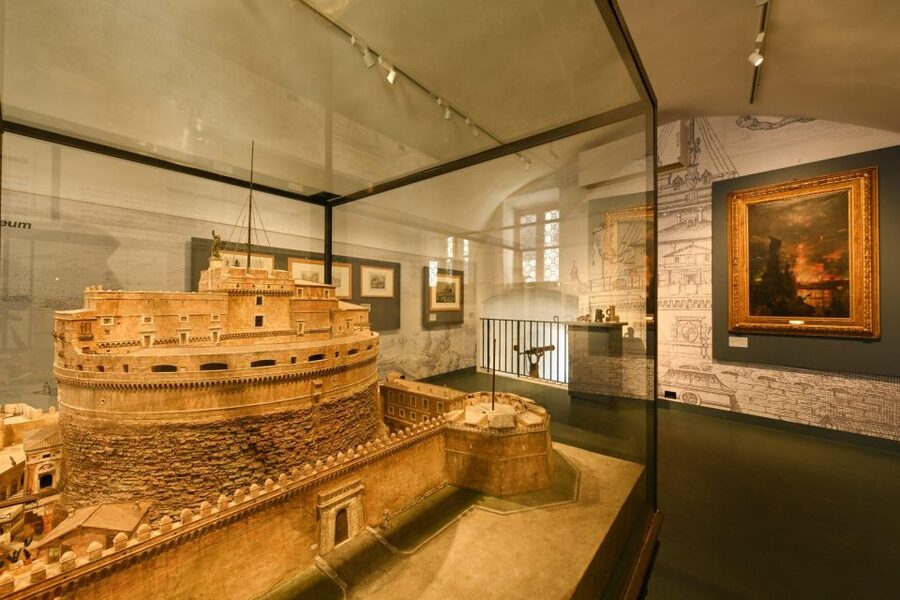
Castel Sant’Angelo is one of Rome’s best history lessons because the building keeps changing character as you walk through it. It began as Emperor Hadrian’s mausoleum, then became a fortress, papal refuge, castle, and prison. I love that you can follow those changes inside one compact monument.
I also like the freedom of a self-guided visit. Your smartphone ticket gets you past the ticket line, and you can move at your own pace through the chambers and up to the roof. The panoramic terrace is the big payoff, with views toward the Tiber, Rome’s skyline, the Vatican, and St. Peter’s Basilica.
The main drawback is physical: reaching the terrace means climbing a series of stairs. The castle is not suitable for wheelchair users or people with mobility impairments, and large bags, luggage, pets, weapons, sharp objects, sprays, and aerosols are not allowed.
In This Review
- Key points to know before you go
- Why Castel Sant’Angelo feels different from other Roman sights
- Entering with the smartphone ticket
- Starting with Emperor Hadrian’s mausoleum
- Following the castle’s military role
- Seeing the opulent Papal Apartments
- Climbing to the terrace and Roman skyline
- How much time and value to allow
- What to bring and what to leave behind
- Who will enjoy this visit most
- Should you book Castel Sant’Angelo?
- FAQ
- Where is Castel Sant’Angelo located?
- How much does the entrance ticket cost?
- How long is the ticket valid?
- Is this a guided tour?
- How do I enter Castel Sant’Angelo?
- When will I receive my ticket?
- Do I need to bring identification?
- Are there stairs inside the castle?
- Is the experience suitable for wheelchair users?
- What items are not allowed?
Key points to know before you go
- Hadrian’s mausoleum: Begin with the original Roman purpose of the monument before seeing how later rulers reshaped it.
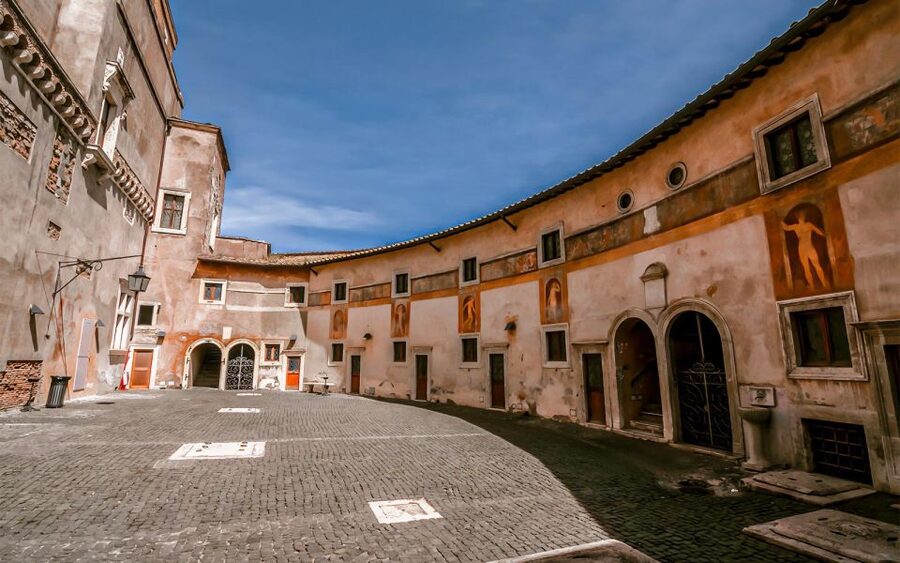
- Papal apartments: Renaissance frescoes and period furniture reveal the castle’s more luxurious side.
- Terrace views: Climb to the ramparts for one of the clearest high views toward St. Peter’s Basilica and the Vatican.
- Self-guided freedom: There is no required meeting point or tour group, so you set the pace.
- Digital entry: Show the e-ticket on your phone at the entrance. It is sent by email in the late afternoon of the day before your visit.
- Physical demands: Stairs are part of the experience, and comfortable shoes will make the visit easier.
Why Castel Sant’Angelo feels different from other Roman sights
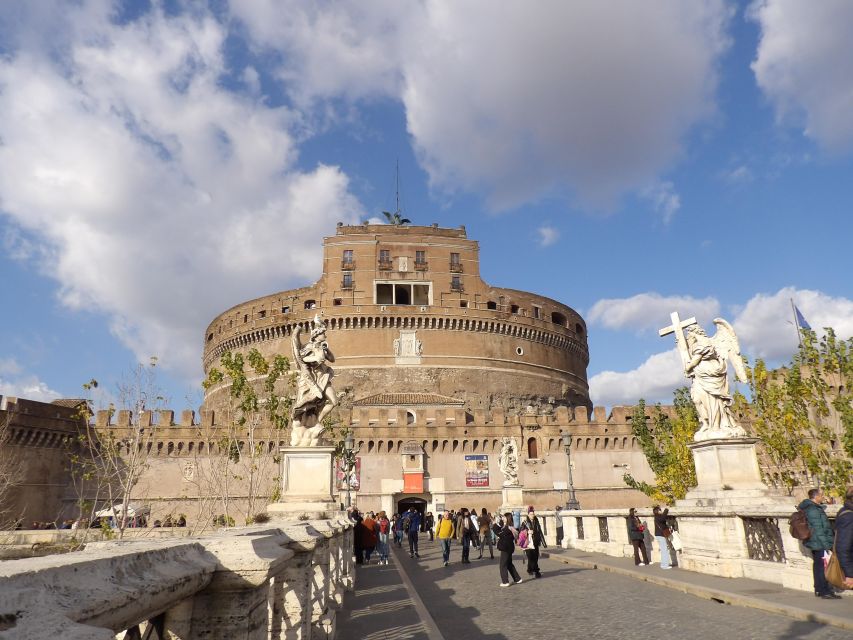
Many Roman monuments tell you about one period. Castel Sant’Angelo makes you walk through several. Its thick walls and defensive passages feel practical and severe, while the papal rooms bring in painted decoration and courtly comfort. The result is less like a single historical snapshot and more like a building that kept getting new jobs.
The monument began as a mausoleum for Emperor Hadrian. That gives the first part of your visit a Roman imperial setting, but the building did not remain a tomb. Over time, it was adapted into a military stronghold, a castle, a prison, and a refuge for popes during dangerous periods.
That sequence matters when you visit. You are not simply looking at old rooms. You are seeing how Rome reused an important structure as political power shifted. The same walls that protected imperial remains later helped defend the city and shelter pontiffs.
This ticket is designed for an independent visit. There is no guide named in the booking information, and no scheduled walking commentary is included. If you enjoy stopping for as long as you like, that is a strength. If you prefer a storyteller to explain every room, you will need to bring your own guidebook or research.
More Castel Sant'Angelo visits:
- Castel Sant’Angelo Skip-the-Line Entry & Optional Audioguide
★ 4.4 · 5,233 reviews - Rome: Castel Sant’Angelo Skip-the-Line Ticket & Audio Guide
★ 4.4 · 3,500 reviews - Rome: Castel Sant’Angelo Skip-the-Line Ticket
★ 4.4 · 3,040 reviews
Entering with the smartphone ticket
The practical appeal is simple. Your ticket is sent by email in the late afternoon of the day before your reserved entry date. You show the e-ticket on your smartphone at the entrance and use the skip-the-line access for the ticket counter.
Check your spam folder if the message does not appear. This is a small step, but it matters. Do not wait until you are standing outside the castle to discover that the voucher email has been filtered away.
The ticket is valid for one day, with available starting times shown when you reserve. It is not described as a guided tour, so you are not joining a group or waiting for a guide to gather everyone. Once inside, you can set a comfortable rhythm and give extra time to the rooms and views that interest you most.
The skip-the-line feature saves time at the ticket desk. It does not mean you can ignore normal entry procedures, and the ticket information does not promise instant passage through every possible security check. Still, avoiding the purchase queue is useful in a city where each saved half hour can help.
Bring your passport or ID card. The entry information lists identification as something to have with you, so keep it easy to reach rather than buried in a large bag.
Starting with Emperor Hadrian’s mausoleum

Begin in the oldest layer of the castle, the mausoleum built for Hadrian. This is the point where the monument’s scale and original purpose come into focus. It was created as an imperial tomb, not as the fortress you see today.
The early rooms and corridors help you understand the building’s heavy, enclosed character. As you move through them, look for the contrast between the solemn function of a mausoleum and the later military use of the same structure. The architecture is not presented as a single neat period, because it was altered for practical needs over the centuries.
This part rewards patience. You may be tempted to hurry toward the terrace, but the lower and inner spaces explain why Castel Sant’Angelo became such a useful stronghold. The enclosed routes and massive construction give the building a serious feel that is hard to grasp from the outside.
I would allow enough time to read the displays and orient yourself before climbing higher. The visit makes more sense once you understand that the fortress grew out of an imperial tomb.
Following the castle’s military role
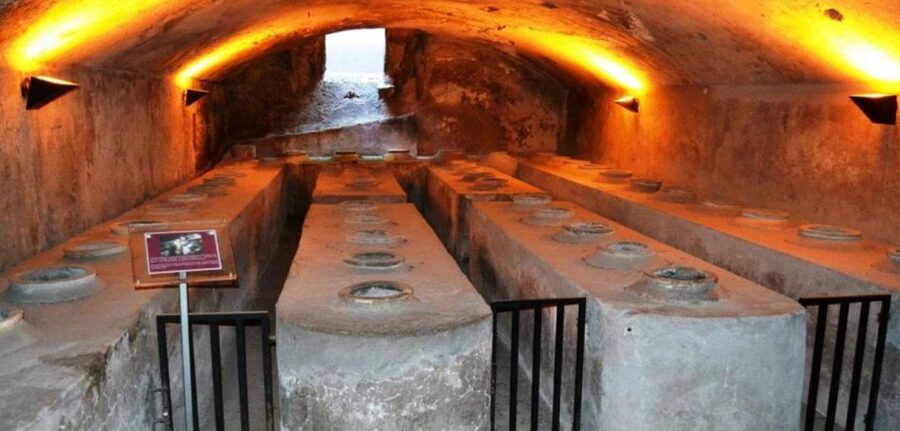
Castel Sant’Angelo’s next story is one of defense. Its position by the Tiber and its thick construction made it useful as a military fortress protecting Rome. You can see this change in the defensive structures and strategic layout.
The military sections are less polished than the papal rooms, but they may be more revealing. They show the building as a working stronghold rather than a ceremonial palace. Corridors, barriers, and fortified areas point to a place built for danger and control.
The castle also served as a prison. That adds a harsher note to the visit. The same complex that offered refuge to popes also confined prisoners, making the monument’s history feel less comfortable and more human.
Do not expect a modern museum layout where every feature is explained in a straight line. You are moving through a building shaped by many uses. That can make the visit feel slightly confusing at times, but it is also the reason the castle has such a strong sense of place.
More Rome tours worth comparing
- Vatican: Museums & Sistine Chapel Entrance Ticket
★ 4.5 · 144,003 reviews - Rome:Hop-On Hop-Off Panoramic Open Bus Ticket 3 Circuits x 1
★ 4.0 · 15,405 reviews - Vatican Museums & Sistine Chapel Skip-the-Line Entry Ticket
★ 4.4 · 13,838 reviews - Rome: Vatican Museums & Sistine Chapel Skip-The-Line Ticket
★ 4.2 · 11,708 reviews
Seeing the opulent Papal Apartments
The Papal Apartments offer the sharpest change in mood. Here, the fortress gives way to decorated rooms associated with papal life. Renaissance frescoes and period furniture show the wealth and ceremony that could exist behind the defensive walls.
These rooms are valuable because they prevent you from reducing Castel Sant’Angelo to a military site. Popes did not use it only as a bunker. They also occupied spaces designed to express status, taste, and authority.
Take time to notice how different these apartments feel from the darker, more functional passages. The contrast tells you a great deal without requiring a long lecture. One part of the building was meant to keep threats out. Another was meant to make power visible.
The booking information does not include a guide, so you may need to read the room notes carefully. That self-guided format works well if you prefer to linger over the frescoes, furniture, and architectural details. It is less suitable if you want an expert to connect every decoration to a date or historical figure.
Climbing to the terrace and Roman skyline

The terrace is the natural high point of the visit. From the historic ramparts, you get broad views across Rome, with the Tiber below and St. Peter’s Basilica and the Vatican among the key sights in the distance.
This is not just a photo stop. The view helps explain the castle’s strategic value. From above, you can see why this location mattered for watching and defending the city. You also get a useful sense of how the monument relates to Rome’s larger urban setting.
Bring comfortable shoes, since the climb includes a series of stairs. The ticket information specifically warns about this, and it should shape your planning. The route is not presented as suitable for wheelchair users or people with mobility impairments.
If stairs are difficult for you, the terrace may not be a realistic goal, and the upper rooms could also be tiring. For visitors who can manage the climb, the view is likely to be the most memorable part of the visit. It gives you a clear visual reward after the enclosed corridors and apartments.
Keep your phone ready for the skyline, but do not let the camera work take over. Pause long enough to look at the river, the rooftops, and the Vatican area without a screen in front of you.
How much time and value to allow
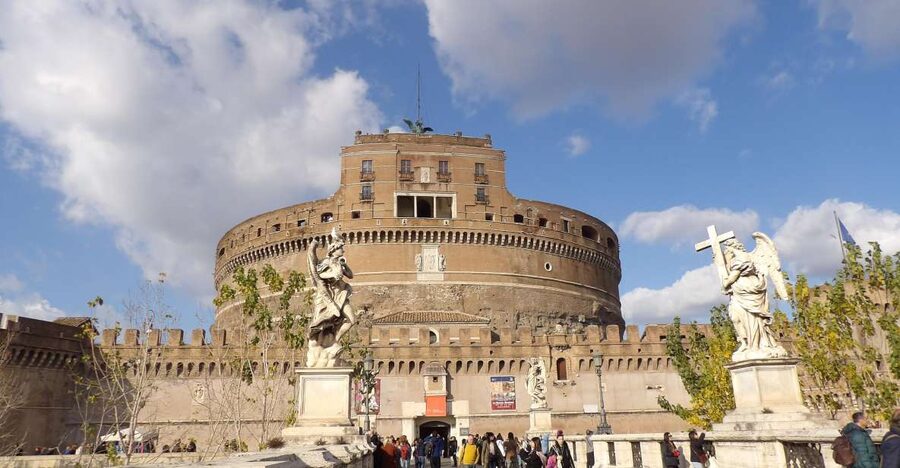
The ticket costs $32 per person and is valid for one day. No fixed tour duration is given, so your time inside depends on how closely you examine the rooms and how long you spend on the terrace.
At that price, the value rests on three things: the building’s unusual range of uses, the convenience of skipping the ticket counter, and the views from the ramparts. You are paying for entry rather than a guide, meal, transfer, or bundled attraction.
I think the price makes the most sense if you already want to see Castel Sant’Angelo and value a flexible visit. The ticket saves you from buying admission at the counter and lets you explore without being tied to a group schedule. If you are mainly seeking a quick photo from outside, it will not be good value because the ticket is for entering and exploring the monument.
The reserve-now-and-pay-later option can help if your Rome plans are still shifting. You can reserve without paying immediately, and free cancellation is available up to 24 hours before the visit for a full refund. Check the available starting times before you commit your day around it.
What to bring and what to leave behind
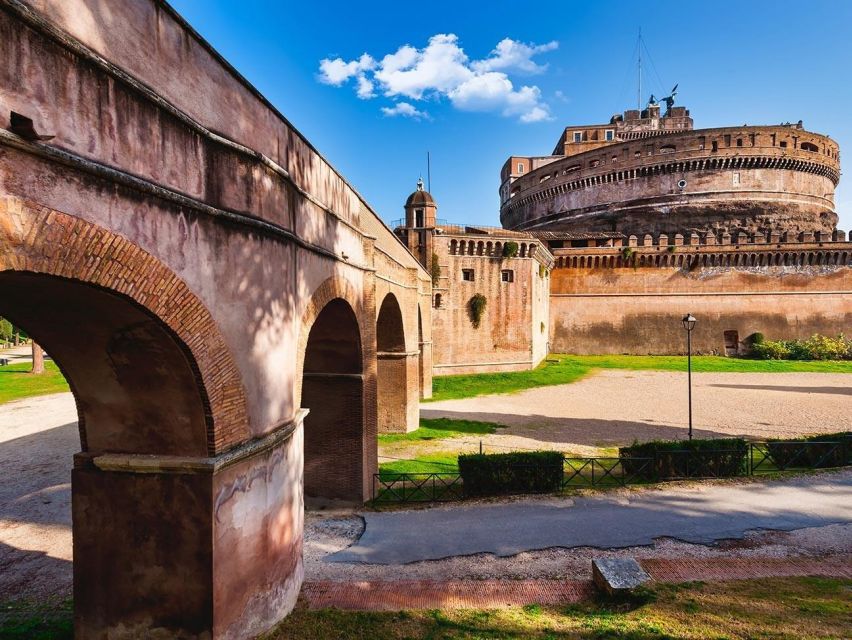
Wear comfortable clothes and shoes. This is not a flat museum visit, and the stairs to the terrace are an important part of the route.
Bring your passport or ID card, along with a charged smartphone for the e-ticket. Since the voucher arrives by email the afternoon before your entry date, save it where you can display it easily.
Large bags and luggage are not allowed. Pets are also not allowed, and you cannot bring weapons, sharp objects, sprays, or aerosols. Pack light so the entrance process is straightforward.
The practical plan is simple: check your email the day before, check the spam folder if needed, charge your phone, wear supportive shoes, and avoid bringing anything listed as prohibited.
Who will enjoy this visit most
This ticket suits you if you like history but prefer to explore independently. You can move from Roman imperial architecture to military defenses, prison spaces, papal rooms, and rooftop views without following a fixed guide.
It is especially useful for visitors who want to pair the castle with time around the Vatican area, since the views include St. Peter’s Basilica and the Vatican. The ticket information does not include transportation or a guided connection between sights, so plan those parts yourself.
Families with children may appreciate the castle-like setting and the change between corridors, rooms, and ramparts. The stairs and no-large-bag rule require planning, though. Anyone with limited mobility should choose another Roman attraction because this experience is specifically not suitable for wheelchair users or people with mobility impairments.
History fans will get the most from the layered timeline. Casual sightseers can still enjoy the views and grand rooms, but the castle rewards you more if you pay attention to how each use changed the building.
Should you book Castel Sant’Angelo?
Book this ticket if you want an independent look at one of Rome’s most unusual monuments. The combination of Hadrian’s mausoleum, a military fortress, prison spaces, papal apartments, and a high terrace gives you more variety than a single-purpose museum.
The strongest reasons to go are the freedom to explore at your own pace, the convenient smartphone entry, and the views toward the Vatican and Rome. The main reasons to hesitate are the $32 price, the lack of an included guide, and the stairs.
For the best experience, read a little about Hadrian and the castle’s papal and military roles before you arrive. That preparation will help the rooms connect into a clear story instead of feeling like a series of unrelated chambers.
FAQ
Where is Castel Sant’Angelo located?
Castel Sant’Angelo is in Lazio, Italy, in Rome.
How much does the entrance ticket cost?
The ticket costs $32 per person.
How long is the ticket valid?
The ticket is valid for one day. Available starting times are shown when you check availability.
Is this a guided tour?
No guide is included in the provided activity details. You explore Castel Sant’Angelo independently at your own pace.
How do I enter Castel Sant’Angelo?
Show the e-ticket on your smartphone at the entrance. The ticket provides skip-the-line access at the ticket counter.
When will I receive my ticket?
The ticket is sent by email in the late afternoon of the day before your entry date. Check your spam folder if it does not arrive.
Do I need to bring identification?
Yes. Bring your passport or ID card with you.
Are there stairs inside the castle?
Yes. You need to climb a series of stairs to reach the panoramic terrace.
Is the experience suitable for wheelchair users?
No. The activity is not suitable for wheelchair users or people with mobility impairments.
What items are not allowed?
Pets, weapons, sharp objects, luggage, large bags, sprays, and aerosols are not allowed.
Newest reviews from Rome
- ROME:Colosseum & Ancient Rome – private/small group TOUR★ 5.0 · 24 reviews
- Off the Beaten Track in Rome: Rione VI Parione Private Tour★ 5.0 · 24 reviews
- Cinematic Photoshoot in Rome★ 5.0 · 24 reviews
- Rome: Best of Colosseum and Roman Forum Small Group Guided Tour★ 4.5 · 24 reviews
- The Labyrinth of Rome between catacombs and ancient quarries★ 4.5 · 24 reviews
- Vatican and Trionfale Market Tour with Wine and Food Tasting★ 5.0 · 24 reviews
- private tour: Vatican Museums, Sistine Chapel, St. Peter’s Basilica★ 4.5 · 24 reviews
- Colosseum guided tour with Virtual Reality★ 5.0 · 24 reviews
Castel Sant'Angelo Tours, compared.

Castel Sant’Angelo Skip-the-Line Entry & Optional Audioguide
Read our review →
Castel Sant’Angelo Skip-the-Line Ticket & Audio Guide
Read our review →

Castel Sant’Angelo Skip-the-Line Entry Ticket
Read our review →



Browse the lists this tour appears in