
Reviewed · CASTEL SANT'ANGELO TOURS
Rome: Castel Sant’Angelo Skip the Line Private Tour
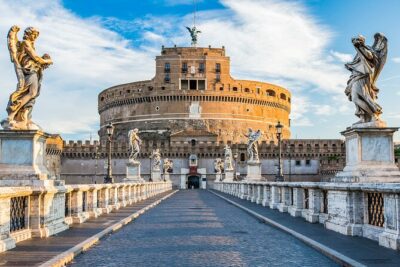
Castel Sant’Angelo is one of Rome’s most unusual time machines. It began as Emperor Hadrian’s tomb, then became a fortress, papal residence, treasury, prison, and execution site. This private tour connects those changes as you move through the building, ending high above the Tiber with one of the city’s finest views.
I like the private format, which gives you room to ask questions instead of following a large crowd. I also like the route’s mix of art, military architecture, papal rooms, and big city views. The main drawback is physical: reaching the terrace means climbing stairs, and the tour is not suitable for wheelchair users or people with mobility impairments.
In This Review
- Key points to know before booking
- Why Castel Sant’Angelo feels different from other Roman sights
- Meeting your guide beside the bridge
- Entering the emperor’s burial place
- From Roman monument to fortified castle
- Pope Paul III’s frescoed apartment
- The treasury room and the castle’s valuables
- Climbing toward the panoramic terrace
- Is two hours enough?
- What the private guide adds
- Is $214.11 per person a fair price?
- Practical details for a smoother visit
- Who should book this Castel Sant’Angelo tour?
- Should you book it?
- FAQ
- How long does the Castel Sant’Angelo tour last?
- Is the tour private?
- Who is the guide?
- What does the tour include?
- Does the tour include hotel pickup?
- Is the tour suitable for wheelchair users?
- Can I cancel the booking?
Key points to know before booking
- Hadrian’s tomb forms the starting point: See the original purpose of the building before it became a papal fortress.
- Pope Paul III’s apartment adds some of Rome’s finest decoration: The frescoes bring a polished Renaissance contrast to the heavy defensive walls.
- The top terrace is the payoff: You’ll get broad views over Rome and plenty of chances for panoramic photos.
- A private English-speaking guide keeps the visit focused: Guide Mates is specifically praised for answering questions and staying attentive to the castle’s details.
- The two-hour length is efficient: You can see the main rooms and viewpoints without giving up half a day.
- Stairs are part of the experience: Comfortable shoes are essential, and the terrace comes with a physical cost.
Why Castel Sant’Angelo feels different from other Roman sights
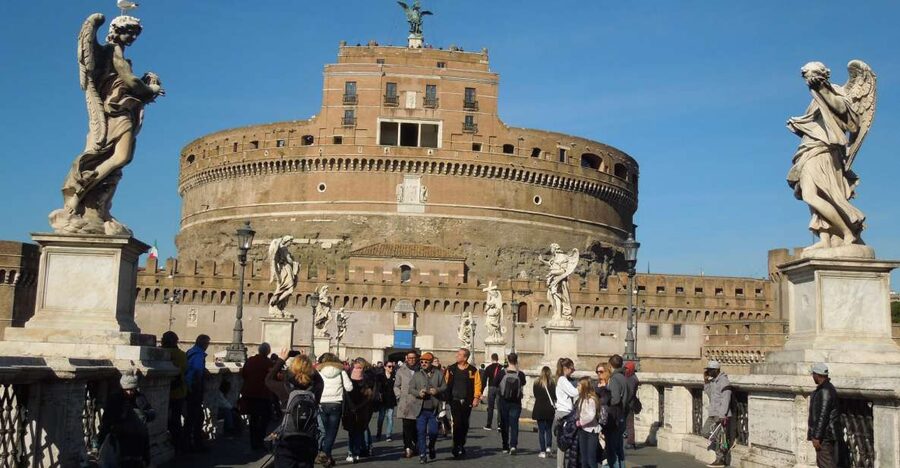
Many Roman monuments tell one main story. Castel Sant’Angelo keeps changing roles as you walk through it. The cylindrical core recalls the Roman Empire, the thick walls speak to medieval warfare, and the decorated papal rooms reveal a more private side of the Renaissance church.
That mix gives the castle its appeal. You are not simply looking at an old building. You are moving through a structure that was repeatedly altered to meet new needs. An emperor needed a monumental tomb. Popes needed a fortified residence and a secure refuge. The state needed somewhere to store valuables, hold prisoners, and stage public executions.
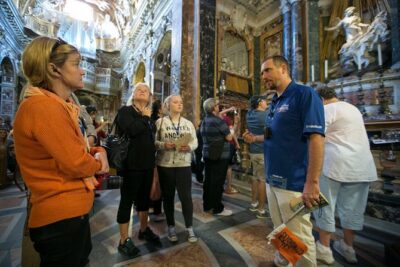
I find that a guide matters here because the building can otherwise feel like a maze of corridors, ramps, rooms, and stairways. A good explanation helps you understand why the same space looks Roman in one moment and papal in the next. The private setup also means you can stop to ask about a painting, a defensive feature, or the castle’s changing purpose.
More Castel Sant'Angelo visits:
- Castel Sant’Angelo Skip-the-Line Entry & Optional Audioguide
★ 4.4 · 5,233 reviews - Rome: Castel Sant’Angelo Skip-the-Line Ticket & Audio Guide
★ 4.4 · 3,500 reviews - Rome: Castel Sant’Angelo Skip-the-Line Ticket
★ 4.4 · 3,040 reviews
Meeting your guide beside the bridge
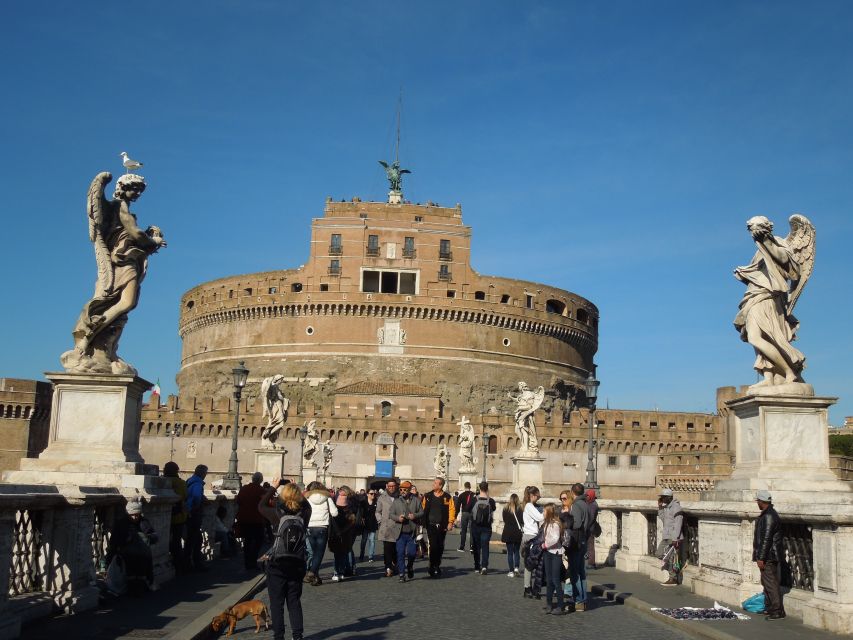
The meeting point is straightforward once you know what to look for. Your guide meets you in the square at the end of the bridge, outside the main entrance to Castel Sant’Angelo. The tour ends at the same point, so you do not need to arrange transportation back to your starting place.
That is useful in Rome, where meeting points can sometimes be hidden on a busy street. Still, give yourself enough time to reach the square and identify the entrance area. Hotel pickup and drop-off are not included, so you are responsible for getting to the castle.
The tour is conducted in English and is offered as a private group. The exact guide can vary, but Mates is one guide specifically praised for expert explanations, patient answers, and attention to the group’s interests. That is the kind of guiding that suits Castel Sant’Angelo well. The building rewards questions.
Entering the emperor’s burial place

The castle was built by Emperor Hadrian as his mausoleum. Hadrian and several successors were buried there, making the structure more than a military monument. Its first purpose was ceremonial and funerary, built to project imperial power even after death.
Seeing the tomb area early in the tour gives you a useful anchor. Before you look at papal frescoes or defensive walls, you learn what the building was meant to be. The massive form suddenly makes more sense: this was designed as an imposing burial monument, not merely as a fort.
Do not expect a quiet, empty tomb chamber with the feel of a traditional church crypt. The castle’s later uses changed and surrounded the original Roman core. The value here is understanding how the first building became the base for everything that followed.
Your guide can also help separate the original Roman structure from later additions. That distinction is easy to miss when you are looking at the castle as a whole. The tour’s focus on architectural changes is one of its strongest features.
From Roman monument to fortified castle
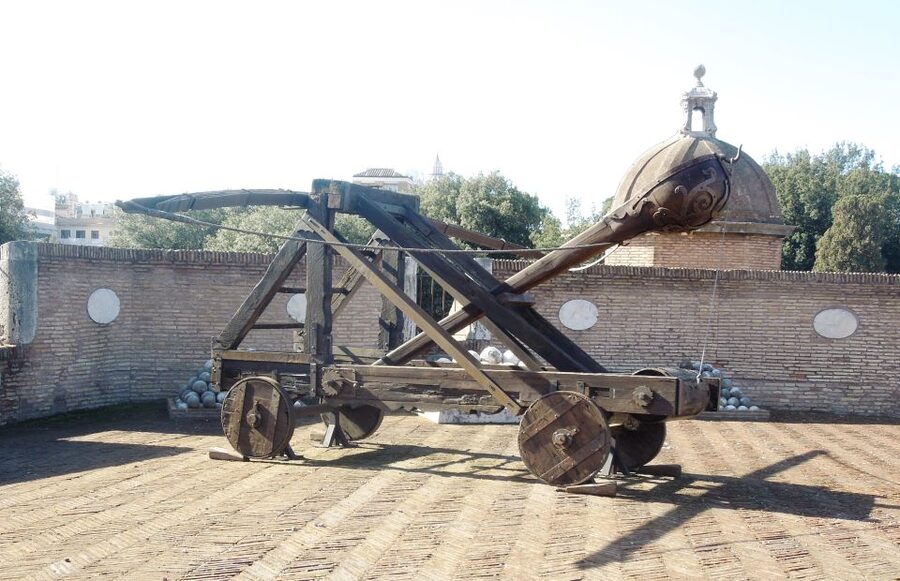
Castel Sant’Angelo’s later life was practical and often grim. It became a fortress, a papal residence, a treasury, a prison, and a place for public executions. Each role left its mark on the building.
The fortified walls are especially important because they show how Rome adapted an imperial monument for defense. Thick masonry and controlled routes tell a different story from the ceremonial tomb below. You can see how security became more important than symmetry or beauty.
This is also where a private guide earns the extra cost. A self-guided visit can show you the walls, but it may not explain the pressure behind the changes. The castle was used because its position and strength made it useful. Its rooms were not preserved as a single carefully planned palace. They were altered over centuries.
The prison history adds a darker edge. Castel Sant’Angelo was not only a place of power and safety. It also confined people and witnessed public punishment. That contrast makes the visit more honest. You see the papal apartments and elegant decorations, but you also learn that comfort and fear occupied the same complex.
More Rome tours worth comparing
- Vatican Museums & Sistine Chapel Skip-the-Line Entry Ticket
★ 4.4 · 13,838 reviews - Skip-the-Line Group Tour of the Vatican, Sistine Chapel & St. Peter’s Basilica
★ 4.5 · 12,779 reviews - Rome: Vatican Museums & Sistine Chapel Skip-The-Line Ticket
★ 4.2 · 11,708 reviews - Vatican, Sistine Chapel & St. Peter’s Skip-the-Line Tour
★ 4.5 · 7,770 reviews
Pope Paul III’s frescoed apartment
The papal apartment of Paul III is one of the tour’s most attractive stops. Here the mood shifts from fortress to palace. The frescoes give you a chance to see the artistic side of papal life, with decorated rooms set against the rougher military character of the castle.
This is an especially good stop for anyone who enjoys painting but does not want a tour devoted only to art. You get the frescoes in context. They were part of a private papal residence inside a building designed to protect power, store valuables, and control movement.
The apartment also shows how popes used Castel Sant’Angelo as more than a defensive outpost. It could serve as a residence, a symbol of authority, and a secure place to retreat. The decorated rooms make that purpose visible.
Lighting and room access can affect how easily you see the paintings, so listen closely to your guide’s explanation rather than rushing through. The tour is only two hours, but the private format should let you spend a little extra time on details that interest you.
The treasury room and the castle’s valuables
The treasury room adds another piece to the castle’s story. This was not simply a home or a church-related residence. It also protected important wealth and possessions.
The room’s significance comes from its function. A treasury inside a fortified papal building tells you how closely religion, government, and security were linked in Rome. The thick walls were not decorative. They helped protect the resources held by the papal state.
You may find this stop less visually dramatic than the frescoed apartment or the terrace, but it is valuable for understanding how the castle worked. It was a functioning center of power. The treasury belongs to that practical side of the building.
If you prefer art and views, this may be a shorter part of your visit. If you enjoy institutions, politics, and the mechanics of power, pay attention here. It helps explain why the castle remained important long after Hadrian’s burial.
Climbing toward the panoramic terrace
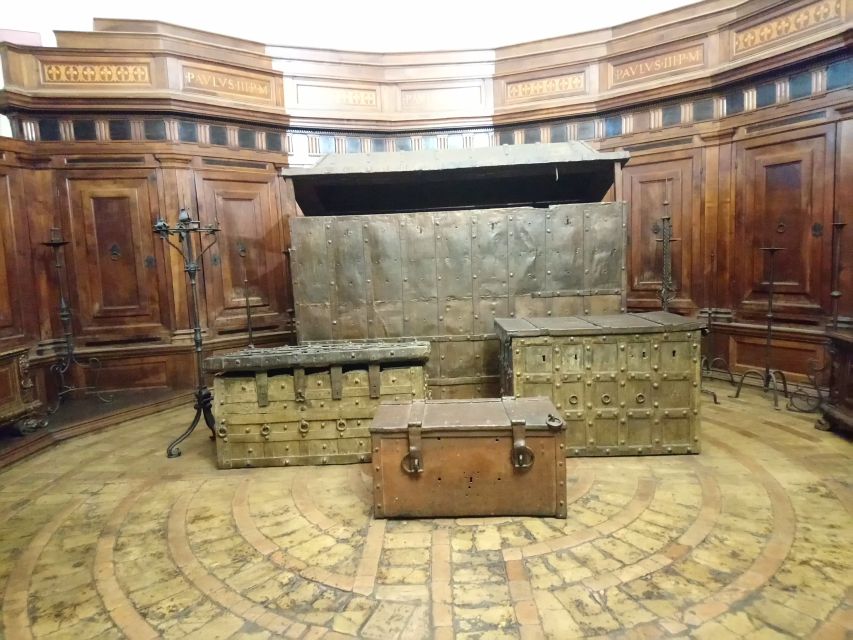
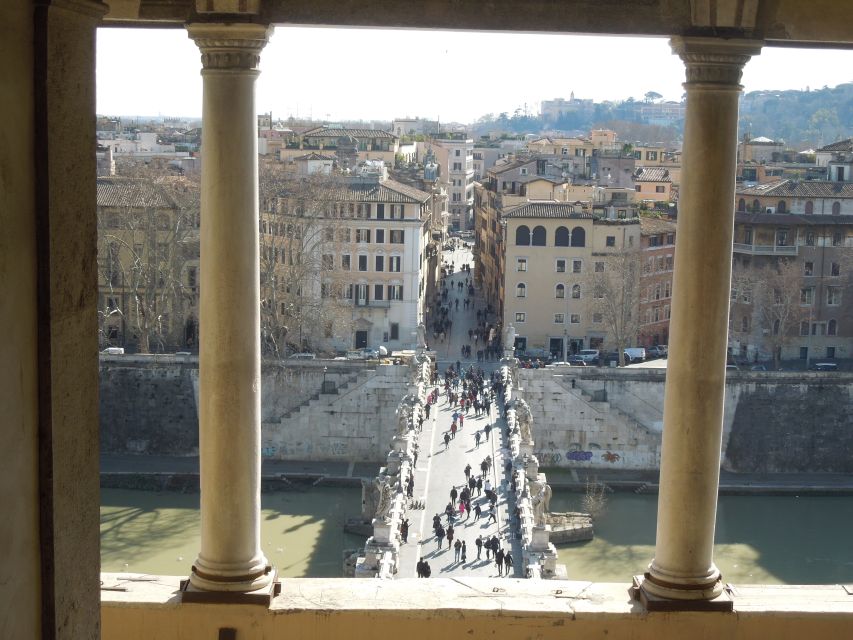
The terrace is the tour’s clear visual reward. From the top, you can take panoramic photos of Castel Sant’Angelo and Rome, with a broad view that makes the city’s size and layered architecture easier to grasp.
The climb is not optional if you want the highest viewpoint. You will need to handle a series of stairs, so wear comfortable shoes and plan for a physical effort. This tour is not suitable for wheelchair users or people with mobility impairments.
That limitation should be part of your booking decision, not an afterthought. The castle’s stairways and historic construction are part of its character, but they also limit access. If someone in your group has trouble with stairs, this is probably not the right attraction.
For those who can manage the climb, the terrace gives the tour a strong finish. You have moved from the emperor’s burial place through papal rooms and defensive spaces, then arrive above the city. The viewpoint ties the whole visit together by showing why control of this site mattered.
Bring a camera, but do not spend the entire stop taking pictures. Give yourself time to look at Rome from the terrace. The views are one of the included features, and you will want a few minutes simply to take in the setting.
Is two hours enough?
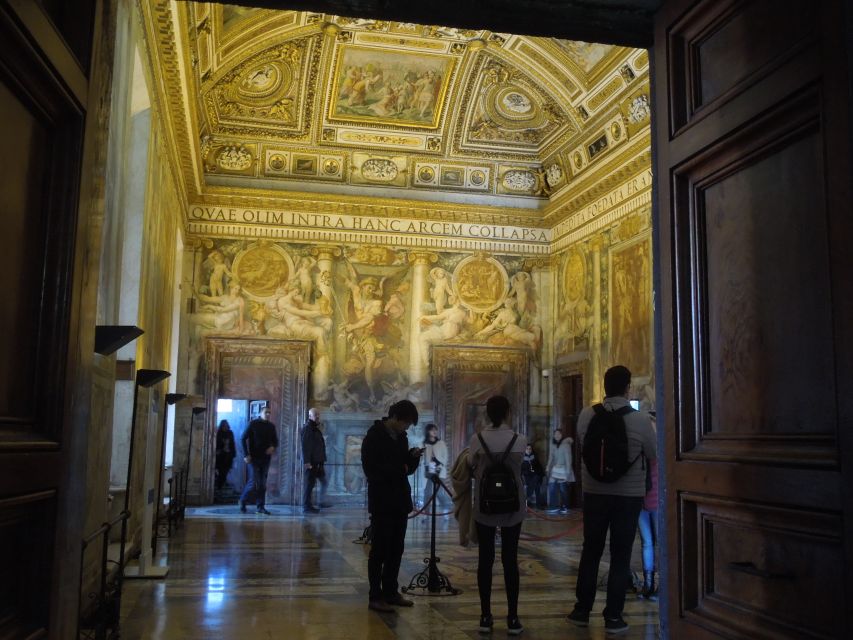
Two hours is a sensible length for Castel Sant’Angelo. It gives you time to cover the main historical stages, see the major interiors, and reach the terrace without turning the visit into an exhausting half-day commitment.
The private format makes those two hours more useful. You are not waiting for a large group to gather or listening to information that does not match your interests. If you want more detail about the Roman tomb, papal apartments, treasury, or military architecture, ask as you go.
The tradeoff is that this will not be an exhaustive study of every room and corridor. Castel Sant’Angelo has a long and complicated story, and a two-hour visit must choose its priorities. The advertised focus is clear: the emperor’s tomb, Pope Paul III’s apartment, the treasury, the castle’s changing roles, and the terrace.
I would treat this as a focused introduction rather than a complete examination of every corner. That is a good match for most Rome itineraries, especially if you want substance but still have other sights planned for the day.
What the private guide adds
The strongest praise for this experience centers on the guide’s ability to make the castle’s past understandable and personal. Mates is singled out for answering questions and keeping attention on specific details of the building throughout the visit.
That matters because Castel Sant’Angelo can be visually impressive but hard to read. Without context, you may see a dramatic fortress and a few decorated rooms without grasping how the site changed. A focused guide gives you the sequence: imperial tomb, fortress, papal home, treasury, prison, and execution site.
The private arrangement also helps if your group has different interests. One person can ask about Roman burial customs while another asks about papal apartments or fortifications. You are not locked into a one-size-fits-all script.
Do keep expectations realistic. The experience lists English as the tour language, so it is not designed for multilingual guiding. It also does not include food, drinks, hotel pickup, or drop-off. You are paying for the entrance, guide, private walking tour, and access to the castle’s views.
Is $214.11 per person a fair price?
At $214.11 per person, this is a premium visit. The price makes the most sense for people who place a high value on private guiding, skip-the-line access through a separate entrance, and a tightly focused two-hour experience.
You are not just paying for entry. The package includes your entrance ticket, an English-speaking local guide, and a private group rather than a standard shared tour. If you have limited time in Rome, skipping a long entry queue can protect a useful part of your day.
Still, the value depends heavily on your group. For a couple or small family that wants personal attention and has room in the budget, the private format can be worthwhile. For a larger group, the per-person price may feel harder to justify, especially if everyone is happy with a self-guided visit.
The rating of 4.9 from 29 reviews and the repeated praise for the guide’s focus support the idea that the guiding is the main selling point. I would book it for the quality of explanation, not simply for access to the building. If you only want the terrace and a quick look around, a private tour at this price is probably more than you need.
Free cancellation up to 24 hours before the tour and the option to reserve now and pay later add useful flexibility. Those policies do not change the cost, but they make it easier to fit the visit into a busy Rome schedule.
Practical details for a smoother visit
Wear comfortable shoes. You will walk through a historic building and climb stairs to the panoramic terrace, so this is not the place for stiff dress shoes or flimsy sandals.
Do not bring luggage or large bags. The tour does not include hotel pickup or drop-off, and large luggage is not allowed, so plan your route with that restriction in mind.
Unaccompanied minors are not allowed. If you are booking for a family, make sure children are accompanied by an adult and that everyone can manage the stair climb.
The tour starts and ends at the meeting point outside the main entrance, in the square at the end of the bridge. Check the available starting times when booking, since the tour lasts two hours but the specific departure time is not fixed in the information provided.
Who should book this Castel Sant’Angelo tour?
I would recommend it to first-time Rome visitors who want the castle explained rather than simply photographed. It also suits people who enjoy a mix of ancient Roman remains, Renaissance art, military architecture, and city views.
History lovers will appreciate the building’s many changes. Art-minded visitors will want time in Pope Paul III’s frescoed apartment. Photographers will value the terrace, while anyone with limited sightseeing time may like the efficient two-hour schedule.
I would hesitate if stairs are difficult for you, if you use a wheelchair, or if you dislike paying a premium for private guiding. I would also skip it if your main goal is a quick viewpoint, since the tour spends time on the burial place, papal rooms, treasury, walls, and wider story of the castle.
Should you book it?
Book this tour if you want Castel Sant’Angelo to make sense as a whole, not just as a striking building beside the Tiber. The private English-speaking guide, skip-the-line entrance, focused two-hour route, and terrace finish create a polished experience with real historical substance.
The decision comes down to price and stairs. At $214.11 per person, it is best for a small group that values personal attention and has limited time. If that describes you, the private format and guide quality make the cost easier to defend. If not, choose a less expensive way to visit and save your budget for another Roman sight.
FAQ
How long does the Castel Sant’Angelo tour last?
The tour lasts two hours. Starting times vary, so check availability when booking.
Is the tour private?
Yes. The experience is offered for a private group with a live English-speaking guide.
Who is the guide?
The tour is conducted by a local English-speaking guide. Mates is specifically associated with this experience and is praised for answering questions and focusing closely on the castle’s details.
What does the tour include?
The price includes entrance tickets, a local guide, a private walking tour, skip-the-line access through a separate entrance, and the city view from Castel Sant’Angelo.
Does the tour include hotel pickup?
No. Hotel pickup and drop-off are not included. You meet the guide in the square at the end of the bridge, outside the main entrance.
Is the tour suitable for wheelchair users?
No. The experience is not suitable for wheelchair users or people with mobility impairments. You must climb a series of stairs to reach the panoramic terrace.
Can I cancel the booking?
Yes. You can cancel up to 24 hours in advance for a full refund. You can also reserve now and pay later.
Newest reviews from Rome
- ROME:Colosseum & Ancient Rome – private/small group TOUR★ 5.0 · 24 reviews
- Off the Beaten Track in Rome: Rione VI Parione Private Tour★ 5.0 · 24 reviews
- Cinematic Photoshoot in Rome★ 5.0 · 24 reviews
- Rome: Best of Colosseum and Roman Forum Small Group Guided Tour★ 4.5 · 24 reviews
- The Labyrinth of Rome between catacombs and ancient quarries★ 4.5 · 24 reviews
- Vatican and Trionfale Market Tour with Wine and Food Tasting★ 5.0 · 24 reviews
- private tour: Vatican Museums, Sistine Chapel, St. Peter’s Basilica★ 4.5 · 24 reviews
- Skip the Line: Vatican Wheelchair Accessible Private Tour★ 5.0 · 24 reviews
Castel Sant'Angelo Tours, compared.
Castel Sant’Angelo Skip-the-Line Entry & Optional Audioguide
Read our review →
Castel Sant’Angelo Skip-the-Line Ticket & Audio Guide
Read our review →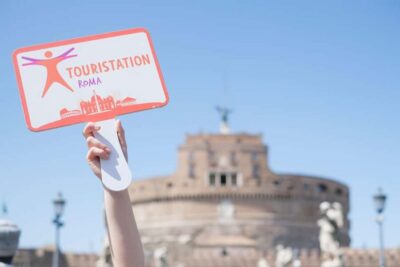
Castel Sant’Angelo Skip-the-Line Entry Ticket
Read our review →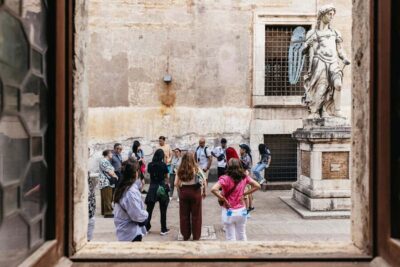

Browse the lists this tour appears in