
Reviewed · CASTEL SANT'ANGELO TOURS
Rome: Castel Sant’Angelo Tour With Skip-the-line Access
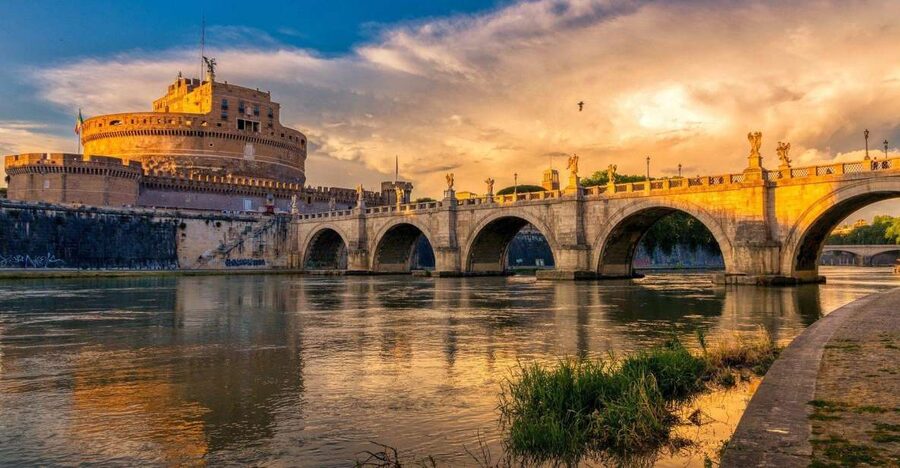
Castel Sant’Angelo began as Emperor Hadrian’s tomb and later became a fortress, papal refuge, and prison. This tour brings those changing roles together, then finishes on the terrace with broad views over Rome and the castle’s defensive wall. I especially like the skip-the-line entry and the guide-led route through the papal corridors, rooms, and frescoes. The main drawback is the physical side: this visit is not recommended for people with limited mobility or wheelchair users, and late arrivals cannot join.
I also like that the guides make room for questions. Irene, Marcello, Silvia Conforti, Alexandra, Alessandra, Maria, and Andrada have all been singled out for clear explanations, warmth, patience, or help with photographs. The advertised cost is $78.57 for a group of up to one, while the official ticket price is €16, so the value rests largely on the guide and saved time rather than admission alone.
In This Review
- Key points at a glance
- Why Castel Sant’Angelo is worth your time
- Meeting beside St. Angelo Bridge
- Entering Hadrian’s ancient mausoleum
- Papal rooms, corridors, and frescoes
- Angels, legends, and the castle’s name
- The terrace and Rome from above
- The guides make the difference
- Timing, price, and practical value
- Who should book this Castel Sant’Angelo tour?
- Should you book it?
- FAQ
- Where does the Castel Sant’Angelo tour start?
- How long does the activity last?
- Which languages are available?
- Is skip-the-line admission included?
- What should I bring?
- Can wheelchair users join?
- Can I cancel or pay later?
Key points at a glance
- Hadrian’s tomb: See the core of the ancient mausoleum that later became Castel Sant’Angelo.
- Papal escape route: Walk through the papal corridors and apartments that show how the building served the popes.
- Terrace views: Look across Rome and down at the castle’s defensive wall from the top.
- Angel-filled history: Hear the story of Archangel Michael and see sculptures by Bernini, Raggi, and Morelli.
- Blue-flag meeting point: Find the guide in front of the main castle entrance, carrying a blue Doooing Experience flag.
- Guide-led access: Choose from English, Spanish, or Italian, with headsets supplied if needed.
Why Castel Sant’Angelo is worth your time
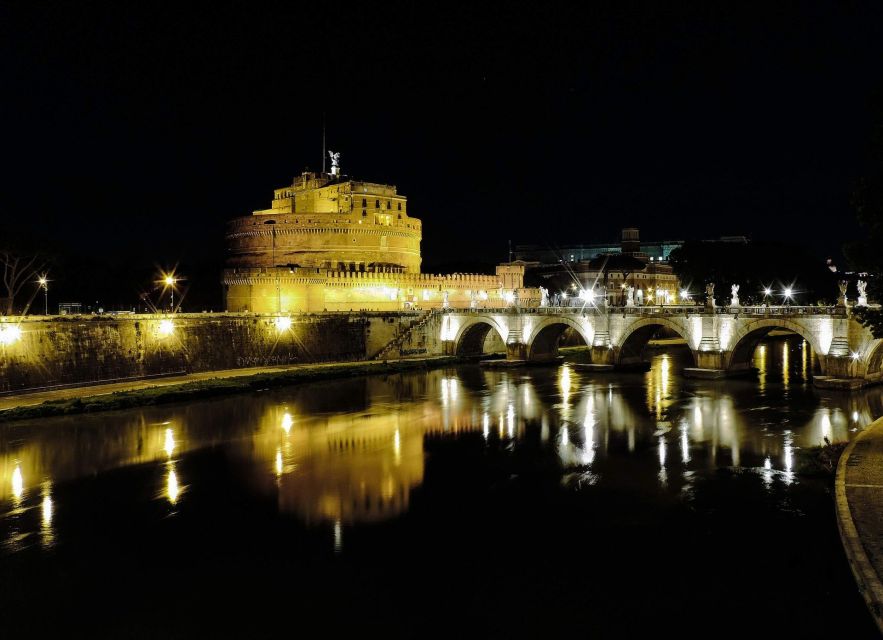
Castel Sant’Angelo is one of Rome’s best examples of a building that refused to remain one thing. It started as the Mausoleum of Hadrian, also called Hadrian’s Mole, and was built for the Roman emperor. Over time, it took on military and papal roles, which explains the unusual mix of imperial remains, defensive features, religious decoration, and grand rooms.
I find that a guided visit works especially well here because the building can otherwise feel like a series of impressive but disconnected spaces. One room belongs to the world of Roman emperors, another to the popes, and the terrace gives you the fortress view. A good guide connects those pieces instead of leaving you to guess why the structure changed so much.
The tour lasts about two hours according to the activity details, while the guided visit is also described as lasting two and a half hours in the itinerary. Check the confirmed timing when you book, since that difference matters if you are arranging lunch, another museum, or a timed Vatican visit afterward.
More Castel Sant'Angelo visits:
- Castel Sant’Angelo Skip-the-Line Entry & Optional Audioguide
★ 4.4 · 5,233 reviews - Rome: Castel Sant’Angelo Skip-the-Line Ticket & Audio Guide
★ 4.4 · 3,500 reviews - Rome: Castel Sant’Angelo Skip-the-Line Ticket
★ 4.4 · 3,040 reviews
Meeting beside St. Angelo Bridge
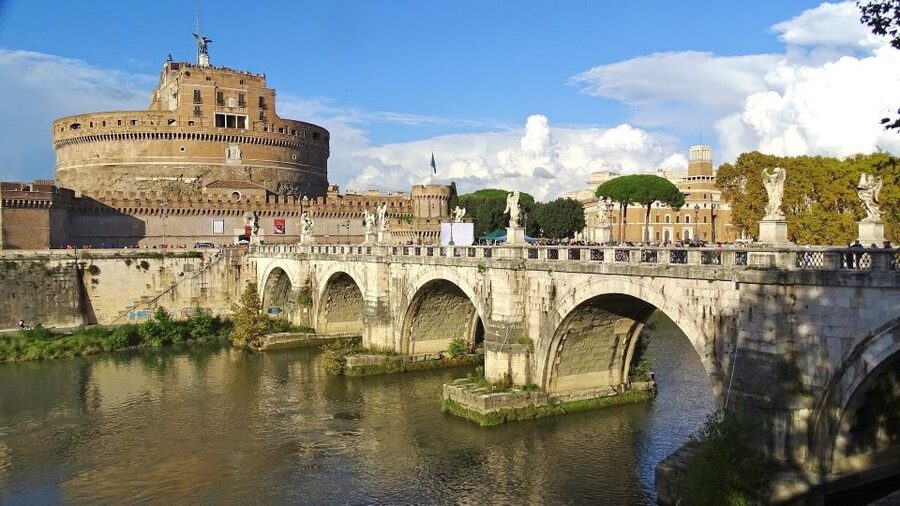
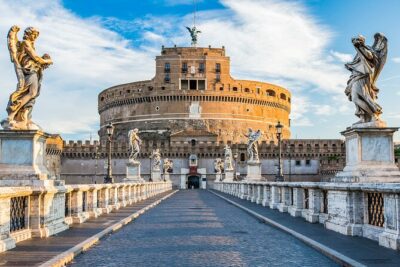
The tour begins at St. Angelo Bridge, in front of the main entrance to Castel Sant’Angelo. Your guide carries a blue flag marked with the Doooing Experience logo, which gives you a clear visual signal in an area where groups can gather.
This starting point is useful because it lets you see the castle from outside before going in. St. Angelo Bridge frames the approach, and the setting helps you understand the building’s position beside the river. The activity ends back at the meeting point, so you do not need to work out a separate return route.
Arrive early. The rules are strict about departure time, and anyone arriving late cannot be accommodated or refunded. Bring a passport or other valid identification, since full names and dates of birth are required when booking and participants must carry valid ID.
Entering Hadrian’s ancient mausoleum
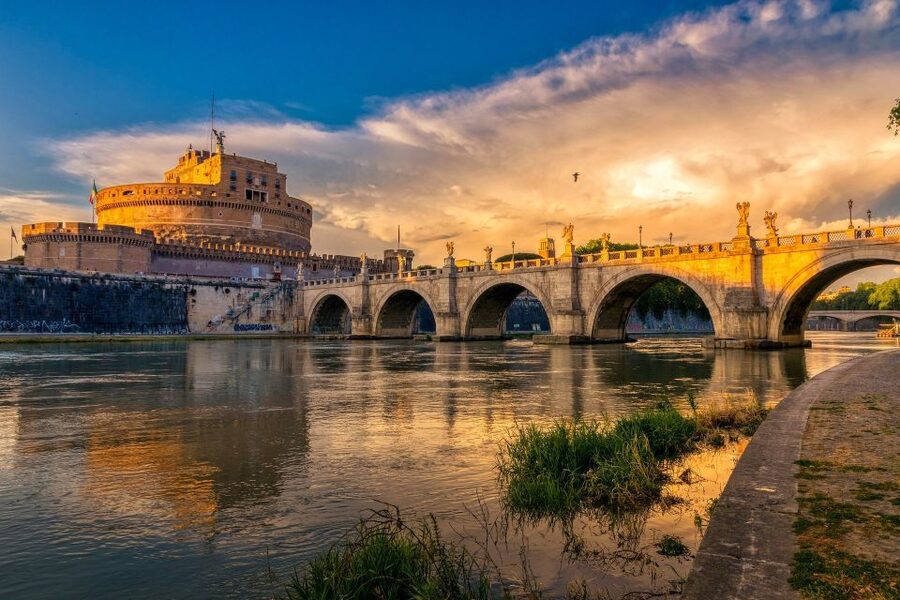
The first major reward is the chance to see the tomb of Emperor Hadrian. The monument is often called Hadrian’s Mole, a name that reflects its massive, rounded form. It was not designed as a castle at first, and that original purpose gives the building its Roman heart.
With a guide, you can place the later fortress around that earlier imperial structure. The point is not just to see old stone. It is to understand how a burial monument became useful for defense and power in later centuries.
The skip-the-line ticket is helpful here. Castel Sant’Angelo is a major Rome sight, and avoiding the ticket queue gives you more time inside. It does not mean every part of the visit will be empty or that you bypass all movement through the monument, but it removes one of the most predictable delays.
The official ticket price is listed as €16. That makes the tour price look high if you compare it only with admission. You are paying the difference for a live guide, organized access, and the chance to ask questions as you go. I would consider it good value if you want context and have limited time in Rome. If you prefer to read at your own pace and already understand the site’s past, the price may feel harder to justify.
Papal rooms, corridors, and frescoes
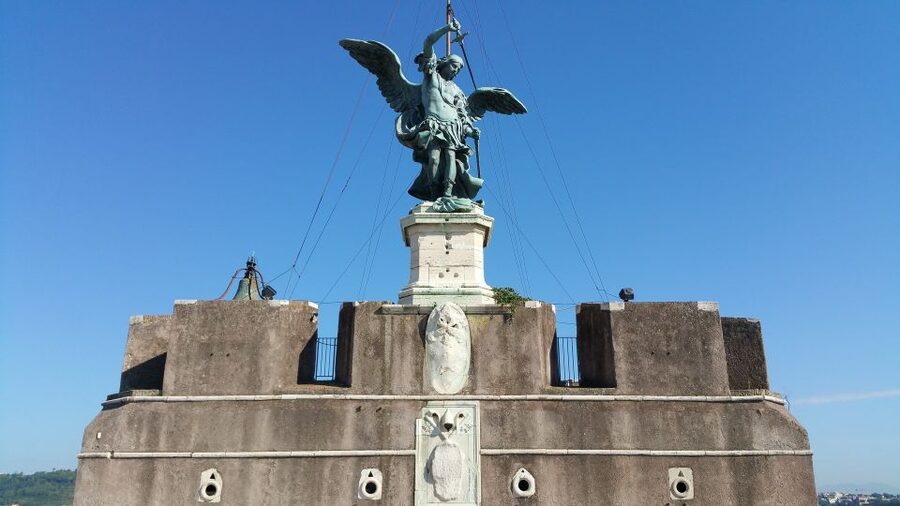
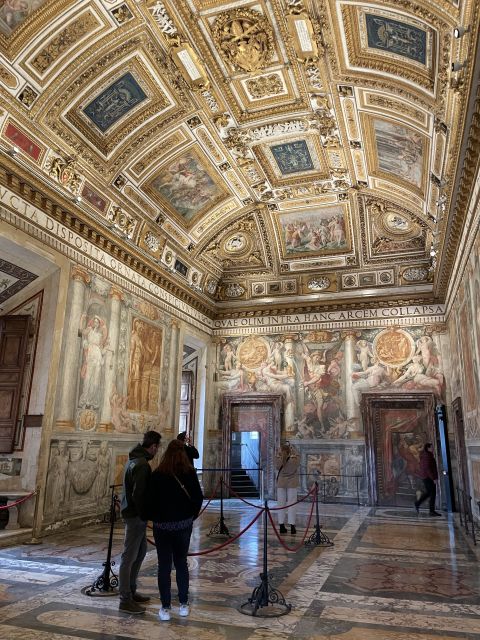
The visit then moves into the castle’s papal side. You can see papal apartments, corridors, and frescoes, which reveal how the building shifted from imperial monument to a place tied to the papacy.
The papal corridors are an important part of the experience because they show that Castel Sant’Angelo was not only a display site. It was part of the practical machinery of papal Rome. The activity specifically includes these corridors, so ask your guide to explain how they fit into the building’s defensive and political role.
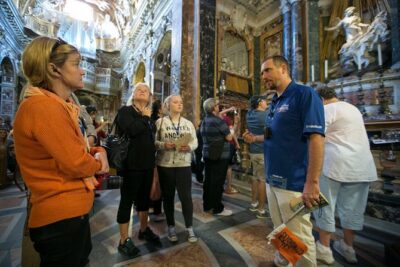
The apartments add a more formal side to the visit. Frescoes and decorated rooms contrast with the hard military character of the exterior. This change in mood is one of the reasons I would not treat Castel Sant’Angelo as just another viewpoint. You get architecture, art, religion, and military history in one compact tour.
The guides are the main asset in these rooms. Irene is praised for keeping the tour engaging while explaining the past. Silvia Conforti is noted for friendly, clear teaching, while Marcello and Alexandra are remembered for making the route lively and easy to follow. Those details matter because decorative rooms can blur together when you visit several historic buildings in one day.
More Rome tours worth comparing
- Vatican Museums & Sistine Chapel Skip-the-Line Entry Ticket
★ 4.4 · 13,838 reviews - Skip-the-Line Group Tour of the Vatican, Sistine Chapel & St. Peter’s Basilica
★ 4.5 · 12,779 reviews - Rome: Vatican Museums & Sistine Chapel Skip-The-Line Ticket
★ 4.2 · 11,708 reviews - Vatican, Sistine Chapel & St. Peter’s Skip-the-Line Tour
★ 4.5 · 7,770 reviews
Angels, legends, and the castle’s name
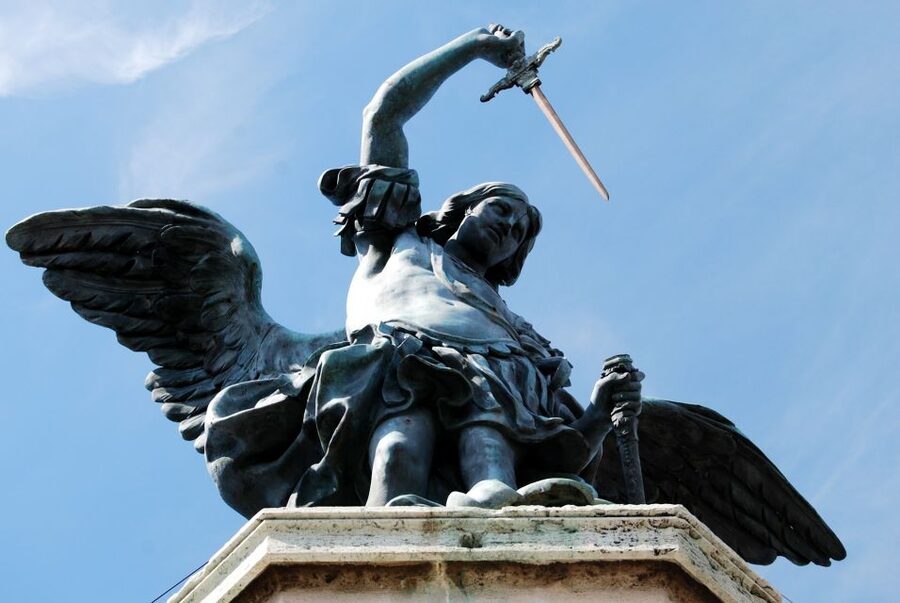
The castle’s current name comes from a striking legend. In 590, Archangel Michael was said to have appeared at the top of the mausoleum, sheathed his sword, and signaled the end of a plague. That story links the monument’s ancient form with its later Christian identity.
You will also see angel sculptures associated with Bernini, Raggi, and Morelli. Their presence reinforces the religious symbolism of the site and gives the guide a chance to show how art helped reshape the old mausoleum’s image.
This is a good place to listen for the difference between legend and documented history. The story of Michael is part of the monument’s identity, but a careful guide can explain it as tradition rather than presenting every detail as a proven event. The best moments on a tour like this come when the story adds meaning without replacing the physical evidence around you.
Alexandra has been especially effective at combining facts with stories while pointing out good places for photographs. That balance suits Castel Sant’Angelo, where the building’s appeal comes from both what happened there and what you can see from it.
The terrace and Rome from above
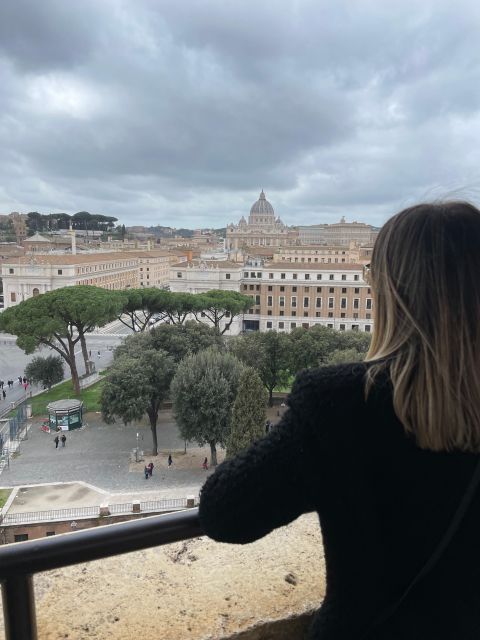
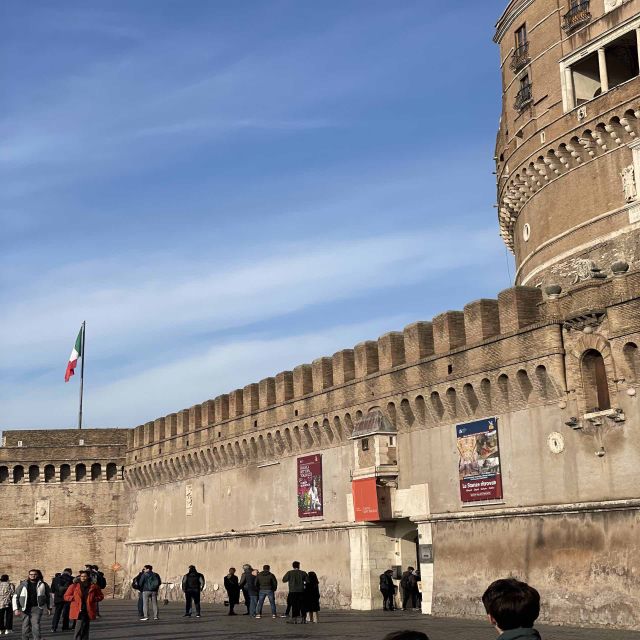
The terrace is the natural high point of the visit. From here, you can admire the castle’s defensive wall from above and take in the view across Rome. After the darker corridors and enclosed rooms, the open air gives the tour a welcome change of pace.
I would save a little energy for this part. The activity is not recommended for people with limited mobility and is not suitable for wheelchair users, so the route may be demanding. The information does not specify every part of the access route, but you should be comfortable with the physical demands of an old castle before booking.
The terrace also helps explain why the building mattered strategically. From the top, the defensive character becomes easier to read than it is from street level. You are not simply looking at Rome from a high platform. You are seeing the castle as a structure designed to watch and protect.
Bring comfortable shoes. Large bags and luggage are not allowed, and pets cannot join the tour. Those limits are practical inside a historic monument, but they mean you should plan ahead if you are carrying a full daypack or arriving straight from a train station.
The guides make the difference
The tour is offered in English, Spanish, and Italian. Headsets are provided if required, which can help you follow the explanation in busy rooms or when the group is spread through a large space.
The strongest feature is the human side of the visit. Alessandra has been praised for her personality, detailed explanations, willingness to answer repeated questions, and help with photographs. Andrada is noted for patience and extra care when a participant had a painful ankle. Maria is remembered for adding useful context that made the building more rewarding than a self-guided walk.
You should still keep expectations realistic. A small-group tour is advertised, but the exact group size is not provided. If the booking is lightly filled, you might receive very personal attention. If more people attend, the guide will need to manage the pace and questions across the group.
That uncertainty is normal for a shared tour. The benefit is a lower price than arranging a fully private guide, while still giving you a person who can explain the site. The trade-off is that your experience depends partly on group size and guide assignment.
Timing, price, and practical value
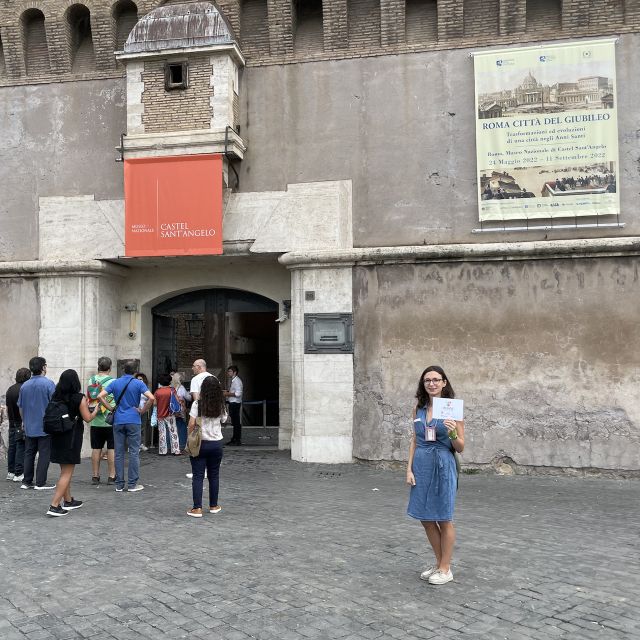
The listed price is $78.57 for a group of up to one. Since the official admission price is €16, I would not book this simply to get inside. The financial case is stronger if you value three things: avoiding the ticket line, learning the story in a clear order, and asking questions during the visit.
Two hours is a manageable length for most Rome itineraries. It gives Castel Sant’Angelo enough attention without taking up half a day. Still, confirm the start time and total duration because the information gives both a two-hour duration and a two-and-a-half-hour guided itinerary.
The booking terms are flexible. You can cancel up to 24 hours before the activity for a full refund, and you can reserve now and pay later. That helps if your Rome schedule is still shifting, but it does not protect a late arrival. The no-late-entry rule is the detail I would take most seriously.
The Jubilee may also affect access routes or restoration work. Check messages before the visit for updates, since parts of the monument or the approach may change.
Who should book this Castel Sant’Angelo tour?
I would choose this tour if you want the building explained rather than simply photographed. It suits first-time visitors to Castel Sant’Angelo, people interested in Roman and papal history, and anyone who prefers a structured visit with a live guide.
It is also a sound choice if your Rome schedule is tight. Skip-the-line access can protect your morning or afternoon from an avoidable queue, though it cannot guarantee a completely quiet interior.
Families and mixed-interest groups may also find the changing story useful. The tale moves from emperor to tomb, from fortress to papal refuge, and from legend to terrace views. That variety gives the guide several ways to keep the visit moving.
I would hesitate if you have limited mobility, use a wheelchair, or dislike old buildings with demanding access. The tour is explicitly unsuitable for wheelchair users and not recommended for people with mobility impairments. I would also compare the cost with a self-guided visit if you mainly want the terrace and do not need historical explanation.
Should you book it?
Book this Castel Sant’Angelo tour if you want expert explanation and fast entry, and if the higher price over the €16 official ticket is acceptable for those benefits. The guides named in the feedback, including Irene, Marcello, Silvia Conforti, Alexandra, Alessandra, Maria, and Andrada, are repeatedly associated with warmth, clear storytelling, patience, and practical help.
Skip it if your priority is the lowest admission cost, if you need wheelchair access, or if you cannot arrive well before the meeting time. For everyone else, this is a focused way to understand one of Rome’s most unusual buildings, with the terrace providing a strong finish.
FAQ
Where does the Castel Sant’Angelo tour start?
It starts at St. Angelo Bridge, in front of the main entrance to Castel Sant’Angelo. Your guide carries a blue flag with the Doooing Experience logo.
How long does the activity last?
The activity is listed as lasting two hours, while the itinerary describes the guided visit as two and a half hours. Check the confirmed details and starting time when booking.
Which languages are available?
The live guide is available in English, Spanish, and Italian.
Is skip-the-line admission included?
Yes. The tour includes a skip-the-line entrance ticket to Castel Sant’Angelo.
What should I bring?
Bring a valid passport or ID card and comfortable shoes. All participants must carry valid identification.
Can wheelchair users join?
No. The activity is not suitable for wheelchair users and is not recommended for people with mobility impairments.
Can I cancel or pay later?
You can cancel up to 24 hours in advance for a full refund. You can also reserve now and pay later. Late arrivals cannot join the activity and will not receive a refund.
Newest reviews from Rome
- ROME:Colosseum & Ancient Rome – private/small group TOUR★ 5.0 · 24 reviews
- Off the Beaten Track in Rome: Rione VI Parione Private Tour★ 5.0 · 24 reviews
- Cinematic Photoshoot in Rome★ 5.0 · 24 reviews
- Rome: Best of Colosseum and Roman Forum Small Group Guided Tour★ 4.5 · 24 reviews
- Vatican and Trionfale Market Tour with Wine and Food Tasting★ 5.0 · 24 reviews
- private tour: Vatican Museums, Sistine Chapel, St. Peter’s Basilica★ 4.5 · 24 reviews
- The Labyrinth of Rome between catacombs and ancient quarries★ 4.5 · 24 reviews
- Colosseum guided tour with Virtual Reality★ 5.0 · 24 reviews
Castel Sant'Angelo Tours, compared.
Castel Sant’Angelo Skip-the-Line Entry & Optional Audioguide
Read our review →
Castel Sant’Angelo Skip-the-Line Ticket & Audio Guide
Read our review →
Castel Sant’Angelo Skip-the-Line Entry Ticket
Read our review →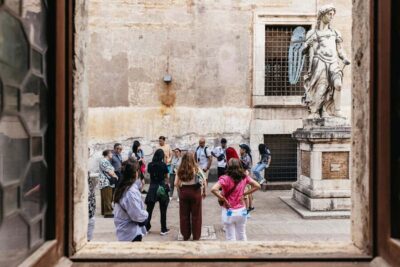


Browse the lists this tour appears in