
Reviewed · COOKING CLASSES
Rome: Five Shapes of Pasta Cooking Class in Ancient Tavern
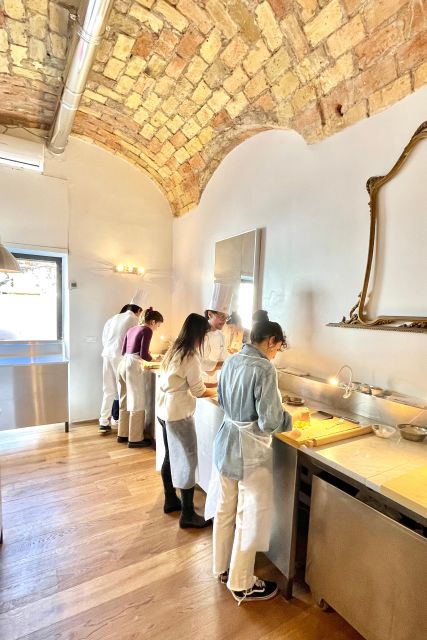
The clever part of this Rome cooking class is that you do not just make one easy pasta shape and call it dinner. You work through five classic forms, from ravioli and tortellini to fettuccine, using a wooden rolling pin in an old tavern that still carries its marble Cucina sign.
I like the generous meal and the lively teaching style of Emanuele and Angelo. You also get real hands-on practice, including safe cutting, filled pasta, two sauces, and a quick tiramisu. The main consideration is that this is an active kitchen class, so it is not suitable for people with mobility impairments, and the advertised small group can feel less intimate if attendance runs above ten.
In This Review
- Key points at a glance
- Inside the old Cucina tavern
- The first lesson: dough, rolling, and safe cutting
- Five shapes, five different skills
- Prosecco, cheese, and a proper break
- Two sauces and the reward of eating your pasta
- Express tiramisu to finish
- The chefs make the difference
- What $67.19 buys you in Rome
- Who should book this class?
- Should you book the Rome pasta class?
- FAQ
- How long does the pasta cooking class last?
- Where does the class meet?
- Which pasta shapes will I make?
- What food and drinks are included?
- Is the class taught in English?
- Can I cancel or pay later?
Key points at a glance
- Five pasta shapes in one class: Make ravioli, agnolotti del plin, tortellini, cappelletti, and fettuccine from fresh dough.
- A real old tavern setting: Meet at the former late-1800s Osteria Cucina, marked by its original marble sign.
- Hands-on rolling technique: Learn to make thin pasta sheets with a wooden pin rather than relying on a machine.
- Dinner is part of the lesson: Eat two pasta dishes with sauces prepared and explained by the chef, plus dessert.
- A social, high-energy class: Music, wine, humor, and a small international group keep the evening moving.
- Good value at $67.19: Prosecco, Italian cheese, a full meal, wine, pasta, and tiramisu are included with no extra class fee.
Inside the old Cucina tavern
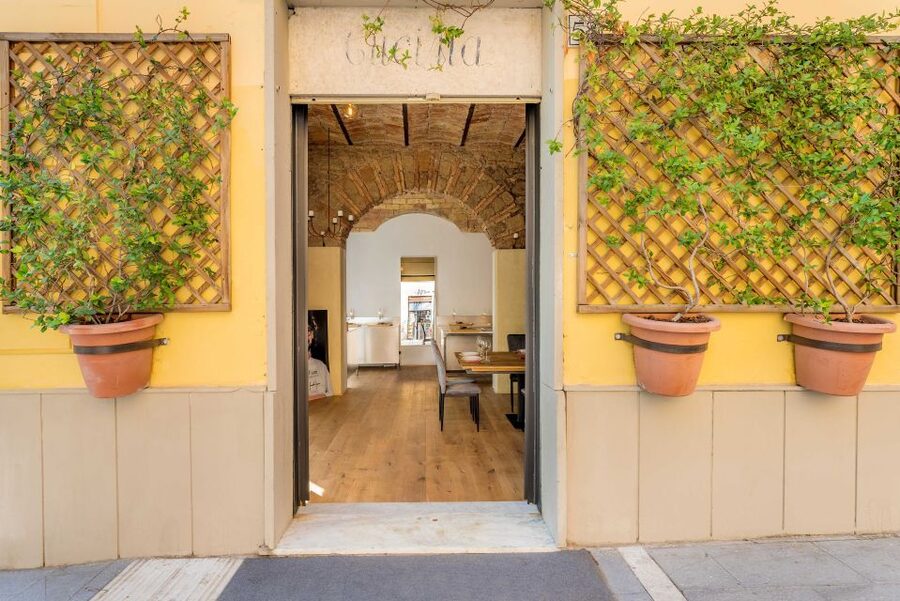
You begin at an old Osteria called Cucina. Look for the original marble osteria sign above the entrance, a useful detail because it gives you a clear visual marker at the meeting point.
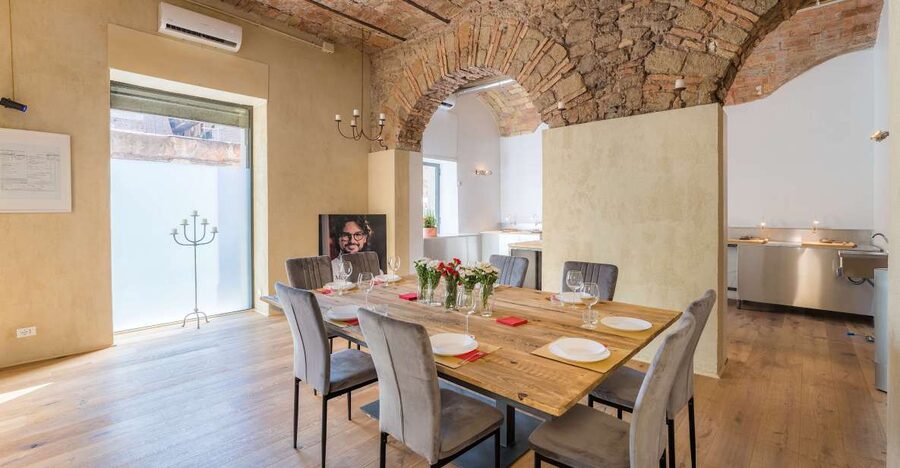
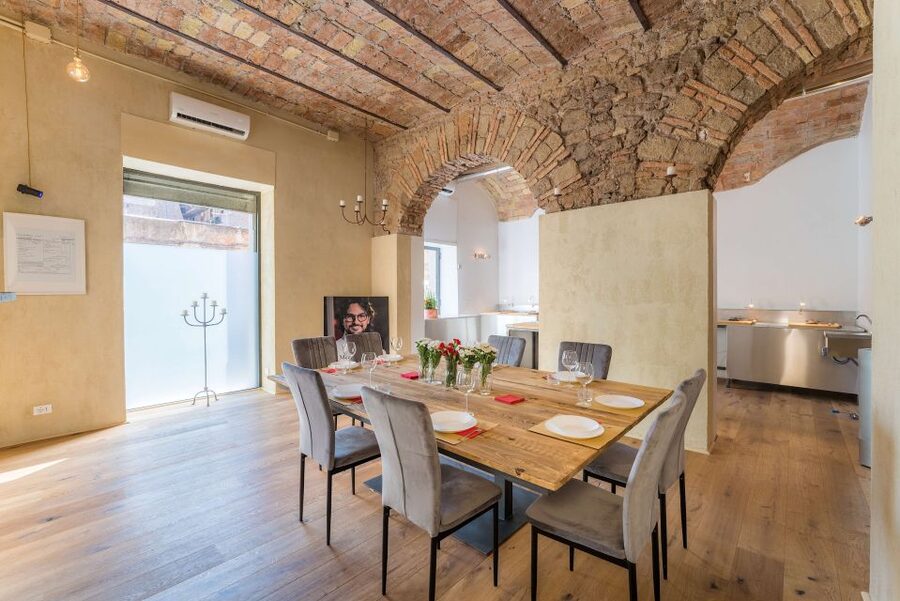
The building dates to the late 1800s and has since been converted into a cooking school. That gives the class more character than a plain modern studio. You cook and eat in a room where the old tavern identity is still part of the setting, with a table prepared for the meal and kitchen space arranged for group work.
I like this kind of place for a cooking class. The room itself helps explain why food matters in Italy: cooking is not only a task, but also a reason to sit together, talk, and stay awhile. The atmosphere is decorative and photo-friendly, but the class remains practical rather than turning into a simple demonstration.
The experience lasts about three hours and ends where it begins. Starting times vary, so check the schedule carefully when booking. This works well as an afternoon activity or an evening dinner plan, but you should leave enough room around it. A three-hour class with food and conversation is not something to squeeze between two timed sightseeing stops.
More cooking classes in Rome:
- 3 in 1 Cooking Class near Navona: Fettuccine, Ravioli & Tiramisu
★ 5.0 · 7,376 reviews - Rome: Pasta Making Class with Wine, Limoncello, and Dessert
★ 4.9 · 3,177 reviews - Rome: 3-in-1 Fettuccine, Ravioli, and Tiramisu Cooking Class
★ 4.9 · 2,704 reviews
The first lesson: dough, rolling, and safe cutting
The class begins with the foundation of fresh pasta: making and handling the dough. You learn how to roll a thin sheet by hand with a wooden pin, using a professional technique rather than simply watching a chef do it for you.
This is one of the most useful parts of the experience. Fresh pasta looks easy when it arrives on a plate, but the thickness of the sheet affects everything that follows. Roll it too thick and filled pasta can feel heavy. Roll it too thin and it may tear. The class gives you a chance to feel the dough change under the pin and to correct your technique with help from the chefs.
You also receive guidance on food cutting and safe procedures. That matters in a group kitchen, especially when you are handling knives, cutting strips, and preparing several shapes in a short period.
The class is designed for beginners. One of the pleasant surprises here is how quickly the process becomes manageable once someone shows you the right movement. If you have made pasta at home before, you may still pick up useful corrections, particularly with rolling and shaping.
Come ready to work with your hands. You will be standing, rolling, cutting, filling, and checking your dough throughout the lesson. The activity is not suitable for people with mobility impairments, and pets are not allowed.
Five shapes, five different skills
The heart of the class is the progression through five famous Italian pasta shapes. Each one asks for a different bit of care.
Ravioli introduces filled pasta in a straightforward way. You place filling on the sheet, seal it properly, and cut the pieces. The key lesson is removing air and closing the edges firmly, since loose seams can open during cooking.
Agnolotti del plin brings a more regional style into the lesson. The small pinched shape takes a little more attention and gives you practice working with neat, compact portions.
Tortellini requires shaping rather than simply cutting. You fold the pasta and bring the ends together, learning how a small piece of dough becomes a familiar ring-like form.
Cappelletti offers another filled shape with its own fold. Making several filled pastas side by side helps you see that Italian pasta is not one single tradition. Small changes in folding can create a different shape, texture, and presentation.
Fettuccine is the most direct contrast. Instead of filling and sealing, you cut the pasta into broad ribbons. This is the shape you are most likely to repeat at home, since it requires less fiddly work and pairs well with many sauces.
The class may also include demonstrations of other pasta ideas, including unusual variations such as cocoa tagliatelle. The supplied information specifically names the five main shapes above, so you should treat any extra demonstration as a possible bonus rather than a guaranteed part of the standard class.
Prosecco, cheese, and a proper break
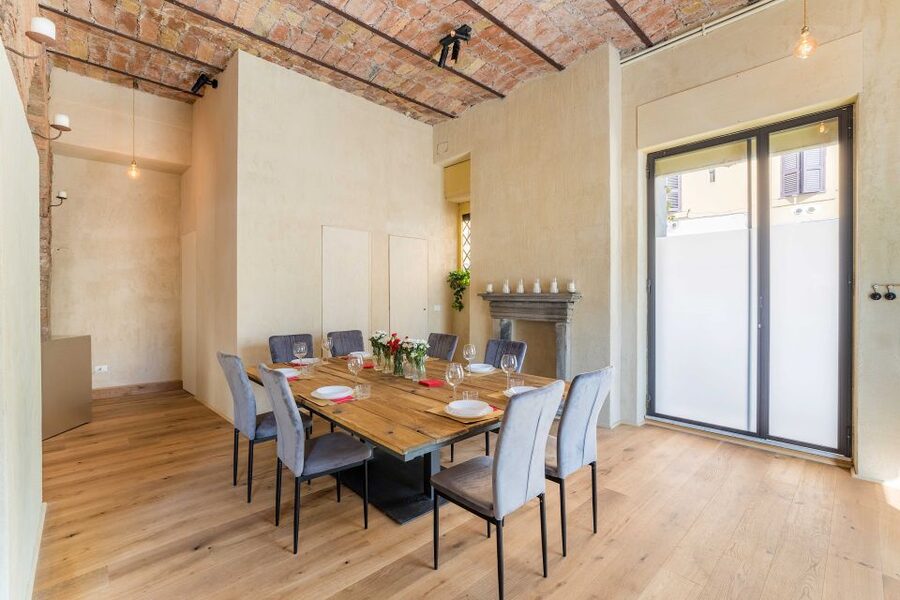
The cooking is broken up with an appetizer of local Italian cheese and fresh Prosecco. This is more than a welcome drink. It gives you a chance to pause while the dough or sauces are being handled, and it turns the class into a full social meal rather than a long work session.
I especially like this structure for couples, families, and solo visitors. You are not trapped at your workstation for three hours. You can taste something, talk with the people around you, and enjoy the old tavern setting before returning to the pasta.
Wine is also served with the meal. The class is therefore best suited to adults who want a food-and-drink evening, though teenagers and children have also been welcomed successfully. If you are booking with children, remember that the class still involves kitchen work and attention to instructions.
The group is limited to 10 participants in the stated format. One account of the experience describes a group of 12, so the actual size may vary by session. A group of 10 gives the chefs a fair chance to walk around and help, while a larger group may mean more waiting at shared work areas.
More Rome tours worth comparing
- Rome: Pasta & Tiramisu Class with Fine Wine by the Vatican
★ 4.9 · 4,852 reviews - Rome: Fettuccine Pasta Cooking Class in Rome’s City Center
★ 4.8 · 2,414 reviews - Rome: Traditional Pasta with Cocktails Cooking Class
★ 5.0 · 2,374 reviews - Learn to Make Pasta & Tiramisu with Wine and Limoncello Included
★ 5.0 · 2,345 reviews
Two sauces and the reward of eating your pasta
After the shaping work, the pasta is cooked and served with two different Italian sauces. The chef explains the sauces as part of the class, so you are not only eating the result but also learning how the finished pasta is paired and presented.
This is where the price begins to make sense. You are not paying for a short lesson followed by a token sample. The included meal contains two handmade pasta plates, along with the appetizer, drinks, and dessert. You taste the shapes you have prepared and see how fresh pasta behaves after cooking.
That direct connection between work and meal is the strongest feature of the class. You notice the texture because you have just rolled and shaped the dough yourself. You also get a practical reference point for future cooking at home: how thin the sheet should be, how much filling is sensible, and how the finished pasta should look.
Do not expect a private chef’s table or a long menu of restaurant courses. This is a cooking school experience, and the meal is built around the pasta you make. That is exactly why it suits people who want to learn, but it may disappoint anyone mainly seeking a quiet gourmet dinner.
Express tiramisu to finish
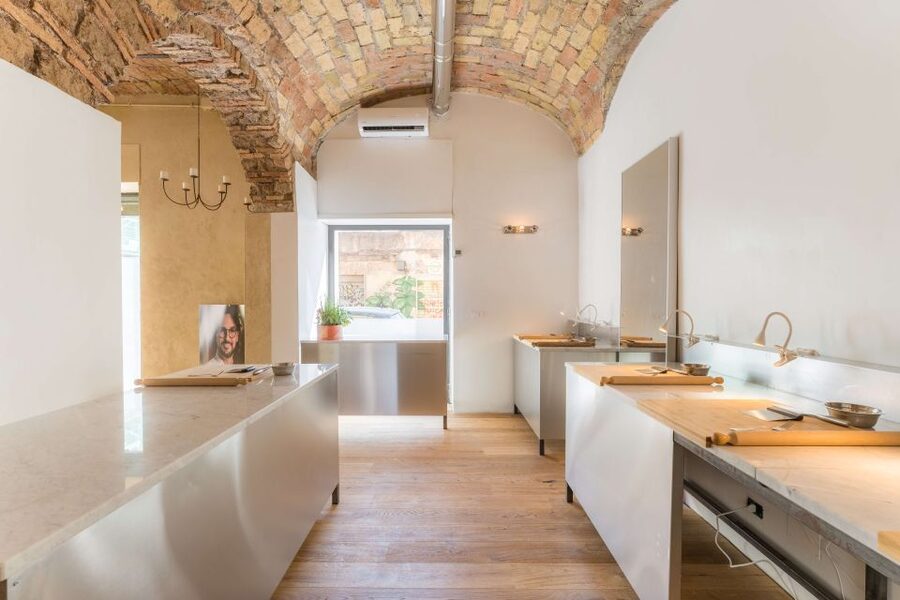
Dessert is an express tiramisu preparation. You get to see and take part in the final sweet course rather than simply having a plated dessert appear at the end.
The quick format is useful because you have already spent much of the class working with pasta. It keeps the pace moving and shows you a dessert technique that is easier to repeat at home than a complicated pastry recipe.
The whole menu has a sensible rhythm: cheese and Prosecco first, pasta preparation in the middle, two pasta dishes with wine, then tiramisu. You leave with a full stomach, not just a sample of what you cooked.
The chefs make the difference
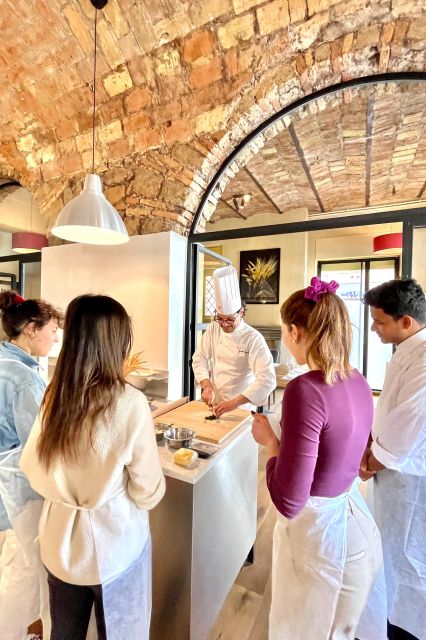
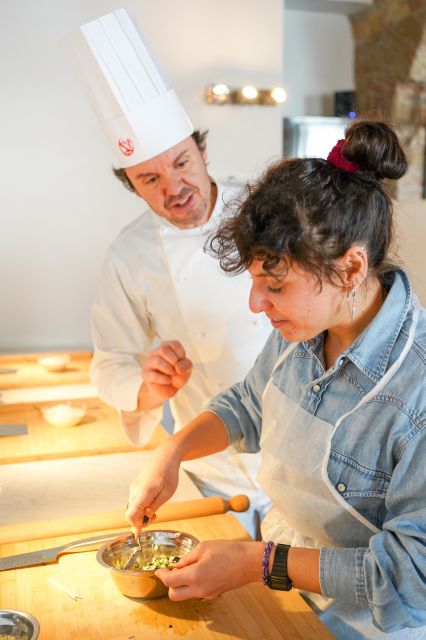
Emanuele is the name most closely associated with the class, while Angelo also leads sessions and works with the team. Their teaching style is energetic, humorous, and involved. Expect music, jokes, dancing, and plenty of encouragement alongside the technical instruction.
That high energy will suit you if you enjoy a social class where the chef talks to the whole room and then moves around to help individuals. The instructors are described as positive when correcting mistakes, which is important when you are learning a skill that can feel awkward at first.
The chefs also make an effort to learn names and check on participants during the process. A small group helps here, since it gives them more time to watch how each person rolls and folds the dough.
English and Italian are the available teaching languages. If you need help with an allergy, tell the chef before the class begins. One participant with a garlic allergy received altered ingredients and a separate sauce, but you should still make your needs clear in advance rather than assume every request can be handled on the spot.
The school is HACCP certified for food hygiene and safety, with certification noted from 2020. That does not turn the class into a formal culinary qualification, but it is a useful sign that food handling is taken seriously.
What $67.19 buys you in Rome
At $67.19 per person, this is a strong value if you want both an activity and dinner. The price includes:
- The cooking instruction
- Five fresh pasta shapes made from scratch
- An appetizer of Italian cheese
- Prosecco
- Two handmade pasta dishes with two sauces
- Wine with the meal
- Express tiramisu preparation and dessert
- A complimentary Professional Chef Hat with the Pastificio Faini logo
- No extra fee during the class
The chef hat is a fun souvenir rather than a major financial benefit, but it adds a memorable touch. The more important saving is the meal. In Rome, a sit-down dinner with drinks can quickly approach this price, and here you also get three hours of instruction and a hands-on activity.
The value is weaker if you do not drink alcohol, do not enjoy group activities, or mainly want to eat without cooking. Prosecco and wine are part of the experience, and the meal centers on pasta. You are paying for participation, not just food.
Free cancellation is available up to 24 hours before the activity for a full refund. You can also reserve now and pay later, which helps if your Rome schedule is still shifting.
Who should book this class?
I would recommend it most strongly to couples, families with older children, food lovers, and anyone who wants an evening away from the usual monuments. It is also a good choice for a honeymoon or anniversary because the meal, wine, music, and shared work create a naturally festive setting.
It suits solo visitors too. The group format makes it easy to speak with people from different countries, and the cooking gives everyone an immediate shared topic. You do not need pasta-making experience.
This may not be right for you if you dislike noisy or playful instruction. The tone is warm and animated, not hushed and formal. It is also not a good pick if standing and moving around a kitchen will be difficult.
The advertised group limit is 10, but you should be prepared for a session that feels slightly fuller. Ask about current group size if personal attention is your top concern.
Should you book the Rome pasta class?
Book it if you want to learn a skill, eat a full meal, and spend an evening in a friendly old tavern rather than simply sit at a restaurant table. The five shapes give the class more substance than a one-recipe workshop, and the chefs provide enough help to keep beginners from feeling lost.
I especially like that you eat what you make. You leave with a clearer idea of how fresh pasta should feel and a set of shapes you can try again at home. At $67.19, the included food, drinks, dessert, and three hours of instruction make this a practical buy.
Skip it if you want a quiet dinner, have mobility limits, or do not enjoy hands-on kitchen work. For everyone else, this is one of Rome’s more useful food activities, with enough laughter and good eating to make the lesson stick.
FAQ
How long does the pasta cooking class last?
The class lasts three hours. Check the available starting times when you book.
Where does the class meet?
It starts at the old Osteria named Cucina. Look for the original osteria sign in marble above the entrance. The activity ends back at the same meeting point.
Which pasta shapes will I make?
You will make ravioli, agnolotti del plin, tortellini, cappelletti, and fettuccine. The class covers handmade dough, rolling with a wooden pin, filling, folding, and cutting.
What food and drinks are included?
The class includes an appetizer of Italian cheese with Prosecco, two handmade pasta dishes with two different sauces, wine with the meal, and dessert with an express tiramisu preparation.
Is the class taught in English?
Yes. Instruction is available in English and Italian. The listed instructors include Emanuele and Angelo.
Can I cancel or pay later?
You can cancel up to 24 hours in advance for a full refund. Reserve-now, pay-later booking is also available.
More Workshops in Rome
- Become a Masterchef in Rome: Pasta, Ravioli and Tiramisù Class
★ 5.0 · 2,156 reviews - Rome: Fettuccine and Tiramisu Cooking Class with Wine
★ 4.8 · 2,013 reviews - Pasta Cooking Class Near the Colosseum with 3 Spritz Cocktails
★ 5.0 · 1,686 reviews - Rome: Pasta & Tiramisu Cooking Class near the Spanish Steps
★ 4.8 · 1,395 reviews
Newest reviews from Rome
- ROME:Colosseum & Ancient Rome – private/small group TOUR★ 5.0 · 24 reviews
- Off the Beaten Track in Rome: Rione VI Parione Private Tour★ 5.0 · 24 reviews
- Cinematic Photoshoot in Rome★ 5.0 · 24 reviews
- Rome: Best of Colosseum and Roman Forum Small Group Guided Tour★ 4.5 · 24 reviews
- private tour: Vatican Museums, Sistine Chapel, St. Peter’s Basilica★ 4.5 · 24 reviews
- The Labyrinth of Rome between catacombs and ancient quarries★ 4.5 · 24 reviews
- Vatican and Trionfale Market Tour with Wine and Food Tasting★ 5.0 · 24 reviews
- Colosseum guided tour with Virtual Reality★ 5.0 · 24 reviews
Cooking Classes, compared.
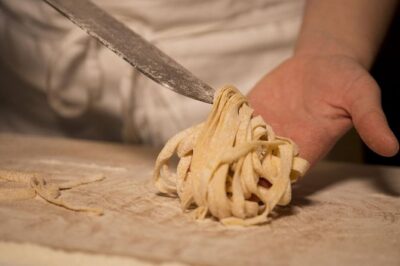
3 in 1 Cooking Class near Navona: Fettuccine, Ravioli & Tiramisu
Read our review →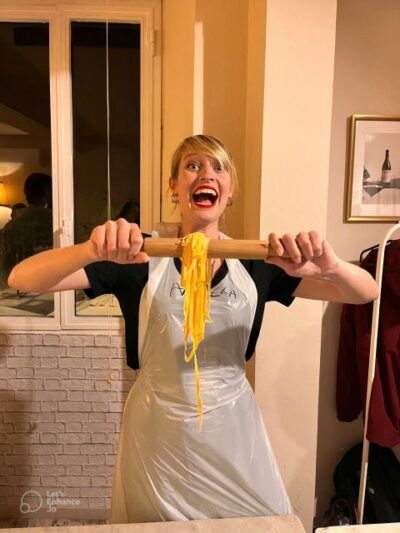
Pasta Making Class with Wine, Limoncello, and Dessert
Read our review →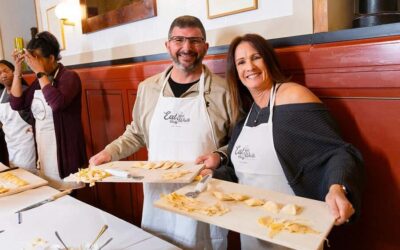
3-in-1 Fettuccine, Ravioli, and Tiramisu Cooking Class
Read our review →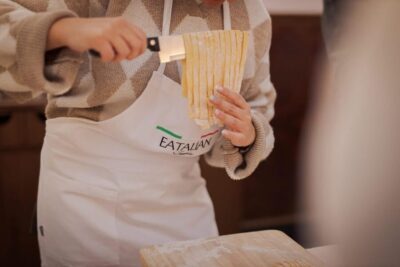
Fettuccine Pasta Cooking Class in Rome’s City Center
Read our review →
Traditional Pasta with Cocktails Cooking Class
Read our review →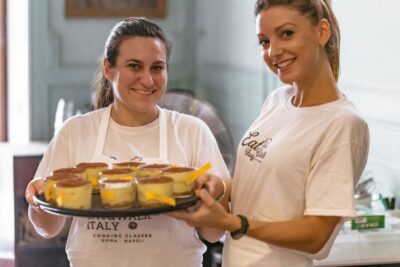
Fettuccine and Tiramisu Cooking Class with Wine
Read our review →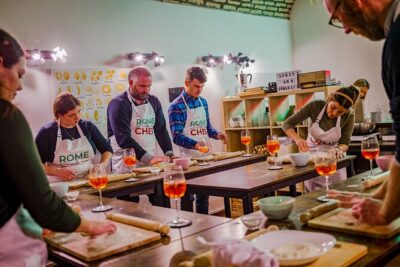
Pasta Cooking Class Near the Colosseum with 3 Spritz Cocktails
Read our review →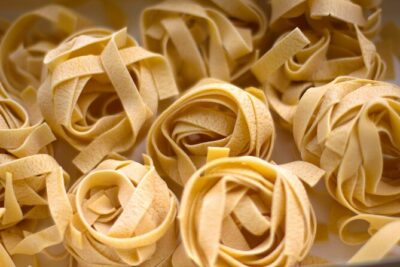
Enjoy Spritz and Pasta Making in Piazza Navona
Read our review →Browse the lists this tour appears in