
Reviewed · PASTA
Rome: Fresh Pasta-Making Class with Italian Chef and Wine
The best part of this Rome cooking class is that you do not just watch someone twirl pasta. You work the dough, shape several kinds of pasta, prepare sauces, and then eat the results at a shared table. Chef Riccardo and instructors such as Leo and William keep the class lively while explaining the small choices that make Italian food taste right.
I like the hands-on format, especially the chance to make both long and stuffed pastas. I also like the useful cooking advice, from handling guanciale in carbonara to choosing ingredients you can find back home. The main consideration is the language mix in a small class: instruction is in English and Italian, but if other participants need long explanations in another language, some stories may be translated only briefly.
In This Review
- Key points to know before booking
- Why making pasta beats another restaurant meal
- Arriving at the Gianicolense cooking lab
- Rolling dough into long pasta
- Shaping ravioli and stuffed pasta
- Carbonara, cacio e pepe, and sauce lessons
- Sitting down to the meal
- What the $97 price gets you
- Who should take this pasta class
- Timing, cancellation, and access
- Should you book Rome’s pasta-making class?
- FAQ
- Where is the cooking class held?
- How long does the class last?
- What kinds of pasta will I make?
- Are food and wine included?
- Can the class accommodate dietary restrictions?
- Is the class available in English?
Key points to know before booking
- Three kinds of pasta may fill your table: Past sessions have included ravioli, fettuccine, spaghetti, tortellini, cappelletti, and spaghetti alla chitarra.
- Roman sauces are part of the lesson: You may work with carbonara, cacio e pepe, arrabbiata, and other traditional sauces.
- The class stays small: With no more than 10 people, the chef can correct your technique and involve everyone.
- You eat what you make: The class ends with a three-course meal and selected wine, with enough food that some people have taken leftovers home.
- It is held outside the historic core: The cooking lab is at Circonvallazione Gianicolense 418, near a cafe, and public transportation from central Rome is reported to be straightforward.
- Tell the team about food restrictions early: Vegetarian options are available, while private classes may allow gluten-free, dairy-free, vegan, gnocchi, tiramisu, or risotto menus.
Why making pasta beats another restaurant meal
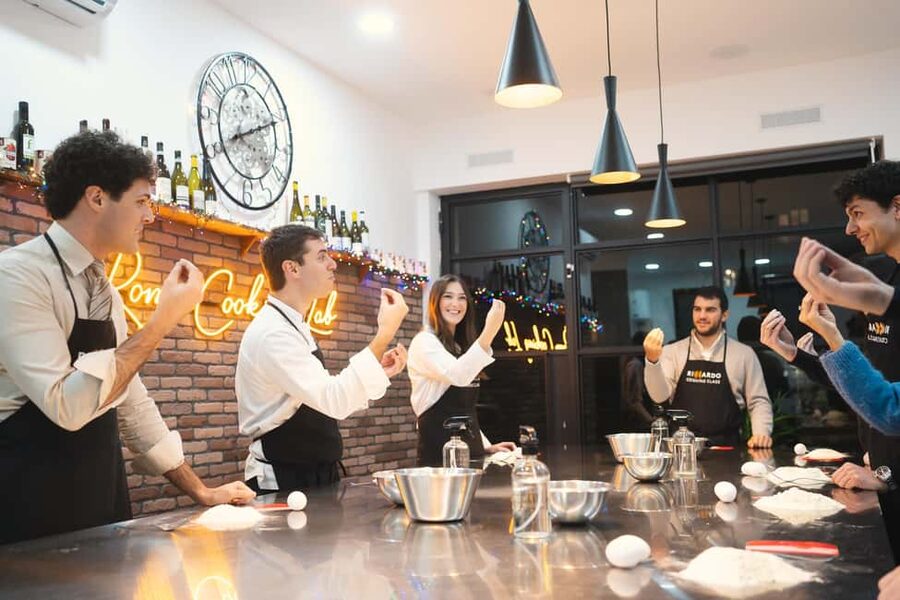
Rome is full of good places to eat, but another plate of pasta does not teach you much about the food. This class gives you a look at the work behind that plate. You feel how soft fresh dough should be, learn when it needs more flour, and see why a sauce must be ready before the pasta leaves the pot.
That practical knowledge is the real souvenir. At home, you can buy dried pasta in seconds, but handmade pasta gives you a better sense of Italian cooking. The class focuses on methods you can repeat, rather than a decorative dish that looks impressive for one evening and never gets made again.
The setting helps. You may meet the chefs at Riccardo’s grandmother’s house or at The Cooking Lab, depending on the arrangement for your session. The family-home option gives the experience a homey feel. The lab is a more predictable choice for a cooking lesson, with a dedicated space and room for a small group to work together.
This is not a formal culinary school course. It is a friendly Roman kitchen experience with plenty of conversation, wine, and food. Chef Riccardo’s team includes instructors such as Leo, William, Marco, Mattia, and Bruno. Leo has been especially praised for his humor, clear demonstrations, and habit of adjusting the lesson when someone needs help.
More Rome wine tastings worth an afternoon:
- Rome: Tuscany & Montepulciano Day Trip with Lunch & Wine Tasting
★ 4.5 · 5,232 reviews - Rome: Pasta & Tiramisu Class with Fine Wine by the Vatican
★ 4.9 · 4,852 reviews - Rome Food Tour: Unlimited Tastings with Fine Wine & Barolo
★ 5.0 · 3,365 reviews
Arriving at the Gianicolense cooking lab
The listed meeting point is Circonvallazione Gianicolense 418, 00152 Rome. The cooking lab is on the street, close to a cafe, so check the address carefully before setting out and allow time to find the entrance. This is not a meeting point beside the Colosseum or Trevi Fountain.
That location is a small tradeoff. You will spend some time getting beyond Rome’s best-known monuments, but the class is meant to feel like a local activity rather than a performance staged in the old center. Public transportation from central Rome is described as easy, which makes the trip manageable when you plan ahead.
The class lasts about three hours. Morning sessions have run from 11 a.m. to around 2 p.m., though available starting times can change. A morning class works well at the start of your Rome stay, since Riccardo and his team also share restaurant, pizza, gelato, and wine suggestions. You can use those tips for the rest of your visit.
Wear something comfortable and practical. Aprons are provided for use during the class, and you can keep one for an additional cost. Since flour and sauce are part of the fun, clothing that can handle a little mess is the sensible choice.
Rolling dough into long pasta
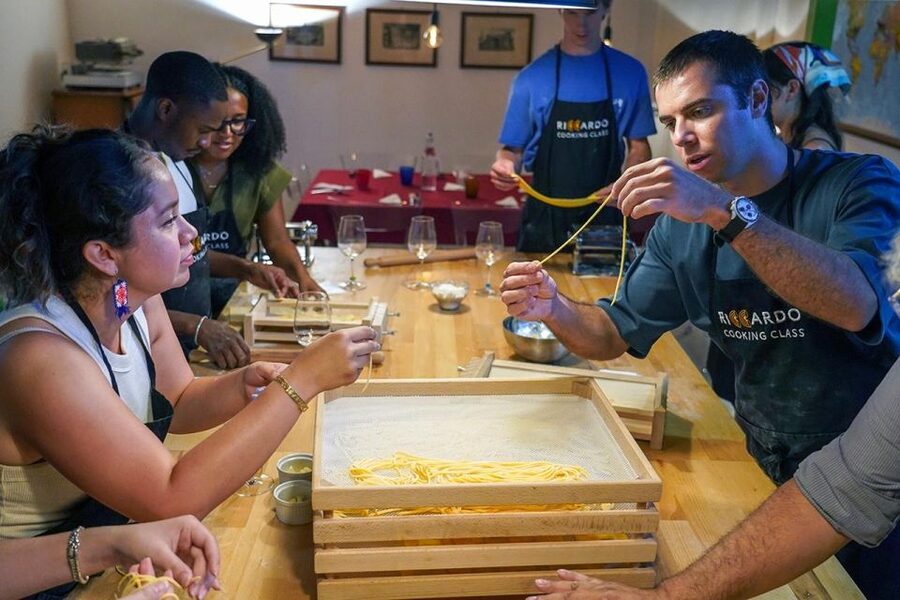
The lesson begins with the basics of fresh dough. You work with quality ingredients and learn how to bring the dough together, knead it, and roll it thin enough for pasta. The chef demonstrates each step, then watches you try it yourself.
This is where a small group matters. Ten people is the maximum, and the instructors can step in when dough is too dry, too sticky, or uneven. You are not left to copy a demonstration from the back of a crowded room.
Long pasta can include fettuccine or spaghetti alla chitarra. The shapes look simple, but the thickness affects the cooking time and how the sauce clings to the noodles. The class helps you see that pasta making is not just about cutting strips. It is also about texture and proportion.
You may also learn to form tortellini or cappelletti. These small shapes take patience, especially when sealing the edges without trapping too much air. The work is repetitive in a good way. Once your hands understand the motion, the process becomes less intimidating.
The team explains what to look for when buying ingredients at home, too. That advice has practical value for anyone who wants to keep making pasta after the holiday. You leave with more than a few photographs of flour-covered hands.
Shaping ravioli and stuffed pasta
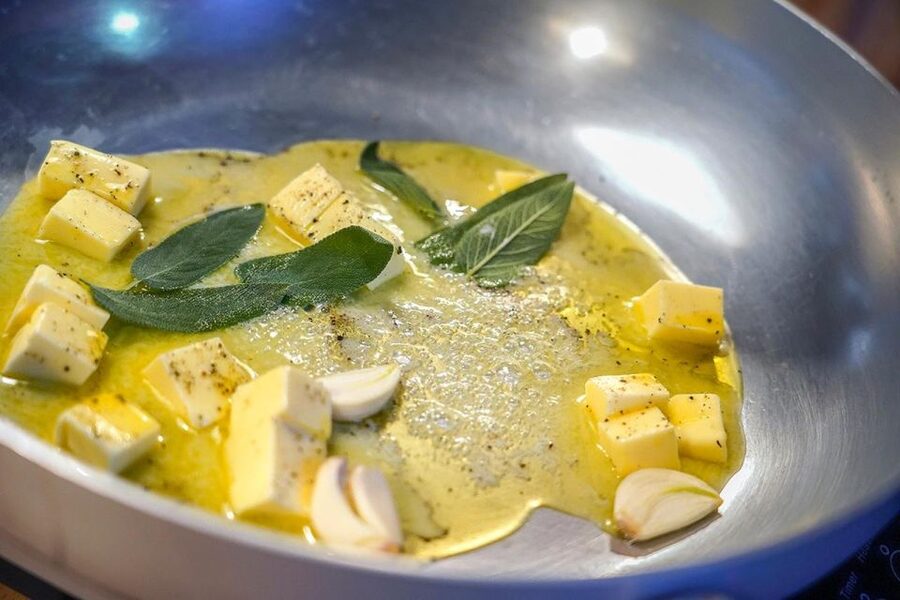
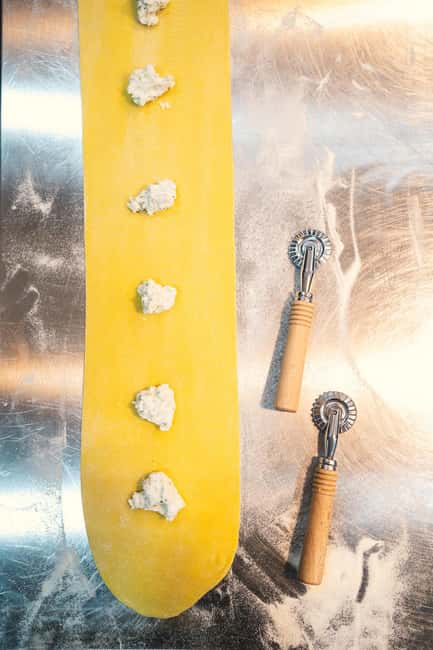
Stuffed pasta is one of the most satisfying parts of the class. Ravioli lets you practice placing filling, sealing the dough, and cutting neat portions. The chefs show you how to avoid excess filling and how to close the pasta so it stays together during cooking.
The exact menu can vary. Past classes have included three different pastas in one session, often combining ravioli with fettuccine and spaghetti. You may instead encounter tortellini, cappelletti, or another regional shape.
That variety is a strong reason to choose this experience over a class devoted to one recipe. You learn several techniques in a single visit, though the tradeoff is that none of them receives the attention of a full-day professional course. For a three-hour activity during a city break, the pace should feel productive rather than exhausting.
The chefs keep the process social. They explain the steps, give tips, and include people who have never made pasta before. Solo participants can join the group without needing to arrive with a partner, while families and friends can work side by side.
More Rome tours worth comparing
- Rome: Pasta Making Class with Wine, Limoncello, and Dessert
★ 4.9 · 3,177 reviews - Rome: Fettuccine Pasta Cooking Class in Rome’s City Center
★ 4.8 · 2,414 reviews - Rome: Traditional Pasta with Cocktails Cooking Class
★ 5.0 · 2,374 reviews - Learn to Make Pasta & Tiramisu with Wine and Limoncello Included
★ 5.0 · 2,345 reviews
Carbonara, cacio e pepe, and sauce lessons
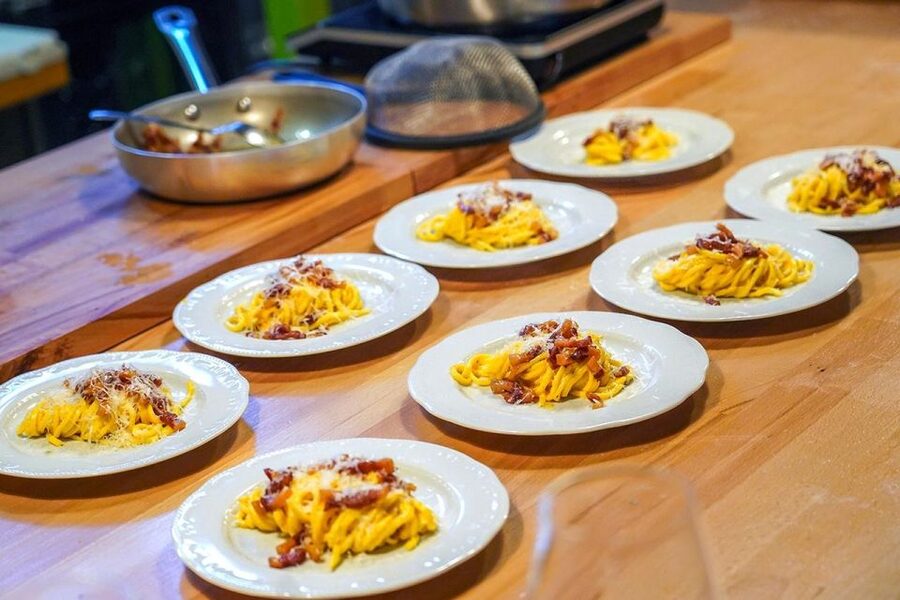
The sauces are not an afterthought. Roman cooking depends on a short list of ingredients used with care, and the class shows how those ingredients work together.
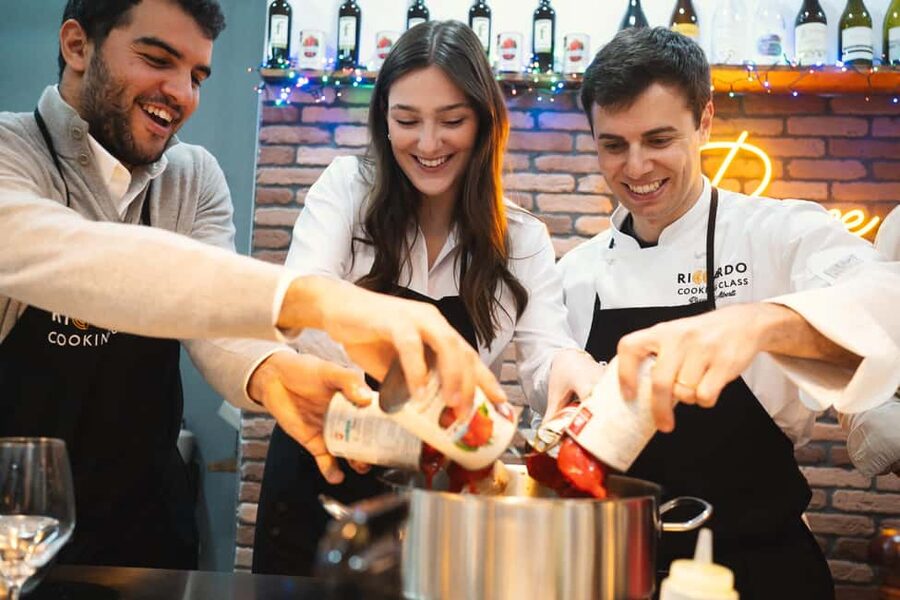
Carbonara is one of the most useful lessons. A traditional version uses guanciale, egg, cheese, and pepper. The class demonstrates a Roman method that differs from many versions served outside Italy, especially those made with cream. The guanciale brings a savory depth that changes the whole dish.
Cacio e pepe is another good lesson because it looks easy and often goes wrong. The key is getting the cheese, pepper, pasta water, and heat to cooperate. You learn why the sauce should turn creamy rather than clump into a heavy mass.
Arrabbiata may accompany fettuccine, while other sauces can be paired with the pasta shapes made that day. Past classes have included three sauces with three pastas, but the precise combination is not guaranteed. Expect Roman staples and fresh ingredients, not a fixed restaurant menu.
I like that the chef explains the reasons behind each step. Instead of simply saying stir this now, the instructor can show how heat affects eggs, cheese, and water. Those details are what help you recreate the dish in your own kitchen.
Sitting down to the meal
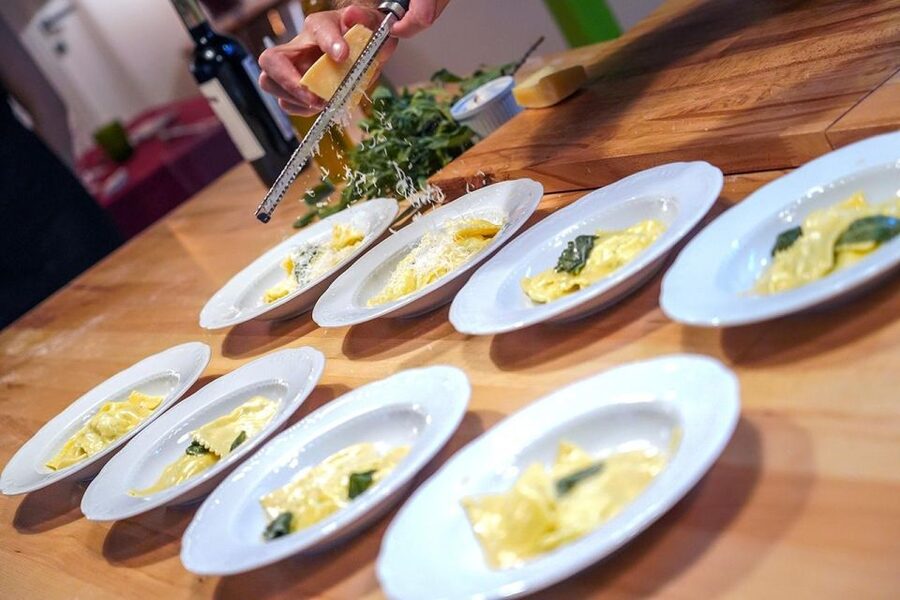
After the cooking, you eat the food together. The experience includes a three-course meal, and portions can be generous. Two kinds of pasta plus ravioli, along with their sauces, can add up to more than you expect from a cooking lesson. You may even have enough to take home, depending on the day and the group.
Selected wine is included, with organic local wine listed as part of the experience. Several sessions have included prosecco during the class, followed by wine with the meal. It is a pleasant pairing for pasta, but remember that this is a class with alcohol, not simply a tasting.
The shared table is part of the appeal. You compare shapes, taste the sauces, and talk with the chefs and other participants. This social side makes the class a good choice for people who want more than a private demonstration.
The language setup deserves a practical note. Instruction is offered in English and Italian. If your group includes people who speak another language, the chef may shift between languages, and not every story or explanation will receive an equal translation. Most of the actual cooking remains easy to follow because the steps are demonstrated, but language can affect how much background conversation you catch.
What the $97 price gets you
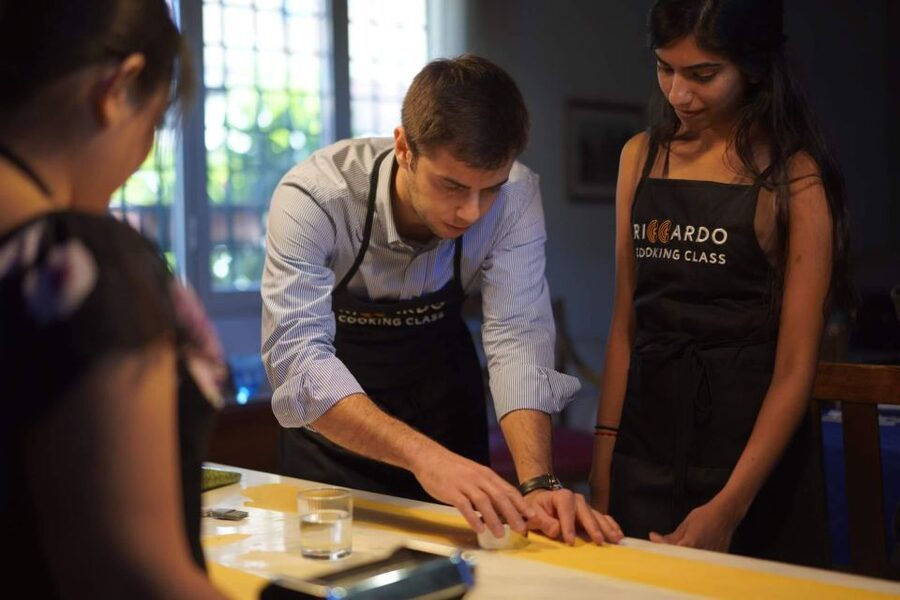
At $97 per person, this is not the cheapest meal you will buy in Rome. It is also not just a meal. The price covers a three-hour lesson, hands-on instruction, organic ingredients, wine, aprons for use, and the food you prepare.
I see the value in the combination. A restaurant dinner gives you finished dishes, but this class gives you a meal plus skills you can use later. The chance to make several pastas and sauces in one sitting makes the price easier to justify for people who enjoy cooking.
The value is weaker if you dislike group activities or rarely cook at home. You may prefer spending $97 on several casual Roman meals instead. The class also takes three hours, plus travel to Gianicolense, so it occupies a meaningful part of your day.
The consistently enthusiastic response to the chefs is important here. Riccardo, Leo, William, and the wider team are praised for patience, humor, clear instructions, and the ability to involve everyone. A cooking class depends heavily on its teacher, and this team appears to understand that the atmosphere matters as much as the recipe.
Who should take this pasta class
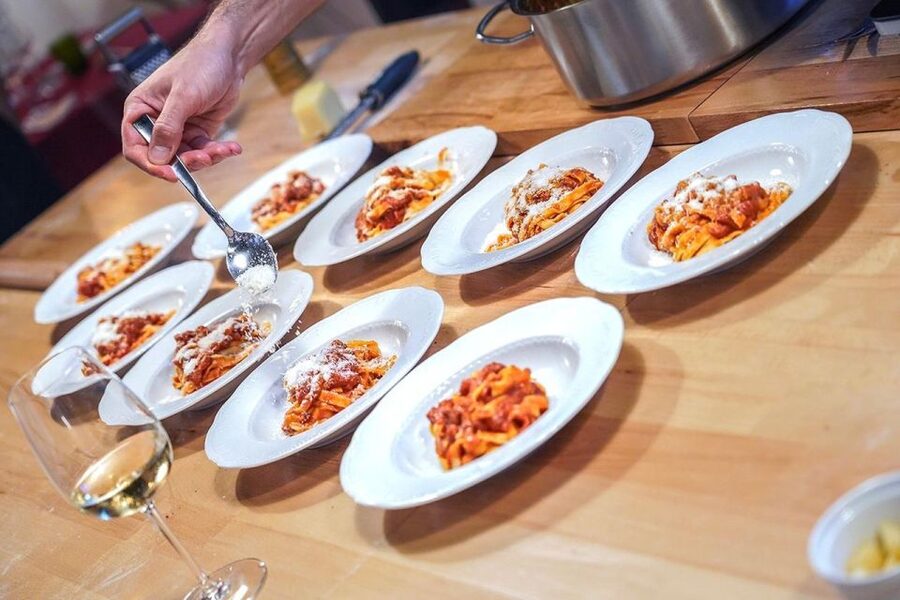
You should consider booking this if you want to learn techniques you can use at home, especially if you are curious about traditional Roman sauces. It suits beginners because the chefs demonstrate each stage and make corrections as you work.
It is also a good pick for couples, families, groups of friends, and solo visitors. The small size gives you a chance to participate, rather than watching from a distant counter. The format has enough structure for people who want instruction and enough conversation for people who want a relaxed social outing.
Vegetarians can be accommodated with a special menu. Allergies, intolerances, and other restrictions must be shared in advance. A private class may offer more flexibility, including gluten-free, dairy-free, vegan, gnocchi, tiramisu, and risotto options.
You should think twice if your main goal is a highly technical professional course. The class covers a lot in three hours, so it offers broad practice rather than a detailed study of one pasta shape. You should also consider the language mix if you need every explanation in one language.
Timing, cancellation, and access
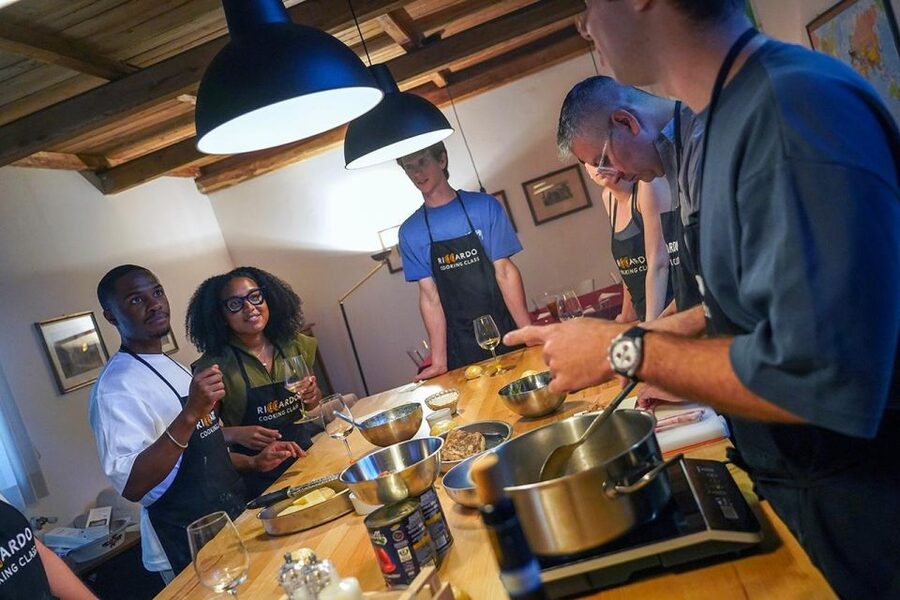
The class is listed as wheelchair accessible. It is offered in English and Italian, and the group is limited to 10 participants.
You can reserve and pay later, which helps if your Rome schedule is still changing. Cancellation is free up to 24 hours before the activity for a full refund. Starting times depend on availability, so check the schedule before building the rest of your day around it.
I would book this early in your stay. That leaves room to use the restaurant and food suggestions during the following days. It also gives you time to buy ingredients and try a pasta recipe at home later in the trip, if your accommodation allows it.
Should you book Rome’s pasta-making class?
Book it if you want a friendly, practical lesson with several pasta shapes, Roman sauces, a full meal, and wine included. The strongest reasons are the hands-on work, the small group, and the teaching style associated with Riccardo and his team. You are likely to leave with recipes, techniques, and a better understanding of carbonara and cacio e pepe.
Skip it if you want a quick activity in the historic center, dislike eating with a group, or would rather spend the same money on restaurant meals. For most food-focused visitors, though, the three-hour format and $97 price make sense because you learn while you eat. Just report dietary needs in advance, confirm the meeting location, and expect the menu to change between sessions.
FAQ
Where is the cooking class held?
The cooking lab is at Circonvallazione Gianicolense 418, 00152 Rome, close to a cafe. Some sessions may take place at Riccardo’s grandmother’s house.
How long does the class last?
The activity lasts three hours. One morning session ran from 11 a.m. to about 2 p.m., but you should check the available start times for your date.
What kinds of pasta will I make?
The class can include ravioli, fettuccine, tortellini, cappelletti, spaghetti alla chitarra, and other fresh pastas. The exact selection may vary by session.
Are food and wine included?
Yes. The price includes the meal you prepare, selected wine, and quality organic ingredients. Prosecco has also been served during some classes.
Can the class accommodate dietary restrictions?
Vegetarian options are available. You must provide information about allergies, intolerances, dietary restrictions, or ingredients you cannot eat. Private classes may offer gluten-free, dairy-free, and vegan menus.
Is the class available in English?
Yes. The instructors teach in English and Italian. The class is limited to 10 participants and is listed as wheelchair accessible.
More Workshops in Rome
- 3 in 1 Cooking Class near Navona: Fettuccine, Ravioli & Tiramisu
★ 5.0 · 7,376 reviews - Rome: 3-in-1 Fettuccine, Ravioli, and Tiramisu Cooking Class
★ 4.9 · 2,704 reviews - Become a Masterchef in Rome: Pasta, Ravioli and Tiramisù Class
★ 5.0 · 2,156 reviews - Rome: Fettuccine and Tiramisu Cooking Class with Wine
★ 4.8 · 2,013 reviews
Newest reviews from Rome
- ROME:Colosseum & Ancient Rome – private/small group TOUR★ 5.0 · 24 reviews
- Off the Beaten Track in Rome: Rione VI Parione Private Tour★ 5.0 · 24 reviews
- Cinematic Photoshoot in Rome★ 5.0 · 24 reviews
- Rome: Best of Colosseum and Roman Forum Small Group Guided Tour★ 4.5 · 24 reviews
- The Labyrinth of Rome between catacombs and ancient quarries★ 4.5 · 24 reviews
- Vatican and Trionfale Market Tour with Wine and Food Tasting★ 5.0 · 24 reviews
- private tour: Vatican Museums, Sistine Chapel, St. Peter’s Basilica★ 4.5 · 24 reviews
- Colosseum guided tour with Virtual Reality★ 5.0 · 24 reviews
Pasta, compared.
Pasta & Tiramisu Class with Fine Wine by the Vatican
Read our review →
Pasta Making Class with Wine, Limoncello, and Dessert
Read our review →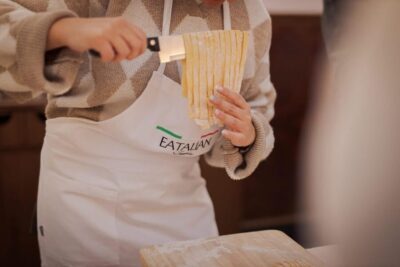
Fettuccine Pasta Cooking Class in Rome’s City Center
Read our review →
Traditional Pasta with Cocktails Cooking Class
Read our review →
Learn to Make Pasta & Tiramisu with Wine and Limoncello Included
Read our review →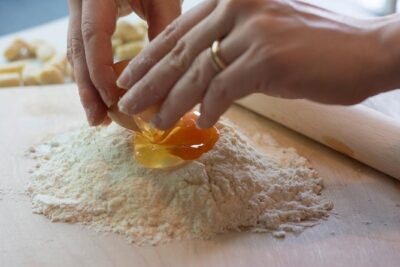
Become a Masterchef in Rome: Pasta, Ravioli and Tiramisù Class
Read our review →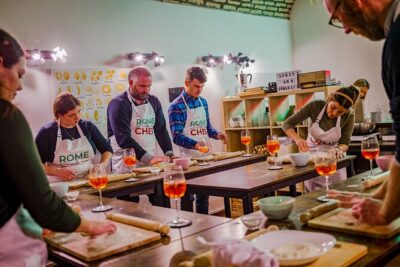
Pasta Cooking Class Near the Colosseum with 3 Spritz Cocktails
Read our review →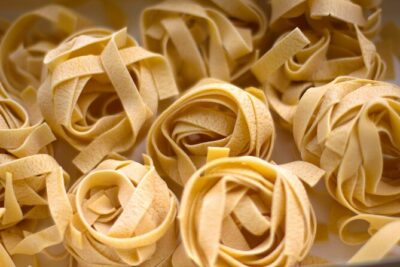
Enjoy Spritz and Pasta Making in Piazza Navona
Read our review →Browse the lists this tour appears in