
Reviewed · COOKING CLASSES
Rome: Hands-on Fettuccine, Ravioli & Tiramisu Cooking Class
Fresh pasta is the star here. In about three hours, you knead dough, stretch it, turn it into fettuccine and ravioli, then make tiramisu before sitting down to eat. It is a useful change of pace from Rome’s churches and ruins, with something tangible to take home: the ability to make pasta from flour and eggs.
I like the hands-on format, since you do not just watch a chef work. I also like the small maximum of 14 people, which gives Giuseppe, Danilo, or the assigned instructor a fair chance to correct your dough and shaping technique. The main consideration is that drinks are not clearly part of the standard inclusions, so check the final booking details if wine matters to you.
In This Review
- Key points before you book
- Why a pasta class works so well in Rome
- Arriving at Via Firenze, 8
- Kneading the dough from scratch
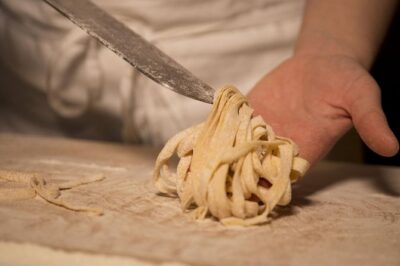
- Turning the dough into fettuccine
- Filling and shaping ravioli
- Building tiramisu with mascarpone and espresso
- Sitting down to eat what you made
- What $71.38 buys you
- Who will enjoy this class most
- Practical details worth knowing
- Should you book the Rome pasta and tiramisu class?
- FAQ
- Where does the cooking class meet?
- Where does the activity end?
- How long does the class last?
- How many people can attend?
- What dishes will I make?
- Is the cooking hands-on?
- Is food included?
- Are ingredients and equipment provided?
- Is transportation included?
- Can I cancel for a full refund?
Key points before you book
- You make two pasta dishes: Fresh dough becomes ribbon-like fettuccine and filled ravioli.
- Tiramisu is part of the lesson: You layer mascarpone with espresso-soaked ladyfingers, then eat the dessert you prepared.
- The class is capped at 14 people: A smaller group should mean more direct help with kneading, rolling, and filling.
- Giuseppe and Danilo receive special praise: Both are described as patient, funny, and able to teach different skill levels.
- The meal is included: You eat the pasta and tiramisu made during class, at the meeting location.
- It fits well between sightseeing stops: The class lasts about three hours and begins and ends at Via Firenze, 8.
Why a pasta class works so well in Rome
Rome can wear you out in the best possible way. You spend hours on stone streets, in museums, and around ancient monuments, often while trying to keep younger members of your group interested. A cooking class gives you a seated, social break without feeling like dead time.
This particular class also gives you a skill rather than only a meal. You learn how fresh pasta dough feels when it is too dry, how it changes as you knead it, and how to shape it into more than one dish. Those are simple lessons, but they are useful ones. You can repeat them in your own kitchen with ordinary ingredients.
I especially like the mix of fettuccine, ravioli, and tiramisu. You get three different tasks: cutting pasta, filling pasta, and assembling a dessert. The pace should feel varied, not like three hours spent repeating one motion.
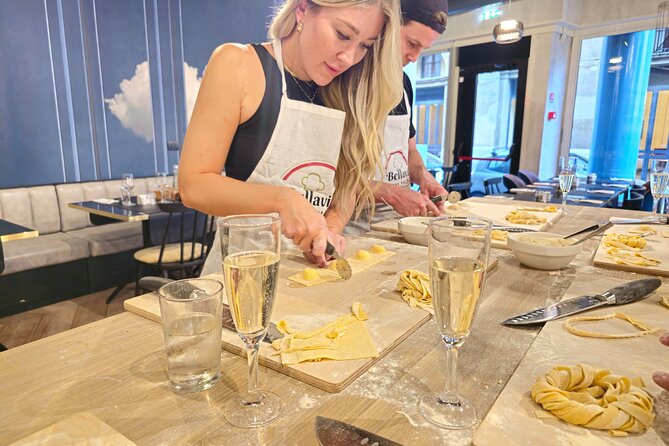
The class is also social by design. You prepare food beside other participants, then share the finished meal at a set table. That makes it a good choice for solo visitors, couples, families, and friends who want an activity that encourages conversation.
More gelato and tiramisu classes:
- 3 in 1 Cooking Class near Navona: Fettuccine, Ravioli & Tiramisu
★ 5.0 · 7,376 reviews - Rome: Pasta & Tiramisu Class with Fine Wine by the Vatican
★ 4.9 · 4,852 reviews - Rome: 3-in-1 Fettuccine, Ravioli, and Tiramisu Cooking Class
★ 4.9 · 2,704 reviews
Arriving at Via Firenze, 8
The meeting point is Via Firenze, 8, 00184 Roma RM, Italy. The class ends at the same location, so you do not need to arrange a separate ride back after eating.
The meeting point is near public transportation, which helps if you are fitting the class into a full day. Still, give yourself enough time to locate the entrance. Rome addresses can be easy to miss when you are watching traffic, reading signs, and navigating unfamiliar streets.
Transportation is not included. You make your own way to the class and back afterward. Since the activity lasts around three hours, it is easy to place it before dinner or between major sightseeing plans, but avoid scheduling a timed attraction immediately afterward. Cooking classes often run on a human timetable, not a train timetable.
Confirmation is provided at booking, and the ticket is mobile. Keep it available on your phone, along with the address and start time.
Kneading the dough from scratch
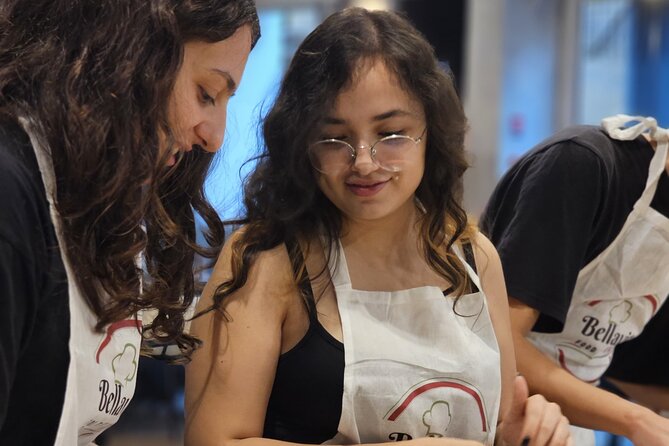
The class begins with fresh pasta dough. You work with the basic ingredients and equipment supplied by the cooking school, wearing an apron and using the provided utensils.
The key lesson is texture. Pasta dough can seem stubborn at first, especially if you are new to it. The instructor shows you how to knead and stretch it until it becomes workable. Giuseppe has been singled out for helping beginners learn those basic movements, including how to knead and stretch the dough without making the task feel intimidating.
This is where the group limit matters. With no more than 14 participants, the chef can watch how you handle the dough and offer corrections. That personal help is more valuable than a long speech about pasta. You learn faster when someone can point to the exact problem in front of you.
The class is designed for all skill levels. You do not need to arrive as a pasta maker, and prior experience at home should not hurt either. One participant who already made pasta occasionally still picked up useful tips and tricks, which suggests the lesson has value beyond the very basics.
Do not expect to leave with restaurant-level speed. The goal is to understand the method and gain confidence. The chef makes the process look effortless, but your first sheet of dough may require patience.
Turning the dough into fettuccine
Fettuccine is flat, thick, and ribbon-like. After preparing the dough, you shape and cut it into the long strands that will become one of the main courses.
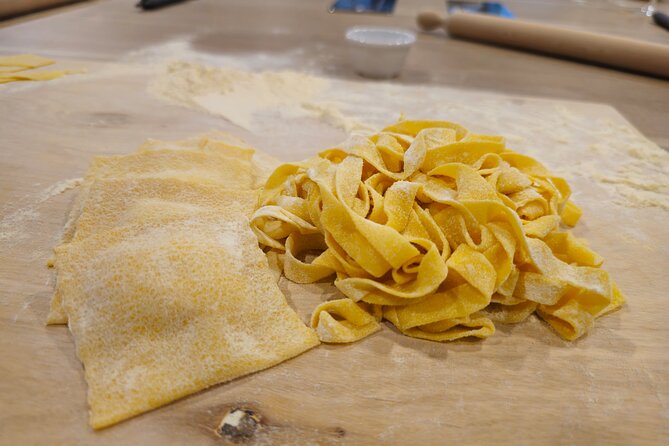
This part teaches you how small differences in thickness affect the finished pasta. The instructor can show you how to handle the dough and prepare it for cutting. You also get a clear sense of the difference between fresh pasta and the dried pasta most people use at home.
The dish is straightforward, which makes it a good first pasta project. You focus on the dough itself rather than a complicated sauce or a long list of ingredients. The result is also easy to appreciate at the table: tender ribbons made by your own hands.
The meal includes the pasta you prepare, so you are not cooking only for practice. You will eventually sit down and eat the finished fettuccine with the group. That gives the lesson a satisfying finish and lets you see how your work turned out.
More cooking classes in Rome:
- Rome: Pasta Making Class with Wine, Limoncello, and Dessert
★ 4.9 · 3,177 reviews - Rome: Fettuccine Pasta Cooking Class in Rome’s City Center
★ 4.8 · 2,414 reviews - Rome: Traditional Pasta with Cocktails Cooking Class
★ 5.0 · 2,374 reviews - Rome: Fettuccine and Tiramisu Cooking Class with Wine
★ 4.8 · 2,013 reviews
Filling and shaping ravioli
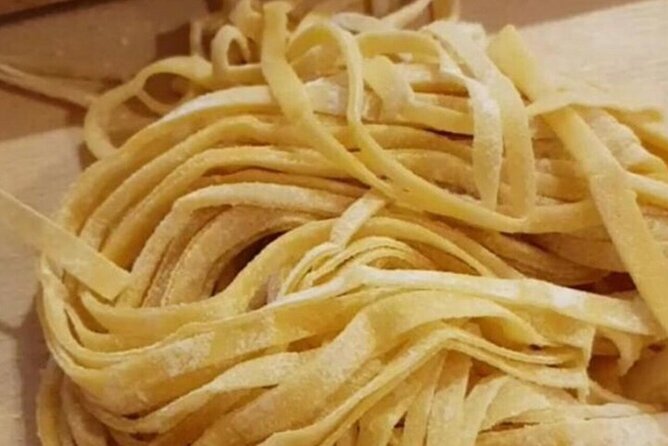
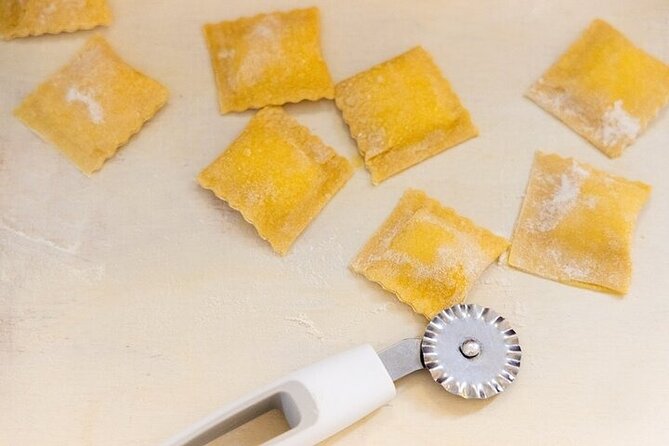
Ravioli brings a different set of skills. Instead of cutting long strips, you learn to fill and shape individual pieces of pasta.
The filling must be placed carefully, and the dough needs to be sealed properly. Too much filling can make the ravioli difficult to close. Poorly sealed edges can allow the filling to escape during cooking. These are exactly the small practical details that are hard to learn from a recipe alone.
The chef guides you through each step, from handling the dough to shaping the finished ravioli. Families and groups of friends should find this part especially engaging because everyone can work at a slightly different pace, then compare the results.
Ravioli also adds a little more room for personality. The pieces may not all look identical, and that is part of the fun. You are learning a traditional technique, not producing factory-perfect pasta.
The finished ravioli becomes the second pasta course. You get to taste both forms of pasta in the same meal, which makes the class feel more complete than a lesson focused on only one recipe.
Building tiramisu with mascarpone and espresso
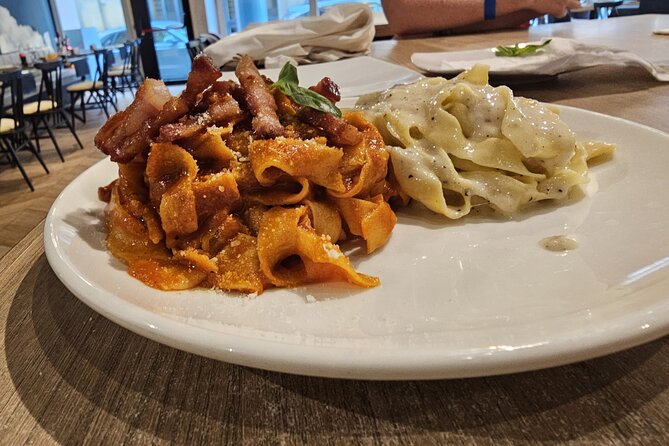
After the pasta work, you prepare tiramisu. The dessert is layered with mascarpone and ladyfingers soaked in espresso.
This is a calmer task after kneading and shaping dough. You assemble the components step by step, learning how the layers come together. Tiramisu is a useful recipe to learn at home because it does not require the same pasta tools or practice with dough.
The name tiramisu means cheer me up, and the dessert certainly gives the meal a sweet finish. You are not simply shown a prepared dessert at the end. You make your own portion as part of the class, then enjoy it with the pasta.
The tiramisu lesson also helps balance the menu. The pasta work is tactile and active. The dessert is more about layering, proportion, and presentation. Together, the three recipes create a better three-hour session than a class devoted only to one type of pasta.
Sitting down to eat what you made
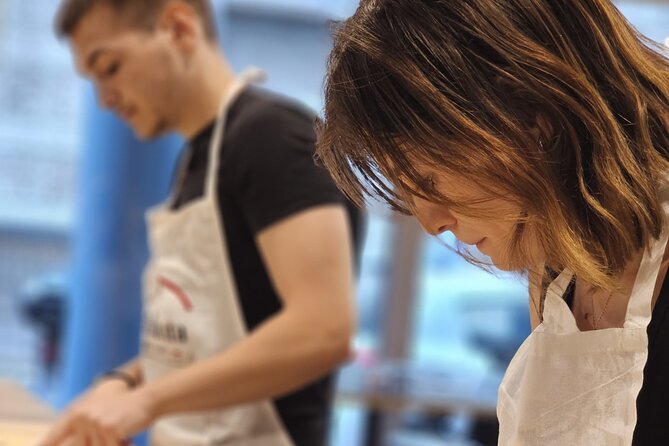
Once the dishes are ready, you sit down with the other participants and eat the food prepared during the class. The experience includes the pasta and tiramisu, as well as the equipment, ingredients, apron, utensils, and professional chef instruction.
The shared meal is an important part of the value. You do not need to find another restaurant afterward, and you get an immediate reward for the work you have done. It also gives you time to talk with the people beside you, compare techniques, and enjoy the setting at a slower pace.
The setting has been described as attractive, with a nicely arranged table for the meal. That detail matters because the class is not only a kitchen lesson. It is also an evening activity with a social finish.
Drink arrangements need a little care. The standard inclusions list does not include additional beverages, while some descriptions of the class format refer to a welcome drink and wine with the meal. Treat drinks as something to confirm before booking rather than assuming they are included in the $71.38 price.
What $71.38 buys you
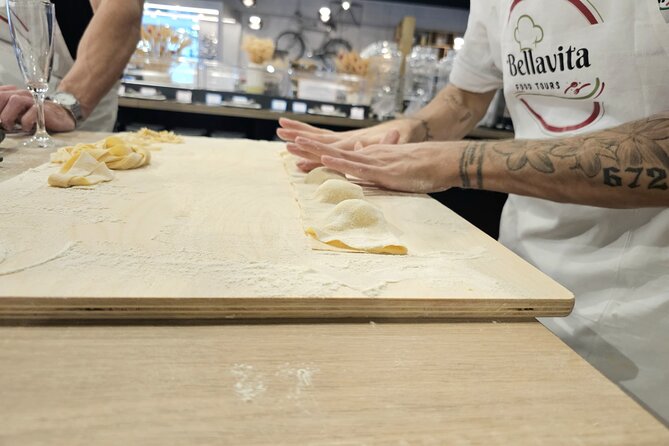
At $71.38 per person, the price is reasonable if you value both instruction and a meal. You are paying for roughly three hours of guided activity, all ingredients, cooking equipment, an apron, utensils, and the food you prepare.
A restaurant meal in Rome might cost less, especially for a simple plate of pasta. That comparison misses the main point, though. Here, you receive personal instruction and take home methods you can use again. If you cook at home, the practical value increases.
The class is also a useful choice for a family or couple looking for one shared activity. Instead of paying separately for sightseeing tickets and a meal, you get an experience that combines both social time and dinner.
The value is weaker if you dislike group activities or already know exactly how to make fresh pasta and tiramisu. Even an experienced home cook may learn a few useful techniques, but the class is aimed at people who want instruction, conversation, and a meal rather than a quiet restaurant evening.
Because it is booked around 35 days ahead on average, popular dates may fill early. I would reserve in advance if your Rome schedule is fixed, particularly if you want a specific day or time.
Who will enjoy this class most
This is a strong fit for first-time pasta makers. The chef works through the process step by step, and the small group allows room for questions and corrections.
Families should also consider it. A parent and child have used the class as a welcome break from walking and history-focused sightseeing, and teenagers have enjoyed the evening format. It gives younger participants a task to finish and a meal they can point to with pride.
Couples and siblings can make the class feel like a shared event rather than another scheduled tour. It also works for solo visitors who want an easy way to meet people over food.
You should be comfortable with a social setting and ready to take part. This is not a demonstration where you sit back and take notes. You knead, shape, fill, layer, and eat.
Language may be a consideration. The instructors make an effort to demonstrate techniques clearly, and one class continued smoothly despite a language mismatch. Still, if you are not comfortable with the language used for your booking, check the available language options and be prepared to learn partly through demonstration.
Practical details worth knowing
The experience lasts about three hours. It begins and ends at Via Firenze, 8, near public transportation, and transportation to the location is not included.
The maximum group size is 14 people. Smaller sessions can be more personal, and some bookings may have fewer participants. In rare cases, a class could feel almost like a private lesson, but you should book on the assumption that other people may attend.
A mobile ticket is accepted, and confirmation arrives at the time of booking. The activity includes a professional chef, ingredients, equipment, apron, utensils, and the meal you make.
Additional food and personal expenses are not included. The safest approach is to ask about drinks when you book, since the stated inclusions and the described meal format do not match perfectly.
Free cancellation is available if you cancel at least 24 hours before the local start time. Cancellations made less than 24 hours ahead, along with late changes, are not refunded or accepted.
Should you book the Rome pasta and tiramisu class?
Book it if you want an active food experience rather than another sightseeing stop. The combination of fettuccine, ravioli, and tiramisu gives you a full lesson, and the meal means your three hours end with something you made yourself.
I would especially recommend it for families, couples, first-time pasta makers, and anyone needing a relaxed break from Rome’s busy sightseeing schedule. Giuseppe and Danilo have both been praised for patient, good-humored teaching, which is exactly what you want when dough refuses to cooperate.
Think twice if you want a private class guaranteed, a formal culinary school setting, or a meal with all drinks clearly covered. Also confirm the beverage arrangements before paying.
For most people, the $71.38 cost is fair because it combines instruction, food, equipment, and a social evening. You leave with a full stomach and a recipe lesson that can outlast the holiday.
FAQ
Where does the cooking class meet?
The class meets at Via Firenze, 8, 00184 Roma RM, Italy.
Where does the activity end?
The class ends back at the meeting point on Via Firenze.
How long does the class last?
The experience lasts approximately three hours.
How many people can attend?
The activity has a maximum of 14 participants.
What dishes will I make?
You will make fresh fettuccine, ravioli, and tiramisu.
Is the cooking hands-on?
Yes. You prepare the dough, shape and fill the pasta, and assemble the tiramisu with guidance from the chef.
Is food included?
Yes. You eat the pasta and tiramisu you make during the class.
Are ingredients and equipment provided?
Yes. Ingredients, cooking equipment, an apron, and utensils are included.
Is transportation included?
No. You arrange your own transportation to and from Via Firenze, 8. The meeting point is near public transportation.
Can I cancel for a full refund?
Yes, if you cancel at least 24 hours before the experience start time. Cancellations or changes made less than 24 hours before the local start time are not accepted, and the payment is not refunded.
More Workshops in Rome
- Become a Masterchef in Rome: Pasta, Ravioli and Tiramisù Class
★ 5.0 · 2,156 reviews - Pasta Cooking Class Near the Colosseum with 3 Spritz Cocktails
★ 5.0 · 1,686 reviews - Rome: Pasta & Tiramisu Cooking Class near the Spanish Steps
★ 4.8 · 1,395 reviews - Rome Tipsy Cooking Class: Make Pasta and Mix 3 Spritz Cocktails
★ 5.0 · 1,357 reviews
Newest reviews from Rome
- Rome: Vatican Museums & Sistine Chapel Skip-the-Line Ticket★ 4.4 · 148 reviews
- Shared Shuttle Transfer from Rome to Civitavecchia Port★ 5.0 · 148 reviews
- Rome: Crypts & Catacombs After Hours Tour with Bone Chapel★ 4.6 · 149 reviews
- Ghosts Legends and Mysteries of Rome Walking Tour★ 5.0 · 149 reviews
- Skip the Line: Vatican and Sistine Chapel with Guided Tour★ 4.0 · 149 reviews
- Tivoli: Villa Gregoriana Entrance Ticket★ 4.7 · 150 reviews
- Pizza and Tiramisu Cooking Class in Rome, Piazza Navona★ 5.0 · 150 reviews
- Appian Way E-bike Tour with Gourmet Picnic and Catacombs★ 4.5 · 150 reviews
Cooking Classes, compared.
3 in 1 Cooking Class near Navona: Fettuccine, Ravioli & Tiramisu
Read our review →
Pasta Making Class with Wine, Limoncello, and Dessert
Read our review →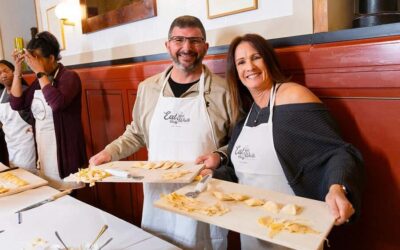
3-in-1 Fettuccine, Ravioli, and Tiramisu Cooking Class
Read our review →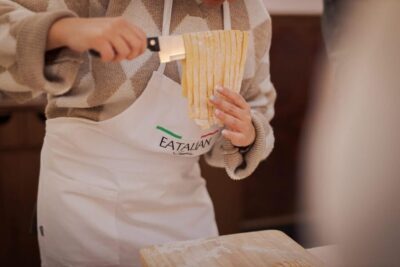
Fettuccine Pasta Cooking Class in Rome’s City Center
Read our review →
Traditional Pasta with Cocktails Cooking Class
Read our review →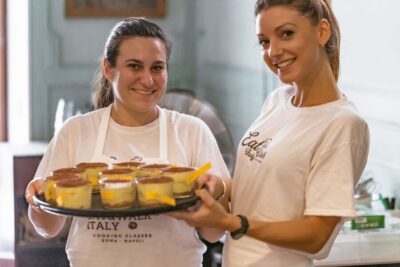
Fettuccine and Tiramisu Cooking Class with Wine
Read our review →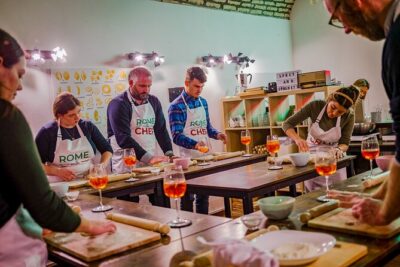
Pasta Cooking Class Near the Colosseum with 3 Spritz Cocktails
Read our review →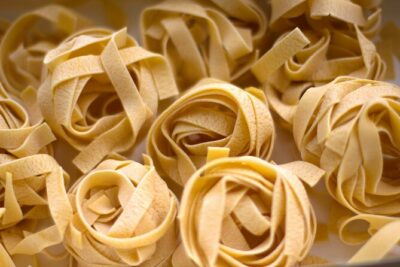
Enjoy Spritz and Pasta Making in Piazza Navona
Read our review →Browse the lists this tour appears in