
Reviewed · ROME GHOST & LEGEND TOURS
Rome Jubilee Walking Tour of Churches, Bridges & Legends
Rome’s churches and monuments make more sense when you follow the old pilgrimage road that links central Rome with Saint Peter’s Basilica. This tour traces that path from Piazza di Pietra to St. Peter’s Square, mixing famous sights with quieter corners and stories about the people who once walked this route for religious reasons.
I like two things here. First, the route gives you useful context before you visit Vatican City, so St. Peter’s Square feels like the end of a journey rather than an isolated photo stop. Second, guides such as Kasia, Alina, and Domenica bring attention to church art, legends, and everyday Roman life, not just dates and building names.
The main consideration is time. Two hours is enough for an introduction, but not enough for long visits inside every church. You also see the Pantheon, St. Peter’s Basilica, and Castel Sant’Angelo from outside, and despite the plural title, the advertised route includes one major bridge crossing.
In This Review
- Key points to know before you book
- Starting among ancient columns at Piazza di Pietra
- Sant’Ignazio and Rome’s painted sky
- Santa Maria sopra Minerva and the quieter side of Rome
- The Pantheon from the outside
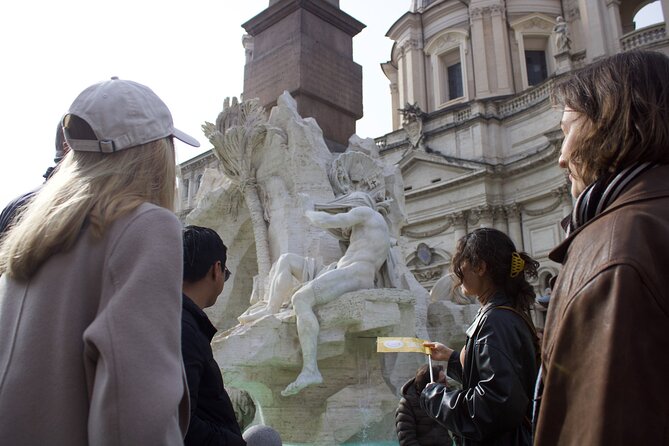
- Baroque Rome in Piazza Navona
- Via dei Coronari and the less holy side of pilgrimage
- Crossing Ponte Sant’Angelo toward the Vatican
- Castel Sant’Angelo and Piazza Pia
- Finishing beneath Bernini’s colonnades
- What the guides add to the walk
- Why the 5:00 pm timing works
- Is $120.14 good value?
- Who should book this Rome walking tour?
- FAQ
- How long does the Rome Jubilee Walking Tour take?
- Where does the tour start?
- Where does the tour end?
- What time does the tour begin?
- Is entry to the Pantheon or St. Peter’s Basilica included?
- How large is the group?
- What should I wear if I visit St. Peter’s Basilica or the Sistine Chapel?
- Should you book it?
Key points to know before you book
- A pilgrimage route with a clear ending: Walk from central Rome toward St. Peter’s Square along streets once used by pilgrims.
- Church art without entry fees: Visit Sant’Ignazio and Santa Maria sopra Minerva, where the interiors are part of the experience.
- A strong evening start: The 5:00 pm departure avoids the hottest part of many summer days.
- Small-group value: The group has a maximum of 15 people, with private-tour upgrades and group discounts available.
- One bridge, several major landmarks: Cross Ponte Sant’Angelo, then see Castel Sant’Angelo and Piazza Pia before reaching the Vatican.
- Outside views only at major ticketed sights: Entry to the Pantheon and St. Peter’s Basilica is not included.
Starting among ancient columns at Piazza di Pietra
The walk begins at Piazza di Pietra, a compact square in central Rome where the columns of the Temple of Hadrian rise above the surrounding streets. It is a smart starting point because Rome’s layers appear immediately: ancient imperial architecture, later buildings, and the modern city all occupy the same small patch of ground.
Your guide uses the square to set the theme. This is not simply a list of churches. It is a walk through the routes taken by pilgrims heading toward Saint Peter’s tomb, with the city’s religious landmarks placed within their Roman setting.
The first stop lasts about 15 minutes and is free. That short time is typical of the tour. You will hear the main story, look closely at the site, and then move on rather than settling in for a full architectural lecture.
More Rome legends after dark:
- Rome by Night Walking Tour – Legends & Criminal Stories
★ 4.5 · 1,003 reviews - Haunted Rome Ghost Tour – The Original
★ 4.5 · 668 reviews - Rome: Angels and Demons Guided Tour
★ 4.7 · 610 reviews
Sant’Ignazio and Rome’s painted sky
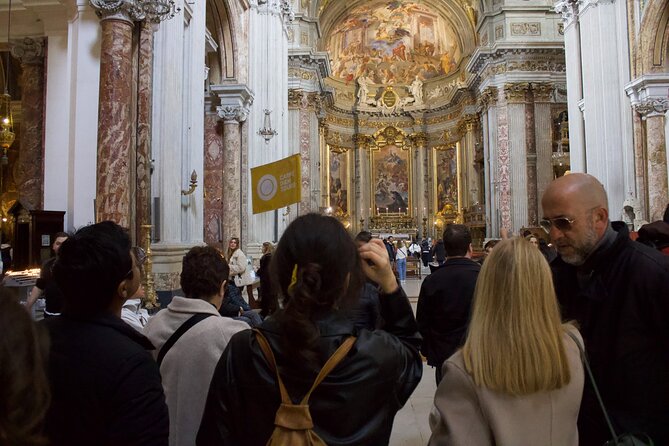
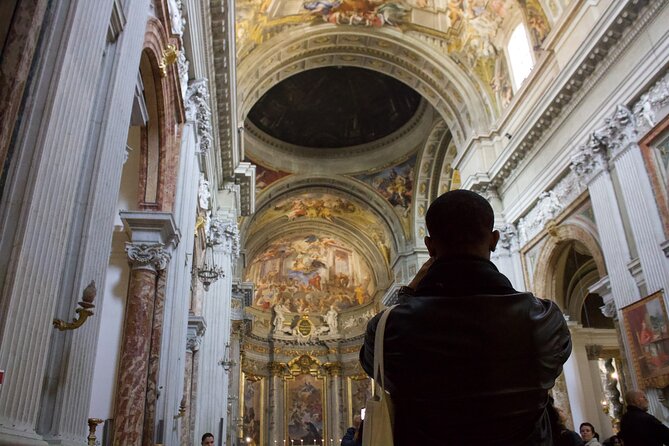
Chiesa di Sant’Ignazio di Loyola is one of the most rewarding stops for anyone who likes dramatic Baroque interiors. The church is known for its painted ceiling, which creates the illusion of architecture extending upward into the sky.
The guide explains both the artistic trick and the religious purpose behind the decoration. That context matters. Without it, the ceiling can seem like a clever visual stunt. With some explanation, you can see how 17th-century church art was designed to inspire awe and communicate ideas to people who might not read religious texts.
You get about 15 minutes here. That is enough to appreciate the ceiling and ornate interior, though not enough to examine every detail. If church interiors are a major reason you came to Rome, treat this tour as an introduction and plan separate time for returning to places that catch your eye.
Santa Maria sopra Minerva and the quieter side of Rome
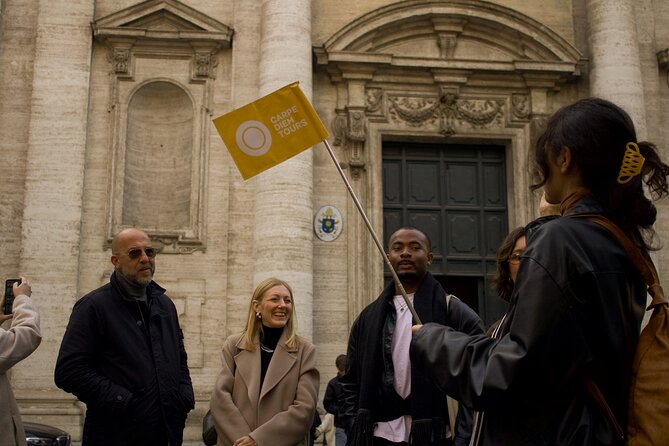
The next stop is the Basilica of Saint Mary of Minerva, formally Santa Maria sopra Minerva. Its square feels calmer than some of Rome’s better-known piazzas, and the basilica contains important works of art, including Michelangelo’s Christ the Redeemer and the tomb of Saint Catherine of Siena.
This is one of the tour’s strongest stops because it connects art, faith, and place. You are not just looking at a decorated church. You are hearing why the building mattered to Catholic Rome and why certain figures and artworks were given such prominence.
The stop is again about 15 minutes and free. The practical limit is the same: you will receive useful orientation, but you should not expect a museum-style examination of the basilica. Keep your attention on the guide, then note anything you want to revisit on your own.
The Pantheon from the outside
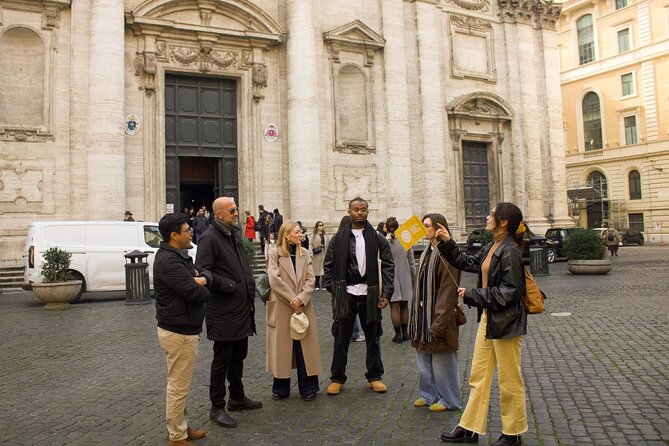
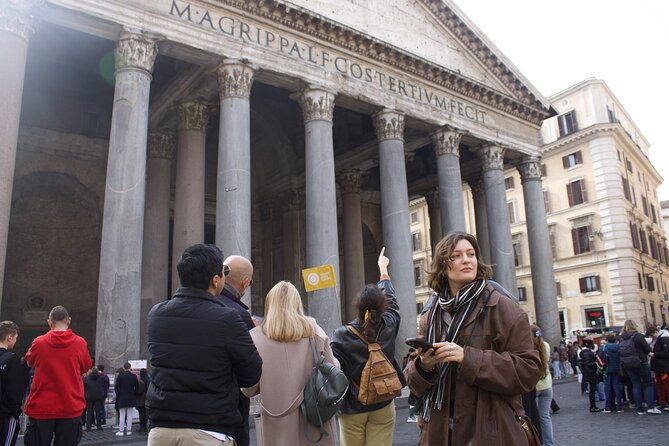
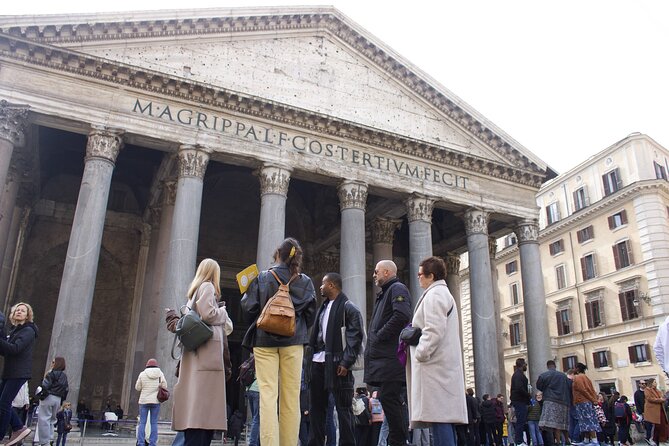
The route also brings the Pantheon into the story. You see its monumental portico and famous dome from outside, rather than entering the building as part of the tour.
That is still worthwhile. The Pantheon is one of the best-preserved Roman buildings, and its survival helps you understand the scale and skill of ancient Roman construction. Your guide places it alongside the churches and pilgrimage roads, showing how later Rome grew around older monuments.
If entering the Pantheon is high on your list, remember that admission is not included. This tour gives you the setting and historical explanation, but you will need to make your own arrangements for an interior visit.
More walking tours in Rome:
- Rome: Trastevere & Campo de Fiori Street Food Walking Tour
★ 4.9 · 2,768 reviews - Rome: Paranormal Night Walking Tour & Secret Backstreets
★ 4.9 · 1,921 reviews - Rome: Guided City Center Evening Sightseeing Walking Tour
★ 4.4 · 953 reviews - Best of Rome Walking Tour including Trevi Fountain
★ 4.5 · 923 reviews
Baroque Rome in Piazza Navona
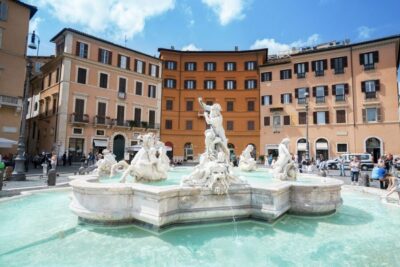
Piazza Navona is the route’s big theatrical square. Built over the site of an ancient Roman stadium, it now presents a long Baroque stage of fountains, façades, and the Church of Sant’Agnese in Agone, associated with Borromini and Bernini.
The guide explains how the square changed from an ancient sporting site into one of Rome’s grand public spaces. That shift is part of what makes the walk useful. You begin to notice that Rome’s piazzas are not random open spaces. Many carry the imprint of an earlier city beneath the present one.
You have around 15 minutes here. The square can be busy, so stay close enough to hear the guide and allow extra care when crossing streets. This is a photo-friendly stop, but the real value comes from understanding the Roman stadium beneath the Baroque design.
Via dei Coronari and the less holy side of pilgrimage
Via dei Coronari is a narrow cobblestone street lined with Renaissance-era buildings. It offers a change of pace after the large piazzas. Instead of looking across a grand open space, you walk through the kind of street where the pilgrimage route becomes personal and practical.
The name and character of the street connect with the people who once headed toward Saint Peter’s Basilica. Your guide also discusses the less respectable businesses that served the crowds. Pilgrimage did not erase ordinary human needs, temptations, or commerce. Rome’s holy roads had plenty of worldly activity along them.
This part of the tour is especially useful if you want more than a standard monument circuit. You get a sense of how historic Rome worked at street level. The cobblestones can be uneven, so comfortable shoes are a sensible choice.
Crossing Ponte Sant’Angelo toward the Vatican
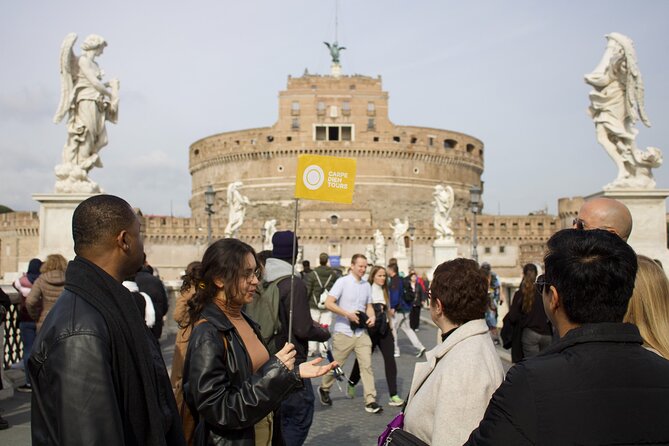
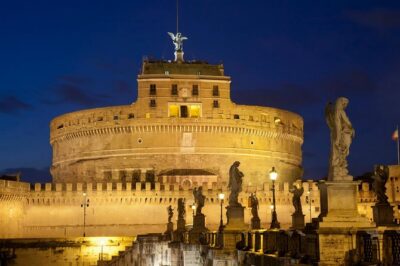
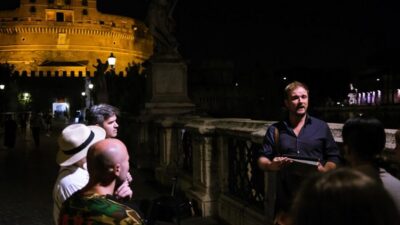
Ponte Sant’Angelo is the route’s key bridge crossing. Its angel statues lead your eye toward Castel Sant’Angelo, while the bridge offers views of the Tiber and a strong visual link to St. Peter’s Basilica.
The bridge once served as the approach to Emperor Hadrian’s mausoleum. Later, it became a major route for pilgrims heading to Saint Peter’s. That change from imperial tomb to Christian pilgrimage passage captures the tour’s main idea: Rome repeatedly reused its ancient structures and gave them new meaning.
One point deserves clear notice. The tour title refers to bridges, but the planned route specifically includes Ponte Sant’Angelo as the major bridge stop. If you are expecting a long bridge-focused walk, adjust your expectations. Here, the bridge is one memorable part of a wider history walk.
Castel Sant’Angelo and Piazza Pia
From the bridge, you admire Castel Sant’Angelo from outside. The cylindrical building began as Hadrian’s mausoleum and later served as a fortress, papal residence, and prison. Today it is a museum, but entrance is not part of this walk.
Its changing roles make it a useful stop. The building is not just an impressive shape beside the river. It shows how Rome adapted old structures to meet new political and religious needs. The guide also connects it to the pilgrims moving toward the Vatican.
The walk continues to Piazza Pia, a key meeting point near the approach to St. Peter’s Basilica. Here, you get the sense that the journey is almost complete. The square gives the route a natural final chapter before the tour reaches Saint Peter’s Square.
Finishing beneath Bernini’s colonnades
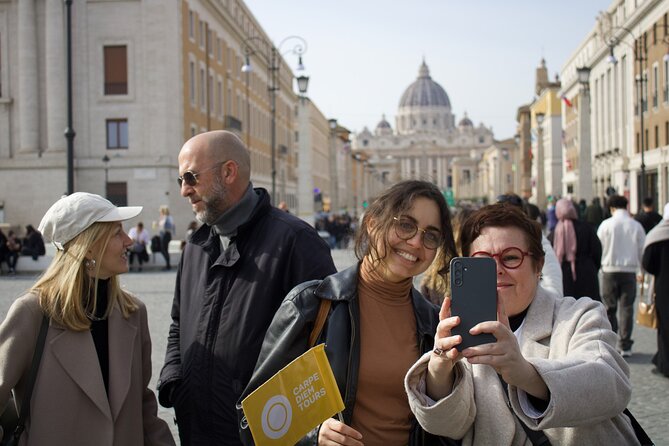
The tour ends in Saint Peter’s Square, beside the great colonnades designed by Bernini. From here, you see the façade of St. Peter’s Basilica and the center of the Catholic world.
This is a satisfying place to finish because the route has gradually built toward it. You have seen ancient Roman remains, Baroque churches, a former imperial mausoleum, a pilgrimage street, and the bridge that carried people toward the Vatican.
You can decide to explore St. Peter’s Basilica on your own after the tour, but admission is not included. If you plan to go inside before or after the walk, dress modestly, with your knees and shoulders covered. The same advice applies if you plan to visit the Sistine Chapel.
What the guides add to the walk
The guide is central to the experience. The tour has been led by Alina, Kasia, and Domenica, among others. Their strengths, based on the details available, include church history, legends, religious meaning, and the social story of the streets.
Kasia is particularly associated with clear explanations of basilicas, church art, and religious symbolism. Alina is described as strong on the history of the churches and places along the route. Domenica has led evening walks that combine history and legends with a fluent, entertaining presentation.
That range matters because this route could otherwise feel like a procession of façades. A good guide helps you connect the ceiling at Sant’Ignazio, the works at Santa Maria sopra Minerva, the Pantheon, the bridge, and the Vatican into one story.
You should still expect some variation in delivery from one guide to another. The repeated praise centers on guides who are well informed, pleasant, entertaining, and able to add facts even for people who have visited Rome before.
Why the 5:00 pm timing works
The walk starts at 5:00 pm and lasts about two hours. That timing is practical in summer, when a long walk in the middle of the afternoon can be uncomfortable. One guide’s evening tour was especially useful in August because it avoided the hottest part of the day.
You also finish near St. Peter’s Square in the early evening, though the exact end time can vary. The tour does not promise an evening entry to the basilica or the Vatican Museums, so plan any indoor visit separately.
The route is near public transportation, and most people can take part. Still, this is a city walk over cobblestones with several stops and a steady route between them. Wear shoes you can walk in for two hours and keep your booking confirmation available on your phone, since the tour uses a mobile ticket.
Is $120.14 good value?
At $120.14 per person, this is not the cheapest way to see Rome from the outside. The price makes more sense if you value a guide who can connect the sites and answer questions in a small group of no more than 15 people.
You are paying for a guided route, local interpretation, and a carefully linked set of central landmarks. You are not paying for admission to the Pantheon, St. Peter’s Basilica, or Castel Sant’Angelo. Those costs, if you choose to visit, come separately.
For budget-minded visitors, the small-group option is the strongest value. You cover a lot of ground without booking a private guide, and group discounts may help if you are traveling with several people. A private upgrade could suit you if you want more control over the pace, but the supplied information does not specify its added cost or exact format.
The tour is most worthwhile early in your Rome stay. It gives you a map in your head, explains how central Rome links to the Vatican, and provides tips for handling holy sights. You can then return to the Pantheon, basilicas, or St. Peter’s Basilica with better context.
Who should book this Rome walking tour?
I would recommend it to first-time visitors who want a clear introduction to Rome’s historic center and the Vatican approach. It also suits repeat visitors. One person who had been to Rome many times still learned new facts, which is a good sign for anyone who thinks the city has no surprises left.
Families with older children can get a lot from the mix of statues, churches, legends, streets, and open squares. The guide’s storytelling keeps the walk from becoming a string of dates. The route also works well for adults who prefer cultural context to a formal museum tour.
You may want a different product if your priority is going inside the Pantheon, touring Castel Sant’Angelo, or spending a long time in St. Peter’s Basilica. This is an orientation walk, not an entry-ticket tour. Also, if you specifically want several bridges, the advertised route includes one main bridge crossing.
Free cancellation is available up to 24 hours before the 5:00 pm start time. Changes or cancellations inside that window are not accepted for a refund.
FAQ
How long does the Rome Jubilee Walking Tour take?
The tour lasts approximately two hours.
Where does the tour start?
It starts at P.za di Pietra, 45, 00186 Roma RM, Italy.
Where does the tour end?
The walk ends at Piazza Pia next to Castel Sant’Angelo, near the approach to Saint Peter’s Square.
What time does the tour begin?
The scheduled start time is 5:00 pm.
Is entry to the Pantheon or St. Peter’s Basilica included?
No. The tour views the Pantheon and St. Peter’s Basilica from outside. Entry tickets are not included.
How large is the group?
The group has a maximum of 15 travelers.
What should I wear if I visit St. Peter’s Basilica or the Sistine Chapel?
Wear modest clothing that covers your knees and shoulders.
Should you book it?
Book this tour if you want Rome’s churches, ancient monuments, and Vatican approach explained as one connected story. The route is strongest for its guides, its pilgrimage theme, and its mix of major sights with streets many visitors pass without understanding.
Skip it if you want extensive time inside the major monuments or a full bridge tour. At $120.14, the value depends on using the guide’s context. For a small group, a 5:00 pm start, and a well-told introduction to central Rome, it is a practical first or second-day choice.
Newest reviews from Rome
- ROME:Colosseum & Ancient Rome – private/small group TOUR★ 5.0 · 24 reviews
- Off the Beaten Track in Rome: Rione VI Parione Private Tour★ 5.0 · 24 reviews
- Cinematic Photoshoot in Rome★ 5.0 · 24 reviews
- Rome: Best of Colosseum and Roman Forum Small Group Guided Tour★ 4.5 · 24 reviews
- Vatican and Trionfale Market Tour with Wine and Food Tasting★ 5.0 · 24 reviews
- private tour: Vatican Museums, Sistine Chapel, St. Peter’s Basilica★ 4.5 · 24 reviews
- The Labyrinth of Rome between catacombs and ancient quarries★ 4.5 · 24 reviews
- Colosseum guided tour with Virtual Reality★ 5.0 · 24 reviews
Rome Ghost & Legend Tours, compared.
Rome by Night Walking Tour – Legends & Criminal Stories
Read our review →


Small Group Rome’s Dark Side – Ghosts & Legends Tour
Read our review →
Dark Heart of Rome – Facts, Legend & Mystery Walking Tour
Read our review →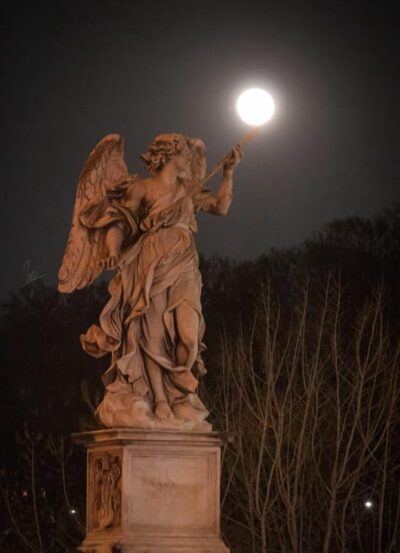
Ghosts, Legends & Mysteries of Rome Tip-Based Walking Tour
Read our review →Browse the lists this tour appears in