
Reviewed · COOKING CLASSES
Rome: Pasta Cooking Class, Dinner & Wine in Authentic Restaurant
Roman pasta tastes best when you make it yourself, and this class puts you in the kitchen with Chef Gabriele, who learned to cook from his grandmother. You’ll prepare fresh pasta, classic sauces, and a seasonal fried specialty before sitting down to eat with wine.
I like the small limit of 10 people, which gives you room to work and ask questions. I also like the setting: an old eatery in Rome’s Jewish Ghetto, where the guide adds stories about local food and the district’s past.
The main thing to consider is the food policy. This is not a kosher class, and the menu includes gluten, dairy, eggs, and other possible allergens. It is also a full dinner, so the two-and-a-half-hour schedule may feel long for young children.
In This Review
- Key points to know before booking
- Cooking Roman pasta in the Jewish Ghetto
- Meeting Chef Gabriele and getting started
- Making pasta from scratch
- Fried artichokes, zucchini flowers, and seasonal cooking
- Sitting down to eat what you made
- What the $104.25 price covers
- Who will enjoy this class most
- A practical evening in central Rome
- What makes this different from a standard pasta class
- Should you book this Roman cooking class?
- FAQ
- Where does the cooking class meet?
- How long does the experience last?
- How many people can join the class?
- Is the class offered in English?
- What food will I prepare?
- Is dinner included?
- Are wine and water included?
- Can vegetarians and vegans join?
- Is the class kosher or suitable for people with gluten allergies?
Key points to know before booking
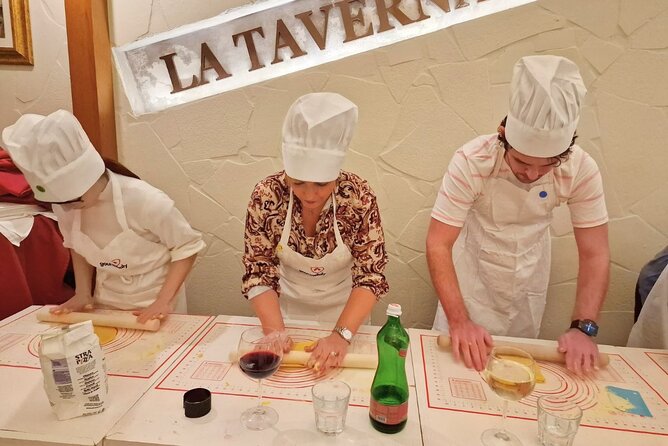
- Chef Gabriele teaches the class: His cooking began with his grandmother, and he leads you through the pasta and sauces with plenty of hands-on help.
- The Jewish Ghetto adds local context: You meet at Piazza Mattei, then learn about the neighborhood’s food traditions and Roman Jewish specialties.
- You make more than one dish: The class covers fresh pasta, cacio e pepe, amatriciana, and arrabbiata, plus seasonal fried vegetables.
- Wine flows during the lesson: Italian wine and water are included from the cooking stage through dinner.
- The group stays small: A maximum of 10 participants makes this more personal than a large demonstration class.
- Dietary limits need careful checking: Vegetarians and vegans are welcome, but the food is not kosher and common allergens are present.
Cooking Roman pasta in the Jewish Ghetto
This experience begins at Piazza Mattei, one of the most attractive small squares in central Rome. The meeting point is Via del Portico d’Ottavia 8, in the heart of the Jewish Ghetto, and the activity ends there after dinner.
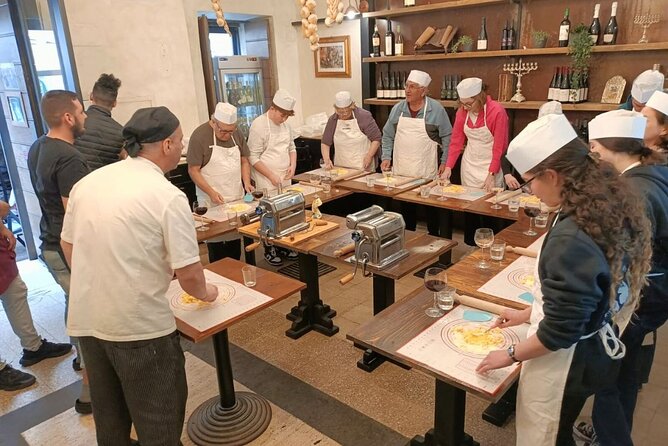
The location matters. You are not being taken to a generic cooking studio on the edge of town. The class takes place in an ancient restaurant inside a 12th-century building, a setting connected with the Rome food scene shown in Stanley Tucci’s Searching for Italy.
Your guide helps bridge the gap between you and the chef. Guides have included Lisa, Anastasia, Daniela, Benedetta, and Eleanor, and their role goes beyond translating. They explain cooking steps, share stories about the Jewish district, and point out how local Roman Jewish food differs from the city’s better-known trattoria fare.
That extra layer gives the evening more shape. You are learning a recipe, but you are also hearing why artichokes matter here, how Roman pasta became so famous, and why this particular neighborhood has its own food identity.
More Rome wine tastings worth an afternoon:
- Rome: Tuscany & Montepulciano Day Trip with Lunch & Wine Tasting
★ 4.5 · 5,232 reviews - Rome: Pasta & Tiramisu Class with Fine Wine by the Vatican
★ 4.9 · 4,852 reviews - Rome Food Tour: Unlimited Tastings with Fine Wine & Barolo
★ 5.0 · 3,365 reviews
Meeting Chef Gabriele and getting started
Chef Gabriele learned to cook with his grandmother, and that family connection fits the tone of the class. The lesson is designed around home cooking rather than formal culinary training. You receive instructions, work with the ingredients, and get help as you go.
The class is offered in English through the guide’s translation. That means the guide remains important throughout the session, especially when the chef is demonstrating a technique or explaining the timing of a sauce.
The class size is capped at 10 people. That is one of the strongest practical features here. In a group this size, you have a better chance of receiving direct corrections, seeing the work surface clearly, and asking about small details such as pasta texture or sauce consistency.
The tone appears to be lively rather than stiff. Singing, jokes, and a relaxed kitchen atmosphere have been part of some sessions. That will suit you if you want dinner with a social side. If you prefer a quiet, highly structured culinary lesson, the informal style may feel less precise.
Italian wine and water are served throughout the class. The wine is not an afterthought saved for the final toast. It is part of the evening, so you can expect a convivial meal as well as a cooking lesson.
Making pasta from scratch
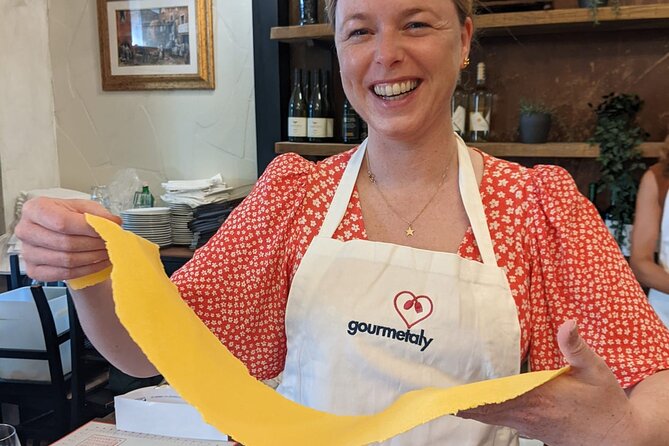
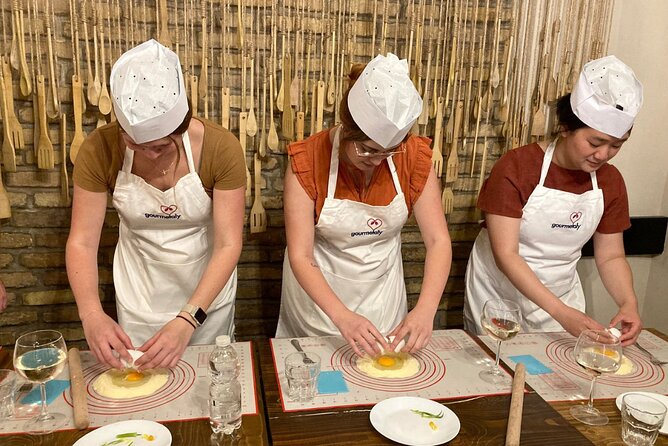
The central task is fresh homemade pasta. You work with the dough and learn how it is prepared before moving on to the sauces.
The value of this part is not simply that you can say you made pasta in Rome. Fresh pasta teaches you to pay attention to texture. You learn how the dough feels, how it changes as you work it, and how the finished pasta differs from dried pasta bought at a supermarket.
The exact level of individual shaping can vary with the group and the kitchen pace. The important point is that this is advertised as a hands-on class, not a demonstration where you only watch Chef Gabriele work.
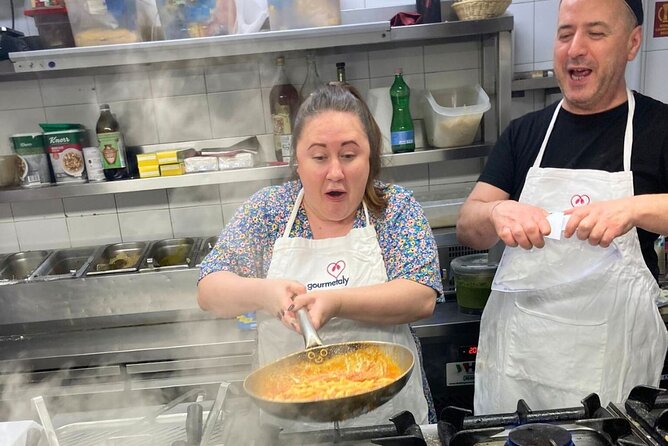
Once the pasta is ready, the class turns to Roman sauces. The signature pair is cacio e pepe and amatriciana, two dishes that look simple but depend on timing and balance.
Cacio e pepe combines pecorino romano and black pepper. It has a short ingredient list, but the technique is easy to mishandle. The cheese must become a smooth sauce rather than a clump, and the pasta water plays an important role.
Amatriciana brings together pecorino romano, guanciale, and tomato sauce. It gives you a different lesson in Roman cooking, with a richer, more savory profile than cacio e pepe.
There is also tonnarelli all’arrabbiata, a tomato sauce with chili and parsley. This is especially useful for participants who do not eat pork, although the class still handles other ingredients that may not suit every diet.
One particularly helpful feature is that you do not just prepare the food and walk away. You challenge yourself to cook the pasta under the chef’s supervision. That lets you see how the lesson works when the clock is running and the sauce, pasta, and serving all need to come together.
Fried artichokes, zucchini flowers, and seasonal cooking
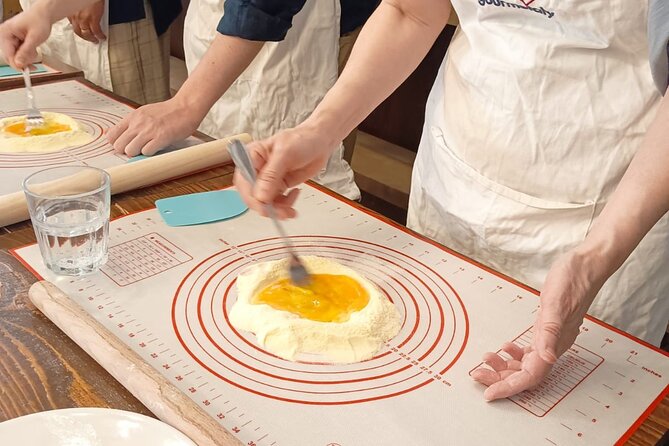
Before the pasta, you prepare a seasonal fried starter known as fritto romano. In summer, this may be a stuffed zucchini flower with mozzarella and anchovy. In winter, it is fried artichoke.
This seasonal change is worth noting before you book. You are not guaranteed the same starter all year, and the ingredients can matter if you dislike anchovies or have dietary restrictions.
The preparation gives the class another useful skill: cleaning vegetables and getting them ready for frying. Zucchini flowers are delicate, while artichokes require more trimming and preparation. These are the kinds of small kitchen tasks that help you understand Roman food better than simply eating the finished dish.
The fried course also breaks up the pasta lesson. You are not spending the full two-and-a-half hours doing one repetitive job. Instead, the evening moves from vegetable preparation to dough, sauce, cooking, and sitting down for dinner.
Still, fried food and wine make this a substantial meal. The food is intended to cover dinner, not just provide a few samples. Plan your day accordingly, especially if you have another major meal booked nearby.
More cooking classes in Rome:
- 3 in 1 Cooking Class near Navona: Fettuccine, Ravioli & Tiramisu
★ 5.0 · 7,376 reviews - Rome: Pasta Making Class with Wine, Limoncello, and Dessert
★ 4.9 · 3,177 reviews - Rome: 3-in-1 Fettuccine, Ravioli, and Tiramisu Cooking Class
★ 4.9 · 2,704 reviews - Rome: Fettuccine Pasta Cooking Class in Rome’s City Center
★ 4.8 · 2,414 reviews
Sitting down to eat what you made
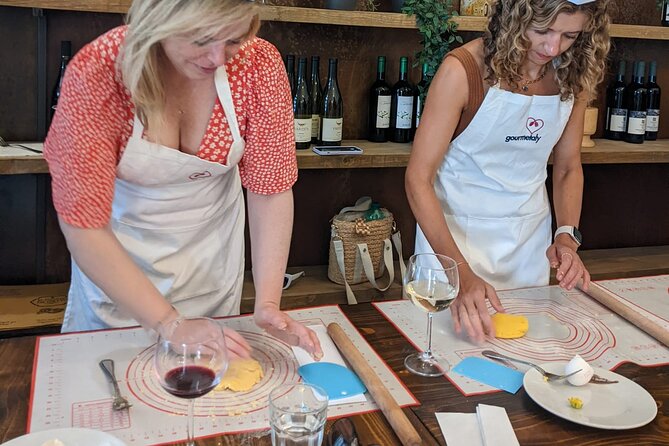
After the kitchen work, you sit at your table and eat the pasta you prepared. This is where the class earns much of its appeal. You can compare the finished dish with the techniques you just practiced, rather than receiving a separate restaurant meal with no connection to the lesson.
The menu includes the seasonal fried starter, homemade pasta with Roman sauces, and dessert. Wine and water continue through the meal.
Dessert is torta di ricotta e visciole, a Roman Jewish ricotta cake with black sour cherry jam. It is listed as a tasting portion, so do not expect a large dessert course. The tart is important because it connects the meal back to the neighborhood’s Jewish culinary traditions.
A cotton apron is included as a souvenir. You also receive a cookbook and guides to recommended restaurants. These extras are useful if you want to recreate the food at home or continue exploring Rome’s dining scene after the class.
The cookbook has practical value. Cacio e pepe is famous precisely because it uses so few ingredients, but getting the method right at home can be harder than ordering it in a restaurant. Having the recipe and having made it under supervision give you a better chance of repeating it successfully.
What the $104.25 price covers
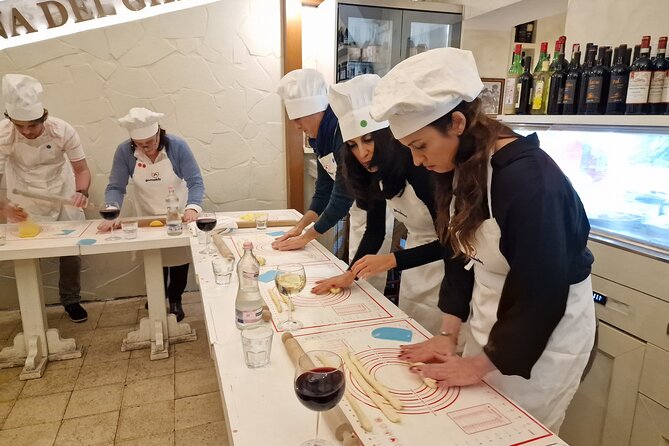
At $104.25 per person, this is not a budget dinner. It is also more than a basic pasta workshop where you pay mainly for instruction and receive a small tasting.
Here, the price includes about two hours and 30 minutes of activity, a full meal, seasonal fried food, dessert, Italian wine, water, equipment, ingredients, an apron, a cookbook, and restaurant guides. You are paying for a combined food tour, cooking lesson, neighborhood introduction, and dinner.
The small group improves the value. A 10-person maximum means you are not paying for a large room where the chef works far away from you. The guide’s translation and neighborhood commentary add another service that a standard restaurant meal does not provide.
The value is strongest if you want an evening activity that replaces dinner. If you view this only as a pasta lesson, the price may seem high. If you count the food, drinks, setting, guide, and instruction together, it becomes easier to justify.
This class is booked an average of 86 days ahead, so it is sensible to reserve early, especially if you have fixed dates or want a particular evening. Confirmation is provided at booking, and free cancellation is available up to 24 hours before the start time. Changes or cancellations inside that window are not refundable.
Who will enjoy this class most
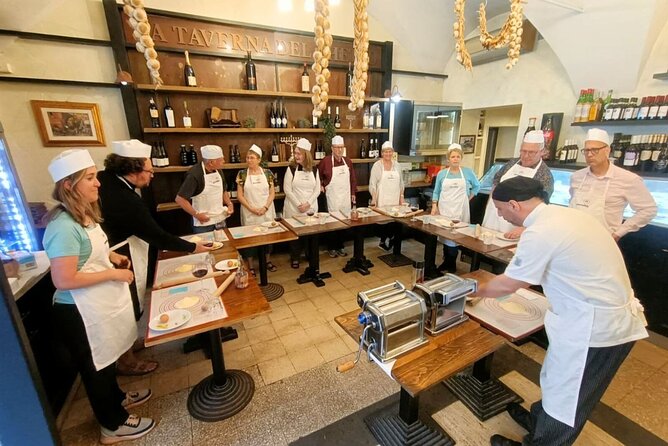
I would choose this for couples, families, and solo participants who like meeting people around a table. It is also a good fit for anyone who wants a Rome activity that is not another monument tour.
Families are welcome, and the small group can make children feel included. Still, the class lasts about two-and-a-half hours, includes wine, and requires patience during preparation. Very young children may find the pace difficult.
Vegetarians and vegans are welcome, but you should take the food policy seriously. The advertised menu includes pecorino, guanciale, mozzarella, anchovy, and ricotta, so alternatives need to be discussed in advance. The operator says it cannot guarantee special food requirements.
The class is not kosher. That matters particularly in the Jewish Ghetto, where the setting and food traditions may create an expectation of kosher preparation. The restaurant and food provided are explicitly not kosher.
Common allergens may be present, including milk, eggs, soya, mustard, nuts, and gluten. The experience is not recommended for people allergic to gluten. If you have a serious allergy, this is not the place to rely on informal substitutions.
A practical evening in central Rome
The meeting point is near public transportation, and the activity returns to the same location. You do not need to arrange a hotel transfer, since pickup and drop-off are not included.
Wear practical clothing. The class operates in all weather, and although much of the activity is connected with the restaurant, you should dress for the conditions when walking to and from the meeting point.
The class is offered in English. The guide translates the chef and provides the local explanations, so you are not left trying to follow a cooking lesson in Italian.
Allow extra time to reach Piazza Mattei. Central Rome can be slow to cross, and a late arrival is especially awkward when dough preparation or sauce work has already begun. The supplied meeting address is Via del Portico d’Ottavia 8, 00186 Rome.
The experience ends at the meeting point, which makes it easy to continue your evening in central Rome. You could plan a quiet walk through the nearby streets afterward, but remember that you will already have had a complete dinner and wine.
What makes this different from a standard pasta class
The strongest feature is the combination of food and place. You are not only learning to roll or cook pasta. You are doing it in the Jewish Ghetto, with a guide who explains the district and its food traditions.
The second strength is the guide’s personal role. Past sessions have been led by Lisa, Anastasia, Daniela, Benedetta, and Eleanor. Their job includes translation, kitchen support, and local storytelling. That helps make the class accessible even when the chef and participants do not share every language.
The third is the social format. The experience can feel like a shared dinner party, complete with wine, jokes, and sometimes singing. I would not choose it for strict culinary certification, but I would choose it for a friendly Roman evening with useful cooking skills.
The main weakness is that the class may not suit every eater. The menu is centered on cheese, pork, gluten, and fried food, and the kitchen cannot guarantee special requirements. The seasonal starter also means the menu changes, so you should not book based on one exact dish alone.
Should you book this Roman cooking class?
Book it if you want to make fresh pasta, eat a full Roman dinner, and hear about the Jewish Ghetto from an English-speaking guide. The small group, Chef Gabriele’s hands-on instruction, and included wine make this a strong choice for a relaxed evening.
I would especially recommend it to couples and families who want one memorable food activity rather than another formal sightseeing stop. The apron and cookbook give you something useful to take home, and the recipes are practical enough to try again.
Skip it if you need a kosher meal, have a serious gluten allergy, or want a quiet, tightly timed culinary workshop. For everyone else, the $104.25 cost is reasonable when you treat it as dinner, instruction, drinks, and a neighborhood experience in one.
FAQ
Where does the cooking class meet?
The meeting point is Via del Portico d’Ottavia 8, 00186 Rome, near Piazza Mattei in the Jewish Ghetto. The activity ends back at the meeting point.
How long does the experience last?
The class and dinner take approximately two hours and 30 minutes.
How many people can join the class?
The activity has a maximum of 10 participants.
Is the class offered in English?
Yes. The experience is offered in English, and the guide translates the chef’s instructions.
What food will I prepare?
You will prepare homemade pasta, cacio e pepe, amatriciana, and tonnarelli all’arrabbiata. You will also prepare a seasonal fried specialty, such as fried artichoke in winter or a stuffed zucchini flower in summer.
Is dinner included?
Yes. The included meal consists of fresh homemade pasta, a seasonal fried specialty, and ricotta and visciole tart. The food is intended to cover dinner.
Are wine and water included?
Yes. Italian wine and water are served throughout the cooking class and dinner.
Can vegetarians and vegans join?
Yes, vegetarians and vegans are welcome. However, special food requirements are not guaranteed, so you should consider the listed ingredients and contact the operator before booking.
Is the class kosher or suitable for people with gluten allergies?
No. The restaurant and food are not kosher, and the experience is not recommended for people allergic to gluten. Possible allergens include milk, eggs, soya, mustard, nuts, and gluten.
More Dinner Experiences in Rome
- Pasta Making & Wine Tasting with Dinner in Frascati from Rome
★ 5.0 · 1,326 reviews - Rome Food Tour: Hidden Gems of Trastevere with Dinner & Wine
★ 5.0 · 1,166 reviews - Rome: Pasta Making with Wine Tasting and Dinner in Frascati
★ 4.9 · 979 reviews - Night Tour of Rome with Local Pizza Dinner and Gelato Experience
★ 4.5 · 780 reviews
More Pasta in Rome
- Rome: Traditional Pasta with Cocktails Cooking Class
★ 5.0 · 2,374 reviews - Learn to Make Pasta & Tiramisu with Wine and Limoncello Included
★ 5.0 · 2,345 reviews - Become a Masterchef in Rome: Pasta, Ravioli and Tiramisù Class
★ 5.0 · 2,156 reviews - Pasta Cooking Class Near the Colosseum with 3 Spritz Cocktails
★ 5.0 · 1,686 reviews
Newest reviews from Rome
- ROME:Colosseum & Ancient Rome – private/small group TOUR★ 5.0 · 24 reviews
- Off the Beaten Track in Rome: Rione VI Parione Private Tour★ 5.0 · 24 reviews
- Rome: Best of Colosseum and Roman Forum Small Group Guided Tour★ 4.5 · 24 reviews
- Cinematic Photoshoot in Rome★ 5.0 · 24 reviews
- The Labyrinth of Rome between catacombs and ancient quarries★ 4.5 · 24 reviews
- Vatican and Trionfale Market Tour with Wine and Food Tasting★ 5.0 · 24 reviews
- private tour: Vatican Museums, Sistine Chapel, St. Peter’s Basilica★ 4.5 · 24 reviews
- Colosseum guided tour with Virtual Reality★ 5.0 · 24 reviews
Cooking Classes, compared.
3 in 1 Cooking Class near Navona: Fettuccine, Ravioli & Tiramisu
Read our review →
Pasta Making Class with Wine, Limoncello, and Dessert
Read our review →
3-in-1 Fettuccine, Ravioli, and Tiramisu Cooking Class
Read our review →
Fettuccine Pasta Cooking Class in Rome’s City Center
Read our review →
Traditional Pasta with Cocktails Cooking Class
Read our review →
Fettuccine and Tiramisu Cooking Class with Wine
Read our review →
Pasta Cooking Class Near the Colosseum with 3 Spritz Cocktails
Read our review →
Enjoy Spritz and Pasta Making in Piazza Navona
Read our review →Browse the lists this tour appears in