
Reviewed · COOKING CLASSES
Rome: Pasta Cooking Class in a Professional Pasta Laboratory
Rome: Pasta Cooking Class in a Professional Pasta Laboratory
The unusual part comes first: this class takes place inside a working professional pastificio, not a hotel kitchen set up for tourists. Chef Angelo and Chef Emanuele Faini show you how to make pasta by hand, using a rolling pin, three kinds of grain, and recipes you can repeat at home. I like the small group of up to nine people and the fact that everyone eats the pasta they made. I also like the attention to different diets, including a separate gluten-free pasta made with buckwheat flour.
The main thing to consider is time. Three hours sounds generous, but you make several pasta shapes, fillings, and sauces, then sit down for a meal. Thursday’s gnocchi option is also more of a quick demonstration than a full hands-on dough lesson, so I would not choose Thursday unless the rest of the class appeals to you most.
In This Review
- Key points at a glance
- Why a professional pastificio changes the class
- Starting with grains, tools, and safe knife work
- Rolling thin sheets by hand
- Three ravioli styles and Roman sauce
- The meal you make yourself
- The Thursday gnocchi option
- What the $66.84 price represents
- Who will enjoy this class most
- Meeting point and practical planning
- My verdict: book it for the craft, not just the meal
- FAQ
- Where does the pasta class take place?
- How long does the experience last?
- How many people are in each class?
- Which languages are available?
- Is the class suitable for gluten-free participants?
- What kinds of pasta will I make?
- What happens on Thursdays?
- What is included in the price?
Key points at a glance
- A real pastificio: Learn pasta-making inside Pastificio Faini on Via dei Latini, rather than in a standard cooking school.
- Three grains: Work with ancient Triticum Monococcum, Senatore Cappelli wheat, and gluten-free buckwheat flour.
- Hand-rolled dough: Use a rolling pin to make thin sheets before cutting, shaping, and filling the pasta.
- Roman sauces: Prepare a classic sauce such as carbonara, cacio e pepe, or gricia, depending on the class.
- A proper meal afterward: Eat the pasta and sauces you made at the worktable, with Italian wine and water.
- Thursday variation: The session includes homemade potato gnocchi on Thursdays instead of the usual pasta focus.
Why a professional pastificio changes the class
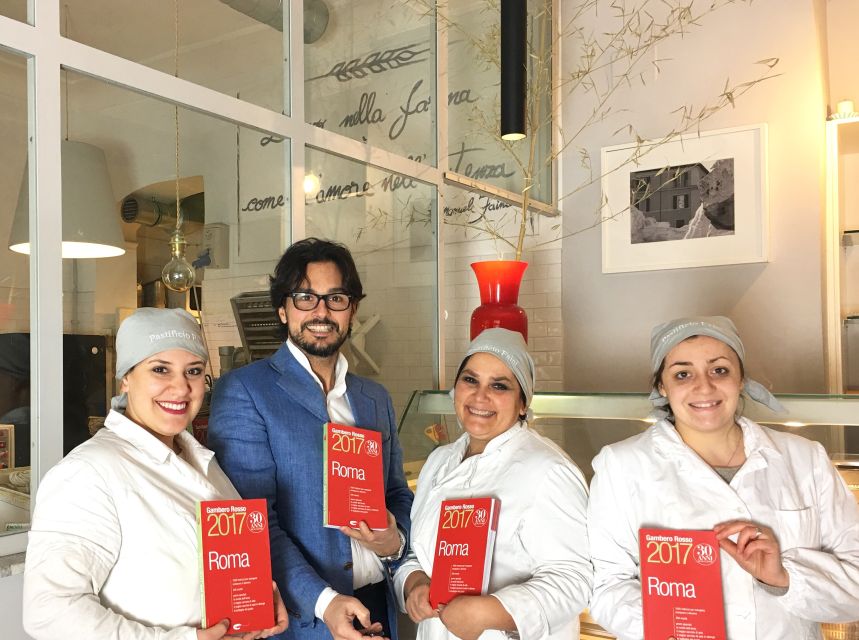
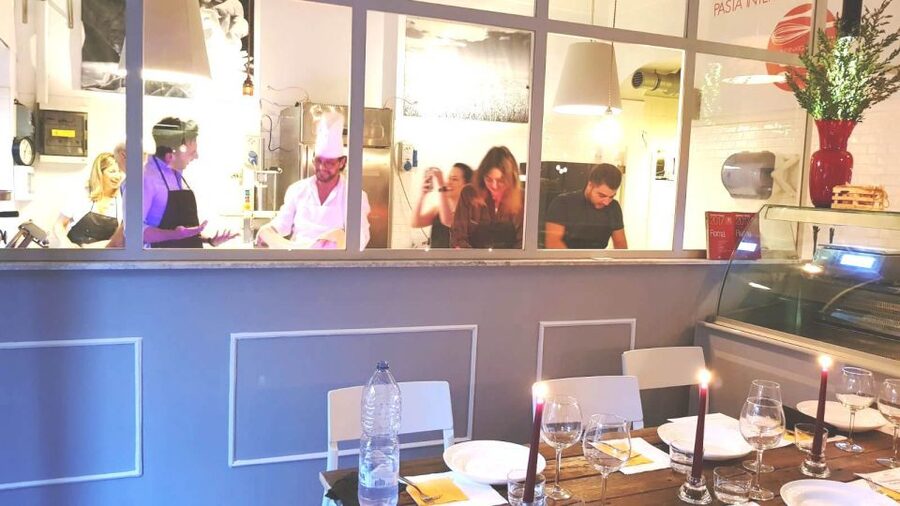
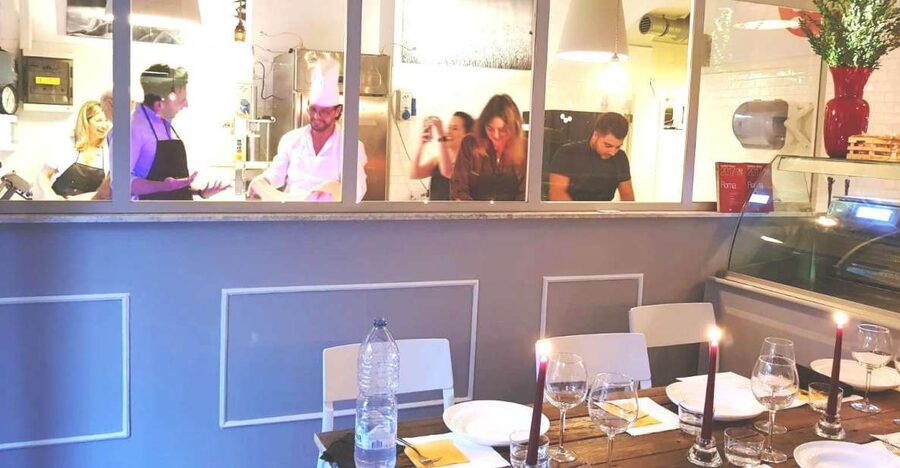
The setting gives this experience a useful sense of purpose. You are not simply mixing flour and eggs at a kitchen table, then taking a few photos before leaving. You work in a professional pasta laboratory where pasta production is the central business.
That matters because the class focuses on repeatable technique. Chef Angelo explains the process in simple steps, demonstrates first, and then lets you follow along. Chef Emanuele is described as especially lively and patient, with a family connection to pasta-making and a strong interest in passing on the craft.
The approach suits beginners. You do not need professional cooking skills, and the teaching is paced for people who have never made fresh pasta. At the same time, the class is not just a quick pasta-machine activity. You roll the dough yourself, cut it, shape it, and fill it with help when needed.
I like that distinction. A machine can produce neat pasta quickly, but hand-rolling teaches you how the dough should feel and how thin the sheet needs to be. Those are the skills that help when you return home without a commercial mixer or pasta roller.
The class has a maximum of nine participants, although the experience description also refers to a group of up to 10. Either way, this is intended to be a small session. That gives the chefs room to correct a fold, show you how to seal ravioli, or help when your dough is too dry or sticky.
More cooking classes in Rome:
- 3 in 1 Cooking Class near Navona: Fettuccine, Ravioli & Tiramisu
★ 5.0 · 7,376 reviews - Rome: Pasta Making Class with Wine, Limoncello, and Dessert
★ 4.9 · 3,177 reviews - Rome: 3-in-1 Fettuccine, Ravioli, and Tiramisu Cooking Class
★ 4.9 · 2,704 reviews
Starting with grains, tools, and safe knife work
You begin with a welcome drink and an explanation of safe food-cutting procedures. This is a practical opening, not wasted time. Once several people are working with knives and fresh ingredients in a compact lab, a few clear rules help the session run smoothly.
The flour lesson is one of the more interesting parts. You use three different grains, each with its own story and character.
Triticum Monococcum, also known as einkorn, is described as one of the first cereals cultivated by humans, dating back to about 7500 BC. Senatore Cappelli was selected in 1915 by Italian agronomist Nazareno Strampelli. It later disappeared from common use in the 1960s before being brought back by a small farmer.
The third flour is Grano Saraceno, or buckwheat. Despite the name, buckwheat is not wheat, and here it provides the basis for a gluten-free pasta. You should advise the provider of dietary requirements ahead of time, especially if you have celiac disease or a serious allergy.
Using different flours makes the lesson more useful than a single standard dough recipe. You can compare how the ingredients behave and learn that fresh pasta is not one fixed formula. It is a family of doughs shaped by the grain, moisture, and intended dish.
Rolling thin sheets by hand
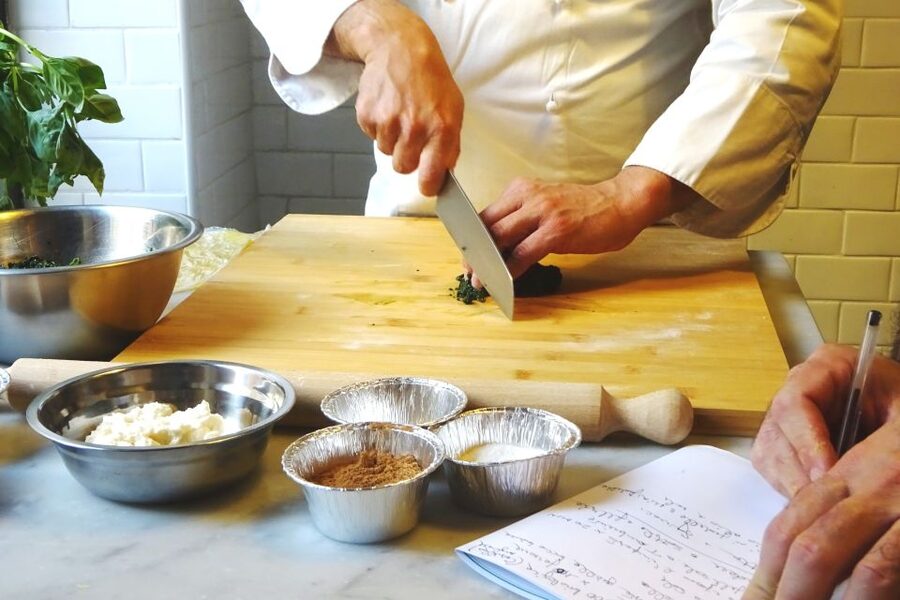
The hands-on work centers on making thin sheets of pasta dough. Chef Angelo or Emanuele demonstrates the motion, then you repeat it at your station. The point is not to produce a perfect restaurant sheet on the first try. It is to learn how pressure, direction, and thickness affect the final pasta.
The chefs provide equipment and ingredients, so you do not need to bring tools. The included chef hat and apron are branded and signed by the chef, which makes a fun keepsake. More important, you can concentrate on the dough instead of worrying about what to buy or pack.
This part may be messy. That is not a flaw, but you should know what you are signing up for. If you want to watch a chef prepare pasta while you drink wine, this is not the right class. Wine is served with the meal, and one account notes that drinks came after the knife exercises were complete.
The class asks you to participate. You will handle dough, flour, fillings, and pasta shapes for much of the session. That makes the three-hour length feel justified, but it also means the experience may be tiring for very young children or anyone who prefers a quiet demonstration.
Three ravioli styles and Roman sauce
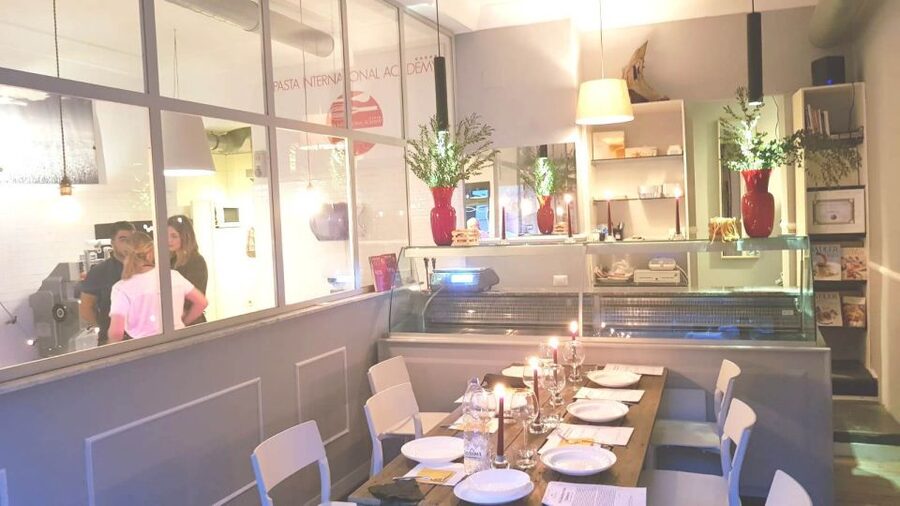
After rolling the sheets, you move on to shaping and filling. The class covers three types of ravioli, giving you a chance to see how small changes in cutting and folding create different results.
Ravioli is a good teaching tool because it tests several skills at once. The dough must be thin but strong enough to hold the filling. The filling must be portioned evenly. The edges need to be sealed without trapping too much air. A little hands-on help from the chefs is valuable here, especially for first-timers.
You also make pasta without egg, which is vegan. This is an important detail for plant-based diners, although you should still discuss your dietary needs in advance rather than assume every part of the menu suits you.
The sauce is a typical Roman preparation. Depending on the session, this may be carbonara, cacio e pepe, or gricia. Each is closely tied to Rome’s cooking traditions, but the techniques differ.
Carbonara depends on handling eggs and cheese without scrambling them. Cacio e pepe looks simple, yet the cheese and pasta water need to come together smoothly. Gricia, made without egg, is a useful reminder that Roman pasta does not begin and end with carbonara.
You may also prepare a basic tomato sauce. One class format includes simple tomato sauce alongside ravioli and fettuccine. The exact combination can vary, so ask at booking if one particular dish matters most to you.
More Rome tours worth comparing
- Rome: Pasta & Tiramisu Class with Fine Wine by the Vatican
★ 4.9 · 4,852 reviews - Rome: Fettuccine Pasta Cooking Class in Rome’s City Center
★ 4.8 · 2,414 reviews - Rome: Traditional Pasta with Cocktails Cooking Class
★ 5.0 · 2,374 reviews - Learn to Make Pasta & Tiramisu with Wine and Limoncello Included
★ 5.0 · 2,345 reviews
The meal you make yourself
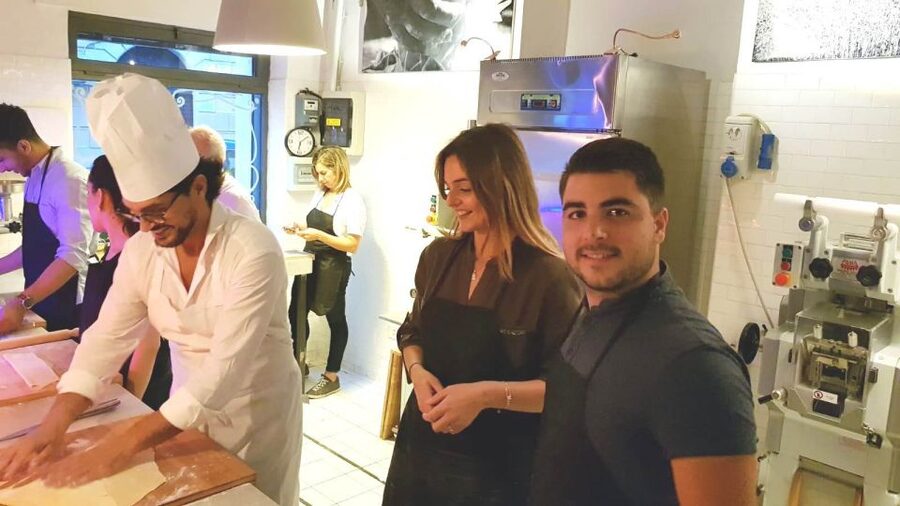
The class ends back at Pastificio Faini, where the pasta and sauces are cooked and served. You sit down with the group and eat the results with Italian wine and water.
This shared meal is more than a reward at the end. It lets you taste the effect of your work immediately. You can see if the sheets were thin enough, notice how the filling sits inside the ravioli, and compare the sauces with the different pasta shapes.
The meal also gives the class a social finish. Participants come from different countries, and the table creates time for conversation with the chefs and the rest of the group. The tone is friendly and informal, with music playing during the preparation and time to talk once the cooking is done.
The wine is included, but the class is not described as a wine tasting. Think of it as a glass with lunch or dinner, not a separate lesson in Italian wine. If you do not drink alcohol, water is also included.
Some sessions may include a surprise dessert. I would treat that as a pleasant extra, not part of the core promise, since the main focus remains fresh pasta, fillings, and sauces.
The Thursday gnocchi option
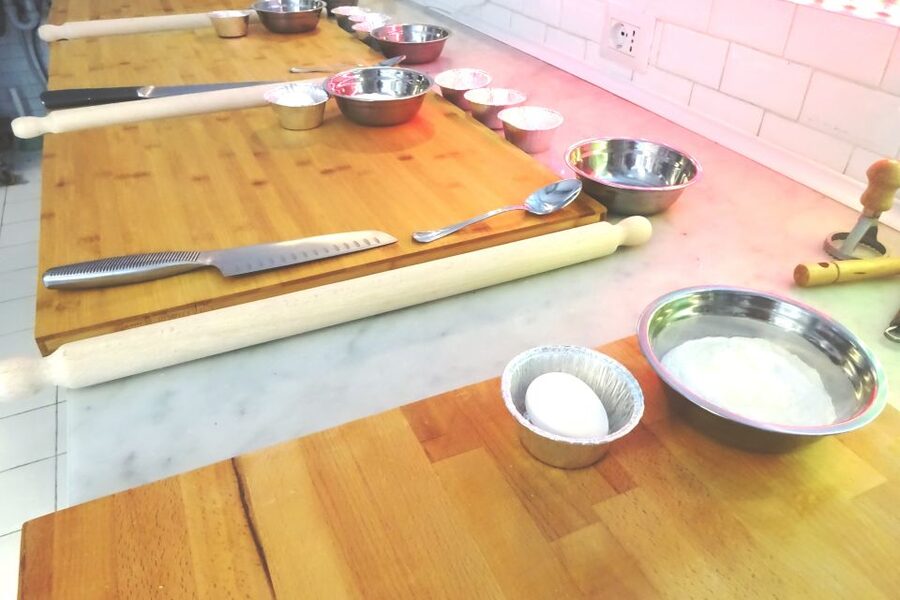
On Thursdays, the class includes homemade Italian gnocchi made with fresh potatoes. This is a tempting variation if you have already made pasta before or particularly enjoy Roman and Italian dumplings.
There is one practical catch. The gnocchi portion has been described as more of a short demonstration than a full opportunity to bring the dough together yourself and receive detailed feedback. The chefs have a fixed three-hour schedule, and adding gnocchi to the program limits the time available for extended practice.
I would choose Thursday if you want variety and do not mind watching part of the process. If your main goal is to master hand-rolled pasta, another day may offer a more focused lesson. The regular format gives you more time with sheets, ravioli, and sauces.
What the $66.84 price represents
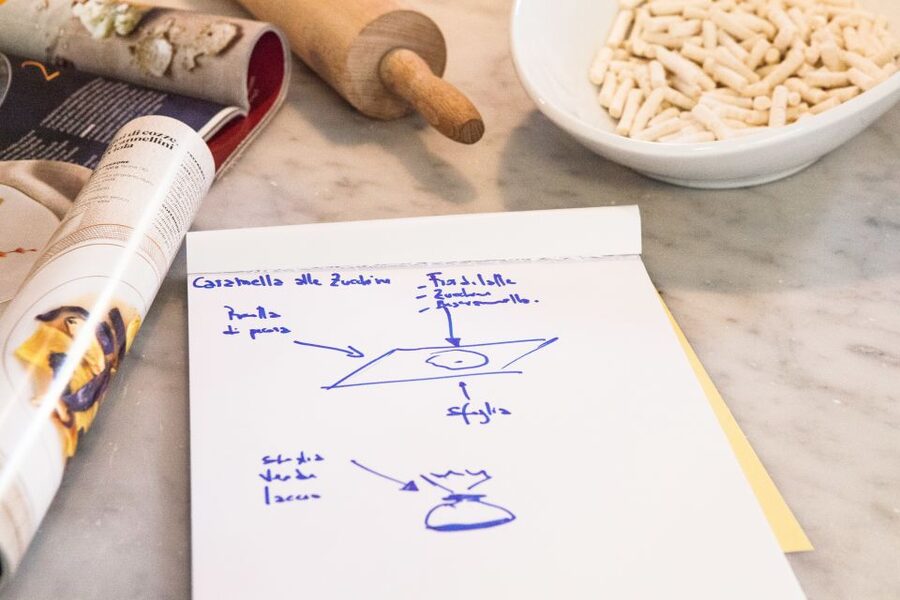
At $66.84 per person, this is not Rome’s cheapest way to eat pasta. It is also not simply a meal with a token cooking activity attached.
Your fee covers three hours of instruction, ingredients, equipment, recipes, a chef hat and apron, wine, and water. You also get a meal made from the food prepared during the class. The professional laboratory setting adds value for anyone interested in how pasta is made beyond the usual home-kitchen routine.
I see the price as fair for a small, hands-on session. The value is strongest if you want to learn a method you can use again. The recipe sheets help you take the class home, and the chefs focus on simple steps rather than techniques that require expensive equipment.
The price may feel less worthwhile if you mainly want dinner or entertainment. Rome has plenty of places to eat excellent pasta without spending three hours making it. This experience earns its cost through participation and instruction, not just the final plate.
Who will enjoy this class most
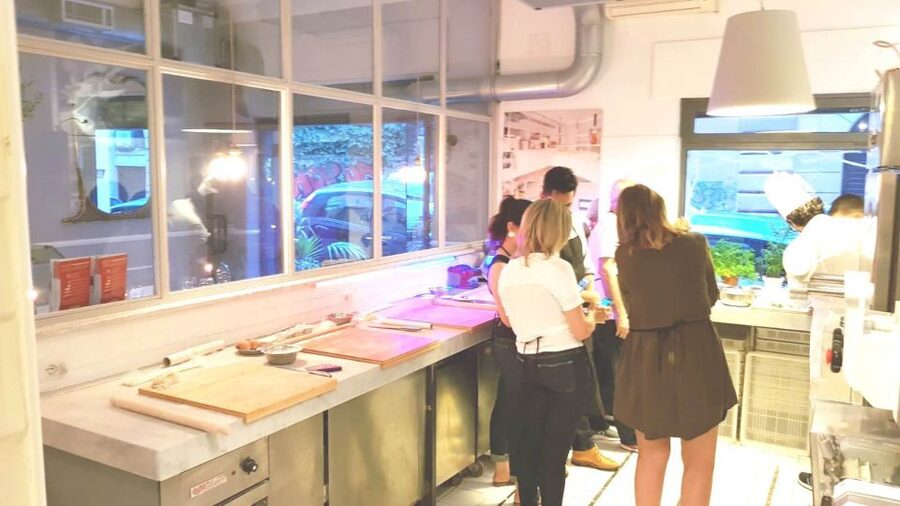
You should book this class if you like to cook, love pasta, or want an activity that gives you a practical souvenir. A recipe card is useful, but the ability to feel the dough and watch the chefs correct your technique is easier to remember.
Families can also fit well, provided everyone is comfortable with hands-on kitchen work. A family with a coeliac child used the gluten-free option successfully, with the child making separate gluten-free pasta. Still, share all dietary requirements before arrival.
Couples and solo visitors can expect a social setting rather than a private lesson. The group size is limited, and the final meal encourages conversation. If you want a private table or a class designed only around your party, this is not presented as that type of experience.
The class also suits repeat visitors to Rome who have already covered the major sights. It gives you a look at a working food business and lets you spend an afternoon or evening doing something tied directly to local cooking.
You may want to skip it if you dislike flour on your hands, have limited patience for step-by-step work, or want a fast demonstration. The chefs are upbeat and attentive, but the class still requires you to do the work.
Meeting point and practical planning
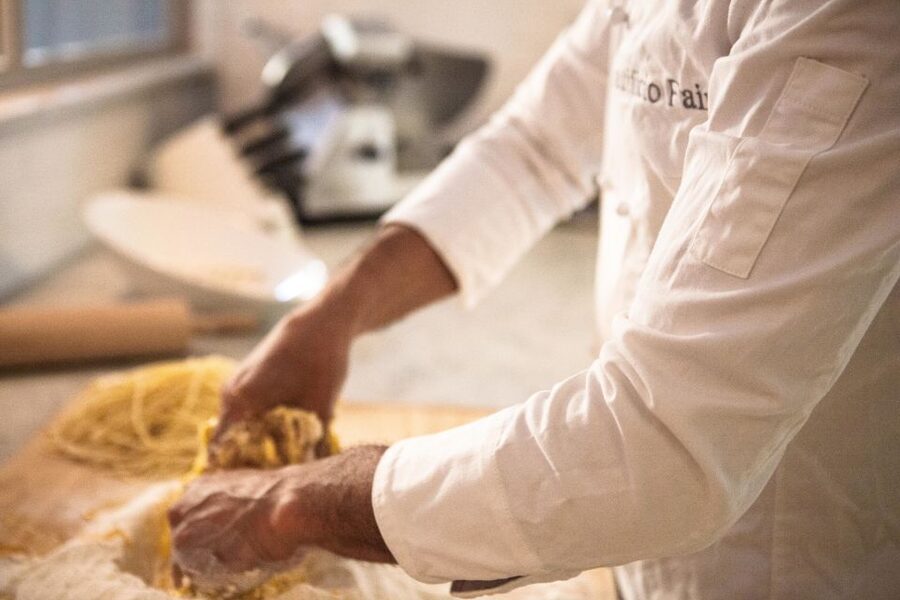
The meeting point is Pastificio Faini at 13 Via dei Latini, Rome, 00185. The activity begins and ends there, so you do not need to arrange a separate return transfer.
The session lasts three hours, with starting times shown when you check availability. Build the rest of your day around that block rather than squeezing it between timed sightseeing reservations.
Instruction is available in English and Italian. Chef Emanuele is praised for speaking clear English, and the teaching format relies on demonstration followed by guided practice. If you have specific food restrictions, contact the provider in advance.
Pets are not allowed. Cancellation is free up to 24 hours before the activity for a full refund, and the reserve-now, pay-later option can help if your Rome plans are still changing.
My verdict: book it for the craft, not just the meal
I would book this pasta class if you want a genuine hands-on food lesson in Rome and care about learning a technique you can repeat at home. The professional pastificio, hand-rolled dough, three grains, gluten-free option, and shared meal give it more substance than a quick tourist cooking demonstration.
Chef Angelo and Emanuele Faini bring the warmth and humor that help beginners relax. The main limitation is that three hours can only cover so much, and Thursday’s gnocchi segment is brief. Choose a non-Thursday session for the strongest pasta focus, and choose Thursday only if gnocchi variety matters more than extended practice.
At $66.84, it is a good buy for a small group, a full meal, and instruction you can carry into your own kitchen. If that sounds better than simply ordering another plate of carbonara, reserve a place.
FAQ
Where does the pasta class take place?
The class takes place at Pastificio Faini, 13 Via dei Latini, Rome, 00185.
How long does the experience last?
The cooking class lasts three hours. Starting times are shown when you check availability.
How many people are in each class?
The class has a limit of nine participants. The experience information also describes a maximum of 10 participants.
Which languages are available?
Instruction is available in English and Italian.
Is the class suitable for gluten-free participants?
Yes. The class caters to gluten-free participants, who make pasta with Grano Saraceno, or buckwheat flour. You should advise the provider of your dietary requirements.
What kinds of pasta will I make?
You will work with thin sheets of dough, three types of ravioli, and one egg-free vegan pasta. The exact pasta selection can vary by session.
What happens on Thursdays?
On Thursdays, the class includes homemade Italian gnocchi made with fresh potatoes.
What is included in the price?
The price includes ingredients, equipment, recipes, a professional branded chef hat and apron signed by the chef, wine, and water. You also eat the pasta and sauces prepared during the class.
More Workshops in Rome
- Become a Masterchef in Rome: Pasta, Ravioli and Tiramisù Class
★ 5.0 · 2,156 reviews - Rome: Fettuccine and Tiramisu Cooking Class with Wine
★ 4.8 · 2,013 reviews - Pasta Cooking Class Near the Colosseum with 3 Spritz Cocktails
★ 5.0 · 1,686 reviews - Rome: Pasta & Tiramisu Cooking Class near the Spanish Steps
★ 4.8 · 1,395 reviews
Newest reviews from Rome
- Rome: Vatican Museums & Sistine Chapel Skip-the-Line Ticket★ 4.4 · 148 reviews
- Shared Shuttle Transfer from Rome to Civitavecchia Port★ 5.0 · 148 reviews
- Rome: Crypts & Catacombs After Hours Tour with Bone Chapel★ 4.6 · 149 reviews
- Ghosts Legends and Mysteries of Rome Walking Tour★ 5.0 · 149 reviews
- Skip the Line: Vatican and Sistine Chapel with Guided Tour★ 4.0 · 149 reviews
- Tivoli: Villa Gregoriana Entrance Ticket★ 4.7 · 150 reviews
- Pizza and Tiramisu Cooking Class in Rome, Piazza Navona★ 5.0 · 150 reviews
- Rome: Borghese Gallery Skip-the-Line Entry and Guided Tour★ 4.7 · 150 reviews
Cooking Classes, compared.
3 in 1 Cooking Class near Navona: Fettuccine, Ravioli & Tiramisu
Read our review →
Pasta Making Class with Wine, Limoncello, and Dessert
Read our review →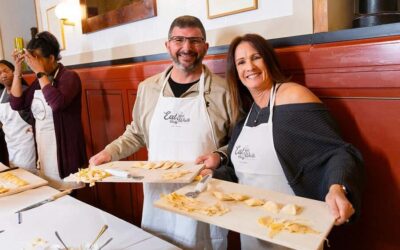
3-in-1 Fettuccine, Ravioli, and Tiramisu Cooking Class
Read our review →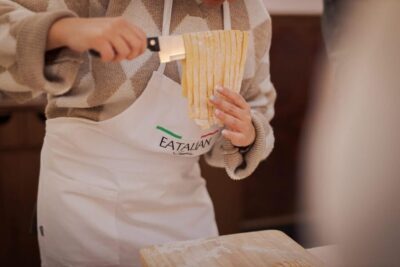
Fettuccine Pasta Cooking Class in Rome’s City Center
Read our review →
Traditional Pasta with Cocktails Cooking Class
Read our review →
Fettuccine and Tiramisu Cooking Class with Wine
Read our review →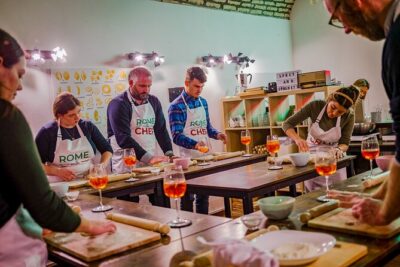
Pasta Cooking Class Near the Colosseum with 3 Spritz Cocktails
Read our review →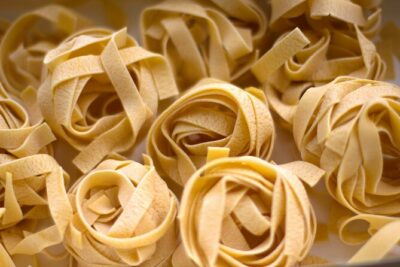
Enjoy Spritz and Pasta Making in Piazza Navona
Read our review →Browse the lists this tour appears in