
Reviewed · COOKING CLASSES
Rome: Pasta Cooking Class with Market Visit and Wine
Rome’s best food lessons often begin away from the grand sights. This one starts at Nomentano Market, where chef Marco helps you choose fresh ingredients before leading you back to the Kitchen of Mamma. You then make pasta by hand, shape several varieties, eat lunch, and raise a glass of Italian wine.
I like the market visit because it connects the cooking to everyday Roman food shopping. I also like that Marco works around the long table and gives each person a station, with plenty of help as the dough takes shape. The main consideration is time: the booking allows six hours, but some sessions finish closer to four, and the exact pasta menu can vary.
In This Review
- Key points to know before booking
- From Via Palestro to Nomentano Market
- Inside the Kitchen of Mamma
- Ravioli, tortellini, and the work of shaping dough
- Sauces, wine, and a proper pasta lunch
- Coffee, limoncello, and the final Roman touch
- The Marco factor
- How the six-hour schedule works
- Is $141.61 a fair price?
- Who should book this pasta class?
- FAQ
- Where does the pasta class begin?
- Where does the activity end?
- How long does the activity last?
- Which market do you visit?
- Who teaches the class?
- Do I need cooking experience?
- What is included with the meal?
- Is the class suitable for someone with gluten intolerance?
- Should you book it?
Key points to know before booking
- Market first: Walk to Nomentano Market with Marco and learn how seasonal ingredients fit into Roman cooking.
- Several pasta shapes: Expect hands-on work with fresh dough, ravioli, tortellini, linguine, and other shapes, depending on the session.
- A lively teacher: Marco leads in English and Italian, mixing cooking instruction with Roman stories, humor, and practical tips.
- A full meal follows: Eat the pasta with sauces, Italian wine, coffee, and limoncello rather than simply taking a small sample.
- Useful take-home items: You receive recipes and a participation certificate, and extra food may sometimes be available to take home.
- Plan for gluten: This class is not suitable for people with gluten intolerance.
From Via Palestro to Nomentano Market
You meet at Via Palestro 51, 00185 Rome, and should arrive at least 10 minutes before the stated start time. The meeting point is convenient for Rome’s central rail and transit area, though you should still allow a little time to find the exact address.
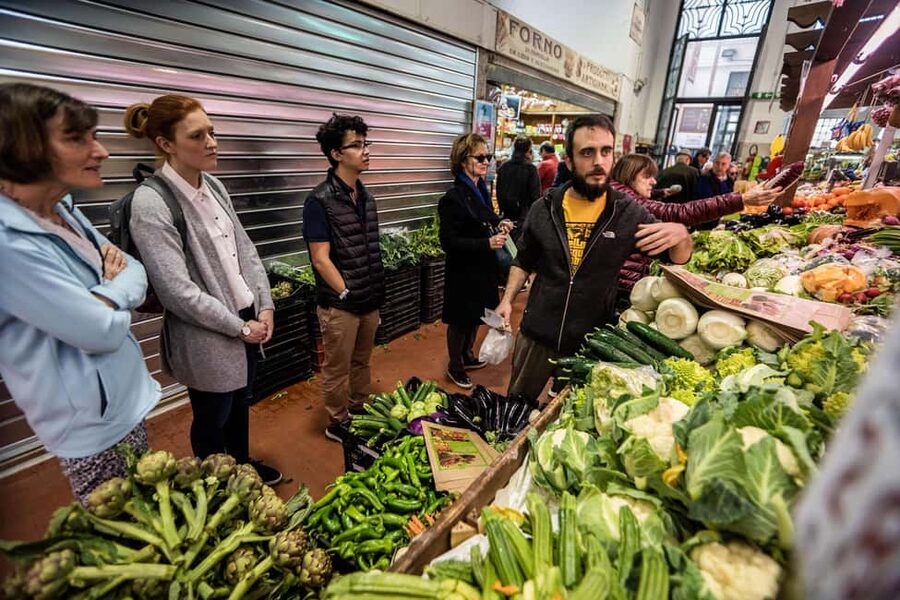
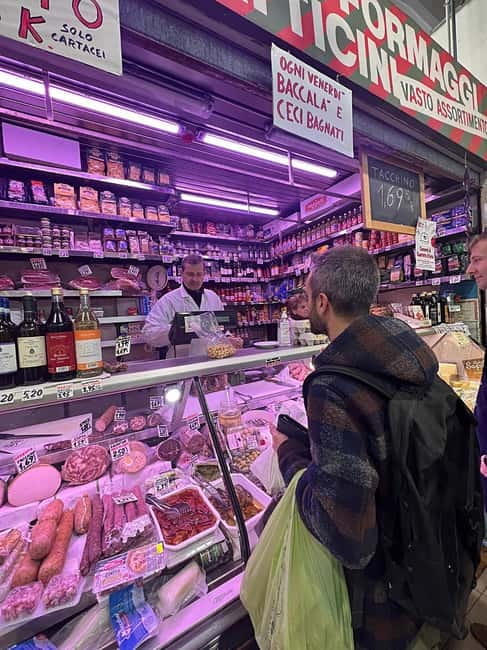
The walk to the market is short, described by participants as roughly five to ten minutes. That small outing gives the class a useful Roman setting. Instead of beginning with a prepared pile of ingredients, you see the kind of local shopping that supports the meal.
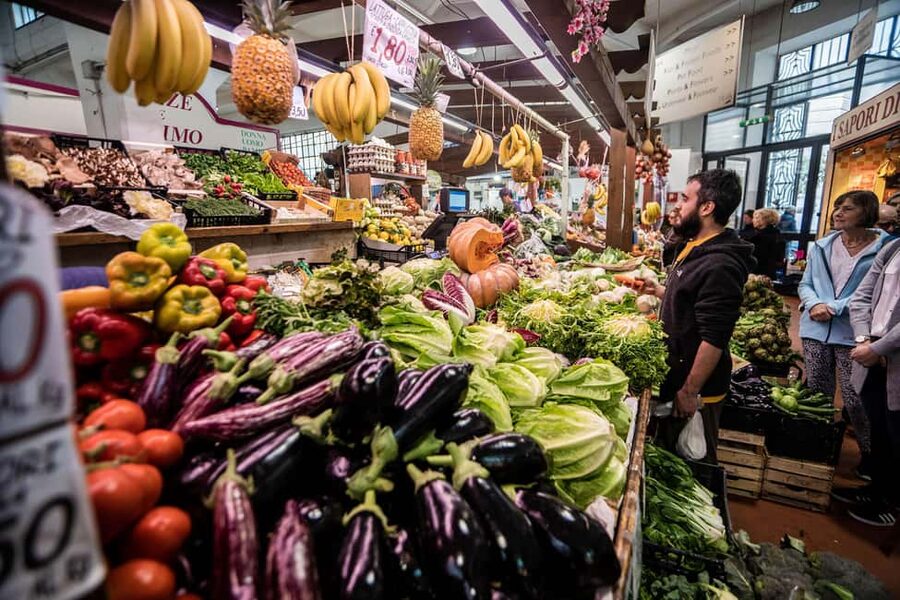
Marco uses the walk to explain ingredients and share stories about Rome and Italy. At the market, he points out vegetables, meat, fish, and other products used in the recipes. You are not simply sightseeing among stalls. You are learning why certain ingredients work together and how a cook chooses produce for the dish ahead.
That makes the market visit more valuable than a quick photo stop. It gives you a better sense of the link between Roman cooking and the neighborhood shops that supply it. You might also find the stop more interesting if you have already spent days eating in restaurants and want to see where the food begins.
The market portion is still a walking tour, not a full food tour. The main purpose is to gather ingredients and set up the cooking lesson. If you want a long market visit with lots of tastings, this is not that kind of outing.
More Rome wine tastings worth an afternoon:
- Rome: Tuscany & Montepulciano Day Trip with Lunch & Wine Tasting
★ 4.5 · 5,232 reviews - Rome: Pasta & Tiramisu Class with Fine Wine by the Vatican
★ 4.9 · 4,852 reviews - Rome Food Tour: Unlimited Tastings with Fine Wine & Barolo
★ 5.0 · 3,365 reviews
Inside the Kitchen of Mamma
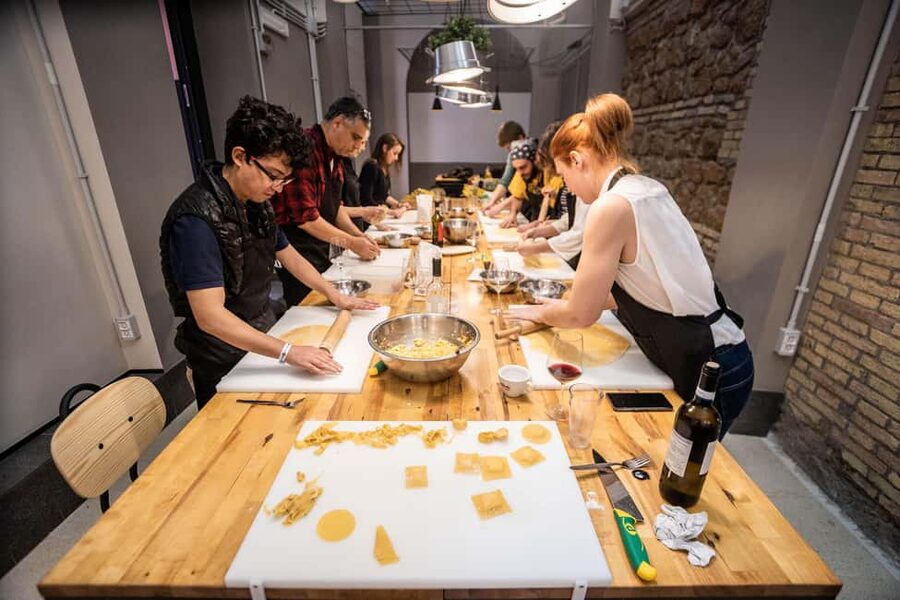
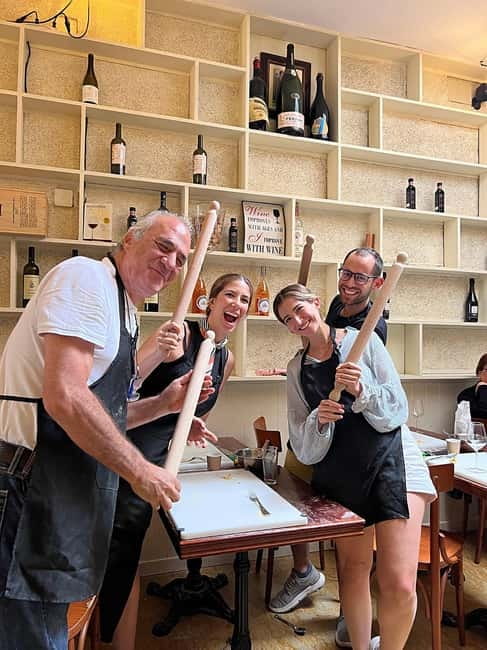
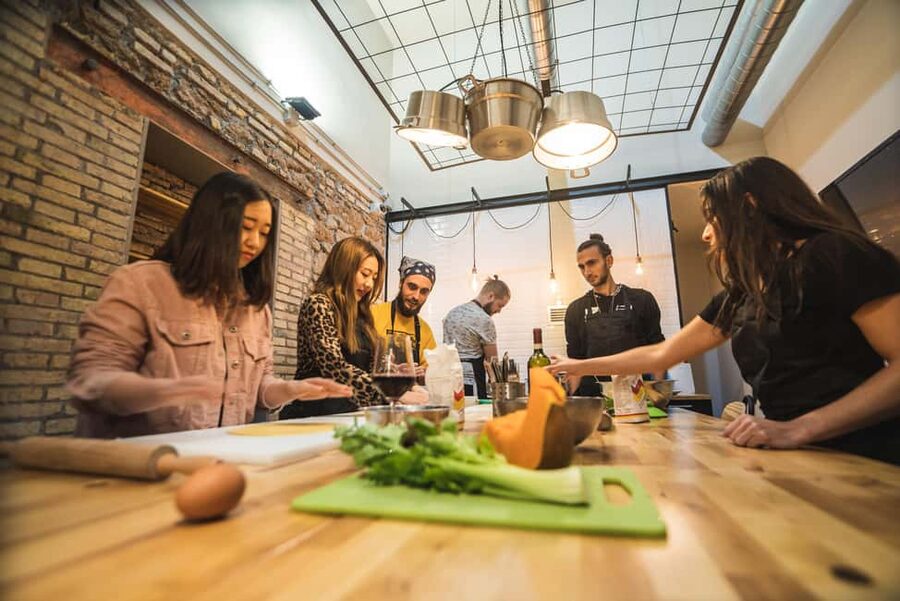
After the market, you return to the cooking space known as the Kitchen of Mamma. The room is arranged for practical work, with participants cooking around a shared table and, according to one detailed account, having individual work stations. That setup matters. You can focus on your own dough rather than watching one demonstration from the back of a crowded room.
No previous cooking skills are required. Marco demonstrates the process, then moves around the group to check each person’s dough and technique. This is a good format for beginners because fresh pasta can look simple until the dough is too dry, too sticky, or rolled unevenly.
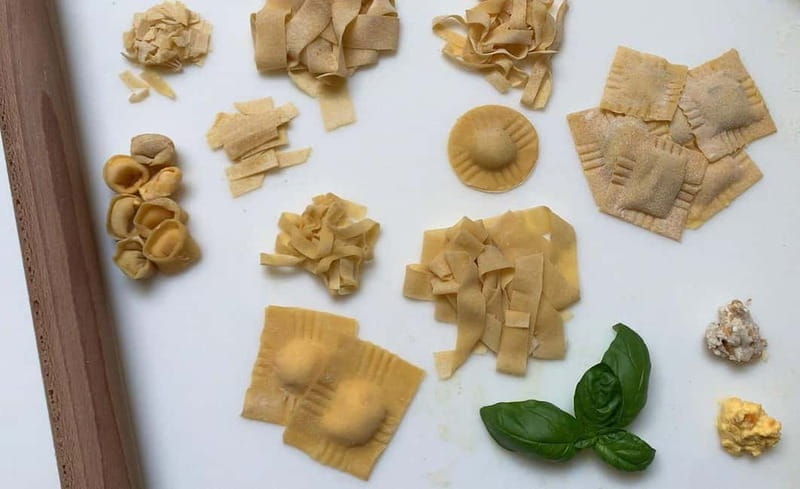
The class focuses on pasta made from scratch. You learn how to prepare the dough, work it by hand, and cut it into different sizes. Sessions have included several forms of pasta, with examples such as linguine, ravioli, and tortellini. Some participants have worked with as many as seven different cuts, while another session included at least five pasta types.
The precise menu is not presented as fixed, so you should treat those examples as a guide rather than a promise. The appeal is the range. You are not spending the whole afternoon making only spaghetti carbonara. You get a look at how shape, filling, and sauce change the finished dish.
Ravioli, tortellini, and the work of shaping dough
Filled pasta is where the lesson becomes especially hands-on. Marco prepares or explains fillings, then shows you how to place, fold, and seal the pasta. Pumpkin and ricotta with sage, mushroom combinations, and other fillings have appeared in sessions. The group has also made tortellini and ravioli.
This part rewards patience. You need enough filling to make the pasta satisfying, but not so much that the edges refuse to close. Marco’s hands-on approach helps here, since he checks the work and offers corrections as you go.
The class also gives you a chance to see the difference between making pasta for a quick meal at home and preparing several forms for a shared lunch. You learn by repetition. The first piece may look rough, but later pieces usually become easier to shape.
Some of the cooking is demonstration rather than individual preparation. One participant noted that not every ingredient was cooked by each person. That is worth knowing if you expect to prepare every sauce and filling from start to finish. The trade-off is that Marco can keep the meal moving and show techniques that would take too long if every person made every component alone.
Sauces, wine, and a proper pasta lunch
While the dough and filled pasta are being prepared, Marco explains the sauces and cooking methods. Past sessions have included sauces for bolognese, sage-based combinations, mushroom dishes, and other pasta pairings. The exact selection can change, but the class aims to show more than one way to finish fresh pasta.
You then sit down to eat the food prepared during the lesson. This is lunch, not just a small tasting. The included meal comes with a glass of Italian wine, and the wine is part of the social rhythm of the class. You cook, pause, talk, and eat together rather than rushing through a recipe demonstration.
I like that arrangement because it turns the lesson into a shared Roman meal. You leave with a better feel for how pasta fits into Italian dining: the shape matters, the sauce matters, and the meal is meant to be enjoyed slowly.
The wine can be a plus for adults who want a relaxed afternoon, but it is not essential to the cooking. If you do not drink, the class still has plenty of value in the market visit and pasta work. One participant who was pregnant found Marco attentive about drink choices, but you should still tell the instructor about any dietary or drink restrictions before the activity begins.
The class can also suit families. The combination of kneading, cutting, filling, and eating gives children and adults clear tasks. The main challenge is that the activity is long enough to require patience, especially for younger children.
More cooking classes in Rome:
- 3 in 1 Cooking Class near Navona: Fettuccine, Ravioli & Tiramisu
★ 5.0 · 7,376 reviews - Rome: Pasta Making Class with Wine, Limoncello, and Dessert
★ 4.9 · 3,177 reviews - Rome: 3-in-1 Fettuccine, Ravioli, and Tiramisu Cooking Class
★ 4.9 · 2,704 reviews - Rome: Fettuccine Pasta Cooking Class in Rome’s City Center
★ 4.8 · 2,414 reviews
Coffee, limoncello, and the final Roman touch
After lunch, the meal ends with coffee and limoncello. These are small inclusions, but they give the day a natural finish instead of ending as soon as the last plate is cleared.
The limoncello adds a distinctly Italian after-dinner note. Coffee provides the familiar close to a meal. You are not just leaving with a recipe sheet after a short lesson. You have spent time cooking, eating, and talking in a social setting.
The activity includes a participation certificate and recipes. The recipes are the more useful souvenir, since you can try the pasta again at home. The certificate is a pleasant extra, especially if you are booking the class as a family activity or a special part of a Rome trip.
Some sessions may have extra food available to take home, but this should not be treated as a guaranteed inclusion. Bring the recipes home and plan to practice. Fresh pasta is one of those skills that becomes clearer after you make it a second time in your own kitchen.
The Marco factor
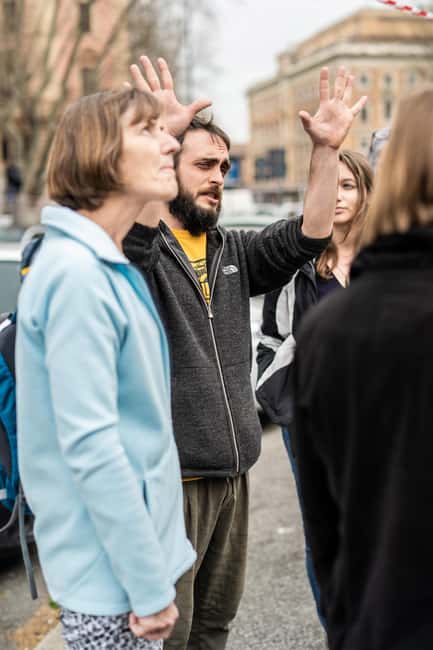
The instructor is Marco, and his teaching style is a major part of the experience. He is described as funny, warm, energetic, patient, and attentive. That combination matters in a hands-on class, where a strict or distant teacher can make beginners nervous.
Marco also keeps the mood easy while staying involved in the details. He walks around to check the dough, helps with pasta shapes, and gives individual guidance. At the market, he introduces the ingredients and explains how they will be used. During the meal, he adds Italian stories and personal conversation.
A strong instructor can make a cooking class feel like an evening with a local friend. Marco’s humor appears to be a central part of the atmosphere, so this is a good choice if you like social activities and do not mind group conversation.
It may be less suitable if you want a quiet, highly formal culinary school lesson. You are not signing up for a silent technical workshop. Expect instruction mixed with laughter, wine, stories, and interaction with the people at your table.
The class is offered in English and Italian, which makes it accessible to English-speaking visitors. Since the format is practical, you can follow much of the work by watching as well as listening, but clear English instruction is available.
How the six-hour schedule works
The advertised duration is six hours, with starting times shown when you check availability. That window covers the meeting, market walk, shopping, cooking, lunch, and the coffee and limoncello finish.
Actual timing can be shorter. Some sessions have lasted about four hours, which suited participants who wanted a complete activity without losing an entire day in Rome. Others may use more of the listed time, especially with a larger group or a slower pace.
I would plan your day as if it could take the full six hours. Do not schedule a timed museum entry, train, or evening reservation too closely afterward. If the class finishes early, you gain free time. If it runs long, you will not be watching the clock while trying to seal ravioli.
The activity ends back at the original meeting point. There is no separate return transfer to arrange, which keeps the logistics simple.
Is $141.61 a fair price?
At $141.61 per person, this is not a budget lunch. The price makes more sense when you count the full package: a market walk, a multi-hour pasta lesson, the meal, wine, coffee, limoncello, recipes, and a certificate.
You are also paying for a chef who gives personal help rather than leaving you to copy a distant demonstration. The individual stations and attention around the table can be important for first-time pasta makers.
Value depends on what you want. If your main goal is a cheap plate of pasta, a trattoria will cost less. If you want a practical skill, a social afternoon, and a meal you helped create, the price is easier to justify. The market stop adds local context, while the recipes extend the value beyond your time in Rome.
For couples, families, and solo visitors who enjoy meeting people, this can be one of the more memorable uses of an afternoon. It also works well on a longer Rome stay, when you can spare half a day without giving up a major monument visit.
Who should book this pasta class?
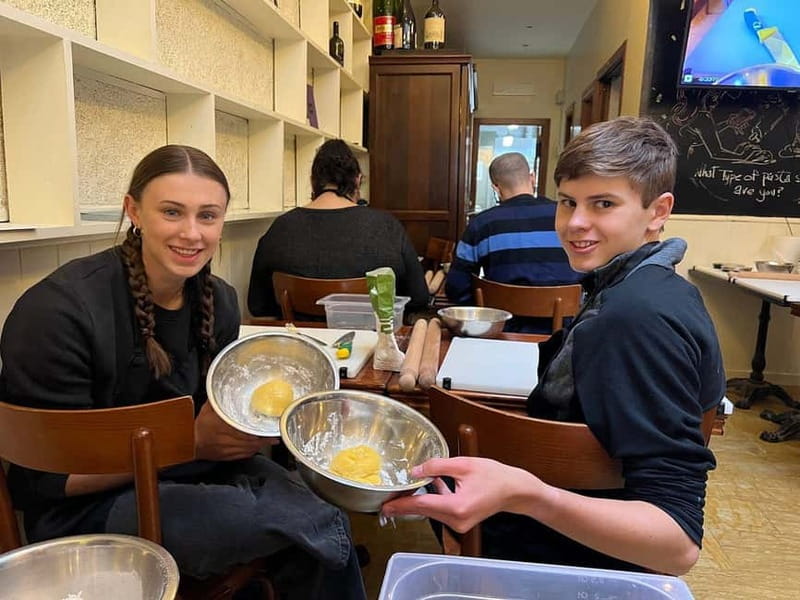
I would choose this for you if you enjoy food, want to learn by doing, and like a relaxed group setting. Beginners are welcome, and Marco’s individual help takes pressure off the first attempt at dough and filled pasta.
It is also a strong family option, provided children can manage a long cooking session. Couples get a shared activity rather than another restaurant meal. Solo visitors can expect plenty of conversation around the table.
You should think twice if you have gluten intolerance, since the class is specifically unsuitable for people with gluten intolerance. If you have other dietary needs, ask about them before booking rather than assuming the menu can be changed.
The class is also not ideal for anyone who wants a fixed, tightly timed menu. Pasta shapes, fillings, sauces, and the exact duration may vary. That flexibility is part of the charm, but it means you should arrive ready for a live cooking session rather than a scripted show.
Cancellation is free up to 24 hours before the activity for a full refund. You can also reserve now and pay later, which helps if your Rome plans are still shifting.
FAQ
Where does the pasta class begin?
It begins at Via Palestro 51, 00185 Rome. You should arrive at least 10 minutes before the activity starts.
Where does the activity end?
The class ends back at the original meeting point on Via Palestro.
How long does the activity last?
The listed duration is six hours. Starting times depend on availability, and some sessions have finished closer to four hours.
Which market do you visit?
You visit Nomentano Market, a short walk from the meeting point. The visit focuses on fresh and seasonal ingredients used in the cooking class.
Who teaches the class?
Chef Marco leads the market visit and the pasta lesson. Instruction is available in English and Italian.
Do I need cooking experience?
No. Previous cooking skills are not required.
What is included with the meal?
The activity includes lunch with pasta, a glass of Italian wine, coffee, and limoncello. Recipes and a participation certificate are also included.
Is the class suitable for someone with gluten intolerance?
No. The activity is not suitable for people with gluten intolerance.
Should you book it?
Book this class if you want to connect Roman food with real ingredients, learn several pasta techniques, and spend a social half-day with an entertaining chef. The market visit, individual work stations, generous meal, and recipes make it more than a basic demonstration.
Skip it if you need a short activity, cannot eat gluten, or prefer a formal lesson with a fixed menu. For everyone else, the combination of market shopping, handmade pasta, wine, and Marco’s personal teaching makes this a strong food choice in Rome.
More Markets in Rome
- Rome: Colosseum, Roman Forum & Trajan’s Market Exterior Tour
★ 4.3 · 2,038 reviews - Roman Food Tour with Visit to the Trionfale Food Market
★ 5.0 · 471 reviews - Authentic Roman Cooking Class & Market Experience
★ 5.0 · 363 reviews - Trevi Fountain, Pantheon, and Campo Dei Fiori Market Food and Wine Tour
★ 5.0 · 320 reviews
More Pasta in Rome
- Rome: Traditional Pasta with Cocktails Cooking Class
★ 5.0 · 2,374 reviews - Learn to Make Pasta & Tiramisu with Wine and Limoncello Included
★ 5.0 · 2,345 reviews - Become a Masterchef in Rome: Pasta, Ravioli and Tiramisù Class
★ 5.0 · 2,156 reviews - Pasta Cooking Class Near the Colosseum with 3 Spritz Cocktails
★ 5.0 · 1,686 reviews
Newest reviews from Rome
- Rome: Vatican Museums & Sistine Chapel Skip-the-Line Ticket★ 4.4 · 148 reviews
- Shared Shuttle Transfer from Rome to Civitavecchia Port★ 5.0 · 148 reviews
- Rome: Crypts & Catacombs After Hours Tour with Bone Chapel★ 4.6 · 149 reviews
- Ghosts Legends and Mysteries of Rome Walking Tour★ 5.0 · 149 reviews
- Skip the Line: Vatican and Sistine Chapel with Guided Tour★ 4.0 · 149 reviews
- Tivoli: Villa Gregoriana Entrance Ticket★ 4.7 · 150 reviews
- Pizza and Tiramisu Cooking Class in Rome, Piazza Navona★ 5.0 · 150 reviews
- Rome: Borghese Gallery Skip-the-Line Entry and Guided Tour★ 4.7 · 150 reviews
Cooking Classes, compared.
3 in 1 Cooking Class near Navona: Fettuccine, Ravioli & Tiramisu
Read our review →
Pasta Making Class with Wine, Limoncello, and Dessert
Read our review →
3-in-1 Fettuccine, Ravioli, and Tiramisu Cooking Class
Read our review →
Fettuccine Pasta Cooking Class in Rome’s City Center
Read our review →
Traditional Pasta with Cocktails Cooking Class
Read our review →
Fettuccine and Tiramisu Cooking Class with Wine
Read our review →
Pasta Cooking Class Near the Colosseum with 3 Spritz Cocktails
Read our review →
Enjoy Spritz and Pasta Making in Piazza Navona
Read our review →Browse the lists this tour appears in