
Reviewed · COOKING CLASSES
Rome: Spritz & Spaghetti Cooking Class
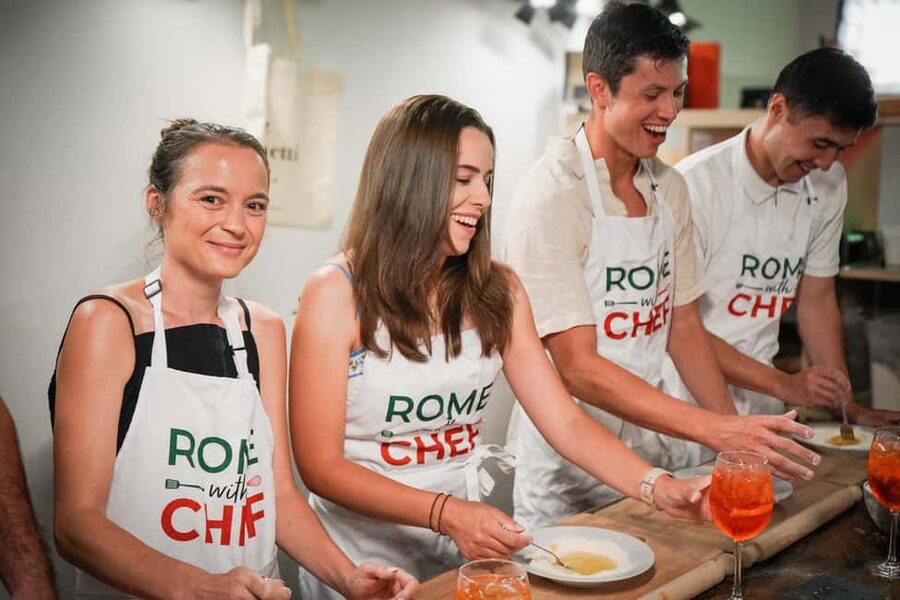
Rome’s most social cooking class begins with an Aperol spritz and ends with handmade pasta, a Limoncello spritz, and recipes for your kitchen at home. You roll and cut fettuccine yourself, then learn the tricks behind carbonara or cacio e pepe. I especially like the small maximum of 14 people and the fact that you eat what you make, rather than watching a chef do all the work.
The three-drink format gives this class a party feel, while the pasta keeps it grounded in Roman food. Guides such as Marzia, Jem, Bart, Laura, Ida, and Sunny have been praised for their humor, warmth, and ability to include beginners. The main catch is important: gluten-free, vegan, and dairy-free diets cannot be accommodated, and the class is not suitable for coeliac disease or gluten intolerance.
In This Review
- Key points at a glance
- A Roman cooking class with a built-in aperitivo
- Starting with Aperol, then moving to Hugo and Limoncello
- Rolling fettuccine in a real Roman kitchen
- Carbonara or cacio e pepe, two Roman standards
- Why the small group matters
- The food quality and what you actually receive
- Is $112.15 a fair price?
- Who will enjoy this most?
- Practical details before you reserve
- How this compares with a regular Roman dinner
- Should you book the Spritz and Spaghetti Cooking Class?
- FAQ
- How long does the Rome Spritz and Spaghetti Cooking Class last?
- Which drinks are included?
- What pasta and sauces will I prepare?
- Is the cooking class suitable for vegetarians?
- Can people with gluten intolerance or dairy restrictions join?
- Is the class private or shared?
Key points at a glance
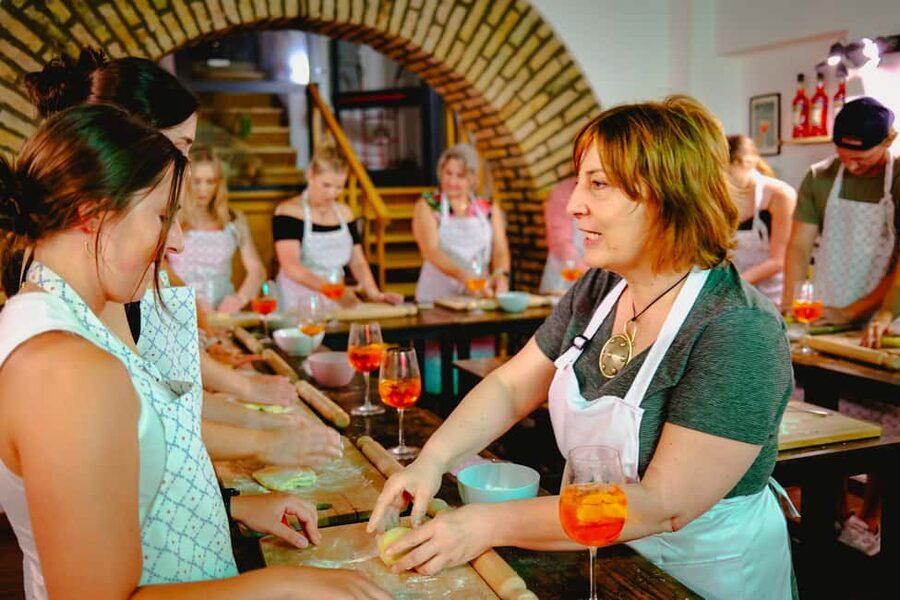
- Three classic spritzes: Make an Aperol spritz, Hugo spritz, and Limoncello spritz during the class.
- Fresh fettuccine by hand: Roll, cut, cook, and eat your own pasta.
- Roman sauces: Prepare either carbonara or cacio e pepe with guidance from a local chef.
- Social group size: Shared classes allow up to 14 people, with private options available.
- A hands-on kitchen session: You take part in the work instead of simply watching a demonstration.
- Recipes to take home: The class gives you a practical souvenir you can use after Rome.
A Roman cooking class with a built-in aperitivo
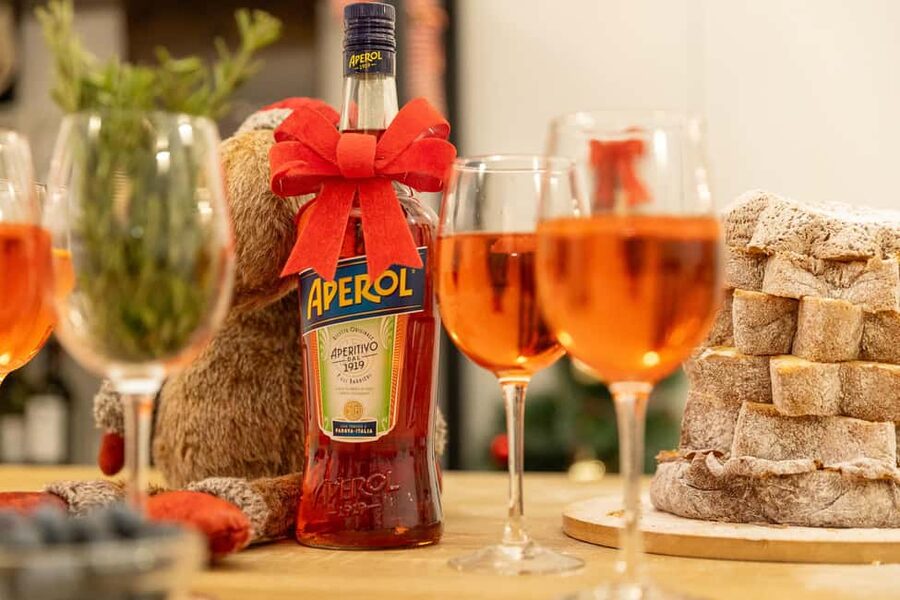
This three-hour experience combines two things Rome does very well: pasta and pre-dinner drinks. The difference is that you are not simply sitting at a restaurant table. You are mixing, kneading, rolling, cutting, stirring, and tasting along the way.
The class takes place in a real Roman kitchen, which gives the activity a more personal setting than a large demonstration room. You work with fresh, locally sourced ingredients, and the chef leads the group through each stage. An English-speaking guide handles the instruction, while a mixologist helps with the drinks.
The mood is deliberately relaxed. The first Aperol spritz helps people introduce themselves and settle into the group. That matters in a shared class, where you may arrive alone or with only one companion. Several instructors, including Ida, Bart, Marzia, and Jem, are praised for keeping the room lively while still making sure everyone can follow the cooking.
This is billed as Rome’s only tipsy cooking class. The phrase tells you what kind of evening this is. It is a cooking lesson, but it is also a social night out. You should expect conversation, laughter, and a generous flow of drinks rather than a quiet, technical workshop.
More cooking classes in Rome:
- 3 in 1 Cooking Class near Navona: Fettuccine, Ravioli & Tiramisu
★ 5.0 · 7,376 reviews - Rome: Pasta Making Class with Wine, Limoncello, and Dessert
★ 4.9 · 3,177 reviews - Rome: 3-in-1 Fettuccine, Ravioli, and Tiramisu Cooking Class
★ 4.9 · 2,704 reviews
Starting with Aperol, then moving to Hugo and Limoncello
The drink portion is spread across the class rather than served all at once. You begin with an Aperol spritz, a familiar Italian aperitivo made with the bright orange liqueur. It is an easy opener and gives you something to do while meeting the chef and the other participants.
As the pasta work gets underway, you prepare a Hugo spritz. This changes the flavor profile and keeps the drink lesson from feeling repetitive. At the end of the meal, a Limoncello spritz provides the final course in liquid form.
You are included in the mixology rather than simply handed three finished cocktails. The experience is designed to teach basic drink preparation and the character of each spritz. It is not presented as an advanced bartending course, so you should book it for fun, useful techniques, and Italian drinking culture, not professional cocktail training.
The drinks are a real part of the value, but they also deserve a practical warning. Some of the class comments describe the drinks as strong and generous. If you are sensitive to alcohol, pace yourself and use the unlimited water and soft drinks provided. Three cocktails over three hours can add up, especially with food and a warm, social room.
Rolling fettuccine in a real Roman kitchen
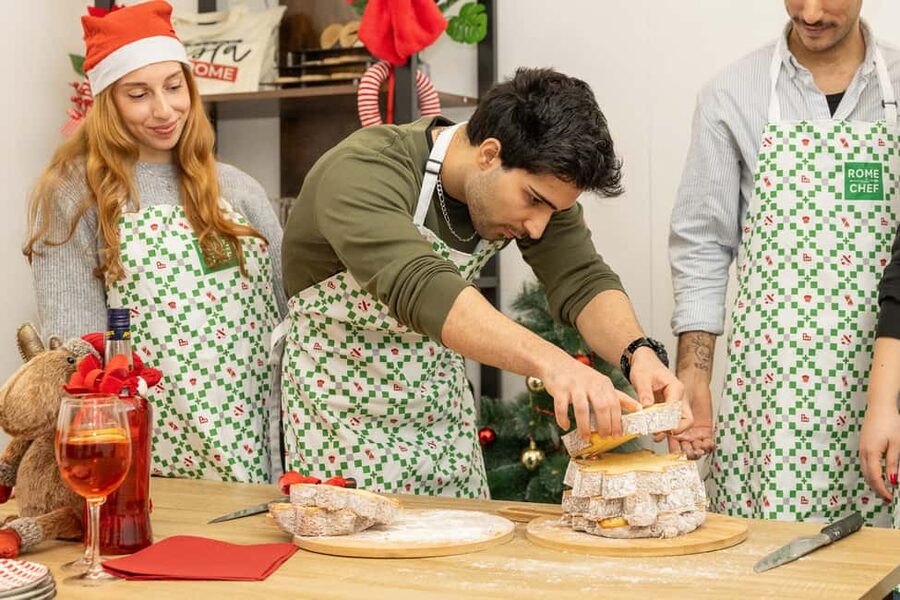
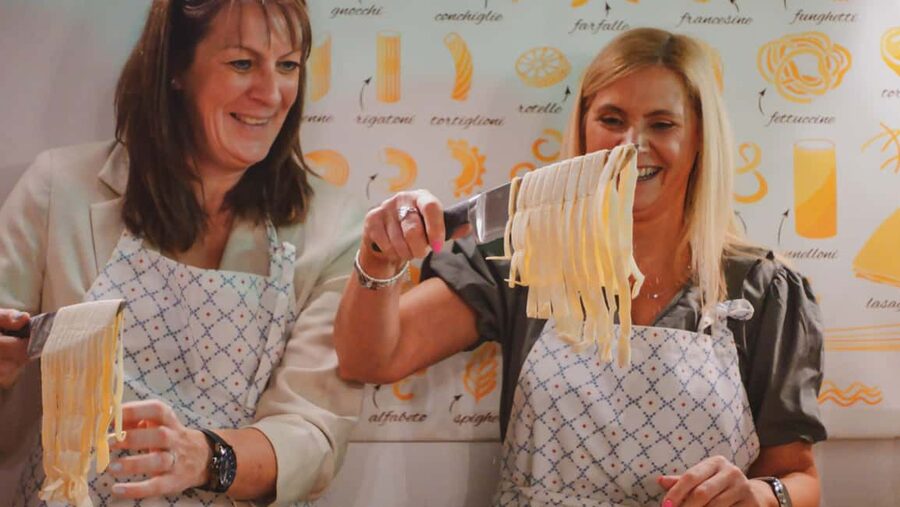
Once introductions and the first drink are finished, the class turns to pasta. You prepare fresh dough, roll it, and cut it into fettuccine. The hands-on element is one of the strongest reasons to choose this activity over a standard food tour.
You are not just collecting a recipe card while a chef works at the front. The format gives you a chance to handle the dough and see how pasta changes as you work it. Beginners can take part, and the guides are expected to help with the stages that feel awkward at first.
This is also where the class becomes useful after your holiday. Fresh pasta can seem intimidating when you see it in a Roman restaurant, but rolling and cutting it yourself makes the process more approachable. The recipes let you repeat the meal at home, although your first attempt may take some practice.
The class serves the pasta you make, so the lesson leads directly to lunch or dinner. That simple feature matters. You are not asked to cook for practice and then sent elsewhere to eat. The finished dish is part of the experience and gives you a chance to taste the results of your work.
Carbonara or cacio e pepe, two Roman standards
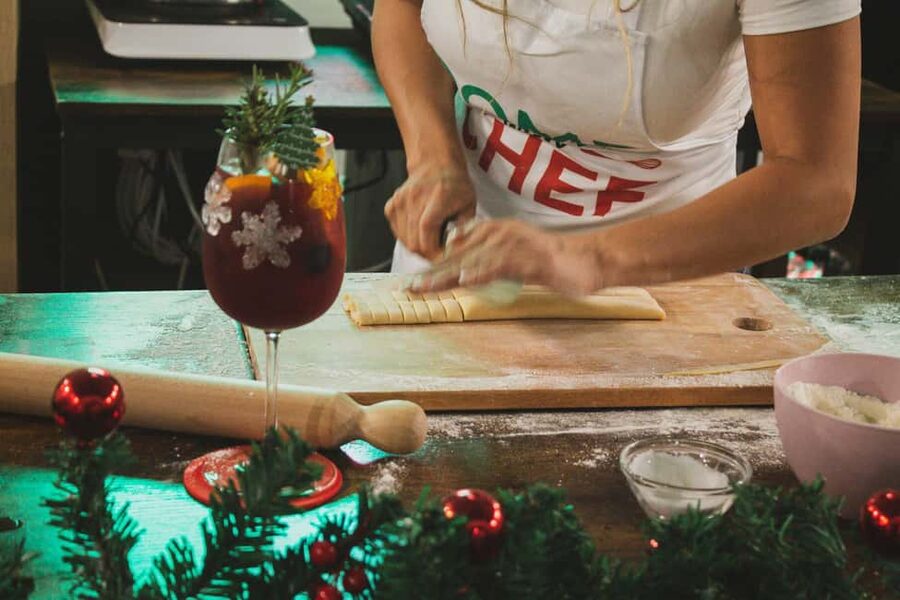
The sauce is either traditional carbonara or cacio e pepe. Both are Roman staples, but they teach different lessons.
Carbonara depends on getting the egg, cheese, and pasta water to the right consistency without turning the sauce into scrambled eggs. Cacio e pepe looks simpler, but its combination of cheese, pepper, and starchy water also requires attention. A good guide can show you how to build a smooth sauce and when to combine it with the pasta.
The class descriptions mention differences in regional cooking styles and Italian food traditions, so you should expect some cultural context along with the instructions. Marzia, for example, has been praised for explaining cooking differences and allowing participants to work as chefs in training. That is exactly the right level for this activity: enough instruction to teach you something, but not so much that the evening feels like school.
You may not get both sauces in one booking. The information specifies carbonara or cacio e pepe, so check the option available when you reserve if one dish matters especially to you. Either choice gives you a classic Roman meal, but neither is suitable for a dairy-free diet.
More Rome tours worth comparing
- Rome: Pasta & Tiramisu Class with Fine Wine by the Vatican
★ 4.9 · 4,852 reviews - Rome: Fettuccine Pasta Cooking Class in Rome’s City Center
★ 4.8 · 2,414 reviews - Rome: Traditional Pasta with Cocktails Cooking Class
★ 5.0 · 2,374 reviews - Become a Masterchef in Rome: Pasta, Ravioli and Tiramisù Class
★ 5.0 · 2,156 reviews
Why the small group matters
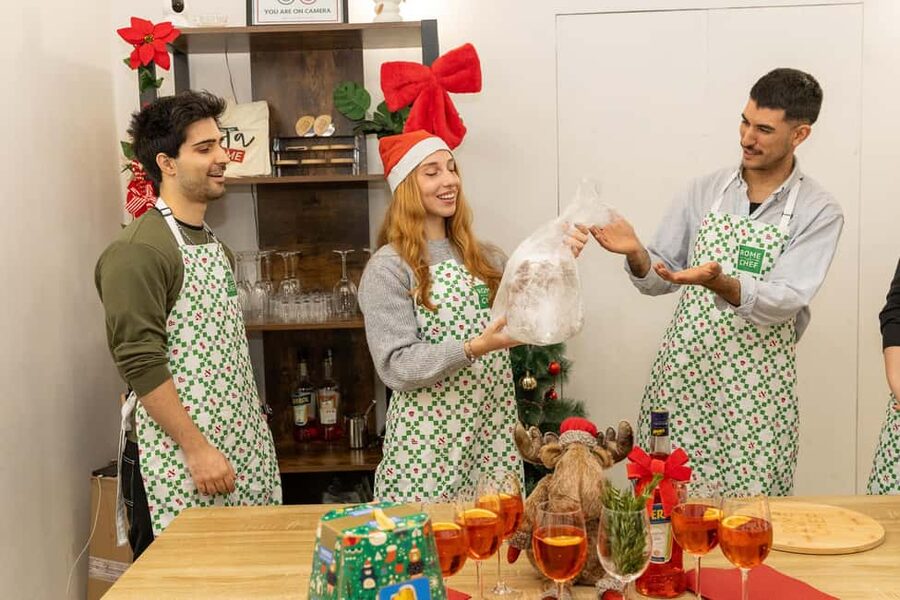
The shared class has a maximum of 14 people. That is not an intimate two-person lesson, but it is small enough to keep the kitchen active and social. You have a better chance of handling the dough, asking questions, and getting help than you would in a large tour group.
A group of this size also supports the social side of the experience. The class attracts people from different countries, and the activity naturally gives everyone a common task. You can make new friends while shaping pasta, rather than trying to begin a conversation from nothing at a crowded bar.
The guides seem to be central to the experience. Names praised in the supplied feedback include Chef Sunny, Marzia, Jem, Laura, Ida, Bart, Ari, Ele, Adriano, Loana, Sherry, Eleanora, Sushi, and Kysusha. The repeated themes are humor, energy, patience, and making sure everyone takes part.
Because different chefs and assistants may lead different sessions, the personality of your class can vary. That is not necessarily a weakness, but it is worth understanding. You are booking a format and a team of hosts, not a guaranteed session with one particular named chef unless your booking says so.
Private groups are available if you want more control over the atmosphere. A private booking may suit a family, birthday group, or group of friends who prefer their own table and pace. For solo participants and couples, the shared option is likely the better social value.
The food quality and what you actually receive

The ingredients are described as fresh and locally sourced. That does not mean the class is a market visit or a farm-to-table tour. It means the cooking focuses on straightforward ingredients prepared close to the point of eating.
You make handmade pasta and sauce, eat the full result, and receive the recipes afterward. Those inclusions make the class feel more useful than a one-off entertainment activity. Your souvenir is not just a photo. It is a set of instructions tied to something you prepared with your own hands.
The strongest praise is directed at the final meal. Pasta carbonara and cacio e pepe are reported as better than versions served in some Rome restaurants. You should treat that as a sign that the cooking is taken seriously, not as a promise that every plate will match your favorite trattoria.
There is also a vegetarian option, which expands the audience. However, the class cannot accommodate vegan, gluten-free, or dairy-free participants. It also cannot accept people with coeliac disease or gluten intolerance because of the pasta menu. Lactose intolerance is another concern because dairy products are used.
If you have any other dietary restriction, tell the provider in advance. The information says the team will try to work out the best accommodation, but you should not assume that a major change to the menu is possible.
Is $112.15 a fair price?
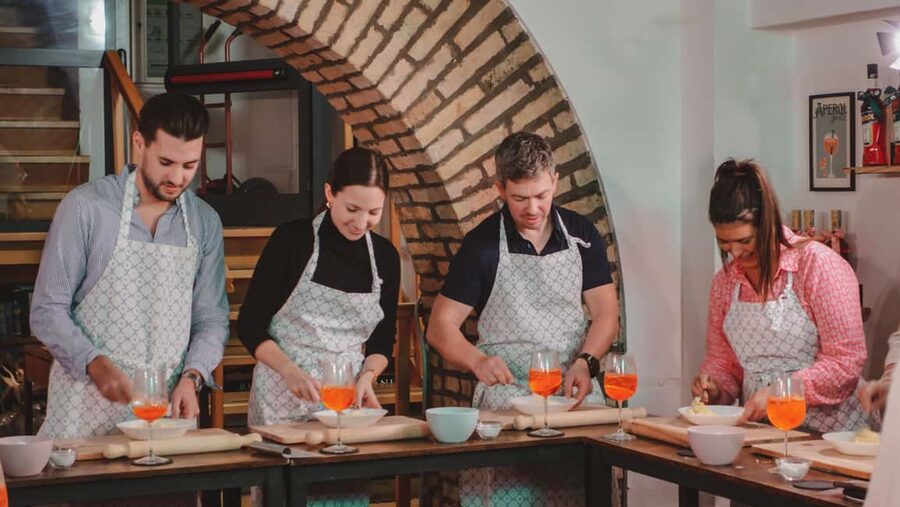
At $112.15 per person, this is not a cheap meal. It is also not just a meal. The price includes a three-hour chef-led workshop, a mixologist, fresh ingredients, three spritzes, unlimited water and soft drinks, the pasta and sauce, the kitchen setting, and the recipes.
The value depends on how you use the evening. If you want a low-cost dinner, a Roman restaurant will usually be the simpler choice. If you want food, drinks, instruction, and a chance to meet people in one booking, the price is easier to justify.
Three cocktails alone would make the cost more substantial than a basic pasta lesson. Add the hands-on work and the fact that you eat everything you prepare, and the class becomes a full evening activity rather than a short demonstration.
I would especially consider it good value for a first visit to Rome when you want one planned night with plenty of structure. It can also replace a regular dinner and aperitivo stop. It is less appealing if you do not drink, have strict dietary needs, or already plan to take a more serious pasta course.
Who will enjoy this most?
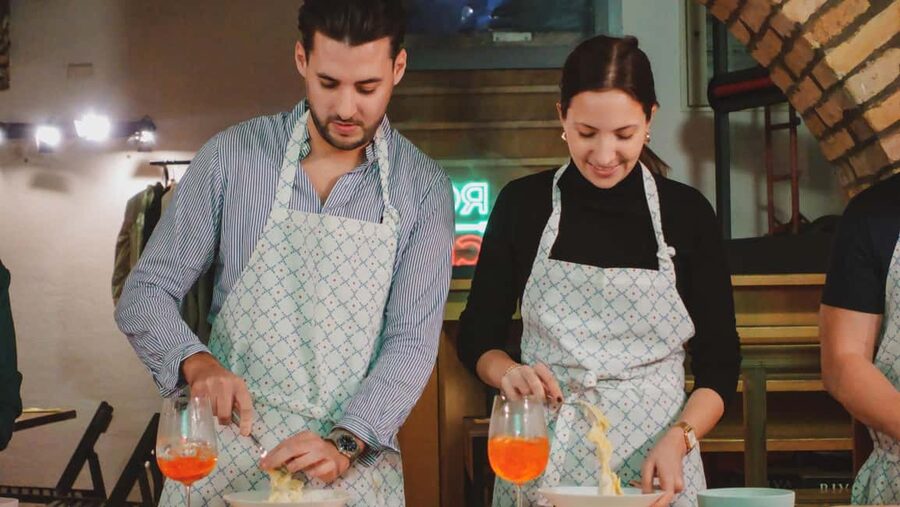
This class fits adults who like food, social conversation, and a relaxed drink. It suits couples, friends, solo visitors, and groups who want something more active than sightseeing.
It is a particularly good choice for:
- People who want to learn a Roman dish they can repeat at home
- Solo visitors who enjoy meeting other English-speaking participants
- Couples looking for an evening activity beyond another restaurant
- Beginners who want a friendly, hands-on introduction to pasta
- Visitors who enjoy cocktails as much as food
- Groups wanting a private cooking and drinking session
It is a poor match for anyone avoiding alcohol or dairy, and it is not suitable for coeliac disease, gluten intolerance, vegan diets, or lactose intolerance. Families should also check the booking details carefully, since the information provided does not specify an age policy.
The class is conducted in English. That makes the instruction accessible to English-speaking visitors, but it may not suit a group that needs another language.
Practical details before you reserve
The activity lasts three hours, with starting times shown according to availability. Meeting points can vary by the option you book, and the experience ends back at the meeting point. Confirm the exact location and time before planning another major activity immediately afterward.
You can choose between a shared class and a private group. The shared option has a maximum of 14 participants. Private bookings offer a more personal setup, but the supplied information does not give a separate private price, so check that cost before paying.
Free cancellation is available up to 24 hours before the start time for a full refund. You can also reserve now and pay later, which helps if your Rome schedule is still changing.
Wear something comfortable for a kitchen session. The provided details do not specify a dress code or equipment list, so avoid assuming that special tools or protective clothing are supplied. The important preparation is dietary: tell the provider about restrictions before the class, and do not book if the stated exclusions affect you.
How this compares with a regular Roman dinner
A restaurant gives you polished service and a chance to focus entirely on the food. This class gives you participation, instruction, drinks, and conversation. The pasta may be less refined than a plate prepared by a professional kitchen, but the memory is more personal because you made it.
The social atmosphere can be a major advantage or a drawback. If you like meeting people and laughing over a shared task, the group format adds a lot. If you want a quiet romantic dinner, choose a restaurant instead or pay for a private option.
The experience also gives context to dishes you will see all over Rome. After making carbonara or cacio e pepe, you will better understand why a short ingredient list does not mean an easy dish. That small bit of cooking insight can improve the rest of your meals in the city.
Should you book the Spritz and Spaghetti Cooking Class?
Book it if you want a lively three-hour evening built around Roman food, Italian cocktails, and meeting people. The strongest reasons are the hands-on fettuccine work, the three spritzes, the small group limit, and the recipes you can use at home.
I would skip it if you need gluten-free, vegan, or dairy-free food, cannot drink alcohol, or want a quiet and highly technical cooking lesson. For everyone else, the $112.15 price is reasonable when you count the meal, drinks, instruction, and social night together.
If you can choose your timing, this works especially well as an evening activity. Arrive ready to cook, keep an eye on your alcohol pace, and check the meeting point and dietary arrangements before you go. You may leave with more than a full stomach: you may also have a Roman sauce you can make again.
FAQ
How long does the Rome Spritz and Spaghetti Cooking Class last?
The class lasts three hours. Starting times depend on availability when you book.
Which drinks are included?
You make and receive one Aperol spritz, one Hugo spritz, and one Limoncello spritz. Unlimited water and soft drinks are also included.
What pasta and sauces will I prepare?
You make fresh handmade fettuccine and prepare either carbonara or cacio e pepe, depending on the class option and menu.
Is the cooking class suitable for vegetarians?
Yes. Vegetarian options are available.
Can people with gluten intolerance or dairy restrictions join?
No. The class cannot accommodate coeliac disease, gluten intolerance, vegan diets, or lactose intolerance because the menu uses gluten and dairy products.
Is the class private or shared?
Both options are available. Shared classes have a maximum of 14 people, and private groups can be booked as an alternative.
Newest reviews from Rome
- Rome: Vatican Museums & Sistine Chapel Skip-the-Line Ticket★ 4.4 · 148 reviews
- Shared Shuttle Transfer from Rome to Civitavecchia Port★ 5.0 · 148 reviews
- Rome: Crypts & Catacombs After Hours Tour with Bone Chapel★ 4.6 · 149 reviews
- Ghosts Legends and Mysteries of Rome Walking Tour★ 5.0 · 149 reviews
- Skip the Line: Vatican and Sistine Chapel with Guided Tour★ 4.0 · 149 reviews
- Tivoli: Villa Gregoriana Entrance Ticket★ 4.7 · 150 reviews
- Pizza and Tiramisu Cooking Class in Rome, Piazza Navona★ 5.0 · 150 reviews
- Rome: Borghese Gallery Skip-the-Line Entry and Guided Tour★ 4.7 · 150 reviews
Cooking Classes, compared.
3 in 1 Cooking Class near Navona: Fettuccine, Ravioli & Tiramisu
Read our review →
Pasta Making Class with Wine, Limoncello, and Dessert
Read our review →
3-in-1 Fettuccine, Ravioli, and Tiramisu Cooking Class
Read our review →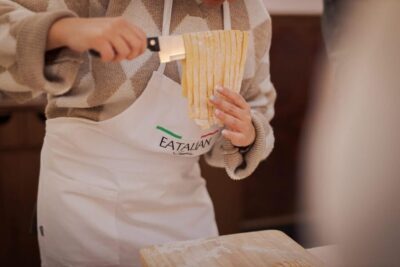
Fettuccine Pasta Cooking Class in Rome’s City Center
Read our review →
Traditional Pasta with Cocktails Cooking Class
Read our review →
Fettuccine and Tiramisu Cooking Class with Wine
Read our review →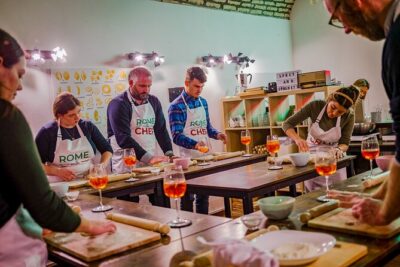
Pasta Cooking Class Near the Colosseum with 3 Spritz Cocktails
Read our review →
Enjoy Spritz and Pasta Making in Piazza Navona
Read our review →Browse the lists this tour appears in