
Reviewed · UNDERGROUND ROME TOURS
Rome: Trevi Fountain District and Underground Domus Guided Tour
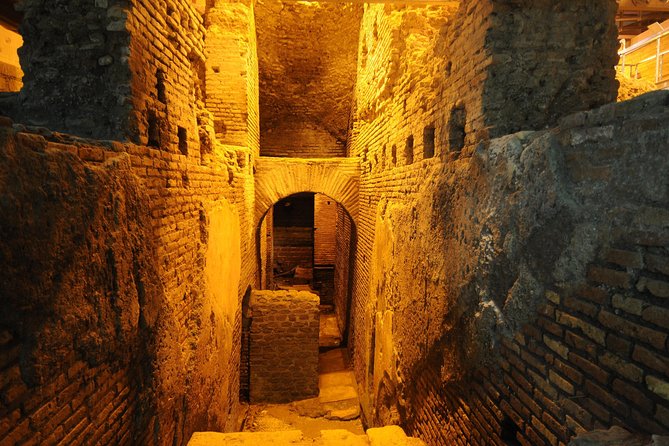
Just steps from Rome’s famous Trevi Fountain, a staircase leads you down into a far older city. At Vicus Caprarius, you’ll see Roman walls, a water tank connected to the Vergine aqueduct, and artifacts found beneath a former cinema. It is a neat reminder that Rome is built in layers.
I like two things here. First, the tour gives you a close look at Roman water engineering, not just another view of a famous monument. Second, the small group of up to 15 people makes it easier to hear the guide and ask questions. Guides including Erika, Michelle, and Noemi have earned especially strong praise for their energy and clear storytelling.
The main drawback is size. This is not a sprawling underground maze. The archaeological site is compact, and some of the 55-minute visit takes place in a small area that can feel crowded. If you expect long tunnels or a major subterranean complex, the $53.10 price may feel high.
In This Review
- Key points to know before booking
- What you actually see beneath the Trevi district
- The 45-minute Vicus Caprarius visit
- Why the water system matters at Trevi Fountain
- Finishing at the Trevi Fountain
- Is $53.10 a fair price?
- Who will enjoy this underground Rome tour?
- Practical details that affect your visit
- Should you book the Vicus Caprarius tour?
- FAQ
- Where does the tour begin?
- How long does the experience last?
- Is the Trevi Fountain portion a full guided tour?
- What language is the tour offered in?
- How many people can join the group?
- Is the tour suitable for people with mobility impairments?
- What is included in the price?
Key points to know before booking

- Nine meters below Trevi Fountain: Reach ancient remains beneath the modern streets of Rome.
- A Roman water system in view: See a cistern linked to the Vergine aqueduct, the source connected with Trevi’s water supply.
- Small but unusual archaeology: Examine marble coverings, African amphorae, coins, and the head of Alessandro Helios.
- A guide makes the difference: Erika, Michelle, and Noemi are praised for humor, clarity, and enthusiasm.
- Short and easy to fit into a busy day: The visit lasts about 55 minutes and ends at Trevi Fountain.
- Not suitable for limited mobility: The underground site requires access by stairs and is not designed for people with mobility impairments.
What you actually see beneath the Trevi district
Rome’s surface can feel familiar after only a few hours. You walk past fountains, churches, cafés, and grand streets, often without seeing what lies below your feet. Vicus Caprarius changes that perspective quickly.
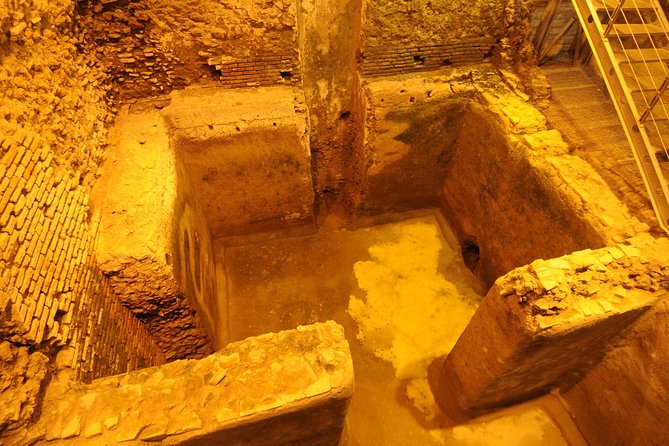
The site was found in 1999 during work in the basement of a cinema. Excavation revealed Roman structures beneath the Trevi district, including the remains of a villa and an ancient cistern. You’ll descend about 30 feet, or nine meters, below street level and move through the preserved archaeological remains with a guide.
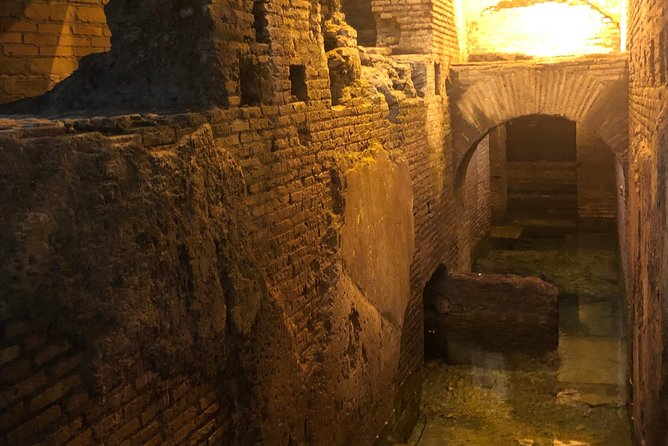
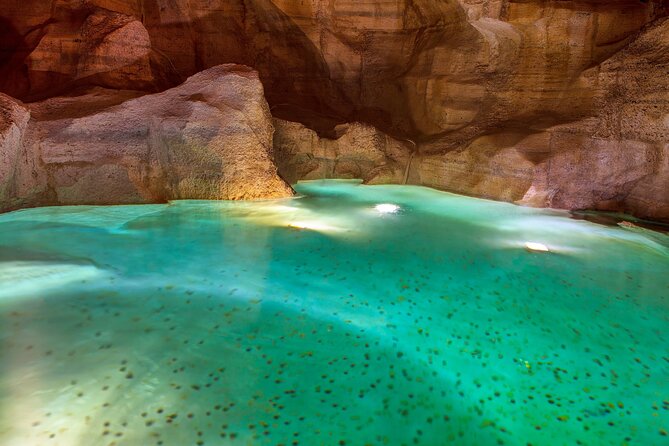
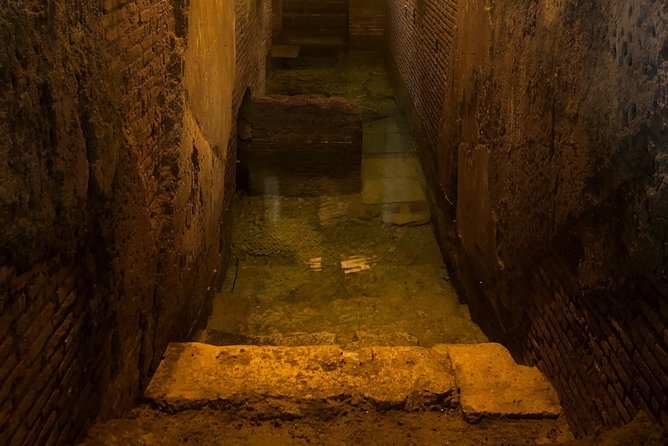
The name City of Water fits the site well. The most important feature is a water tank connected to the Vergine aqueduct. That aqueduct still has a role in supplying the Trevi Fountain, giving the underground visit a direct link to the monument you see afterward.
I find this connection more satisfying than visiting an isolated ruin. You are not simply looking at old walls and trying to picture their purpose. The guide explains how water moved through Roman neighborhoods and why water management mattered so much to daily life in ancient Rome.
Do keep your expectations in check. The excavated area is small. Some descriptions of the experience can make it sound like an extensive tunnel network, but the visit is closer to a compact archaeological room spread across two levels. That limitation does not make it uninteresting, but it does affect the value.
More Domus Aurea entries:
- Rome: Domus Aurea Guided Group Tour
★ 4.6 · 697 reviews - Rome: Domus Aurea, Nero’s Golden House guide tour
★ 4.6 · 449 reviews - Rome: Domus Aurea Tour with Virtual Reality Experience
★ 4.5 · 222 reviews
The 45-minute Vicus Caprarius visit
Your visit begins at Vicolo del Puttarello 25, directly at the archaeological site. You do not get hotel pickup, and there is no need to meet at a distant office first. Report to the site, redeem your ticket with the Touristation staff, and join the guide for the underground portion.
The first part of the tour focuses on the site itself. Expect an explanation of the Roman villa remains, the cistern, and the layers of construction discovered below the present-day city. The guide also places the archaeological finds in context, so the objects do not feel like random pieces in glass cases.
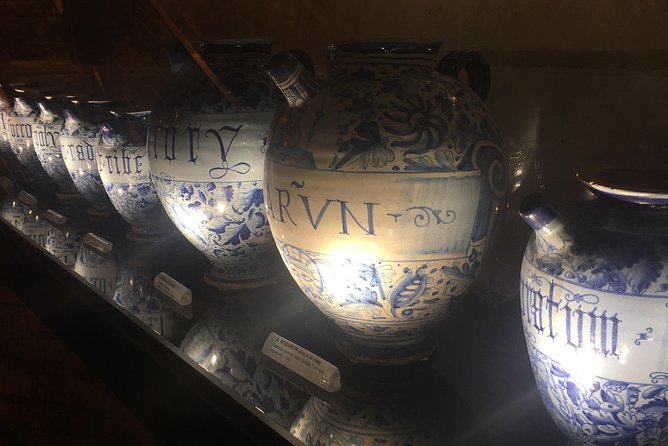
Among the most interesting objects are precious polychrome marble coverings. These hint at the appearance of the Roman building before it was buried beneath later construction. You’ll also see the head of Alessandro Helios, a striking sculpture, along with a group of about 800 coins found during the excavation.
The African amphorae called spatheia add another useful detail. These vessels were used to transport oil, showing that the site was connected to trade and ordinary supply systems as well as water. I like this kind of evidence because it helps you picture a working neighborhood rather than a collection of ruins.
The guide also explains the Roman approach to sanitation and water distribution. One particularly useful theme is how advanced Roman water systems were and how fountains depended on that network. The subject has practical value for the rest of your Rome sightseeing: once you understand the water supply, the city’s many fountains make more sense.
A strong guide can make this short visit feel full. Erika is repeatedly praised for her humor, energy, and ability to explain complicated Roman history in plain English. Michelle is noted for careful detail and lively delivery, while Noemi receives praise for making the ancient water system easy to understand. Your guide may be someone else, but the experience depends heavily on the person leading it.
Why the water system matters at Trevi Fountain
The Trevi Fountain is often treated as a photo stop. You take your picture, perhaps toss in a coin, and move on. The underground visit gives you a reason to look again.
The water linked to the Vergine aqueduct helps explain why this particular area became important. Roman engineers brought water into the city over long distances, feeding baths, homes, fountains, and other public facilities. At Vicus Caprarius, you see part of the infrastructure that made urban life possible.
That does not mean the tour takes you through the full aqueduct system. It does not. Instead, it gives you one visible piece of the story, then connects that piece to the fountain above.
This is especially worthwhile if you have already seen Rome’s headline sights and want a more specific subject. Families can also find the water engineering and underground setting easier to follow than a long lecture about emperors and battles. The visit is short enough to hold attention, although a restless child can still be a challenge in a confined space.
Finishing at the Trevi Fountain
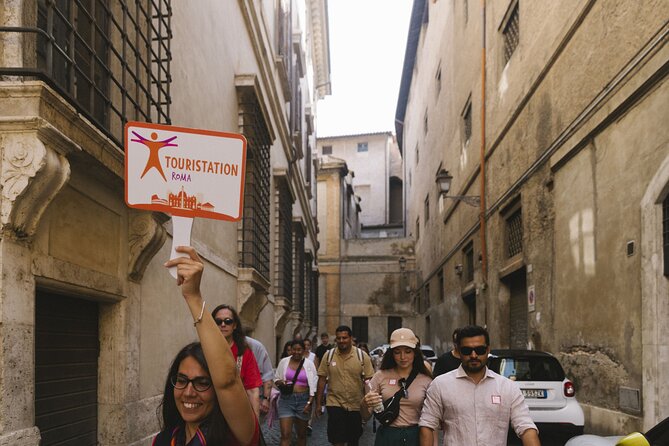
After leaving the archaeological site, you end at the Trevi Fountain area. The listed itinerary allows about 10 minutes here. That is enough for a quick explanation, photographs, and the traditional coin toss if you wish.
The legend says that throwing a coin into the fountain ensures your return to Rome. The tour does not turn this into a long guided visit of the entire Trevi district, so you should not book it expecting a detailed walking tour of surrounding streets, churches, or cafés.
This point matters. The title includes the Trevi Fountain district, but the main guided content is underground. The fountain portion is brief and can be difficult to hear when the area is packed with people. You’ll have the chance to take pictures, but you may want to return later during a quieter moment for a slower look.
Still, the pairing works well. You see how the water system functioned below, then stand beside the famous fountain that benefits from that ancient story. It creates a tidy beginning and end to the experience.
Italian gelato is included, which adds a pleasant finish. Other food and drinks are not included, and you are responsible for reaching the meeting point yourself.
More underground Rome tours:
- Colosseum: Underground and Ancient Rome Tour
★ 4.7 · 12,691 reviews - Rome: Crypts and Catacombs Underground Tour with Transfers
★ 4.6 · 5,341 reviews - Expert Guided Tour of Colosseum Arena OR Underground, and Forum
★ 4.5 · 5,041 reviews - Rome: Colosseum Underground Small Group Guided Tour
★ 4.7 · 4,844 reviews
Is $53.10 a fair price?
At $53.10 per person, this is not the cheapest way to see Vicus Caprarius. Independent admission to the archaeological site can be much less expensive, and one dissatisfied customer specifically compared the guided price with a roughly €4 self-guided ticket.
So why pay more? You are paying for reserved entry, a guide, assistance from the Touristation staff, and the structure of a short small-group visit. If you enjoy asking questions or want the water system explained as you go, the added cost can make sense.
If you mainly want to walk through the site and read the basic information, you may prefer the lower-cost self-guided option. The value is strongest when your guide is engaging and when you care about how the cistern, aqueduct, artifacts, and fountain fit together.
I would also compare this experience with the rest of your Rome budget. It lasts only about 55 minutes, so it does not consume a major part of your day. That makes it easier to fit between major attractions, but the short duration means you should not expect the same value as a half-day archaeological tour.
The advance booking pattern is also worth noting. This experience is booked, on average, 39 days ahead. That suggests you should reserve early if your dates are fixed, especially if you want a particular time. Confirmation is provided when you book, and free cancellation is available up to 24 hours before the start time.
Who will enjoy this underground Rome tour?
I would recommend it most strongly to:
- People who have already seen Rome’s major landmarks and want a less obvious stop
- Anyone interested in aqueducts, fountains, engineering, and daily Roman life
- Families who prefer a short activity with a clear subject
- Visitors who appreciate a lively English-speaking guide
- People staying near Trevi Fountain who want an easy addition to their sightseeing day
I would be more cautious if you dislike confined spaces, have difficulty with stairs, or want a long underground exploration. The site is not suitable for people with mobility impairments. You also need to be comfortable with the possibility of a crowded room and limited viewing space.
This is not the right pick if your main goal is an in-depth tour of the Trevi Fountain district. The underground remains receive most of the attention, while the fountain itself is a short final stop.
Practical details that affect your visit
The meeting and ticket redemption point is Vicolo del Puttarello 25, 00187 Rome. Go there directly and allow enough time to find the narrow street near Trevi Fountain. The site is close to public transportation, but hotel pickup and return are not included.
The tour is offered in English and has a maximum of 15 people. That is a useful group limit in a small archaeological space. A larger crowd would make it harder to hear the guide and see the remains.
The experience lasts approximately 55 minutes, with about 45 minutes at Vicus Caprarius and roughly 10 minutes at Trevi Fountain. Because the schedule is compact, you can pair it with nearby sightseeing, but do not assume you’ll have time for a long meal or a distant attraction immediately afterward.
Wear shoes that feel secure on stairs and uneven historic surfaces. The supplied information does not promise special facilities for limited mobility, and the activity specifically excludes people with mobility impairments, so check your own comfort level before booking.
Should you book the Vicus Caprarius tour?
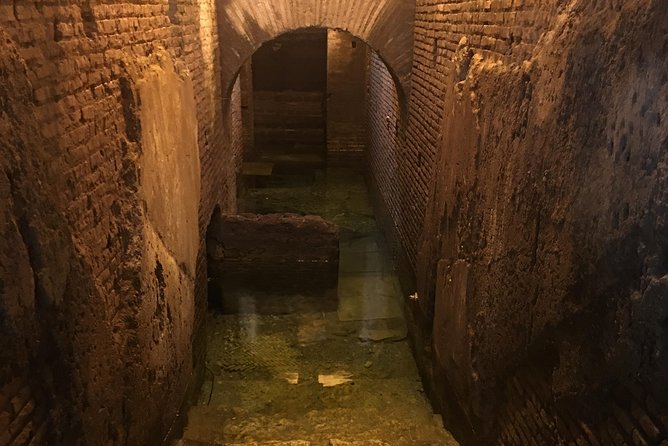
Book it if you want a short, guided look at the water beneath Trevi Fountain and enjoy seeing the overlooked layers of Rome. The aqueduct connection, 800 coins, marble decoration, Alessandro Helios sculpture, and spatheia amphorae give the visit more substance than a simple photo stop.
Skip it if you expect extensive tunnels or a full Trevi district walking tour. The site is small, and at $53.10, the guided format needs to matter to you. My advice is simple: choose this for the explanation and the connection between ancient water engineering and the fountain above, not for the size of the excavation. A good guide such as Erika, Michelle, or Noemi can make the compact site worthwhile.
FAQ
Where does the tour begin?
The tour begins at Vicus Caprarius, Vicolo del Puttarello 25, 00187 Rome. You should report directly to this address to redeem your ticket and meet the guide.
How long does the experience last?
The experience lasts approximately 55 minutes. About 45 minutes are allocated to Vicus Caprarius, followed by about 10 minutes at Trevi Fountain.
Is the Trevi Fountain portion a full guided tour?
No. The main guided portion takes place underground at Vicus Caprarius. The Trevi Fountain stop is brief and gives you time for photographs and, if you wish, the traditional coin toss.
What language is the tour offered in?
The tour is offered in English.
How many people can join the group?
The activity has a maximum of 15 participants.
Is the tour suitable for people with mobility impairments?
No. The activity is not suitable for people with mobility impairments.
What is included in the price?
The price includes Touristation staff assistance, reserved entry to Vicus Caprarius, the guided tour, access to the Trevi Fountain stop, and Italian gelato. Hotel transportation, other food, and drinks are not included.
More Trevi and Pantheon Walks
- Rome: Pantheon Timeless Marvel Guided Tour with Entry Ticket
★ 4.9 · 4,002 reviews - Rome: Pantheon Priority Entry Ticket & Audio Guide App
★ 4.1 · 3,234 reviews - Enjoy Spritz and Pasta Making in Piazza Navona
★ 5.0 · 1,681 reviews - Rome: Trevi Fountain and Underground Guided Tour
★ 4.3 · 1,664 reviews
Newest reviews from Rome
- Rome: Vatican Museums & Sistine Chapel Skip-the-Line Ticket★ 4.4 · 148 reviews
- Shared Shuttle Transfer from Rome to Civitavecchia Port★ 5.0 · 148 reviews
- Rome: Crypts & Catacombs After Hours Tour with Bone Chapel★ 4.6 · 149 reviews
- Ghosts Legends and Mysteries of Rome Walking Tour★ 5.0 · 149 reviews
- Skip the Line: Vatican and Sistine Chapel with Guided Tour★ 4.0 · 149 reviews
- Pizza and Tiramisu Cooking Class in Rome, Piazza Navona★ 5.0 · 150 reviews
- Tivoli: Villa Gregoriana Entrance Ticket★ 4.7 · 150 reviews
- Rome: Borghese Gallery Skip-the-Line Entry and Guided Tour★ 4.7 · 150 reviews
Underground Rome Tours, compared.
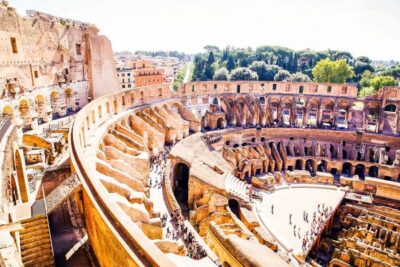
Colosseum: Underground and Ancient Rome Tour
Read our review →
Crypts and Catacombs Underground Tour with Transfers
Read our review →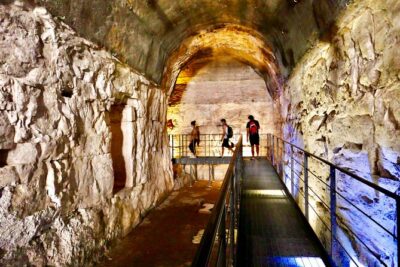
Expert Guided Tour of Colosseum Arena OR Underground, and Forum
Read our review →
Colosseum Underground Small Group Guided Tour
Read our review →
St. Peter’s Basilica, Dome Climb, and Underground Tour
Read our review →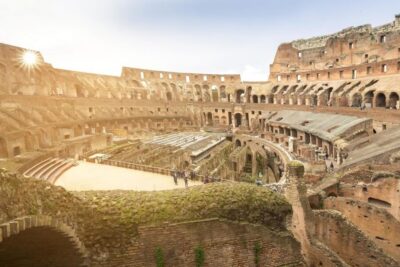

Colosseum Underground & Ancient Rome Guided Tour
Read our review →
Browse the lists this tour appears in