
Reviewed · DOMUS AUREA TOURS
Rome: Domus Aurea Tour with Virtual Reality Experience
The best part of this experience is seeing how little of Nero’s Golden House survives on the surface, then using 3D virtual reality to picture the palace at its full scale. Underground halls, painted ceilings, and the newly reopened west wing give you the real ancient remains. The virtual reconstruction supplies the missing gardens, porticoes, light, and lavish decoration.
I like the tour for two clear reasons. First, an English-speaking guide puts the confusing layers of Nero, Vespasian, Trajan, Renaissance art, and modern archaeology into a sensible order. Second, the VR sequence does more than add a modern gimmick: it helps you understand what the dark, stripped-down rooms once looked like.
The main drawback is meeting the group. The entrance can be hard to find, and the preliminary talk outside may feel long if you are eager to get underground. Inside, a large group can make it difficult to hear every explanation. You also need comfortable shoes, a jacket, and enough mobility for a site that does not suit wheelchair users or people with mobility impairments.
In This Review
- Key points before you book
- Why Nero’s Golden House is unlike Rome’s other ruins
- Meeting at the Domus Aurea
- Entering the east and west wings
- The Octagonal Room and Roman engineering
- The fire of 64 AD and Nero’s final years
- Seeing the Golden Palace through virtual reality
- From buried palace to Renaissance discovery
- Guide quality and group size
- Is the two-hour format good value?
- Who should book this Domus Aurea experience?
- Should you book it?
- FAQ
- How long does the Domus Aurea tour last?
- What language is the tour conducted in?
- Where do I meet the guide?
- Is the voucher the admission ticket?
- How long after the guide presentation does entry begin?
- Does the tour include the west wing?
- Is the virtual reality section seated?
- What should I bring?
- Are large bags allowed?
- Is the tour suitable for wheelchair users?
Key points before you book
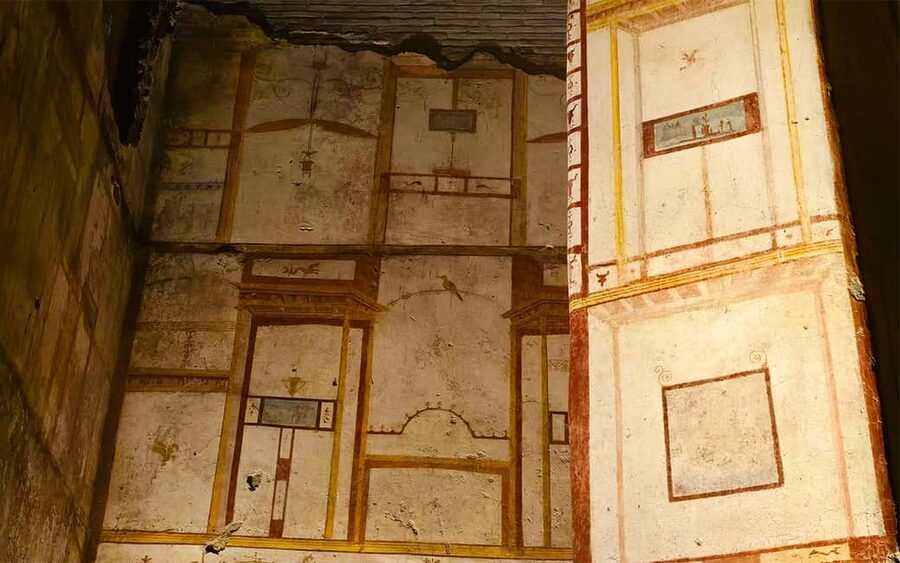
- The west wing is now part of the visit: You see both the east and recently reopened west sections, including around 30 frescoed halls and corridors.
- The palace is underground: Trajan’s Baths were built over Nero’s complex, leaving the Domus Aurea in a cool, shadowy setting.
- The Octagonal Room is a major stop: Its unusual design offers a glimpse of Roman engineering at its most ambitious.
- The VR is seated: The virtual reconstruction takes place during one seated section, so look in every direction as the palace appears around you.
- The tour lasts about two hours: The guided visit inside the Domus Aurea takes about 105 minutes, with the rest of the time used for meeting and introduction.
- It is a history-heavy experience: You will get much more from this tour if you enjoy Roman politics, archaeology, architecture, and the problem of separating fact from legend.
Why Nero’s Golden House is unlike Rome’s other ruins
Rome gives you many ancient monuments in open air, bright sun, and heavy crowds. The Domus Aurea feels different. You enter a buried palace where rooms, corridors, vaults, and traces of wall painting survive in a cool, controlled environment.
The remains are only part of the story. Nero’s palace once spread across a huge area after the fire of 64 AD. It included the Palatine Hill, gardens, porticoes, fountains, and a large private lake. The later Colosseum occupies the site of that lake, a deliberate political statement by the emperor Vespasian.
That change matters. The Colosseum is often treated as Rome’s symbol of public spectacle, while the Domus Aurea represents imperial luxury and private power. Seeing the two in the same part of Rome helps you understand the political message. Vespasian’s amphitheater gave the people a public venue and replaced a private imperial pleasure ground associated with Nero.
The tour also helps separate Nero from the cartoon villain familiar from films and novels. The guide presents his tastes, artistic interests, and sharp intellect alongside his political failures and extravagance. The story is not a simple defense of Nero. It is a more useful attempt to explain how a complicated emperor became one of antiquity’s most hated names.
More Domus Aurea entries:
- Rome: Domus Aurea Guided Group Tour
★ 4.6 · 697 reviews - Rome: Domus Aurea, Nero’s Golden House guide tour
★ 4.6 · 449 reviews - Rome: Trevi Fountain District and Underground Domus Guided Tour
★ 4.5 · 298 reviews
Meeting at the Domus Aurea
The meeting point is outside the Domus Aurea at approximately 41.891132, 12.495589. Look for a guide holding an OPEN MIND TOURS sign. Your GetYourGuide voucher is not the admission ticket, because the guide carries the actual entry materials.
Allow extra time to locate the meeting spot. One of the practical weak points of this experience is the signage and communication around the entrance. The address has caused confusion, and some people have had to phone the operator to find the group. Do not arrive at the last minute, especially if you are unfamiliar with the Colle Oppio area.
The guide may begin with a short introduction outside before the group enters. Guides such as Alexei and Rosario have been praised for giving context about Rome’s foundation, the Republic, the Empire, Nero, and the construction of the palace. That talk can be useful because the Domus Aurea is not an easy site to read on your own.
Still, this opening is not equally strong every time. One outside guide was late, and a tablet intended to show images had no battery. Another introduction wandered between subjects and was hard for some people to follow. If your main interest is the palace itself, you may find the outside presentation less important than the guided visit inside.
The entrance is scheduled at least 20 minutes after the guide’s presentation begins. That delay is part of the normal arrangement, so do not assume you have arrived at the wrong place if you wait outside first.
Entering the east and west wings
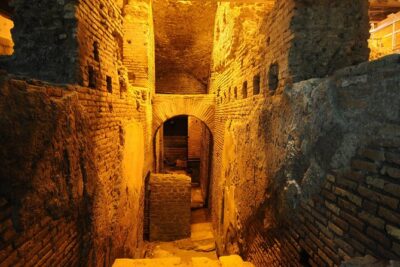
The guided portion inside lasts about 105 minutes. You move through vaulted halls and corridors in both the east wing and the recently reopened west wing. The exact route can depend on site conditions, but the advertised visit includes around 30 frescoed spaces.
Do not expect a complete palace with furniture and bright surfaces. The Domus Aurea is an archaeological site under conservation. Its rooms are empty, and the light is restrained. That absence is part of the experience, but it means you need the guide to explain what you are seeing.
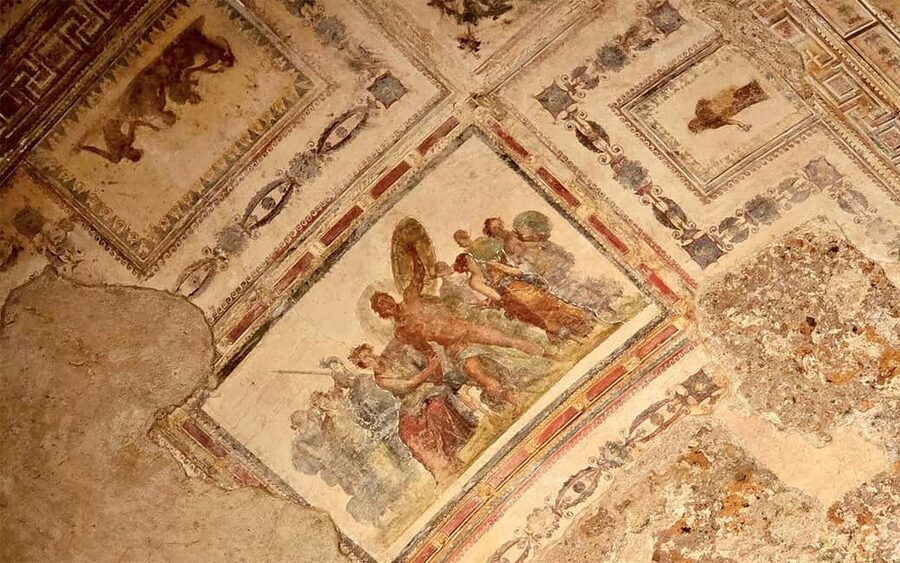
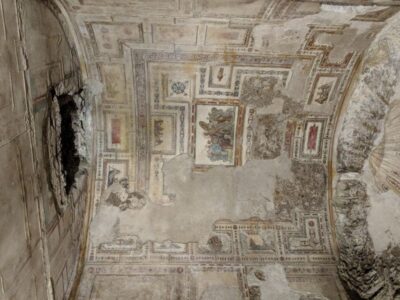
The wall paintings are the great reward. They include delicate figures, decorative borders, and unusual combinations drawn from the ancient world’s wide artistic vocabulary. The guide explains how bizarre or playful figures in the frescoes can reflect Nero’s eccentric taste without proving that he was simply mad.
The architecture also deserves close attention. High corridors and vaulted ceilings give the rooms an imposing scale. Look up whenever the guide stops. A ceiling can tell you as much about Roman building skill as a wall painting tells you about taste.
The Domus Aurea’s preservation is fragile. One visitor who loved the site also worried about the effect of public access on such delicate material. That is a fair concern. The controlled route and rules are not needless fuss. They help protect paintings and surfaces that survived centuries underground and are still being studied and restored.
The Octagonal Room and Roman engineering
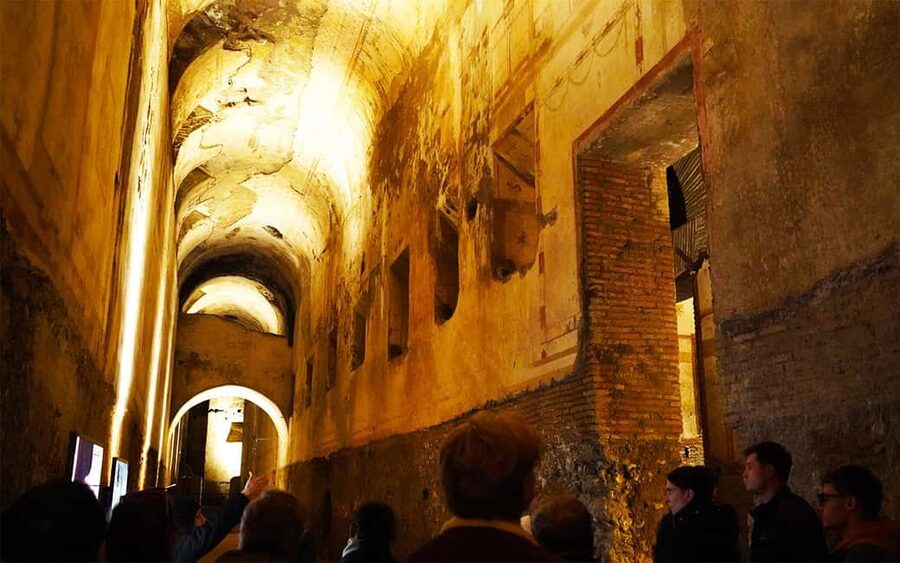
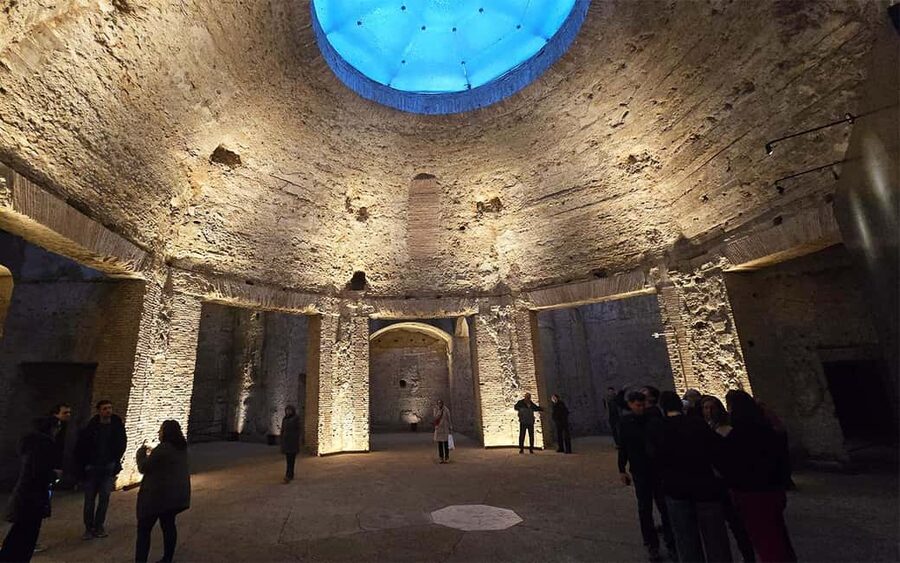
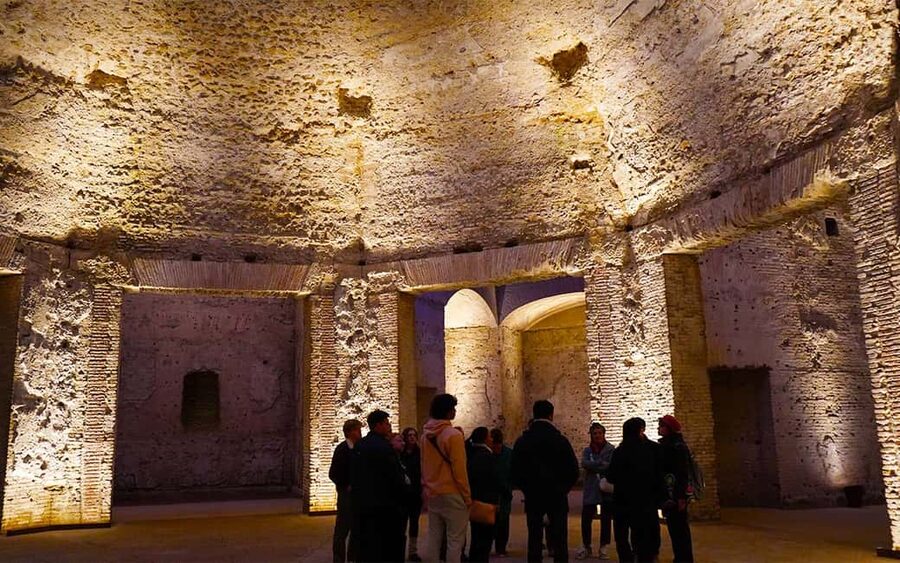
The Octagonal Room is one of the tour’s most memorable architectural stops. Its form is striking, and the possibility of a rotating ceiling adds to its reputation as an extraordinary imperial experiment.
The important point is not simply that Nero wanted something spectacular. The room shows how Roman builders worked with concrete, vaults, geometry, light, and movement. The guide connects the building to the people, materials, and ideas brought into Rome from across the empire.
This is where a good explanation makes a real difference. Without context, you see a large underground room with an unusual shape. With context, you begin to understand how much planning and labor went into creating a palace designed to surprise its occupants.
The tour is especially valuable for anyone interested in construction. The surviving materials and ancient systems offer more than decorative beauty. They reveal how Roman engineers handled ambitious spaces long before modern equipment.
A completely different way to spend the day in Rome:
- Vatican: Museums & Sistine Chapel Entrance Ticket
★ 4.5 · 144,003 reviews - Vatican Museums & Sistine Chapel Tour with Optional Basilica
★ 4.3 · 67,413 reviews - Vatican Museums, Sistine Chapel & St Peter’s Basilica Guided Tour
★ 4.5 · 39,149 reviews - Rome: Colosseum, Palatine Hill and Roman Forum Guided Tour
★ 4.8 · 32,814 reviews
The fire of 64 AD and Nero’s final years
The story of the Domus Aurea cannot be separated from the great fire of July 64 AD. The tour challenges the familiar claim that Nero started the blaze while playing music or watching Rome burn.
The explanation offered here is that Nero was at his seaside villa outside Rome when the fire began. Afterward, he opened his gardens to people made homeless, distributed essential goods, lowered the price of grain, and introduced new building rules. These included greater separation between buildings and more use of brick and stone instead of wood.
That does not make Nero blameless. He was accused of delays in rescue efforts and inadequate funding for rebuilding. More troubling still, the destroyed districts gave him an opportunity to expand his palace complex on the Palatine Hill.
The private lake was the most audacious part of that expansion. It created an oasis of art and pleasure in the heart of Rome, but it also showed how far the emperor had moved from ordinary Roman concerns. Public anger grew, his popularity collapsed, and he took his own life in June 68 AD.
This part of the tour gives the ruins a human and political dimension. You are not just looking at old paint. You are looking at the remains of a project that helped destroy an emperor’s reputation.
Seeing the Golden Palace through virtual reality
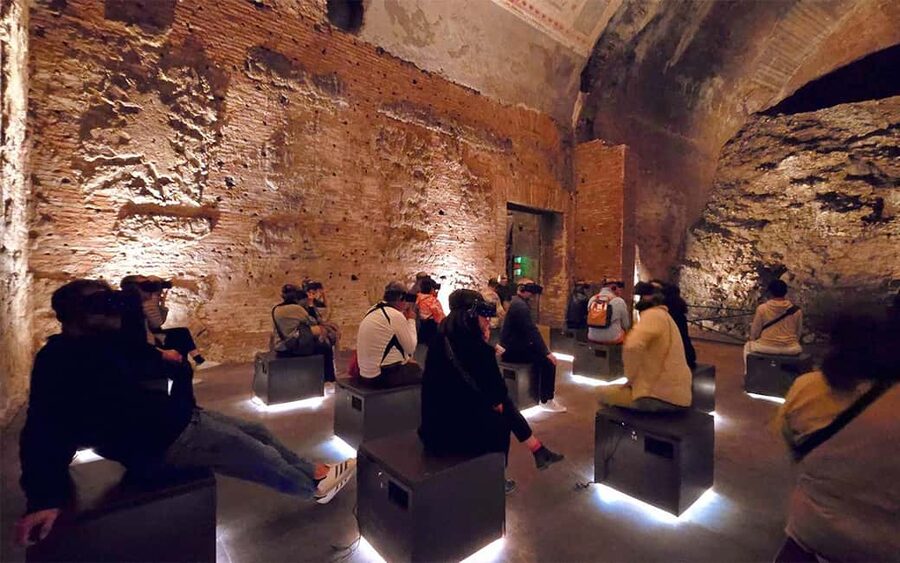
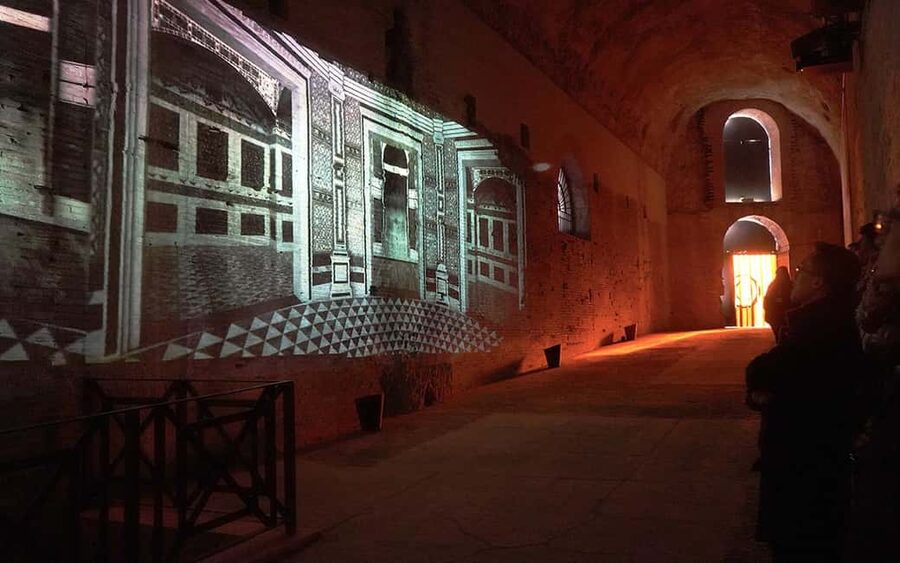
The VR section is the tour’s clearest teaching tool. You sit while a 3D reconstruction shows the palace and an exterior portico as they may have appeared before the complex was finished.
The contrast is powerful. In the actual rooms, you see damaged frescoes, bare walls, and a controlled archaeological setting. In the virtual sequence, you can picture the decorative schemes, gardens, fountains, porticoes, and beams of light that once shaped the palace.
The experience is seated, and you should look in every direction. The reconstruction is designed to surround you, not simply place a picture in front of your eyes. The sequence has been especially helpful for people who had already seen Pompeii and wanted a clearer sense of how Roman art, architecture, and imperial spaces fitted together.
The technology does not replace the archaeology. That is important. A virtual image can make a restoration look certain even when parts of it are based on informed interpretation. Treat it as a visual aid, not a perfect photograph of the past.
Even with that limitation, the VR works well here because the palace is so incomplete. It gives you a mental floor plan and helps explain the relationship between the rooms, the gardens, and the vanished lake. For many people, it will be the moment when the whole site finally makes sense.
From buried palace to Renaissance discovery
After Nero’s death, the next emperors had a political problem. Vespasian filled in the lake and began building the Colosseum above it. The choice turned Nero’s private pleasure ground into a public monument.
About 50 years later, Trajan built a large bath complex over much of the Domus Aurea. The palace disappeared from view for nearly 1,500 years. This burial helped preserve parts of the complex, though later conditions also created serious conservation problems.
Renaissance artists rediscovered the rooms in the 1500s. They lowered themselves into the buried spaces and copied the decorations they found. Those paintings influenced European art and helped revive interest in ancient Roman design.
The term grotesque comes from this setting. Renaissance artists called the underground rooms grotte, or caves, and the strange decorative style became known as grotesque. The tour’s final historical layer is therefore not just about Roman emperors. It is also about how forgotten antiquity helped shape European culture.
That long sequence, Nero to Vespasian to Trajan to Renaissance artists, is one of the best reasons to choose a guided visit. The building has several lives, and each one changes how you read the next.
Guide quality and group size
The quality of the explanation is a major part of the value. Inside the site, the guide is generally from the Domus Aurea staff, while the outside guide provides the initial historical framing. Guides named Linda, Yev, Laura, Rosario, and Alexei have received particularly strong praise for clear explanations, warmth, punctuality, and enthusiasm.
That does not guarantee the same person on your date. It does show what the best version of the tour can offer. A strong guide makes the complicated history understandable and points out details you could easily miss.
Group management is the main variable. In a large party, the guide may begin talking before everyone has gathered, and the acoustics can make it hard to hear. The site itself is not ideal for a loose, wandering group because corridors and rooms can be tight.
Stay close to the guide and position yourself where you can see the guide’s face. If you cannot hear, move nearer rather than relying on signs. There is limited written information in the rooms, so missing the spoken explanation means missing much of the site’s meaning.
Is the two-hour format good value?
No price is provided here, so I cannot judge the exact cost. I can judge what you are paying for: organized admission, a separate entrance arrangement, a live English guide, the restored archaeological route, and the VR reconstruction.
The tour offers good value if you would otherwise struggle to understand the ruins. The Domus Aurea is not a simple monument with a clear central viewpoint. Its buried rooms and layered history make guide support more useful here than at some open-air sites.
The value is less certain if you prefer to move independently or already know Roman imperial history well. One outside introduction may feel unnecessary, particularly when the guide inside is strong. If you can book a direct visit through the Domus Aurea and prefer to save money, compare what is included before committing.
The separate entrance arrangement may also save time, though you still need to be at the correct meeting point and wait for the scheduled entry. The two-hour length fits neatly into a day of sightseeing, and the underground rooms offer relief during hot Roman weather.
Who should book this Domus Aurea experience?
I recommend it most for adults and older children who enjoy stories, architecture, art, or archaeology. It is especially useful if you want more than another quick look at ancient walls.
Construction enthusiasts should pay close attention to the vaulted halls, materials, and engineering details. Art lovers will appreciate the frescoes and the Renaissance connection. Anyone visiting the Colosseum should consider adding the Domus Aurea because the two sites explain each other politically.
The tour is less suitable if you have limited mobility. The activity is specifically not suitable for wheelchair users or people with mobility impairments. Large bags, luggage, selfie sticks, tripods, professional cameras, drones, weapons, sharp objects, sprays, aerosols, glass objects, and pets are not allowed, though assistance dogs are permitted.
Bring comfortable shoes and a jacket. The underground setting is cool, and the jacket is useful even in summer. Plan to carry only what you need.
Should you book it?
Book this tour if you want the Domus Aurea to make sense rather than simply see it. The west wing, fragile frescoes, Octagonal Room, and VR reconstruction combine into a visit that feels very different from Rome’s headline monuments.
I would be cautious only if the meeting point, group size, or added outside presentation would frustrate you. Arrive early, find the OPEN MIND TOURS sign, stay close to the guide, and compare the price with a direct Domus Aurea booking.
For most first-time visitors with an interest in ancient Rome, the virtual reconstruction is worth the extra structure. It turns a buried, damaged palace into something you can picture, while the surviving rooms keep the story grounded in real archaeology.
FAQ
How long does the Domus Aurea tour last?
The full experience lasts two hours. The guided visit inside the Domus Aurea takes about 105 minutes.
What language is the tour conducted in?
The live tour guide speaks English.
Where do I meet the guide?
Meet outside the Domus Aurea at the stated coordinates and look for a guide holding an OPEN MIND TOURS sign.
Is the voucher the admission ticket?
No. The voucher is not the entry ticket. The guide carries the ticket for entry into the Domus Aurea.
How long after the guide presentation does entry begin?
Entrance to the Domus Aurea is at least 20 minutes after the scheduled guide presentation begins.
Does the tour include the west wing?
Yes. The experience includes the east wing and the recently reopened west wing.
Is the virtual reality section seated?
Yes. The virtual reality reconstruction takes place during a seated part of the tour.
What should I bring?
Bring comfortable shoes and a jacket.
Are large bags allowed?
No. Luggage and large bags are not allowed. Several other items are also prohibited, including selfie sticks, tripods, professional cameras, drones, weapons, sharp objects, sprays, aerosols, and glass objects.
Is the tour suitable for wheelchair users?
No. The experience is not suitable for wheelchair users or people with mobility impairments.
Newest reviews from Rome
- Rome: Vatican Museums & Sistine Chapel Skip-the-Line Ticket★ 4.4 · 148 reviews
- Shared Shuttle Transfer from Rome to Civitavecchia Port★ 5.0 · 148 reviews
- Rome: Crypts & Catacombs After Hours Tour with Bone Chapel★ 4.6 · 149 reviews
- Ghosts Legends and Mysteries of Rome Walking Tour★ 5.0 · 149 reviews
- Skip the Line: Vatican and Sistine Chapel with Guided Tour★ 4.0 · 149 reviews
- Tivoli: Villa Gregoriana Entrance Ticket★ 4.7 · 150 reviews
- Pizza and Tiramisu Cooking Class in Rome, Piazza Navona★ 5.0 · 150 reviews
- Rome: Borghese Gallery Skip-the-Line Entry and Guided Tour★ 4.7 · 150 reviews
Domus Aurea Tours, compared.
Trevi Fountain District and Underground Domus Guided Tour
Read our review →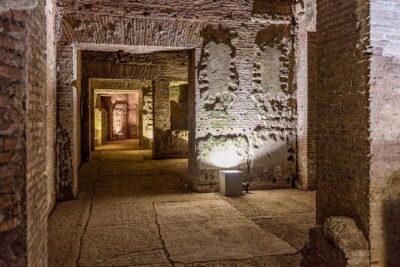
Domus Aurea Guided Tour: The Golden House of Nero
Read our review →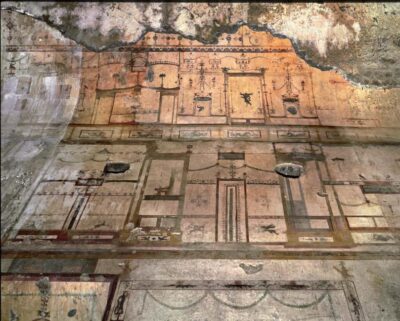
Domus Aurea Guided Tour and Virtual Reality Experience
Read our review →Browse the lists this tour appears in