
Reviewed · CASTEL SANT'ANGELO TOURS
Castel Sant’Angelo E-Ticket & Multilingual Audio Guide
Castel Sant’Angelo is Rome’s great shape-shifter: first a Roman emperor’s tomb, later a fortress, papal residence, prison, and museum. This self-guided ticket lets you follow that story at your own pace, ending on the Sant’Angelo terrace, where the Tiber, Vatican area, and rooftops of Rome spread out below.
I like two things here. You get a downloadable audio tour and offline map, so you are not hunting for a signal inside the castle. You also avoid the uncertainty of buying an adult ticket at the door, with a choice of dates and times. The main caution is that the audio route can be confusing, especially when the castle changes its visitor flow.
In This Review
- Key points at a glance
- Why Castel Sant’Angelo is worth your time
- The former execution courtyard sets a grim tone
- Hadrian’s mausoleum survives inside the fortress
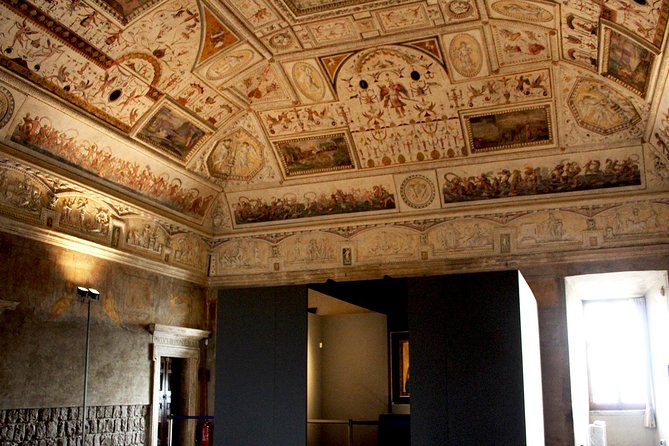
- Paolina Hall reveals the papal side of the castle
- The terrace is the reward at the top
- What the audio guide does well
- Where the audio guide needs improvement
- The $34.94 price and what you receive
- Timing, entrance, and practical planning
- Who should choose this format
- Should you book Castel Sant’Angelo with this audio ticket?
- FAQ
- Is this a guided tour with a person?
- What language is the audio guide available in?
- Do I need internet access inside Castel Sant’Angelo?
- What phone do I need?
- How early should I arrive?
- Are reduced or free tickets included?
Key points at a glance
- A Roman tomb hidden inside a papal fortress: Follow the original sloping passage toward the imperial burial chamber.
- Paolina Hall is the visual high point: Frescoes and polished decoration reveal how Pope Paul III used the castle to display power.
- The rooftop view earns its place: The terrace looks over the Tiber and central Rome, with a small café nearby.
- The audio works offline: Download the ticket, narration, map, and text over WiFi before you leave your hotel.
- Navigation needs patience: Audio chapter numbers and on-site room numbers may not match, and restoration can alter the route.
- Plan for slopes and stairs: The visit is not a flat museum stroll, and bulky bags are not allowed.
Why Castel Sant’Angelo is worth your time

The castle’s appeal comes from its layers. Hadrian built the original cylindrical mausoleum in the second century as an imperial tomb. Centuries later, the building became a defensive stronghold and a papal retreat. It is hard to find a Roman monument that changes character so dramatically from room to room.
This experience is best understood as an independent museum visit with added commentary, not a guided tour. No guide meets you at the entrance, and nobody leads you physically through the rooms. You receive an adult entry ticket plus an app-based audio tour for an Android or iOS phone.
The advertised visit lasts about 90 minutes. I would allow that much time at a minimum, then add extra time for the terrace, the café, photographs, and moments spent figuring out the route. The castle’s upward paths can slow you down, particularly in hot weather or if stairs and slopes are difficult for anyone in your party.
More Castel Sant'Angelo visits:
- Castel Sant’Angelo Skip-the-Line Entry & Optional Audioguide
★ 4.4 · 5,233 reviews - Rome: Castel Sant’Angelo Skip-the-Line Ticket & Audio Guide
★ 4.4 · 3,500 reviews - Rome: Castel Sant’Angelo Skip-the-Line Ticket
★ 4.4 · 3,040 reviews
The former execution courtyard sets a grim tone
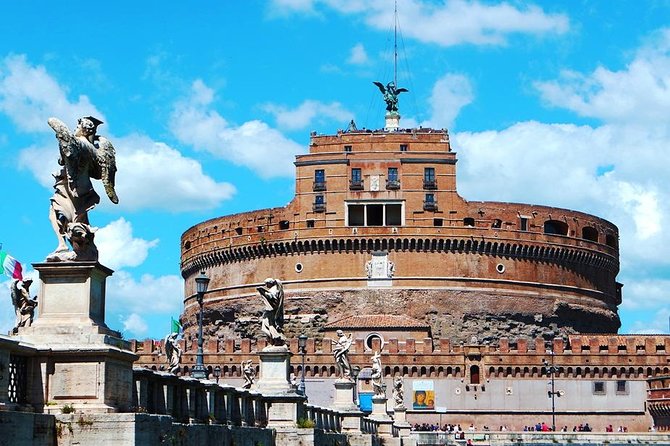
Your visit begins at the main entrance beside the Tiber. After security, the route takes you toward the large open space once used as an execution courtyard.
This is an effective opening because it quickly moves the castle beyond postcard views. The audio explains the site’s connection with the Roman Inquisition and recalls figures such as Giordano Bruno, a famous heretic executed in Rome. The courtyard feels less ornate than the papal rooms later in the visit, but that starkness suits the subject.
Plan on about 15 minutes here. Listen before rushing onward, since this section supplies useful context for the castle’s later role as a prison and place of punishment. The audio narration is the main attraction at this stop, so this is also the first point where a phone problem can spoil the experience.
Hadrian’s mausoleum survives inside the fortress
The next section takes you into the building’s earliest identity. Before it became a papal fortress, Castel Sant’Angelo was the mausoleum of Emperor Hadrian and members of the imperial family.
You climb the original second-century brick-walled ramp toward the room associated with the cinerary urns. The ramp is one of the most memorable physical parts of the visit. It gives you a sense of the monument as a solid, engineered tomb rather than simply a medieval castle with Roman foundations.
The stop is planned for about 30 minutes. Take your time here, especially if you want to study the brickwork and understand how the route rises through the massive cylindrical structure. The audio provides useful historical context, but the navigation is not always as clear as it should be. In some sections, the chapter number in the app does not correspond neatly to the number posted beside a room or exhibit.
That means you should not press play merely because you see a matching-looking number. Use the audio’s description of the room as your guide, and pause when you need to catch up. The commentary can be informative even when the directions are imperfect.
Paolina Hall reveals the papal side of the castle
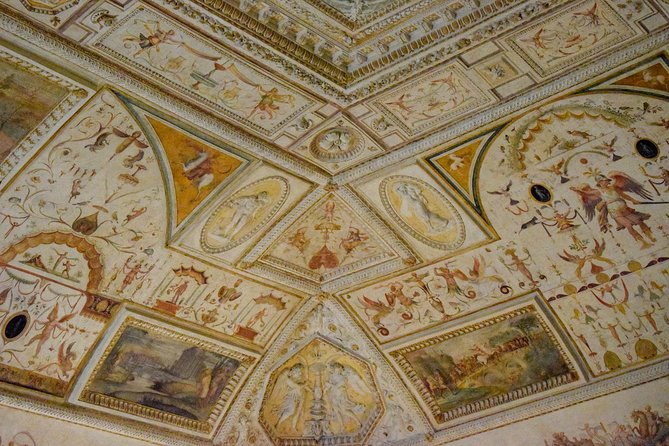
After the severe brick passages, Paolina Hall feels like a change of universe. Also called the Sala Paolina, this room was designed during the reign of Pope Paul III as a reception space for important guests.
The decoration is the point. Elaborate frescoes by Perino del Vaga and his workshop cover the room, turning a defensive building into a display of Catholic wealth and authority. The contrast with the execution courtyard and Roman tomb is exactly what makes Castel Sant’Angelo so compelling.
Allow around 30 minutes for this part. Look up, look across the walls, and listen to the explanation of the castle as a papal residence. If you simply follow the app without stopping to examine the decoration, you will miss much of the room’s effect.
The audio’s pacing can be a nuisance here. Some people find it difficult to pause at the right moment, while others may arrive at a room before the relevant commentary. I recommend starting each chapter only after you have identified the space described by the narration. That small habit makes the self-guided format easier to manage.
More Rome tours worth comparing
- Rome: Colosseum & Forum with Audio Guide App -Optional Arena
★ 4.2 · 24,770 reviews - Rome: St. Peter’s Basilica & Dome Entry Ticket & Audio Tour
★ 4.2 · 7,537 reviews - Vatican & Sistine Chapel Ticket with Optional Audio Guide
★ 4.1 · 5,405 reviews - Rome: Colosseum, Forum, & Palatine Hill with Audio Guide
★ 4.3 · 4,591 reviews
The terrace is the reward at the top

The final stop is the Sant’Angelo terrace, and this is where the visit pays off visually. From the top, you can look along the Tiber and across the rooftops of the Eternal City.
The terrace is also tied to the famous final scene of Puccini’s opera Tosca, in which the singer Floria Tosca leaps from the castle. You do not need to know the opera to enjoy the view, but the connection adds drama to an already theatrical setting.
Give yourself at least 15 minutes here. The view is especially good for understanding Rome as a city of domes, river bends, and layered monuments. The terrace café offers a place for a drink or snack, though food service may stop around 4 p.m., after which the choices can be limited. Another café near the upper areas has also been described as a pleasant place to pause.
The castle’s top is not reached by a quick elevator-style ride. Sloping paths and stairs are part of the experience. If you have limited endurance or walking difficulties, plan regular pauses. The audio guide’s self-paced format helps because you can stop without holding up a group, but the building itself remains physically demanding.
What the audio guide does well

The strongest part of the audio product is its historical framing. The narration links the Roman mausoleum, Inquisition-era courtyard, papal residence, fortress, and opera setting into one visit. That context is valuable because the rooms do not always explain themselves.
The offline format is also practical. You download the narration, text, and interactive map to your phone before arrival, then listen without using mobile data or paying roaming charges. This matters in a thick-walled monument where a phone signal may be unreliable.
The app is available for Android version 5.0 and later and for iOS, with the supplied information describing the audio as multilingual while the experience page identifies English as the offered language. Check the language shown at booking if you need something other than English.
The ticket arrives separately from the initial booking confirmation. Read the supplier’s email carefully, since the Viator voucher itself is not accepted as the entrance ticket. The actual ticket may show the legal representative’s name rather than your own. That difference is expected and should not create a problem at the entrance.
Where the audio guide needs improvement
The audio is not a live commentary system, and its weaknesses are most noticeable when you are trying to move through the castle. The map and suggested path have not always matched the current visitor flow. Renovation, restoration, or temporary closures can force you to take a different route from the one described in the app.
You may pass through a café or bookstore area more than once while trying to find the next section. At times, the narration can seem ahead of your position. Other parts of the route may be difficult to locate at all if you follow the map too literally.
I would treat the audio as a history companion rather than a perfect set of walking instructions. First follow the castle’s current signs and staff directions. Then use the narration when you reach the relevant room. This approach sacrifices some of the app’s intended structure but prevents you from missing the building while searching for a virtual waypoint.
Technical preparation is essential. Download everything over WiFi, install or open the app, check that the audio plays, and make sure the ticket is visible before leaving. Bring earphones and a fully charged phone. The download needs roughly 100 to 150 MB of storage.
Several problems can be avoided this way. The audio is not supplied through speakers in the castle, and there is no WiFi or 4G service to rely on at the site. If the ticket email does not arrive, contact the supplier before you reach the entrance rather than waiting until the last minute. Support has been able to resend tickets quickly in some cases, but assistance is not something to gamble your timed entry on.
The $34.94 price and what you receive
At $34.94 per person, this is not the cheapest way to enter Castel Sant’Angelo. The price includes an adult entry ticket, electronic delivery, and the self-guided audio content. It may be worthwhile if you value a reserved time, want commentary in your pocket, and prefer not to stand at the ticket counter.
The value is weaker if you only want admission. The official site may offer a simpler purchase route, and young visitors under 18 qualify for free admission at the monument. EU citizens aged 18 to 25 may qualify for reduced admission. This supplier provides an adult ticket only, so it does not pass those savings along.
You should also separate the ticket benefit from the audio benefit. The entry ticket can save time compared with buying at the door, though you still need to pass security. The audio can add useful context, but its route instructions are not dependable enough to justify the full price on their own.
Demand appears to be steady, with bookings often made about 24 days ahead. If your Rome schedule is fixed, reserving early can help you secure a suitable time. If your schedule is loose and you are visiting near closing time, buying directly may be worth comparing. The experience is non-refundable and cannot be changed, so do not reserve a time that leaves no room for transport delays.
Timing, entrance, and practical planning

Arrive 30 minutes before your selected time. Security screening can create a delay, and late arrivals are not accommodated. This early arrival is especially important if you are crossing Rome from another attraction or relying on public transportation.
The castle is near public transportation, but the supplied information does not promise hotel pickup or drop-off. You make your own way to the entrance on the Tiber. Keep your phone and actual e-ticket ready, either digitally or in printed form.
Do not bring a large backpack, bulky luggage, or oversized bags. Those items are not allowed inside the site. A small day bag is the safer choice.
Visit early in summer if you can. The open and upper sections can feel hot, and the climb is easier before the strongest heat. Late afternoon can work well for the terrace, but check the café’s food hours if a meal is part of your plan. The upper view is the part most worth protecting time for.
Most people can take part, but the slopes and stairs deserve honest attention. The self-guided format lets you pause, yet it does not remove the physical demands of a fortress built on a steep internal route. Children under 18 may enter free under the site’s admission rules, but this product supplies only adult tickets.
Who should choose this format
I would choose this experience if you want independent sightseeing and already feel comfortable managing an app. It suits visitors who like to stop for photographs, skip a live group, and control the pace through the castle.
It is also useful for history-minded visitors who want more explanation than the rooms alone provide. The narration’s strongest material concerns the building’s changing purpose, from imperial tomb to papal stronghold. The offline map is a real convenience when prepared correctly.
I would hesitate if you need flawless directions, personal help, or a clear human introduction at the door. A live guide or a simpler self-guided visit may be less frustrating for anyone who dislikes troubleshooting. You should also think twice if your phone is old, your battery is unreliable, or you cannot download the material before arrival.
The experience is offered without a live guide, so you must handle the app, ticket, route, and timing yourself. That is either the main advantage or the main drawback, depending on how you like to tour.
Should you book Castel Sant’Angelo with this audio ticket?
Book it if the terrace views, Roman mausoleum, and papal rooms appeal to you and you want adult admission with offline commentary. The castle itself is the sure thing. Paolina Hall, the imperial ramp, and the rooftop make the visit worthwhile even if you use the audio only occasionally.
Book with care if navigation matters as much as history. Download the app and ticket over WiFi, test the audio, arrive early, and follow on-site signs when they conflict with the map. At $34.94, the ticket is convenient but not automatically a bargain, particularly for visitors eligible for free or reduced admission.
My practical verdict: choose this option for independence and advance planning, but not because it promises a perfectly guided route. Protect time for the top, wear comfortable shoes, and treat the audio as helpful background rather than your only way to find the castle’s rooms.
FAQ
Is this a guided tour with a person?
No. This is an adult entry e-ticket combined with a downloadable self-guided audio tour for your smartphone. No live guide or meeting point is provided.
What language is the audio guide available in?
The supplied details describe the audio guide as multilingual, while the experience information identifies English as the offered language. Check the language shown at booking if you require a specific option.
Do I need internet access inside Castel Sant’Angelo?
No internet connection should be required during the visit if you download the ticket, audio, text, and map over WiFi beforehand. There is no WiFi or 4G available on-site.
What phone do I need?
You need an Android phone running version 5.0 or later or a compatible iPhone running iOS. The app is not compatible with Windows phones, iPhone 5 or 5C and older models, iPod Touch 5th generation or older, iPad 4th generation or older, or the first-generation iPad Mini. Allow 100 to 150 MB of storage.
How early should I arrive?
Arrive 30 minutes before your selected time for security screening. Late arrivals are not accommodated.
Are reduced or free tickets included?
No. This product supplies an adult entry ticket only. Visitors under 18 may qualify for free admission, and EU citizens aged 18 to 25 may qualify for reduced tickets, but those tickets are not provided by this supplier.
More Audio Tours in Rome
- Skip the Line: Vatican & Sistine Chapel Ticket with Audio Guide
★ 4.0 · 3,271 reviews - Rome: Pantheon Priority Entry Ticket & Audio Guide App
★ 4.1 · 3,234 reviews - Rome: Colosseum Experience with Audio Guide and Arena Option
★ 4.2 · 2,200 reviews - Rome: Colosseum, Roman Forum & Palatine Hill Visit + Audio Guide
★ 3.5 · 1,522 reviews
Newest reviews from Rome
- ROME:Colosseum & Ancient Rome – private/small group TOUR★ 5.0 · 24 reviews
- Off the Beaten Track in Rome: Rione VI Parione Private Tour★ 5.0 · 24 reviews
- Cinematic Photoshoot in Rome★ 5.0 · 24 reviews
- Rome: Best of Colosseum and Roman Forum Small Group Guided Tour★ 4.5 · 24 reviews
- The Labyrinth of Rome between catacombs and ancient quarries★ 4.5 · 24 reviews
- Vatican and Trionfale Market Tour with Wine and Food Tasting★ 5.0 · 24 reviews
- private tour: Vatican Museums, Sistine Chapel, St. Peter’s Basilica★ 4.5 · 24 reviews
- Colosseum guided tour with Virtual Reality★ 5.0 · 24 reviews
Castel Sant'Angelo Tours, compared.

Castel Sant’Angelo Skip-the-Line Entry & Optional Audioguide
Read our review →
Castel Sant’Angelo Skip-the-Line Ticket & Audio Guide
Read our review →

Castel Sant’Angelo Skip-the-Line Entry Ticket
Read our review →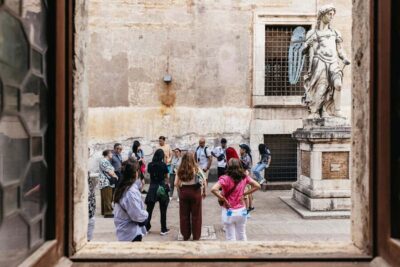


Browse the lists this tour appears in