
Reviewed · OSTIA ANTICA TOURS
Ostia Antica – Commercial Port of Ancient Rome Tour
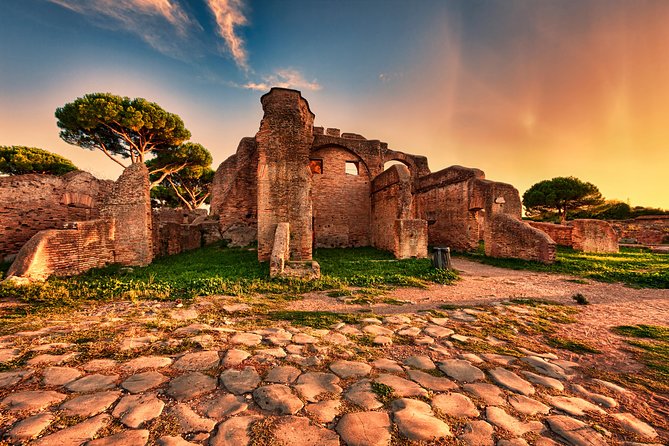
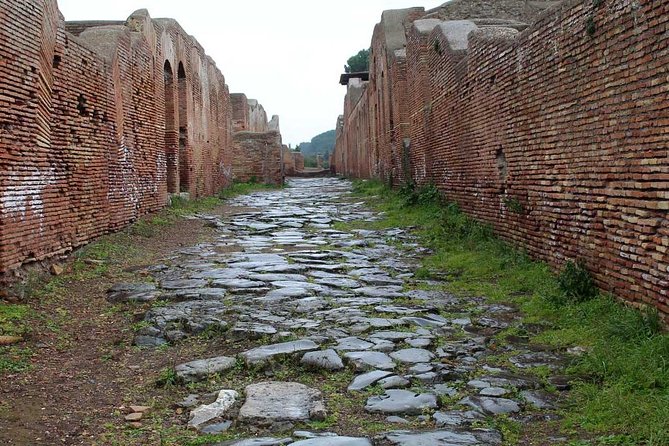
Ostia Antica gives you something central Rome often cannot: a chance to walk through an entire ancient city without pushing through a crowd. Its broad streets, old shops, public baths, theatre, and working port buildings make Roman life easier to picture than a single grand monument does. The ancient streets are the real attraction, with the Square of Guilds, Baths of Neptune, House of Diana, and theatre forming the core of the visit.
I like two things right away. First, you meet your guide in Rome and travel together, so you do not have to work out the train route alone. Second, the group is limited to 12 people, which gives you a fair chance to hear explanations and ask questions. Guides named Sarah, Sonia, Rebecca, Celia, Claudia, and Julio have all led highly praised visits, with a strong focus on daily life rather than just dates and emperors.
The main drawback is the pace. Ostia Antica is a large archaeological park, and four hours at the site can only cover its main sights. You should also expect plenty of walking over old roads and uneven ground, and lunch or drinks are not included. This is a history-heavy morning, not a relaxed café outing.
In This Review
- Key points to know before booking
- Why Ostia Antica feels different from central Rome
- Meeting at Piazza Ostiense at 8:30 am
- Four hours among streets, homes, and public buildings
- The outdoor theatre gives the morning a focal point
- The Square of Guilds shows Ostia at work
- Baths of Neptune and the House of Diana add everyday detail
- The small-group format earns its place
- What the $120.36 price includes
- Who will enjoy this ancient port visit
- Practical ways to enjoy the four-and-a-half-hour outing
- Should you book the Ostia Antica tour?
- FAQ
- Where does the Ostia Antica tour begin?
- How long does the experience last?
- How do I get to Ostia Antica?
- Is admission to Ostia Antica included?
- How large is the group?
- Is the tour offered in English?
- Is lunch included?
- Can I cancel for a refund?
Key points to know before booking
- A full ancient city, not one isolated ruin: You walk old streets and enter remains of homes, baths, guild buildings, and public spaces.
- A simple start from Rome: Meet at Piazza Ostiense at 8:30 am, then ride with your guide using the included metro tickets.
- Small group, maximum 12 people: The format makes it easier to hear the guide and ask about details that catch your eye.
- Theatre, mosaics, and baths: The outdoor theatre, Baths of Neptune, and House of Diana give the visit a varied rhythm.
- A quieter alternative to central Rome: The site offers open space and a calmer setting after busy days around Rome’s major monuments.
- Plan for a four-hour archaeological walk: Wear comfortable shoes, bring your own water and food, and expect moderate physical effort.
Why Ostia Antica feels different from central Rome
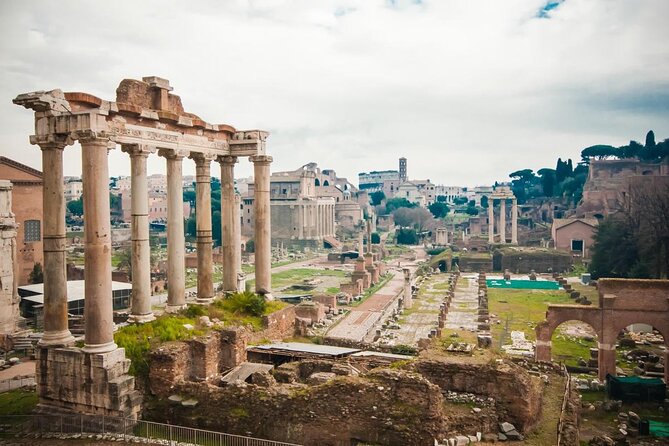
Rome’s best-known ruins often work as dramatic fragments. You see a triumphal arch, a temple column, or a section of wall, then rely on your imagination to fill in the rest. Ostia Antica gives you more of the city plan. You follow roads, pass blocks of buildings, and move from public spaces into houses and work areas.
That makes the site useful for understanding ordinary Roman life. The theatre is impressive, but the smaller details often stay with you longer: the layout of a home, a paved street, a bath complex, or the signs of trade around the Square of Guilds. Instead of looking only at monuments built to impress, you get a sense of a place where people lived, worked, washed, worshipped, and handled business.
I would choose this outing after a busy first day in Rome. The open setting and lighter crowds give your eyes and mind a break from the Colosseum, Trevi Fountain, and crowded lanes of the historic center. It still feels deeply connected to Rome, but the visit has a slower rhythm.
More Ostia Antica visits:
- Ancient Ostia Antica Semi-Private Day Trip from Rome by Train with Guide
★ 4.5 · 579 reviews - From Rome: Ostia Antica Guided Half-Day Trip by Train
★ 4.8 · 486 reviews - Horse Sanctuary & Trail Ride in Ostia Antica
★ 4.5 · 276 reviews
Meeting at Piazza Ostiense at 8:30 am
The tour begins at P.za Ostiense, 9, at 8:30 am. Your guide helps you navigate public transportation to Ostia Antica, with metro tickets included in the price. The exact train details are not set out in the tour information, but the practical point is clear: you are not expected to make the journey alone.
That shared start is one of the strongest reasons to book a guided visit rather than simply going on your own. Rome’s public transport can feel confusing when you are watching the clock, checking platforms, and trying to keep a group together. With a guide at the meeting point, you can focus on the day instead of the route.
Allow a little extra time to find Piazza Ostiense and identify the guide. One person specifically found Sarah easy to spot because she carried a clearly marked Viator sign. Still, start early. A missed meeting point is a poor way to begin a half-day outside the city center.
The ride itself also sets up the visit. One guide, Claudia, used the journey to discuss Ostia before the group arrived. That is a good use of transit time, since the site makes more sense once you understand why a port city mattered to Rome.
Four hours among streets, homes, and public buildings
The archaeological park portion lasts about four hours, within a total experience of roughly four and a half hours. That gives you enough time for a guided route through the main areas, but not enough to inspect every corner of a large site.
Your guide’s role matters here. Without context, a ruin can look like a low wall and a patch of stone. A good explanation turns it into a home, a shop, a bath, or a civic building. The strongest guides on this experience, including Sarah, Sonia, Rebecca, and Celia, are praised for using stories about daily Roman life to make the remains easier to read.
Sonia is described as taking groups throughout the expansive ruins and explaining how ancient Romans lived. Celia impressed a Latin teacher with her grasp of the ancient world. Those details suggest the tour can work for both first-time visitors and people who already know a fair amount about Roman history.
You should not expect a lecture that stays fixed on one subject. The appeal is the mix of architecture, social history, and small observations. You might pause at a road, look at a mosaic, enter a building, and then compare what you see with the public spaces nearby. The route turns the park into a connected city rather than a collection of unrelated stops.
The outdoor theatre gives the morning a focal point
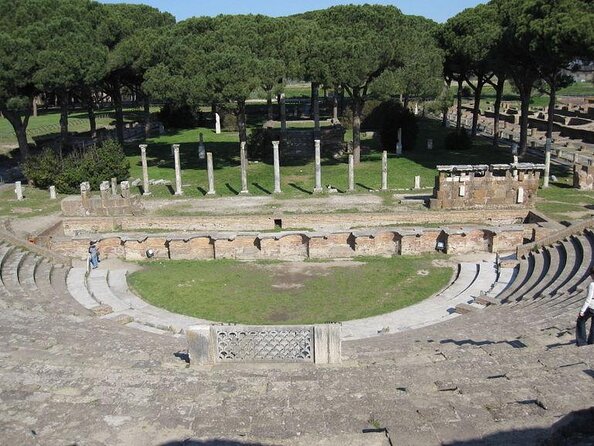
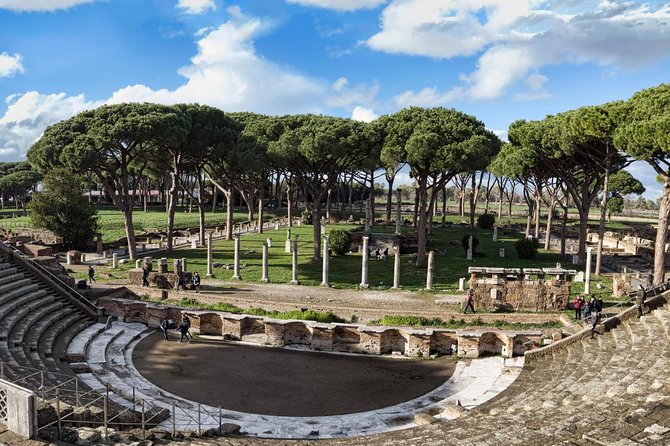
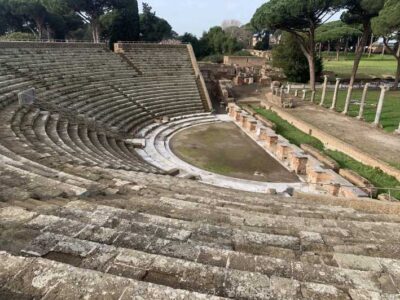
The outdoor theatre is one of the clearest visual highlights. It gives you a large public space to imagine filled with people, noise, and performances. Even if you are not an ancient-history specialist, a theatre is easy to understand at a glance: the shape of the seating, the stage area, and the view across the site all make the building readable.
It also gives the walking tour a useful change of scale. Narrow streets and house remains can feel intimate. The theatre opens things up and reminds you that Ostia was not only a place of private homes and commercial activity. It had public entertainment and shared civic spaces too.
Your guide can add the meaning that stones alone cannot provide. The experience is strongest when the guide explains how the building fitted into the wider city, rather than simply pointing out its age or construction. Bring questions. The group size should make it possible to pause for them without holding up a large crowd.
A completely different way to spend the day in Rome:
- Vatican: Museums & Sistine Chapel Entrance Ticket
★ 4.5 · 144,003 reviews - Vatican Museums & Sistine Chapel Tour with Optional Basilica
★ 4.3 · 67,413 reviews - Vatican Museums, Sistine Chapel & St Peter’s Basilica Guided Tour
★ 4.5 · 39,149 reviews - Rome: Colosseum, Palatine Hill and Roman Forum Guided Tour
★ 4.8 · 32,814 reviews
The Square of Guilds shows Ostia at work
The Square of Guilds is especially important for this tour because the experience focuses on Ostia as a commercial port. The site is not just about grand Roman culture. It also reflects the people and organizations involved in trade.
The square helps connect the ancient city to practical work. You can look at the layout and ask what kind of business took place there, how groups used the space, and how the port supported Rome. A guide can help you read the evidence and explain details that are easy to miss when you walk through alone.
This is one place where a small group has real value. If you want to ask about a symbol, a room, or the purpose of a building, you are more likely to get a useful answer than you would on a crowded, scripted tour. The guide can also adjust the explanation to the group. One family described a guide who took time to show them details and move at their pace.
Do not expect every part of the Square of Guilds to look complete. Archaeological sites work through partial remains. Some areas require imagination, and the guide’s storytelling helps bridge that gap.
Baths of Neptune and the House of Diana add everyday detail
The Baths of Neptune bring the public side of Roman life into view. Public baths were not merely places to wash. They were social spaces, and the surviving remains help you think about how residents spent time together.
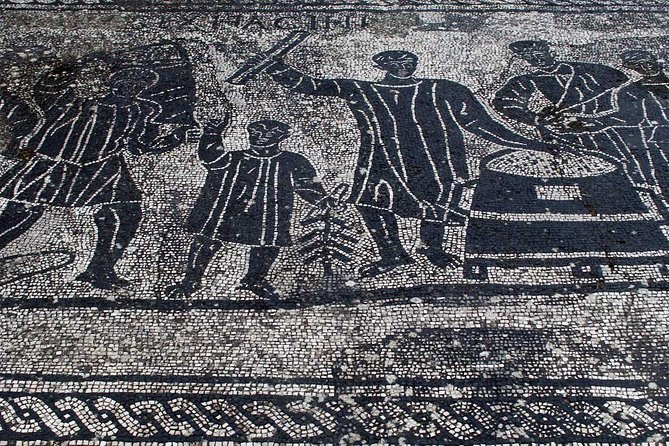
The mosaics are among the visual details worth watching for. Their patterns and placement give the ruins a human scale. You are not only looking at walls and foundations. You are also seeing decoration chosen for people who used the building every day.
The House of Diana shifts the focus toward domestic life. Its remains help you picture the ordinary structure of a city block and the homes within it. This is where the tour can feel most like a walk through a neighborhood rather than a visit to a monument.
A guide such as Rebecca or Celia can help sort out what is known from what must be inferred. That distinction matters. The best archaeological guiding does not pretend every stone has a certain answer. It explains the evidence, then gives you a sensible picture of how the space may have worked.
The small-group format earns its place
With a maximum of 12 people, this is not a private tour, but it is far more personal than a large coach group. You should be able to stay near the guide, hear explanations, and ask follow-up questions.
The format also helps with comfort. Sonia was praised for watching out for older participants and checking that they were safe and comfortable. That does not remove the physical demands of the site, but it suggests a guide can pay attention to the needs of the group.
The pace is not completely yours. You are joining a planned four-hour route, so you cannot stop for as long as you like at every mosaic or building. Still, the small size gives the guide room to respond when a particular subject interests you.
The named guides associated with the experience include Rebecca, Sonia, Sarah, Celia, Claudia, and Julio. You cannot request that a particular person lead your departure unless the operator confirms it, so book for the format and subject rather than for one specific guide. The consistent praise for clear explanations and enthusiasm is encouraging, but the individual guide will shape the morning.
What the $120.36 price includes
At $120.36 per person, this is not the cheapest way to reach Ostia Antica. The price includes admission to the archaeological park and the metro tickets, along with the guide and the convenience of coordinated transport from Rome.
The value depends on how much help you want. If you are comfortable navigating public transport and reading ruins without much explanation, you might prefer an independent visit. If you want the ancient city explained as a working community, the guide is the main reason to pay more.
You are also buying time. A guided route prevents you from spending your first hour finding the entrance, choosing a direction, and wondering which remains matter most. In a site this large, good selection is useful. You see the theatre, Square of Guilds, Baths of Neptune, and House of Diana in one morning.
Group discounts may make the price easier for families or larger parties. Lunch and drinks are not included, so budget for your own food and water. The tour returns to the starting meeting point, which keeps the outing straightforward, but you should not count on a meal being built into the schedule.
Who will enjoy this ancient port visit
I would recommend this experience most strongly to:
- First-time visitors who want more than Rome’s headline monuments
- History fans who enjoy buildings, streets, and daily-life details
- Families with older children or teenagers who can manage a long walk
- Visitors who prefer a quieter archaeological site
- People who want help with the train journey from Rome
- Anyone who found the city center too crowded and wants a calmer morning
It is also a good choice for Latin teachers, classicists, and serious Roman-history readers. Celia’s ability to satisfy a Latin teacher suggests the guiding can go beyond simple background facts.
I would hesitate to recommend it to anyone with limited walking ability unless they first confirm that the route suits them. The information calls for moderate physical fitness, and the ancient roads are not designed like a modern museum floor. You should also think twice if you want a slow, unstructured visit. Four hours sounds generous, but the park is large.
Practical ways to enjoy the four-and-a-half-hour outing
Wear shoes that can handle a long walk over old paving. The tour information does not give a precise mileage, but one account described walking from end to end for several miles, so do not treat this as a short stroll between two monuments.
Bring water and a small snack. Since lunch and drinks are excluded, you need to supply your own refreshments. Keep the morning simple, since the focus is walking and listening rather than stopping for a long meal.
Give yourself time to reach the 8:30 am meeting point. The tour starts at Piazza Ostiense, not at Ostia Antica itself, and the guide helps you make the public transport connection. Confirmation arrives at booking, and the site is near public transportation.
The tour is offered in English. It is capped at 12 people, and group discounts are available. The experience ends back at the meeting point, so plan the rest of your day from there rather than assuming you will finish at the archaeological park.
Weather can affect the outing. It requires good weather, and if poor conditions cancel it, you are offered another date or a full refund. You can also cancel for a full refund up to 24 hours before the start time. Changes or cancellations made less than 24 hours ahead are not refunded or accepted, and the operator may cancel if the minimum number of participants is not reached.
Should you book the Ostia Antica tour?
Book it if you want to understand how a Roman city worked, not just photograph famous ruins. The theatre, mosaics, baths, homes, and Square of Guilds create a varied visit, while the guide gives the buildings meaning. The quieter setting is a welcome change after crowded Rome.
Skip it if your schedule is tight, you dislike long walks, or you would rather explore at your own speed. You can see only the main areas in four hours, and the price is higher than visiting independently.
For most visitors with half a day free, I think the guided format earns its cost. The included transport, park admission, and small group remove much of the uncertainty. More important, a good guide can turn scattered stones into a believable town. That is the reason to choose Ostia Antica over another quick monument stop.
FAQ
Where does the Ostia Antica tour begin?
The tour begins at P.za Ostiense, 9, 00154 Rome, Italy, at 8:30 am.
How long does the experience last?
The total experience lasts approximately 4 hours and 30 minutes. About four hours are spent at Parco Archeologico di Ostia Antica.
How do I get to Ostia Antica?
You meet your guide in Rome and travel together using public transportation. Metro tickets are included.
Is admission to Ostia Antica included?
Yes. The entrance ticket to the archaeological park is included.
How large is the group?
The experience has a maximum of 12 participants.
Is the tour offered in English?
Yes. The tour is offered in English.
Is lunch included?
No. Food and drinks are not included, so you should make your own arrangements.
Can I cancel for a refund?
Yes. You can cancel at least 24 hours before the start time for a full refund. Cancellations or changes made less than 24 hours before the start time are not accepted or refunded.
Newest reviews from Rome
- ROME:Colosseum & Ancient Rome – private/small group TOUR★ 5.0 · 24 reviews
- Off the Beaten Track in Rome: Rione VI Parione Private Tour★ 5.0 · 24 reviews
- Cinematic Photoshoot in Rome★ 5.0 · 24 reviews
- Rome: Best of Colosseum and Roman Forum Small Group Guided Tour★ 4.5 · 24 reviews
- The Labyrinth of Rome between catacombs and ancient quarries★ 4.5 · 24 reviews
- Vatican and Trionfale Market Tour with Wine and Food Tasting★ 5.0 · 24 reviews
- private tour: Vatican Museums, Sistine Chapel, St. Peter’s Basilica★ 4.5 · 24 reviews
- Skip the Line: Vatican Wheelchair Accessible Private Tour★ 5.0 · 24 reviews
Ostia Antica Tours, compared.
Ancient Ostia Antica Semi-Private Day Trip from Rome by Train with Guide
Read our review →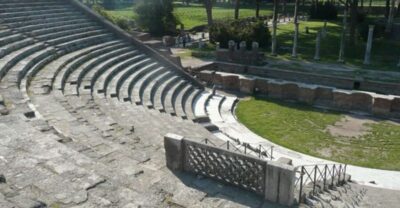

Ostia Antica Archaeological Park Ticket & Audio App
Read our review →
Browse the lists this tour appears in