
Reviewed · GELATO & TIRAMISU CLASSES
Pasta and Tiramisu Making Class with Fine Italian Wine in Rome
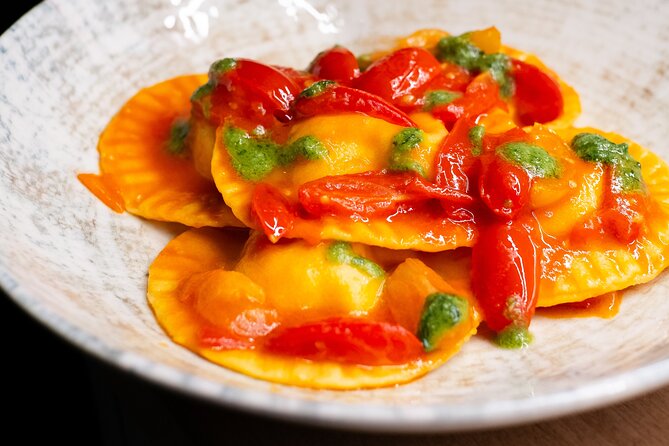
The best part of this Rome cooking class is that you do not simply watch a chef prepare dinner. You work the dough, shape ravioli, build tiramisu, then sit down to eat what you made with Italian wine. It turns a meal into a useful souvenir.
I like the small maximum of 10 people, which gives the class a social feel without turning the kitchen into a crowd. I also like the recipes, since you can repeat the pasta and tiramisu at home instead of leaving with only a full stomach. The main drawback is that the class is not recommended for people with celiac disease, and the price of $119.47 is a serious part of a Rome food budget.
In This Review
- Key points at a glance
- What the three-hour Rome cooking class is really like
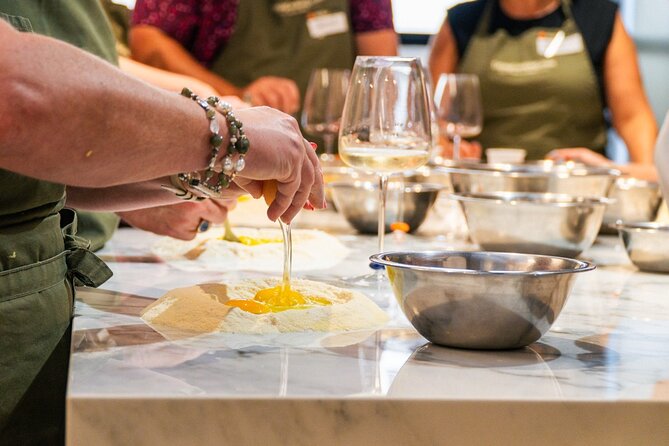
- Starting with homemade pasta dough
- Shaping ravioli with a local chef
- Building tiramisu one layer at a time
- Italian wine and the final tasting
- Is $119.47 a fair price?
- Location, timing, and the Colosseum connection
- Dietary needs and practical limits
- Who will enjoy this experience most
- What to know before you book
- Should you book the pasta and tiramisu class?
- FAQ
- How long does the pasta and tiramisu class last?
- Where does the class meet?
- What will I make during the class?
- Is wine included?
- Is the class offered in English?
- How many people can join the class?
- Can I cancel for a full refund?
Key points at a glance
- Two fresh pastas from scratch: Learn the dough, rolling, filling, shaping, and folding involved in handmade pasta and ravioli.
- Tiramisu made layer by layer: You prepare the creamy dessert yourself, with recipes to take home.
- Italian wine with the meal: The wine is selected to complement the food rather than added as an afterthought.
- A group capped at 10: You get a more personal lesson and an easier chance to ask the chef questions.
- A central meeting point: The class begins and ends at Piazza Mattei, 5, near the Colosseum area.
- Three hours well spent: This is long enough for instruction, hands-on work, and a proper tasting without taking an entire day.
What the three-hour Rome cooking class is really like
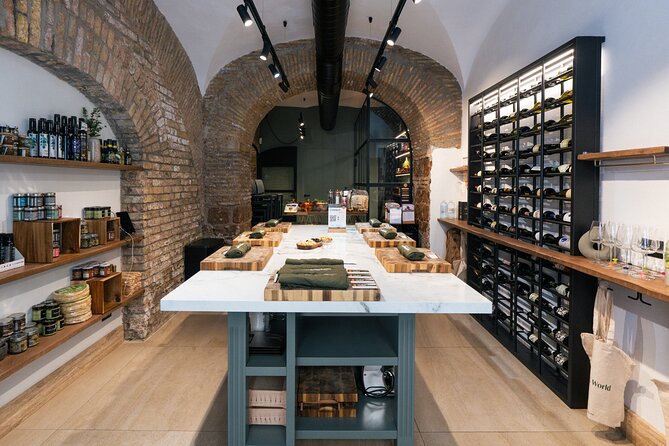
This is a practical food experience built around a simple sequence: pasta first, ravioli next, tiramisu after that, and a shared tasting at the end. You meet the local chef at Piazza Mattei, 5, 00186 Roma RM, then remain at the same location for the class.
The advertised language is English. That matters in a cooking lesson, since small details make a difference. You need to understand how the dough should feel, how thin to roll it, and how much filling to place in each ravioli. The class is not just a demonstration from across the room.
The session is capped at 10 people. That is a useful number for this sort of activity. A class of 20 can become a parade of elbows around one table, while a group of 10 still gives you the easy social energy that makes cooking more fun. The exact personalities in the room will vary, but the format suits couples, families, and solo visitors who enjoy meeting people over food.
Hosts associated with this experience include Alessandro, Marco, and Max. Alessandro has been singled out for his clear instructions, charisma, and strong interest in Italian cooking. Marco and Max are also associated with especially lively sessions. Since staff can vary, the safest expectation is a warm local chef and a hands-on lesson rather than a particular personality.
More gelato and tiramisu classes:
- 3 in 1 Cooking Class near Navona: Fettuccine, Ravioli & Tiramisu
★ 5.0 · 7,376 reviews - Rome: Pasta & Tiramisu Class with Fine Wine by the Vatican
★ 4.9 · 4,852 reviews - Rome: 3-in-1 Fettuccine, Ravioli, and Tiramisu Cooking Class
★ 4.9 · 2,704 reviews
Starting with homemade pasta dough
The first important lesson is the dough. You see how homemade pasta begins, then follow the chef’s guidance as you prepare it yourself. This is valuable because pasta making is less about memorizing a recipe than learning the feel of the dough.
You will work through the main stages from dough to finished pasta. The chef demonstrates the technique, then helps you apply it. You learn rolling methods and how the dough changes as it becomes thinner and more workable.
The class covers two kinds of handmade pasta. One is ravioli, which adds another layer of work because the pasta must hold its filling without splitting. The other type is not specified in the tour details, so do not book this expecting a particular shape or sauce. The appeal is the process and the chance to practice more than one style.
I like this structure because you get more than a quick taste of pasta making. One dough lesson could feel too brief, but two pasta preparations give you time to notice how shaping and filling affect the result. You also receive the recipes, so you can try again when the Roman holiday is over.
The class may be messy in the normal, pleasant way that flour-based cooking tends to be. If you prefer a polished food demonstration with no work at your station, this is not the right choice. If you like learning by doing, the dough section is likely to be the heart of the experience.
Shaping ravioli with a local chef
Ravioli is where the class becomes more exact. You are guided through filling, shaping, and folding the pasta. These steps look simple until you try to seal each piece neatly while avoiding too much filling.
The chef’s guidance is useful here. You learn how to form the ravioli and how to close it properly. The point is not to produce factory-perfect pasta. It is to understand the method well enough to repeat it at home.
This part also gives you a direct connection to Italian home cooking. Ravioli takes time and care, which is why making it from scratch feels different from ordering a plate in a restaurant. You see the work behind the dish, then get to eat the result.
The experience description does not provide the exact ravioli filling or sauce. That is worth noting for anyone with strong food preferences. You can expect two fresh pastas and ravioli instruction, but you should not assume a specific recipe beyond what the chef teaches on the day.
Building tiramisu one layer at a time
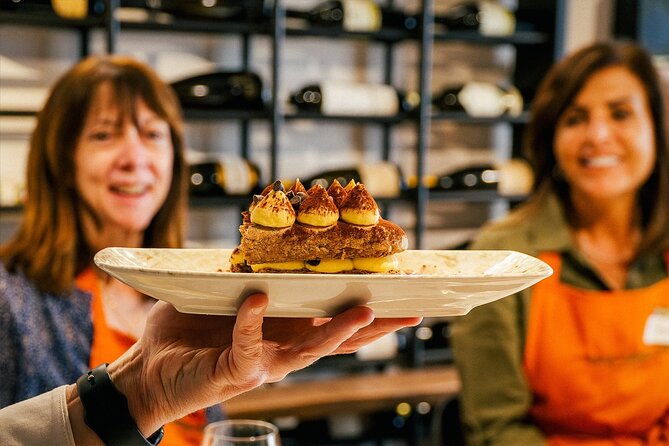
The dessert lesson focuses on classic tiramisu. You create the creamy layers from scratch and learn how to arrange them correctly. The chef’s emphasis is on the order and proportion of the layers, which are central to getting the dessert right.
Tiramisu is a smart choice for a class because it is familiar, distinctly Italian, and practical to recreate. Unlike a difficult pastry project, it gives you a useful home recipe without requiring special equipment. The class also supplies the recipe, so you do not need to rely on memory after a long day of sightseeing.
The dessert section adds a welcome change of pace after the pasta work. You move from dough and shaping to a colder, creamier preparation. By the time you sit down to taste everything, you have made both the main course and dessert.
The information provided does not specify the ingredients or any alcohol content in the tiramisu. If that matters to you, ask before booking or contact the provider with your dietary question. Do not assume the recipe will suit every restriction.
More Rome wine tastings worth an afternoon:
- Rome: Tuscany & Montepulciano Day Trip with Lunch & Wine Tasting
★ 4.5 · 5,232 reviews - Rome Food Tour: Unlimited Tastings with Fine Wine & Barolo
★ 5.0 · 3,365 reviews - Rome: Pasta Making Class with Wine, Limoncello, and Dessert
★ 4.9 · 3,177 reviews - Rome: Trastevere Food tour with Free-Flowing Fine Wine
★ 5.0 · 2,853 reviews
Italian wine and the final tasting
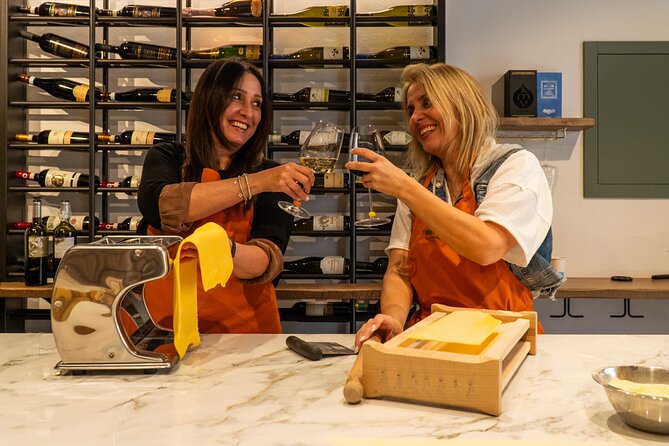
The class includes Italian wine chosen to complement the food. That detail makes the final meal feel planned rather than tacked on. You are not only eating pasta at the end, but pairing the dishes with a drink selected for the meal.
The tasting is the payoff for the hands-on work. You sit down and enjoy the ravioli, the second handmade pasta, and the tiramisu you helped create. Reports from the class describe the finished food as good enough to rank among the better meals of a Rome visit, which is a strong result for a cooking lesson.
Keep your expectations sensible. This is a class, not a long wine-tasting seminar or a restaurant meal with a large menu. The wine is there to accompany the dishes, while the main focus remains cooking.
You should also account for the social side. The experience works best if you are happy to share a table, compare cooking attempts, and enjoy a few hours with people you did not arrive with. The group limit of 10 keeps this from feeling impersonal, but it cannot guarantee a quiet or private meal.
Is $119.47 a fair price?
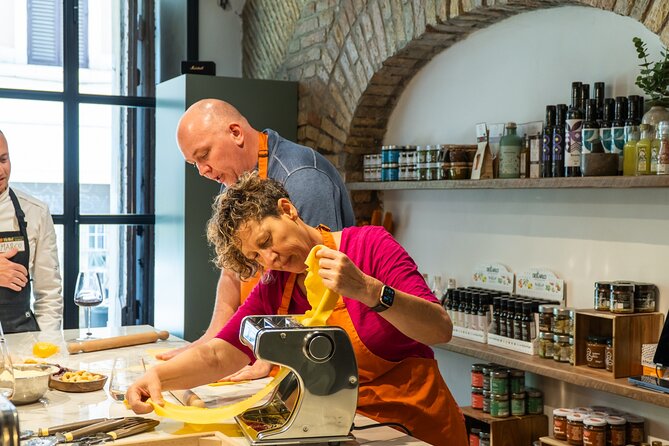
At $119.47 per person, this is not a bargain activity in the narrowest sense. Rome offers plenty of inexpensive meals. You can eat pasta for far less than the price of this class.
The better comparison is with what the fee includes: about three hours of instruction, two types of fresh pasta, ravioli practice, tiramisu preparation, Italian wine, the final meal, and recipes for home use. You are paying for food, but also for teaching, equipment, a central location, and a social evening.
I see the strongest value for people who would otherwise book both a special meal and a food-related activity. The class combines those two plans. It can also replace a standard dinner with something more memorable and active.
The value is weaker if you dislike cooking, do not drink wine, or mainly want the cheapest way to eat near the Colosseum. The fee also does not include gratuities, so allow for a tip if you feel the chef provided good service.
The class is often reserved about 35 days ahead. That suggests you should not leave it until the last night of your Rome stay, especially if you have only a few days in the city. Booking early also helps you place the three-hour session where it fits best in your sightseeing plan.
Location, timing, and the Colosseum connection
The meeting point is Piazza Mattei, 5, in Rome’s 00186 postal area. The class begins and ends there, so you do not need to manage a second meeting point after dinner or arrange a ride back to your hotel through the provider.
The experience is described as being near the Colosseum, making it easy to pair with a day of ancient Rome sightseeing. Still, do not assume the cooking venue is inside the Colosseum complex or directly at the monument. Plan your route to Piazza Mattei and check the meeting details carefully before setting out.
A three-hour class takes a real portion of your day. I would avoid placing it between two tightly timed attractions. Cooking has a natural rhythm, and you will get more from it if you are not watching the clock because of a museum reservation.
The end point is the same as the start. That is simple, but useful. You can arrange your evening from the known finishing location instead of guessing where the meal will leave you.
Dietary needs and practical limits
The class is not recommended for people with celiac disease. That is the clearest health limitation provided, and anyone with celiac disease should choose another activity rather than rely on a last-minute kitchen adjustment.
Other dietary restrictions may be accommodated if you contact the provider in advance. The provider specifically asks you to share those needs, so do this at booking rather than arriving with an unexpected request.
The wording is important: accommodation may be possible, but it is not guaranteed for every need. Ask for confirmation if your restriction is strict or medically important. The class centers on pasta and tiramisu, so gluten and dairy questions deserve particular attention even when they are not medical allergies.
The class is offered in English and uses a mobile ticket. Confirmation is provided when you book. Those details make the experience easy to add to a phone-based itinerary, though you still need to arrive at the correct piazza.
Who will enjoy this experience most
I would recommend this class to you if food is part of the reason you came to Rome, not simply something you need between monuments. It gives you a meal, a lesson, and a story to take home.
It is especially well suited to:
- Couples looking for a shared activity beyond a restaurant dinner
- Families with older children who can follow kitchen instructions
- Solo visitors who enjoy a friendly small-group setting
- Home cooks who want to learn fresh pasta and ravioli techniques
- First-time Rome visitors who want a break from sightseeing
- Repeat visitors who have already seen the major ancient sites
It may not suit you if you want a private class, a formal wine lesson, or a quiet dinner. The group is small, but it is still a group experience. You should also skip it if you have celiac disease or if your dietary needs have not been confirmed in advance.
What to know before you book
Reserve early if the class is central to your plans. It is commonly booked about 35 days ahead, and the small 10-person limit can make late availability less certain.
Wear something comfortable and suitable for hands-on cooking. No special clothing requirement is provided, but pasta making involves active work with dough, flour, filling, and shaping. Arrive ready to participate rather than simply observe.
Check the exact meeting instructions for Piazza Mattei, 5 before leaving. Since the class starts and finishes at the same point, a little route planning will prevent a rushed arrival.
Cancellation is flexible if you act in time. You can receive a full refund by canceling at least 24 hours before the local start time. Cancellations or changes inside that window are not accepted and are not refunded.
Should you book the pasta and tiramisu class?
Book it if you want an active Roman meal and like the idea of learning a skill you can repeat at home. The combination of two fresh pastas, ravioli, tiramisu, wine, recipes, and a 10-person limit gives the class a clear purpose and a pleasant pace.
I would hesitate only if $119.47 is beyond your food budget, you need a private setting, or you have celiac disease. For everyone else, this is a strong choice for a memorable evening near the Colosseum, especially when you would rather make dinner than merely order it.
FAQ
How long does the pasta and tiramisu class last?
The experience lasts approximately three hours, including the cooking instruction, hands-on preparation, and final tasting.
Where does the class meet?
The meeting point is Piazza Mattei, 5, 00186 Roma RM, Italy. The activity also ends back at this meeting point.
What will I make during the class?
You will make two types of fresh handmade pasta, including ravioli, and prepare tiramisu. The class covers pasta dough, rolling, filling, shaping, folding, and tiramisu layering.
Is wine included?
Yes. Italian wine selected to complement the food is included with the experience.
Is the class offered in English?
Yes. The experience is offered in English.
How many people can join the class?
The class has a maximum of 10 people.
Can I cancel for a full refund?
Yes, if you cancel at least 24 hours before the experience start time. Cancellations or changes made less than 24 hours before the start time are not refunded or accepted.
More Workshops in Rome
- Rome: Fettuccine and Tiramisu Cooking Class with Wine
★ 4.8 · 2,013 reviews - Pasta Cooking Class Near the Colosseum with 3 Spritz Cocktails
★ 5.0 · 1,686 reviews - Rome: Pasta & Tiramisu Cooking Class near the Spanish Steps
★ 4.8 · 1,395 reviews - Rome Tipsy Cooking Class: Make Pasta and Mix 3 Spritz Cocktails
★ 5.0 · 1,357 reviews
More Pasta in Rome
- Rome: Fettuccine Pasta Cooking Class in Rome’s City Center
★ 4.8 · 2,414 reviews - Rome: Traditional Pasta with Cocktails Cooking Class
★ 5.0 · 2,374 reviews - Learn to Make Pasta & Tiramisu with Wine and Limoncello Included
★ 5.0 · 2,345 reviews - Become a Masterchef in Rome: Pasta, Ravioli and Tiramisù Class
★ 5.0 · 2,156 reviews
Newest reviews from Rome
- ROME:Colosseum & Ancient Rome – private/small group TOUR★ 5.0 · 24 reviews
- Off the Beaten Track in Rome: Rione VI Parione Private Tour★ 5.0 · 24 reviews
- Cinematic Photoshoot in Rome★ 5.0 · 24 reviews
- Rome: Best of Colosseum and Roman Forum Small Group Guided Tour★ 4.5 · 24 reviews
- The Labyrinth of Rome between catacombs and ancient quarries★ 4.5 · 24 reviews
- Vatican and Trionfale Market Tour with Wine and Food Tasting★ 5.0 · 24 reviews
- private tour: Vatican Museums, Sistine Chapel, St. Peter’s Basilica★ 4.5 · 24 reviews
- Colosseum guided tour with Virtual Reality★ 5.0 · 24 reviews
Gelato & Tiramisu Classes, compared.
3 in 1 Cooking Class near Navona: Fettuccine, Ravioli & Tiramisu
Read our review →
Pasta & Tiramisu Class with Fine Wine by the Vatican
Read our review →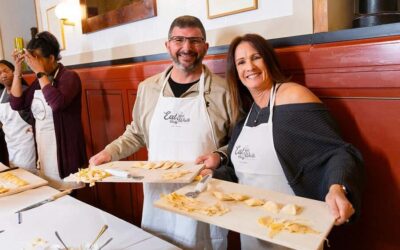
3-in-1 Fettuccine, Ravioli, and Tiramisu Cooking Class
Read our review →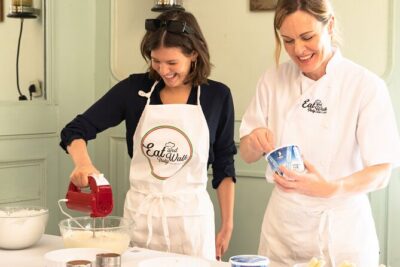
Learn to Make Pasta & Tiramisu with Wine and Limoncello Included
Read our review →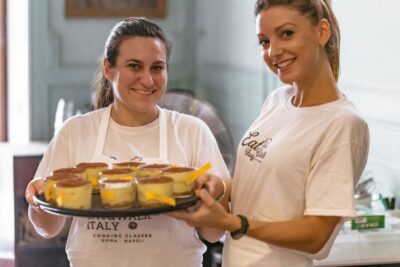
Fettuccine and Tiramisu Cooking Class with Wine
Read our review →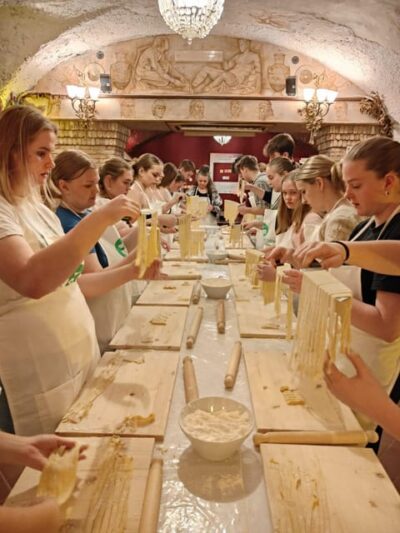
Pasta & Tiramisu Cooking Class near the Spanish Steps
Read our review →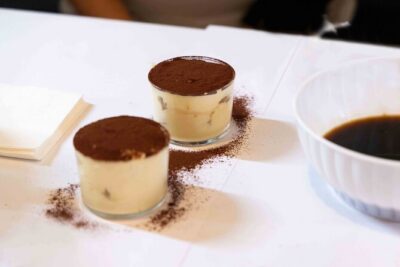
Cooking Class in the Heart of Rome: Pizza and Tiramisu Making
Read our review →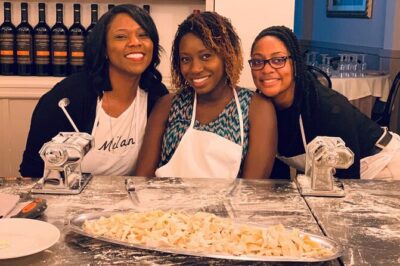
Rome Pasta and Tiramisu Class: Ravioli, Fettuccine & Fine Wine 5*
Read our review →Browse the lists this tour appears in