
Reviewed · OSTIA ANTICA TOURS
Private Tour – Ancient Ostia
Ancient Ostia gives you something central Rome often cannot: space to picture ordinary Roman life. In three hours, you walk through baths, shops, homes, religious buildings, a theater, and a museum at the old harbor city, far from the packed streets around the Colosseum.
I like the private format, since a guide can slow down for mosaics or speed up past ruins that matter less to you. I also like the focus on everyday details, from plumbing and apartment blocks to bakers, shopkeepers, bars, and traders. The main consideration is physical: the site is large, uneven, and not recommended for people with walking disabilities.
In This Review
- Key things to know before visiting Ancient Ostia
- Why Ancient Ostia is worth your afternoon
- Entering the old harbor city at 3:30 pm
- Thermal baths and the practical Roman city
- Shops, apartments, homes, and working life
- Theater and religious buildings
- Mosaics that reward a slower look
- The small museum at the end
- The café and the end of the visit
- Is $156.19 a fair price?
- Who will enjoy this tour most?
- Should you book Private Tour, Ancient Ostia?
- FAQ
- Where does the tour begin?
- What time does the tour start?
- How long does the tour last?
- Where does the tour end?
- Is the tour offered in English?
- Is this a private tour?
- Are admission tickets included?
- Is transportation included?
- Is there a café at the site?
- Can I cancel for a full refund?
Key things to know before visiting Ancient Ostia
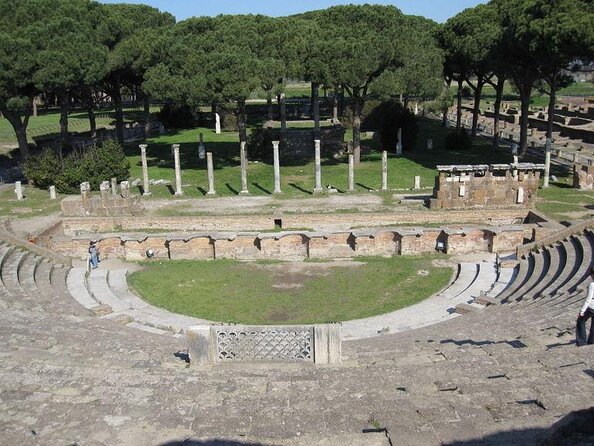
- The three-hour visit covers a full Roman city, not just one famous monument.
- Mosaics, plumbing, and multistory buildings help you picture how people lived and worked.
- Guides such as Vincenzo and Roberto are known for using stories and images to make the ruins easier to understand.
- The private tour adjusts to your interests and pace, with only your group taking part.
- The archaeological site includes a café, and the tour ends there after the museum.
- Tickets and a professional private guide are included, while transport to the site is not.
Why Ancient Ostia is worth your afternoon
Rome can fill every hour with famous sights. Ancient Ostia offers a useful change of rhythm. Instead of moving from one monumental building to another, you walk through the remains of a city that once handled trade and supported daily life.
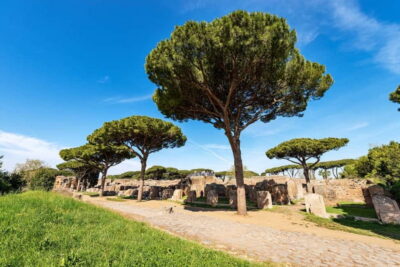
The old harbor city is especially good for seeing the Roman world from ground level. You can study the layout of streets, the remains of homes and villas, commercial spaces, bathhouses, religious sites, and public buildings. The details are often more revealing than the grand names. Plumbing tells you about urban planning. A mosaic can hint at a building’s purpose. A multistory structure helps you understand that Rome was not made only of villas and marble temples.
I love that this tour treats Ostia as a city rather than a pile of ruins. A private guide can connect the pieces for you, which matters here because many walls are incomplete and several buildings need explanation. Without context, a bath or shop can look like a low stone outline. With the right explanation, it becomes part of a working neighborhood.
The other strong point is the setting. You still get an important Roman archaeological site, but the experience takes you away from the densest part of Rome for a few hours. The tour lasts about three hours, so it works well as a focused half-day break rather than a full-day commitment.
The trade-off is that Ancient Ostia rewards walking. The information provided describes a moderate physical fitness requirement and says the tour is not recommended for people with walking disabilities. You should also plan your own way to the meeting point, since private transport, pickup, and drop-off are not included.
More Ostia Antica visits:
- Ancient Ostia Antica Semi-Private Day Trip from Rome by Train with Guide
★ 4.5 · 579 reviews - From Rome: Ostia Antica Guided Half-Day Trip by Train
★ 4.8 · 486 reviews - Horse Sanctuary & Trail Ride in Ostia Antica
★ 4.5 · 276 reviews
Entering the old harbor city at 3:30 pm
The tour starts at 3:30 pm at Parco Archeologico di Ostia Antica, Viale dei Romagnoli 717. That afternoon start gives you a clear plan for the day, though you should allow enough time to reach the site independently.
Your guide meets you at the archaeological park and leads your private group inside. Admission tickets are included, so you are not left to sort out the entrance on your own. The experience is offered in English, and only your group participates.
The private setup is useful from the first minutes. You can ask what a building was used for, stop to examine a floor mosaic, or tell the guide that you are more interested in Roman commerce than religious buildings. Guides named Vincenzo and Roberto have led this experience, with Vincenzo praised for helping people picture the ancient city and Roberto noted for bringing its shops, restaurants, soldiers, and traders into view. Guide assignment can vary, so you should not assume one specific person will lead your date.
Thermal baths and the practical Roman city
The thermal baths are one of the most useful early stops because they show how Roman cities served social needs as well as basic ones. A bath complex was not simply a place to wash. It was part of urban public life, and the remains help you see how much planning went into heating, water, and shared facilities.
The same practical side appears in the city’s plumbing. This is one of the features I would ask the guide to explain carefully. Plumbing is easy to skip when you are looking for statues, but it tells you how the settlement functioned day after day. It also helps correct the usual picture of ancient cities as a collection of isolated temples and grand houses.
The private format is valuable here because you can spend a little longer on the parts that interest you. If you like engineering, ask about water systems. If you prefer social history, ask how the baths fit into ordinary routines. The tour is designed to adjust to your pace, though the total visit remains about three hours.
Shops, apartments, homes, and working life
Ancient Ostia is particularly strong when you want to understand people below the level of emperors and generals. The remains include houses, villas, shops, and multistory buildings. Together, they suggest a city with different kinds of residents and different standards of living.
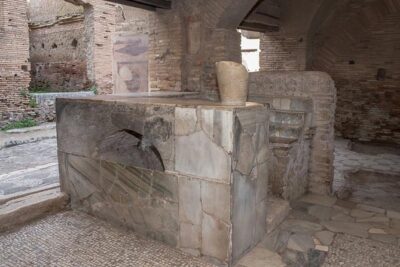
You might find it easier to imagine the city here than at a single monumental ruin. A shopfront points toward trade. A bakery or food business suggests the daily work needed to feed a settlement. A bar or restaurant area gives the streets a human scale. The guide’s job is to connect these remains with the people who used them: traders, bakers, soldiers, shopkeepers, and restaurant workers.
The city plan is another strong feature. You can look at streets and building placement not just as ancient stonework, but as evidence of how the Romans organized movement, commerce, housing, and public life. One detailed explanation can turn several scattered foundations into a neighborhood with a purpose.
This is also where a private tour earns its price. A larger group often has to keep moving because everyone wants a different thing. Here, you can ask for more explanation of the commercial areas or shift attention toward domestic spaces. That flexibility is hard to measure, but it can make the difference between seeing ruins and understanding a city.
More Rome tours worth comparing
- Rome by Golf Cart Private Tour: Beyond the Landmarks
★ 5.0 · 4,361 reviews - Early Morning Vatican, Sistine, St. Peter’s Semi or Private Tour
★ 5.0 · 3,779 reviews - Rome on a Golf Cart Semi-Private Tour Max 6 with Private Option
★ 5.0 · 2,502 reviews - Rome Private Arrival Transfer: Fiumicino Airport to Hotel in Rome
★ 4.5 · 2,492 reviews
Theater and religious buildings
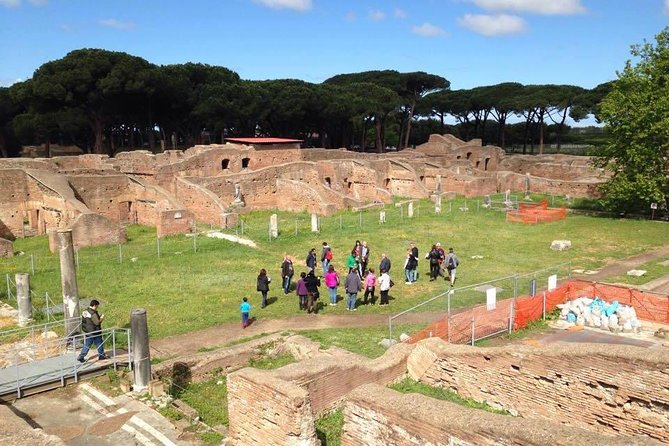
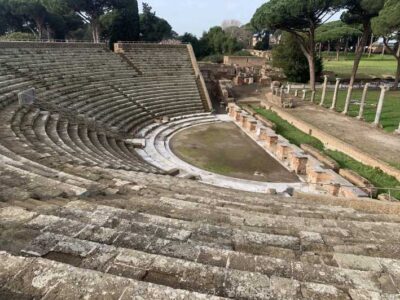
The theater adds a public face to the visit. After seeing homes and shops, you reach a place built for larger gatherings and shared entertainment. The remains give you another way to think about the city, not only as a port and work center but also as a community with public events.
Religious places are included as well. These buildings help show the range of beliefs and rituals that formed part of Roman life. Do not expect the guide simply to point out a temple and move on. Ask how the religious spaces fit among homes, shops, baths, and civic buildings. Their location within the city can be as interesting as their surviving walls.
The theater and religious areas also offer a useful balance to the tour. Ancient Ostia is not only about commerce and plumbing, even though those practical details are some of its most memorable. Public buildings give the city a civic dimension and help you see how private, commercial, political, and religious life overlapped.
Mosaics that reward a slower look
The mosaics are among the site’s strongest visual details. Some are described as large and well preserved, and they help identify the character of different buildings. Their patterns and subjects are more than decoration. They can offer clues about the people who commissioned them, the purpose of a space, and the image a business or household wanted to present.
I would not rush across a mosaic just to reach the next famous ruin. Ask your guide to explain what you are looking at and why it matters. A guide who uses stories and pictures can help you imagine the setting as it once functioned, rather than leaving you with a disconnected pattern underfoot.
The private format suits this kind of stop. If you are drawn to ancient art, you can linger. If you have already seen many Roman mosaics, you can keep the pace brisk and spend more time in the museum or commercial sections. The point is not to follow a fixed crowd schedule.
The small museum at the end
The visit includes the museum, which holds a small but important collection of ancient sculptures and sarcophagi. After walking through the open archaeological site, the museum gives you a more concentrated look at objects removed from their original settings.
The collection is described as little, so do not book this expecting a huge indoor museum. Its value comes from focus. Sculptures and sarcophagi can add faces, bodies, and personal meaning to the buildings you have just seen. They also provide a quieter final chapter after the broad street plan and large ruins outside.
Ending at the museum makes sense. You first see how the city worked, then look at selected objects that help fill in the human side. The guide can explain why particular pieces matter, and your group can decide how much time to give the collection.
The café and the end of the visit
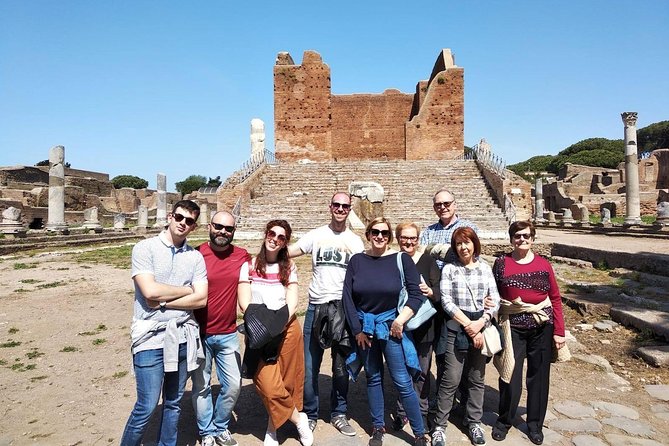
The tour ends inside the archaeological site, in front of Café degli Scavi. This is practical because you do not need to hurry out immediately after the last explanation. Coffee or tea is not included, but you can buy refreshments at the café at the end of the tour.
There is no hotel pickup or drop-off. The meeting and ending point are both at the archaeological park, so you should arrange your own transport and confirm the route before setting out. The site is near public transportation, but the tour price does not cover getting there.
The 3:30 pm start and café ending create an easy structure, but you should still pay attention to the local operating schedule on your date. The supplied details confirm the tour time, duration, and meeting point, but they do not specify the exact return journey to central Rome.
Is $156.19 a fair price?
At $156.19 per person, this is not a budget walk. The value depends on how much you want from Ancient Ostia and how many people are in your private group. Tickets are included, as are professional, local, and private guide services, so you are paying for access plus interpretation rather than admission alone.
For one person or a couple, the cost may feel high compared with entering the park independently. You would need to be comfortable reading the ruins on your own or using a separate guidebook. For a family or small group, the private format becomes easier to justify because the cost is attached to the group experience, and group discounts are available.
The key value is not simply speed. Three hours is long enough to cover major parts of the city without turning the visit into an exhausting full-day outing. A good guide can save you from wandering past important buildings without knowing what you are seeing. You also get the chance to shape the visit around mosaics, baths, commerce, domestic life, or the museum.
I would book it if you want Ancient Ostia to make sense, not merely to check it off. I would skip the private tour if your main goal is the lowest possible cost and you are happy exploring alone.
Who will enjoy this tour most?
This experience suits you if you have already seen some of Rome’s headline sights and want a different view of Roman life. It is also a good choice if you enjoy archaeology but prefer a manageable three-hour visit to a full day at a large site.
Families and private groups may appreciate the adjustable pace. You can ask the guide to explain basic points clearly, or focus on more detailed questions if your group already knows Roman history. People who enjoy mosaics, city planning, engineering, architecture, and daily life should find plenty to hold their attention.
You should think twice if walking on an extensive archaeological site is difficult for you. The tour requires moderate physical fitness and is not recommended for people with walking disabilities. Since transport is not included, it also suits people who are comfortable making their own way to Ostia Antica.
Should you book Private Tour, Ancient Ostia?
Book this tour if you want to see a less crowded side of Roman history and prefer a guide who can turn walls, streets, mosaics, and plumbing into a readable story. The best reasons to choose it are the private pace, the broad look at city life, and the chance to focus on details that interest your group.
The decision is less convincing if you want a cheap entrance ticket or dislike walking. For everyone else, three focused hours at Ancient Ostia offer a strong contrast to central Rome, with enough structure to make the old harbor city understandable without taking over your whole day.
FAQ
Where does the tour begin?
It begins at Parco Archeologico di Ostia Antica, Viale dei Romagnoli 717, 00119 Rome, Italy.
What time does the tour start?
The tour starts at 3:30 pm.
How long does the tour last?
The visit lasts approximately three hours.
Where does the tour end?
It ends inside the archaeological site, in front of Café degli Scavi.
Is the tour offered in English?
Yes. The experience is offered in English.
Is this a private tour?
Yes. Only your group participates in the activity.
Are admission tickets included?
Yes. Admission tickets are included in the tour price.
Is transportation included?
No. Private transportation, pickup, and drop-off are not included.
Is there a café at the site?
Yes. The archaeological site has a café where you can go at the end of the tour. Coffee and tea are not included.
Can I cancel for a full refund?
Yes. You can cancel at least 24 hours before the local start time for a full refund. Cancellations or changes made less than 24 hours before the start time are not accepted for a refund.
Newest reviews from Rome
- ROME:Colosseum & Ancient Rome – private/small group TOUR★ 5.0 · 24 reviews
- Off the Beaten Track in Rome: Rione VI Parione Private Tour★ 5.0 · 24 reviews
- Cinematic Photoshoot in Rome★ 5.0 · 24 reviews
- Rome: Best of Colosseum and Roman Forum Small Group Guided Tour★ 4.5 · 24 reviews
- The Labyrinth of Rome between catacombs and ancient quarries★ 4.5 · 24 reviews
- Vatican and Trionfale Market Tour with Wine and Food Tasting★ 5.0 · 24 reviews
- private tour: Vatican Museums, Sistine Chapel, St. Peter’s Basilica★ 4.5 · 24 reviews
- Colosseum guided tour with Virtual Reality★ 5.0 · 24 reviews
Ostia Antica Tours, compared.
Ancient Ostia Antica Semi-Private Day Trip from Rome by Train with Guide
Read our review →

Ostia Antica Archaeological Park Ticket & Audio App
Read our review →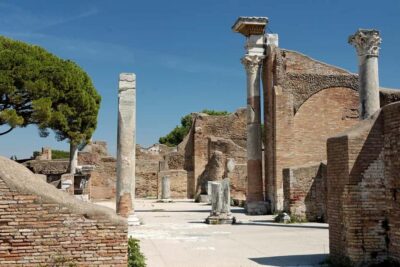
Browse the lists this tour appears in