
Reviewed · COLOSSEUM TOURS
Rome: Pasta, Ravioli & Tiramisu Cooking Class by Colosseum
The best part of this Rome experience is that you do not just watch a chef twirl pasta. You make two kinds of handmade pasta, shape ravioli, prepare sauces, and build tiramisu from scratch. The class finishes with a shared meal and free-flowing Italian wine.
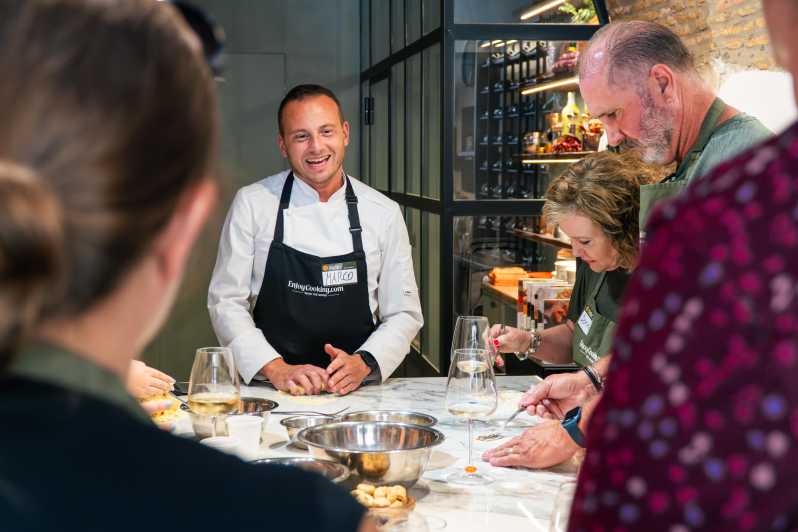
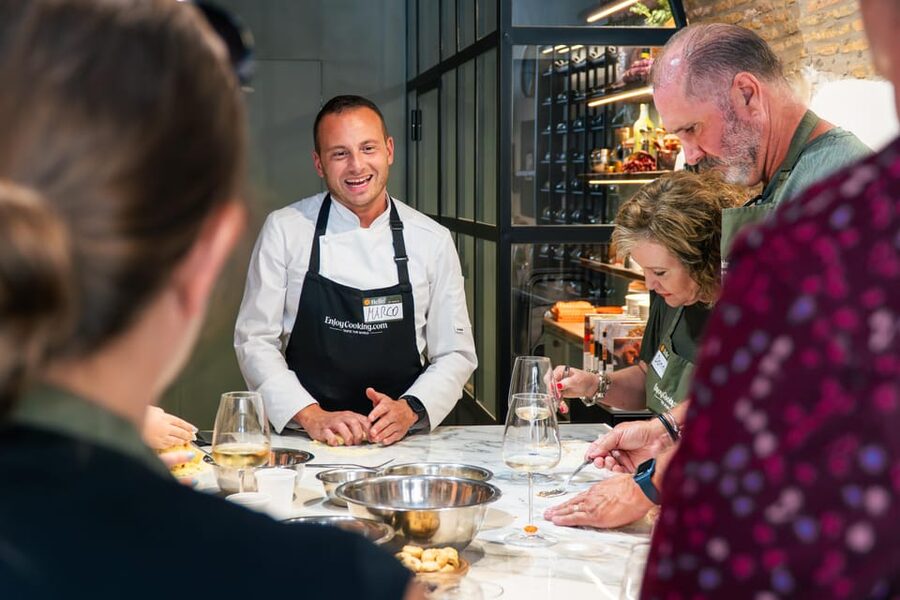
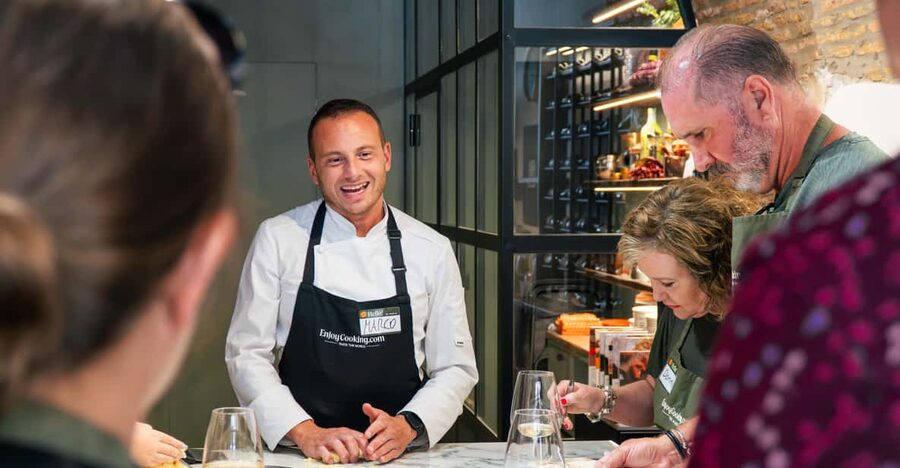
I like the small maximum of 10 people, which gives the chef time to help at your station. I also like the practical recipe book, since the real test comes later in your own kitchen. Chef Marco gets special praise for putting people at ease, while Max and Alex are also described as fun and engaging instructors.
The main drawback is dietary flexibility. Severe nut allergies and gluten-free diets may not be safely accommodated, and trace amounts may be present. You should also arrive on time, since late arrival does not guarantee participation.
In This Review
- Key points to know before booking
- What this three-hour Rome cooking class is really like
- Starting with pasta dough from scratch
- Making ravioli and sauces with help from the chef
- Building tiramisu layer by layer
- The teaching style: Marco, Max, and Alex
- Wine, conversation, and the final meal
- Pairing the class with the Colosseum
- Who will enjoy this class most
- Allergies, clothing, and other practical concerns
- Is $112.15 a fair price?
- Should you book this Rome pasta class?
- FAQ
- How long does the cooking class last?
- Where does the activity start?
- Does the activity end at the same place?
- Is transportation included?
- What food will I make?
- Is wine included?
- What language is the class taught in?
- How many people can join the class?
- Can people with allergies or dietary restrictions join?
Key points to know before booking
- Three dishes, not just one: You make two pasta preparations, including filled ravioli, plus tiramisu.
- Small class size: The group is limited to 10 participants, allowing more help than a large demonstration class.
- Chefs with personality: Marco, Max, and Alex are named instructors associated with warm, lively teaching.
- Wine is part of the experience: Italian wine flows freely during the class, with soft drinks also available according to the experience details.
- A meal at the end: You sit down and eat the pasta and tiramisu you prepared instead of leaving with a small sample.
- Near the Colosseum: The class is a handy food activity to pair with a Colosseum visit, though the exact meeting point depends on the option you book.
What this three-hour Rome cooking class is really like
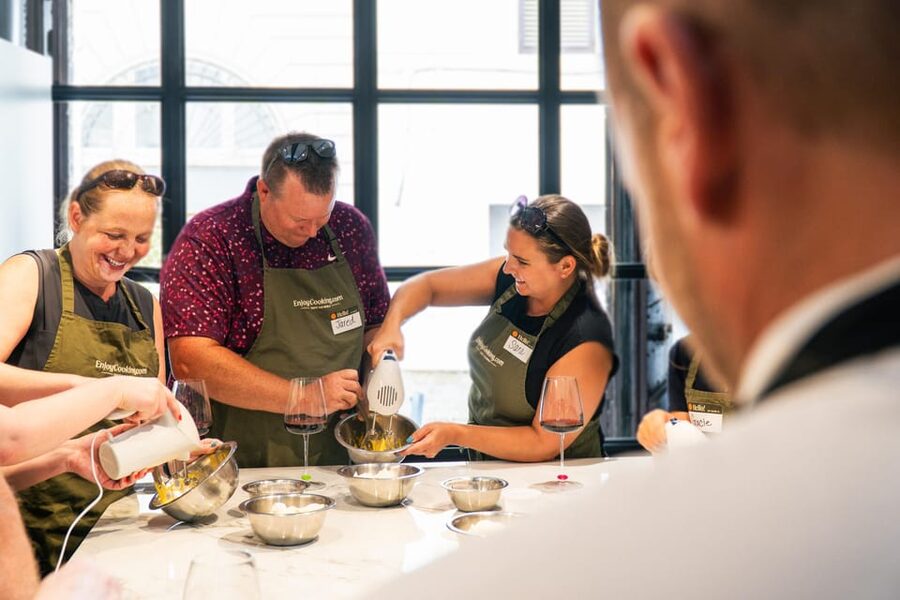
This is a social cooking lesson built around the food most people hope to eat in Italy: fresh pasta, ravioli, and tiramisu. You work with a local English-speaking chef, follow the process step by step, and then eat the results together.
The three-hour format gives the class enough room to feel hands-on rather than rushed. You are not simply shown a finished plate. You combine ingredients for pasta dough, work it into shape, prepare fillings and sauces, and assemble dessert.
The setting is described as intimate, with no more than 10 people. That matters. Pasta dough can be stubborn, ravioli edges can split, and tiramisu layers can get messy if nobody is watching. A small group gives the instructor a better chance to correct a technique before it becomes a kitchen disaster.
The mood is relaxed and social. Wine is available throughout the class, and snacks or soft drinks may also be part of the table setup. If you are traveling alone, this can be an easy way to meet people without the awkwardness of a formal group tour. If you are traveling with family, the activity gives everyone a job.
More ways to see the Colosseum:
- Rome: Colosseum, Palatine Hill and Roman Forum Guided Tour
★ 4.8 · 32,814 reviews - Rome: Guided Tour of Colosseum, Roman Forum & Palatine Hill
★ 4.7 · 27,897 reviews - Rome: Colosseum & Forum with Audio Guide App -Optional Arena
★ 4.2 · 24,770 reviews
Starting with pasta dough from scratch
The first major task is handmade pasta. You learn how to combine the ingredients, work the dough, and prepare it for rolling and cutting. The value here is practical: fresh pasta looks simple, but the texture depends on small choices in mixing and handling.
The chef guides you through each stage rather than expecting you to know the basics. That makes the class suitable for beginners, while experienced home cooks can still pick up useful details about fillings and sauces.
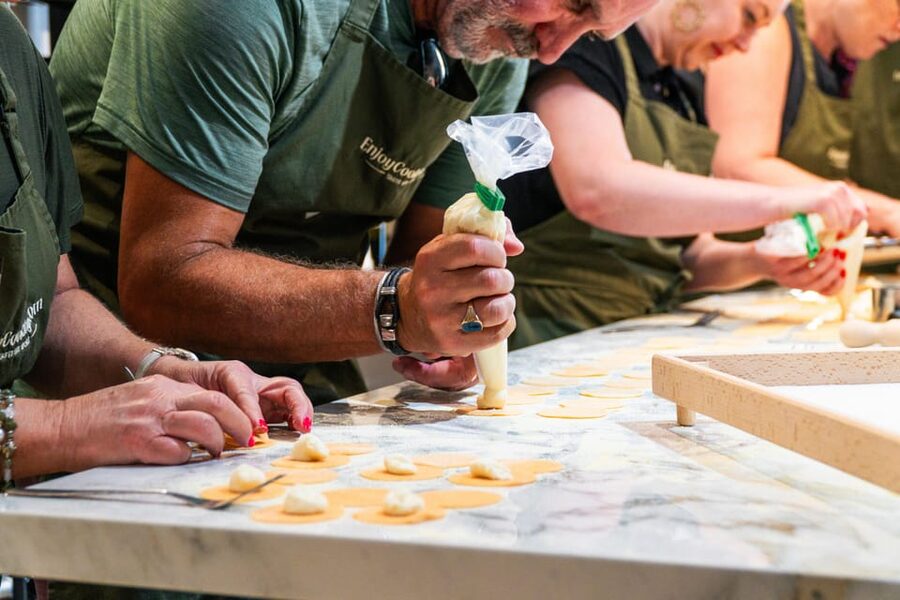
You then move from plain dough to two pasta dishes. The experience specifically includes filled ravioli, so you learn more than the mechanics of cutting noodles. You prepare a filling, place it carefully, seal the pasta, and finish it with sauce.
That filling and sauce work is one of the strongest parts of the class. The lesson is not limited to making pasta shapes. You also learn how the filling works with the sauce, which is the difference between a plate that looks attractive and one that tastes balanced.
Expect some hands-on work with rolling, cutting, and filling. If you have never made ravioli, your first pieces may not look like the ones in a Roman restaurant. That is part of the fun, and the chef is there to show you how to improve the shape and seal.
One practical note: some people mention needing a pasta machine at home to repeat the results. The class teaches the method, but your home equipment may affect how easy it is to reproduce the pasta later.
Making ravioli and sauces with help from the chef
Ravioli is the point where this class becomes more than a standard pasta demonstration. You are handling delicate dough and deciding how much filling to use. Too little gives you a disappointing bite, while too much makes sealing difficult.
The chef explains the process as you work. You should expect guidance on the filling, the sauce, and the final assembly, not only on the dough itself. That makes the lesson useful for anyone hoping to cook the meal again after returning home.
The class includes recipes for the two pasta preparations. Keep them safe in your luggage, especially if you enjoy cooking. A recipe book is a small inclusion, but it adds value to an activity that would otherwise end when dinner is over.
The finished pasta becomes your meal. You do not cook for practice and then watch someone else serve the real food. After the work is done, the group sits down together and eats what it prepared.
That shared meal also gives the class a natural rhythm. You begin with instruction, move into teamwork, and finish with a proper pause at the table. The wine helps keep the atmosphere informal, though you can choose soft drinks instead.
Building tiramisu layer by layer
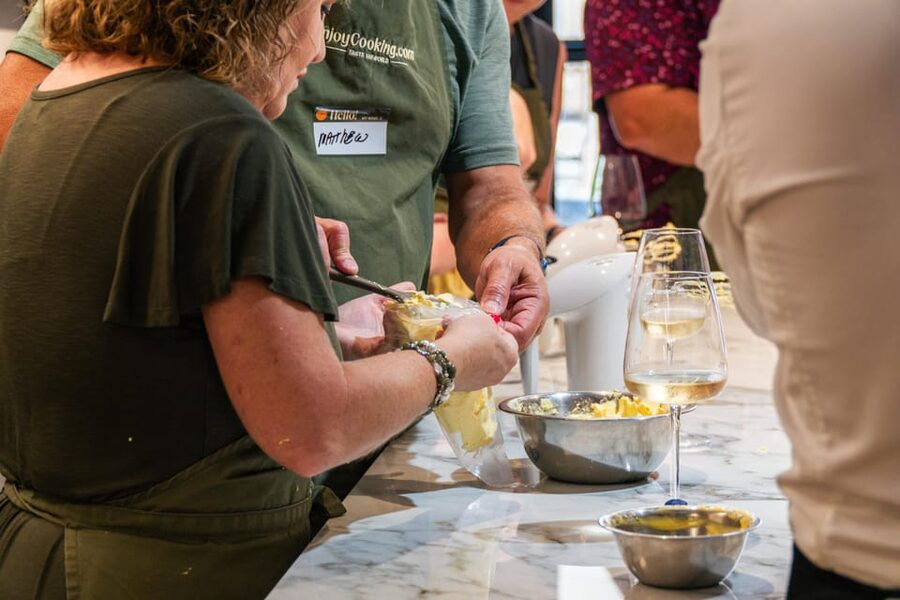
The dessert portion focuses on tiramisu, one of Italy’s most familiar sweets. You prepare the creamy layers from scratch and learn how the components fit together.
This is a good choice for a cooking class because tiramisu is approachable but still rewards care. The dessert depends on balance, texture, and layering. The chef takes you through the process so you can understand what you are doing instead of merely spooning a premade mixture into a dish.
The tiramisu is served as part of the final meal, and it is included with its own recipe. That gives you two useful take-home lessons: a fresh pasta meal for the main course and a familiar Italian dessert for later.
Families and mixed-skill groups should find this section manageable. The pasta work may require more coordination, while tiramisu offers another task for people who prefer slower, precise preparation.
More gelato and tiramisu classes:
- 3 in 1 Cooking Class near Navona: Fettuccine, Ravioli & Tiramisu
★ 5.0 · 7,376 reviews - Rome: Pasta & Tiramisu Class with Fine Wine by the Vatican
★ 4.9 · 4,852 reviews - Rome: 3-in-1 Fettuccine, Ravioli, and Tiramisu Cooking Class
★ 4.9 · 2,704 reviews - Learn to Make Pasta & Tiramisu with Wine and Limoncello Included
★ 5.0 · 2,345 reviews
The teaching style: Marco, Max, and Alex
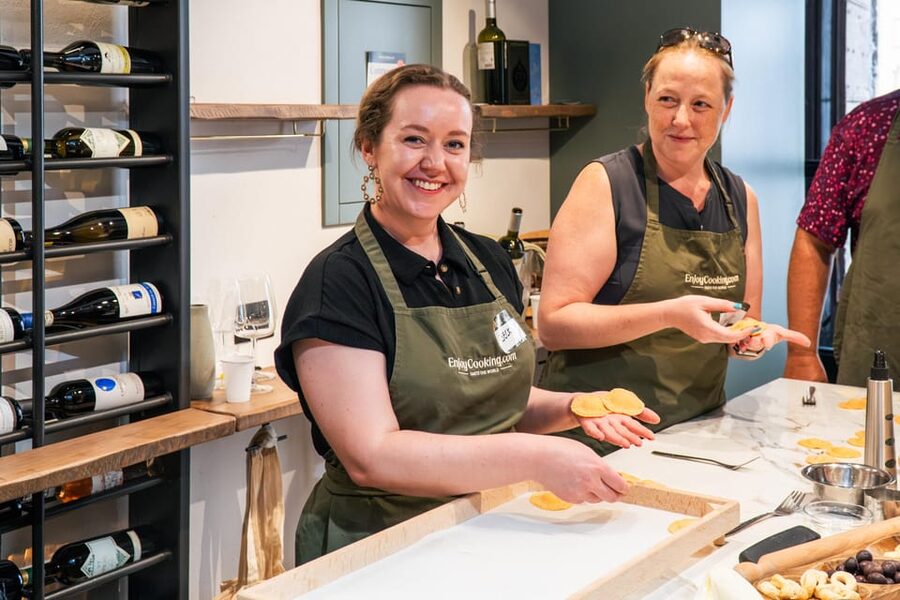
The experience is led in English by local chefs. Marco is the instructor most often singled out in the supplied feedback, with repeated praise for his humor, friendliness, ingredient knowledge, and ability to put people at ease.
That last point matters more than it may sound. A cooking class can become uncomfortable if the chef moves too fast or makes beginners feel clumsy. Marco is described as keeping people laughing, including teenagers, while still explaining traditional methods and the origins of ingredients.
Max is also associated with a lively, informative class. His teaching is described as both educational and fun, with clear guidance that made the cooking feel easier than expected. Alex is praised for being fun to work with and for explaining the food well.
The instructor can vary, so you should not book on the assumption that one specific chef is guaranteed unless your selected option says so. Still, the repeated pattern is clear: this is designed as a warm, participatory class rather than a stern technical lesson.
Wine, conversation, and the final meal
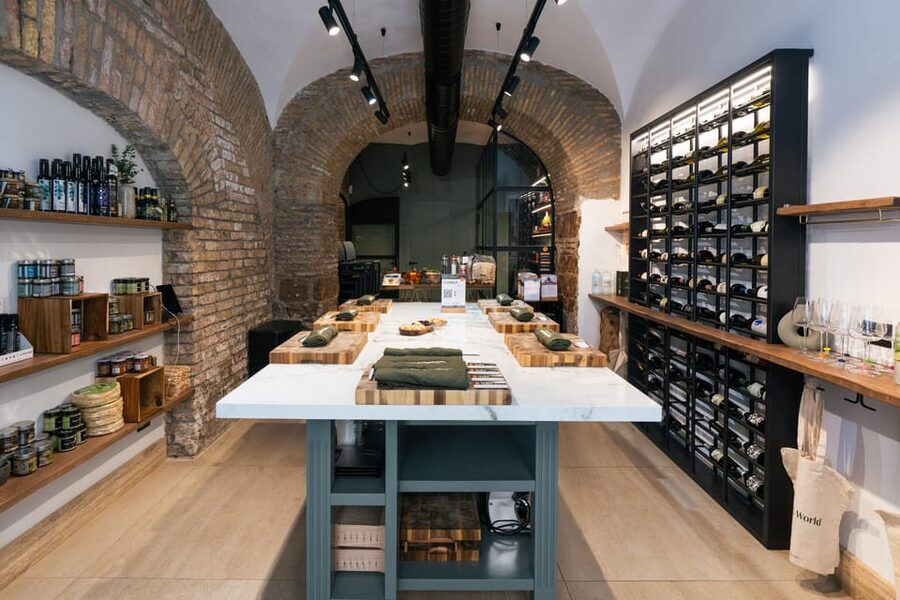
Free-flowing Italian wine is included, which affects the value of the class. Wine is not just an optional purchase added to your bill. It is part of the three-hour social format, served while you cook and eat.
That can make the evening feel generous for the price, especially in Rome, where a sit-down meal and drinks can quickly become expensive. At $112.15 per person, this is not a budget meal, but you are paying for instruction, ingredients, a full meal, wine, and a small group.
You should be honest with yourself about how much you value the cooking lesson. If you only want dinner near the Colosseum, cheaper choices are easy to find. If you want an activity that teaches you something and includes dinner and wine, the price is more defensible.
The class has also been described as suitable for solo participants. You will have a built-in table of people and a shared project, which is often easier than joining a sightseeing group where everyone disappears after the guide’s final stop.
The wine does mean you should plan the rest of your evening sensibly. The activity ends back at the meeting point, and transportation is not included. Since the meeting point can vary by booking option, check the exact address and starting time before setting your plans.
Pairing the class with the Colosseum
The activity is marketed by the Colosseum, making it easy to connect with a major Rome sightseeing day. One useful plan is to visit the ancient monument earlier, rest or eat lightly, then attend the cooking class later.
The exact schedule depends on the available start time. Do not assume the class begins at a fixed hour, and do not rely on a tight connection from another ticketed attraction. Check availability before booking, then allow extra time to reach the meeting point.
Some people choose to look at the Colosseum at night after class. That can be a pleasant way to end the evening, but it is not part of the cooking activity itself. The class returns you to its meeting point, not to a separate sightseeing stop.
Because transportation is not included, you are responsible for getting there and getting back. The meeting point may vary depending on the option you select, so save the booking details and avoid turning up at the wrong kitchen.
Who will enjoy this class most
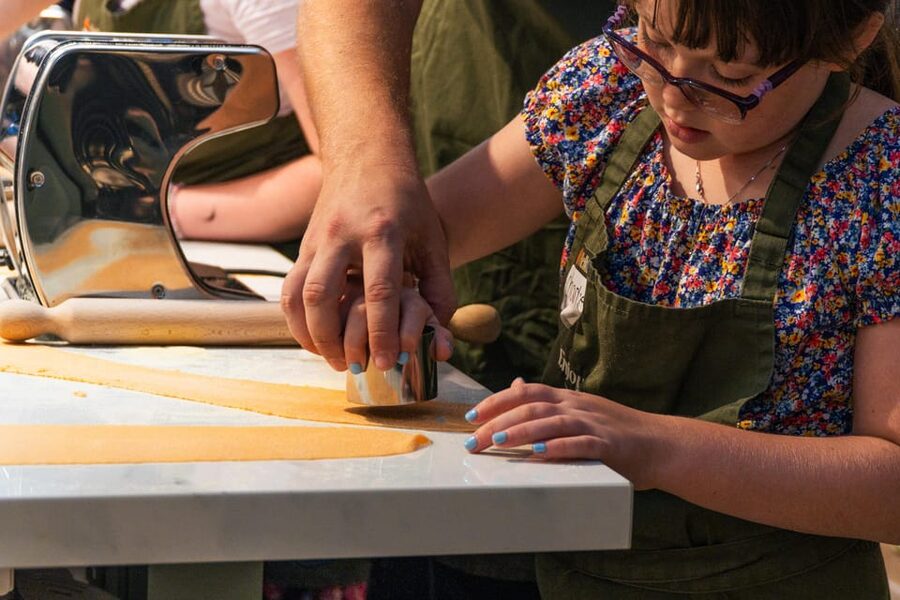
I would recommend this experience to you if you want an activity with a clear result. You leave having learned techniques, eaten a meal, and received recipes to use at home.
It is a particularly good fit for:
- Couples looking for a relaxed evening activity
- Solo visitors who want an easy social setting
- Families with teenagers who enjoy practical activities
- Beginner cooks who want patient instruction
- Home cooks interested in fresh pasta and ravioli
- Anyone who values wine and dinner as part of the class
The class also works for mixed groups. One person can be more interested in dessert, another in pasta dough, and another in sauces. Since the group is small, the chef can give personal attention without turning the session into a private lesson.
You may want to skip it if you dislike group activities, do not drink wine, or want a highly technical professional cooking course. The tone is friendly and fun, not a formal culinary-school workshop.
Allergies, clothing, and other practical concerns
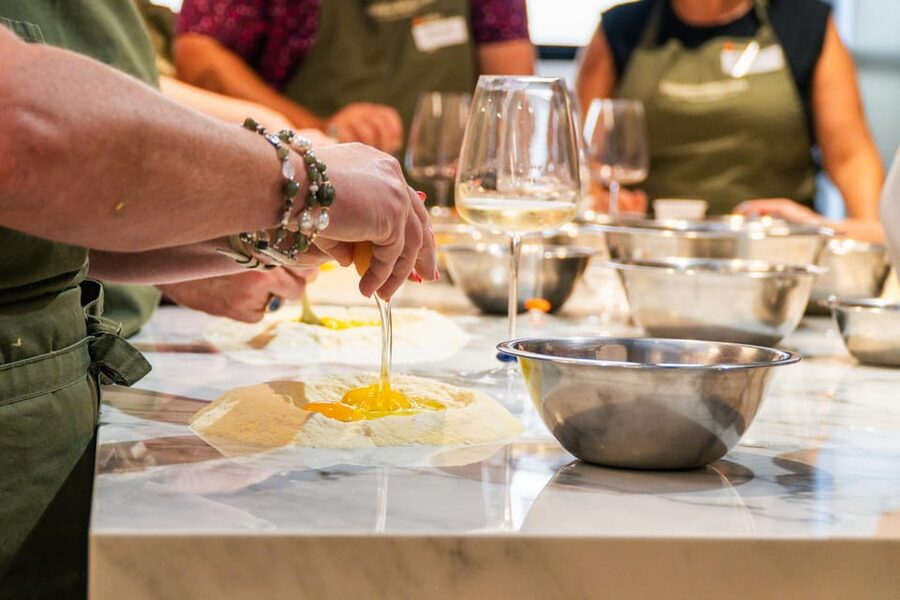
Wear clothing that is suitable for cooking. Flour, sauces, and dessert ingredients have a way of finding sleeves and waistbands, especially when you are learning to roll and fill pasta.
Tell the provider about allergies or dietary restrictions immediately after booking. Severe nut allergies and gluten-free diets may not be possible to accommodate because trace amounts can be present in the ingredients.
The activity is not suitable for people with nut allergies according to the provided information. Do not wait until you arrive to raise the issue, since the kitchen may not be able to change the recipes safely.
The class runs in all weather, so rain will not normally cancel the cooking session. Late arrivals are a more serious concern: participation is not guaranteed if you miss the start.
Cancellation is flexible if your plans change. You can cancel more than 24 hours before the activity for a full refund, and the reserve-now, pay-later option lets you hold a place without paying immediately.
Is $112.15 a fair price?
At $112.15 per person, this sits in the paid-experience category rather than the casual meal category. The value comes from the combination of a three-hour lesson, two pasta dishes, tiramisu, ingredients, an English-speaking chef, wine, and recipes.
The maximum group size of 10 strengthens the offer. A large class can leave you watching from the back, but this format is built around personal attention at the work table.
I would not choose it simply because it is near the Colosseum. Choose it because you want to spend part of your Rome trip cooking. The location is useful, but the kitchen experience is the reason to pay.
The final meal also matters. You are not buying a short tasting or a single demonstration. You prepare enough food to make the ending feel like dinner, with tiramisu to complete it.
Should you book this Rome pasta class?
Yes, if you want a social, hands-on evening and have no serious dietary restrictions. The combination of pasta, ravioli, tiramisu, wine, and a small group gives you a fuller experience than a basic pasta lesson.
I especially like this for first-time pasta makers, solo visitors, and families with older children or teenagers. The recipes mean the class has value after Rome, while the shared meal and lively chefs make it more than a cooking worksheet.
Book carefully if your schedule is tight. Confirm the meeting point, check the starting time, and arrive early. If you want a quiet technical course or need strict gluten-free or nut-free preparation, this is not the right choice. For everyone else, it is a tasty way to spend three hours near one of Rome’s biggest sights.
FAQ
How long does the cooking class last?
The class lasts three hours. Starting times vary, so check availability for the date you want.
Where does the activity start?
The meeting point may vary depending on the option you book. Check your booking details for the exact starting location.
Does the activity end at the same place?
Yes. The activity ends back at the meeting point.
Is transportation included?
No. Transportation to and from the cooking class is not included.
What food will I make?
You will make two types of handmade pasta from scratch, including ravioli with filling and sauce, as well as tiramisu.
Is wine included?
Yes. Free-flowing Italian wine is included. The experience information also mentions unlimited soft drinks as an alternative.
What language is the class taught in?
The instructor teaches in English.
How many people can join the class?
The class is limited to a maximum of 10 participants.
Can people with allergies or dietary restrictions join?
You should report allergies or dietary restrictions immediately after booking. Severe nut allergies and gluten-free diets may not be possible to accommodate because trace amounts may be present.
More Pasta in Rome
- Become a Masterchef in Rome: Pasta, Ravioli and Tiramisù Class
★ 5.0 · 2,156 reviews - Pasta Cooking Class Near the Colosseum with 3 Spritz Cocktails
★ 5.0 · 1,686 reviews - Enjoy Spritz and Pasta Making in Piazza Navona
★ 5.0 · 1,681 reviews - Rome: Pasta & Tiramisu Cooking Class near the Spanish Steps
★ 4.8 · 1,395 reviews
More Cooking Classes in Rome
- Rome: Pasta Making Class with Wine, Limoncello, and Dessert
★ 4.9 · 3,177 reviews - Rome: Fettuccine Pasta Cooking Class in Rome’s City Center
★ 4.8 · 2,414 reviews - Rome: Traditional Pasta with Cocktails Cooking Class
★ 5.0 · 2,374 reviews - Rome: Fettuccine and Tiramisu Cooking Class with Wine
★ 4.8 · 2,013 reviews
Newest reviews from Rome
- ROME:Colosseum & Ancient Rome – private/small group TOUR★ 5.0 · 24 reviews
- Off the Beaten Track in Rome: Rione VI Parione Private Tour★ 5.0 · 24 reviews
- Cinematic Photoshoot in Rome★ 5.0 · 24 reviews
- Rome: Best of Colosseum and Roman Forum Small Group Guided Tour★ 4.5 · 24 reviews
- The Labyrinth of Rome between catacombs and ancient quarries★ 4.5 · 24 reviews
- Vatican and Trionfale Market Tour with Wine and Food Tasting★ 5.0 · 24 reviews
- private tour: Vatican Museums, Sistine Chapel, St. Peter’s Basilica★ 4.5 · 24 reviews
- Skip the Line: Vatican Wheelchair Accessible Private Tour★ 5.0 · 24 reviews
Colosseum Tours, compared.
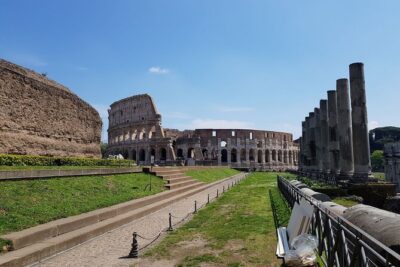
Colosseum, Palatine Hill and Roman Forum Guided Tour
Read our review →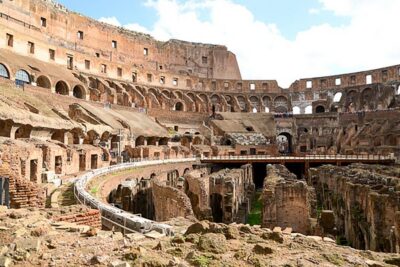
Guided Tour of Colosseum, Roman Forum & Palatine Hill
Read our review →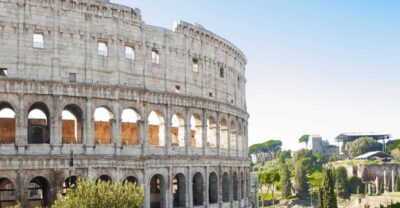
Colosseum & Forum with Audio Guide App -Optional Arena
Read our review →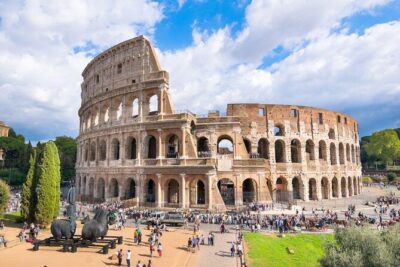
Colosseum, Roman Forum and Palatine Hill Guided Tour
Read our review →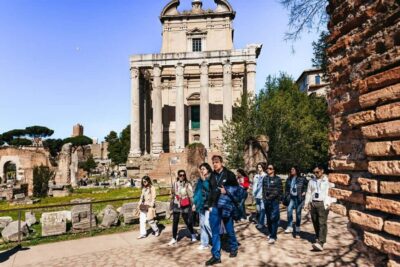
Colosseum, Forum & Palatine Hill Tour & Optional Arena
Read our review →
Colosseum, Palatine Hill & Roman Forum Guided Tour
Read our review →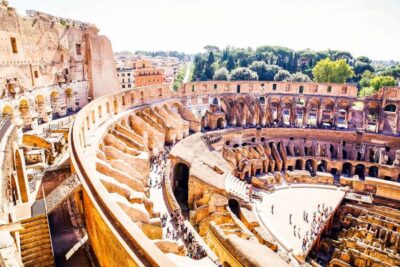
Colosseum: Underground and Ancient Rome Tour
Read our review →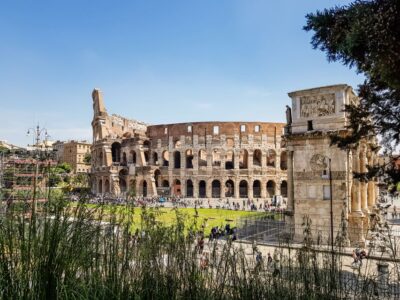
Colosseum Arena, Palatine Hill & Forum Guided Tour
Read our review →Browse the lists this tour appears in