
Reviewed · DOMUS AUREA TOURS
Domus Aurea Guided Tour: The Golden House of Nero
The most surprising thing about the Domus Aurea is its scale. Nero’s Golden House is now an underground archaeological site, but the surviving rooms, painted decoration, and huge spaces hint at a palace built for spectacle rather than ordinary living. I love that you can walk through an active excavation, then use virtual reality to picture what has vanished.
I also like the two-hour length. It gives you a serious look at one of Rome’s strangest ancient sites without swallowing your whole day, and the archaeologist-led commentary adds much more than a quick photo stop. The main caution is that the quality of the spoken English and the organization can vary, and the site’s meeting instructions deserve careful attention.
In This Review
- Key things to know before entering Nero’s palace
- Why the Golden House feels so different from other Roman ruins
- The two-hour route from Oppio Caffè to the excavated rooms
- What the archaeologist guide adds
- Painted rooms, enormous spaces, and the problem of missing context
- Why the virtual reality presentation is worth your attention
- Price, timing, and the value of a limited-access site
- Practical comfort notes for the underground site
- Who will get the most from this visit
- Should you book the Domus Aurea tour?
- FAQ
- How long does the Domus Aurea guided tour last?
- What is included in the price?
- Where does the tour begin?
- Where does the tour end?
- Do I need to bring identification?
- Is the site suitable for people with mobility concerns?
- Can I cancel for a refund?
Key things to know before entering Nero’s palace
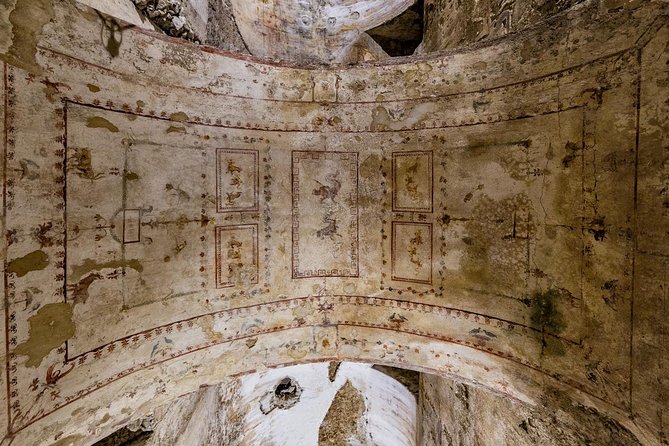
- The palace is underground: Even in Rome’s summer heat, the interior can feel cold, so bring a light jacket or sweater.
- The virtual reality segment matters: The reconstruction helps you understand the original size and decoration far better than the bare ruins do.
- You may meet two guides: A tour-company representative may check you in and lead you to the entrance, while a Domus Aurea staff guide conducts the main visit.
- The site is still being excavated: You see a place under study and restoration, not a finished museum.
- Bring the correct identification: Every participant’s full name must match the name on a government-issued photo ID.
- Allow for a little uncertainty: Start times have occasionally changed, and some visitors have had trouble finding the representative at the meeting point.
Why the Golden House feels so different from other Roman ruins
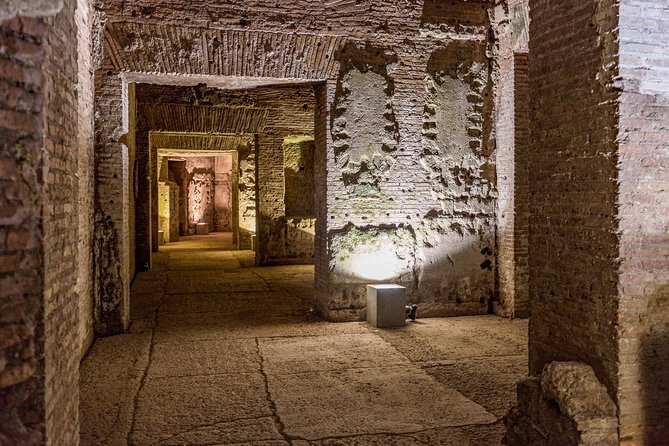
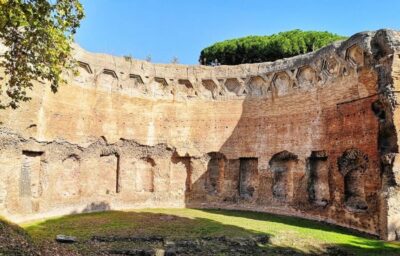
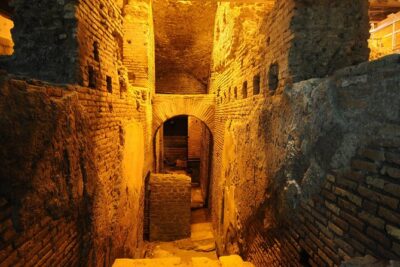
The Domus Aurea does not greet you with a complete facade, a grand staircase, or a tidy row of columns. You enter near Oppio Caffè and make your way into a dark, cool archaeological site where much of Nero’s palace lies below the modern ground level.
That hidden quality changes the visit. You are not simply looking at a monument that survived in plain sight. You are seeing rooms that were buried, altered, and slowly brought back into public view. Restoration work is ongoing, so parts of the site can feel raw and unfinished. That is not a flaw in the setting. It is part of what makes the visit unusual.
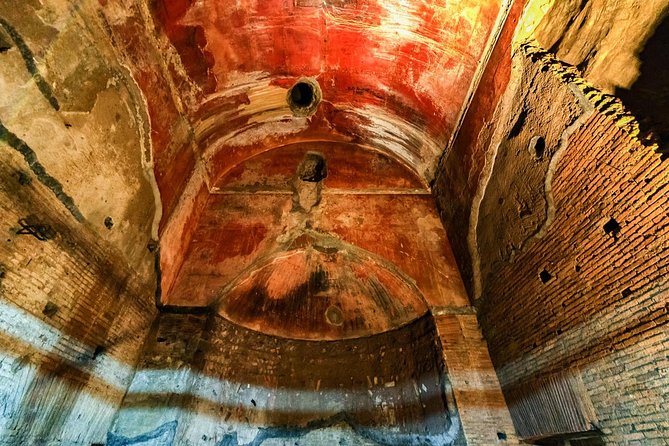
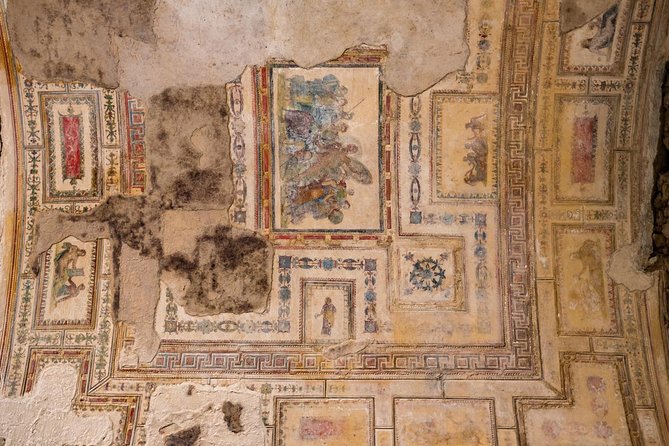
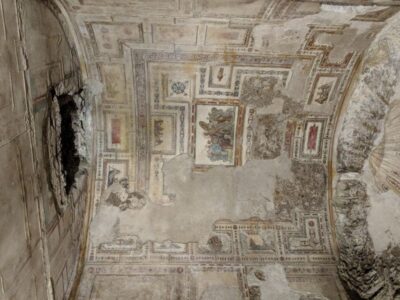
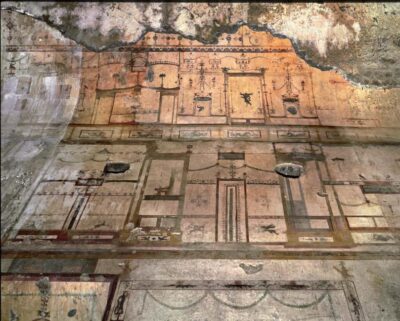
The name Domus Aurea means Golden House, and the palace was designed to project wealth and power. The site’s present condition makes that extravagance hard to picture on its own. You see fragments of painted walls, ceilings, and floors, but not the full glittering residence Nero once controlled.
This is where the guide and the visual material earn their place. The best explanations connect the surviving pieces to Nero’s public image, his rule, and the way later Romans treated the palace. You also get context about the relationship between Rome and Egypt, an emphasis that several guides have used to explain the palace’s imagery and grand ambitions.
More Domus Aurea entries:
- Rome: Domus Aurea Guided Group Tour
★ 4.6 · 697 reviews - Rome: Domus Aurea, Nero’s Golden House guide tour
★ 4.6 · 449 reviews - Rome: Trevi Fountain District and Underground Domus Guided Tour
★ 4.5 · 298 reviews
The two-hour route from Oppio Caffè to the excavated rooms
The meeting point is listed as Oppio Caffè, Via delle Terme di Tito 72, near the entrance to the park. Pay attention here. The representative may actually be across from the café, by the garden or park entrance, rather than directly inside the café.
Arrive early, but do not assume the guide will be obvious. One useful practical detail is that the representative may hold only a small paper sign, and the company logo may not be easy to spot. If you cannot find anyone about ten minutes before the scheduled start, use the phone number in your booking information.
Once the group is assembled, the representative handles check-in and leads you to the Domus Aurea entrance. The representative may give a short introduction before the site’s own guide takes over. At the end, the representative may meet the group again and provide a brief wrap-up or guide you away from the site.
The group limit is 22 people. That is not a private tour, but it is small enough for a guide to keep the group together in narrow rooms and to manage questions. The main portion is on foot, with steps, staircases, and uneven surfaces. Comfortable shoes are essential, and a bottle of water is a sensible addition.
The site is near public transportation, but transportation to and from the meeting and ending points is not included. The tour ends on Viale della Domus Aurea, not necessarily at the starting café, so plan your next stop from there.
What the archaeologist guide adds
The central visit is conducted by a guide employed by the archaeological site. That distinction matters. The tour-company representative may be helpful with tickets and group movement, but the strongest explanations come from the person leading you through the actual rooms.
Guide assignments vary. Names associated with particularly well-received visits include Sara, Valentina, and Stu, while Zenda has been described as a friendly and passionate representative who stayed with the group before and after the interior visit. You should not book expecting a particular person, but it is useful to know that you may have a company escort and a separate site guide.
The best guide will help you read what remains. A broken wall is not just a broken wall when you understand where the decoration once continued, how the room fit into the palace, and why the site was later covered. Good explanations also help separate popular stories about Nero from what can actually be supported by the archaeological evidence.
That said, spoken English has not been consistent for every departure. Some visitors have found an accent difficult to follow, while others describe clear, warm, and witty English. One person reported that the tour lacked a clear narrative and left several points vague. I would treat the guide as a major part of the value, but also recognize that this is a variable you cannot fully control.
Painted rooms, enormous spaces, and the problem of missing context
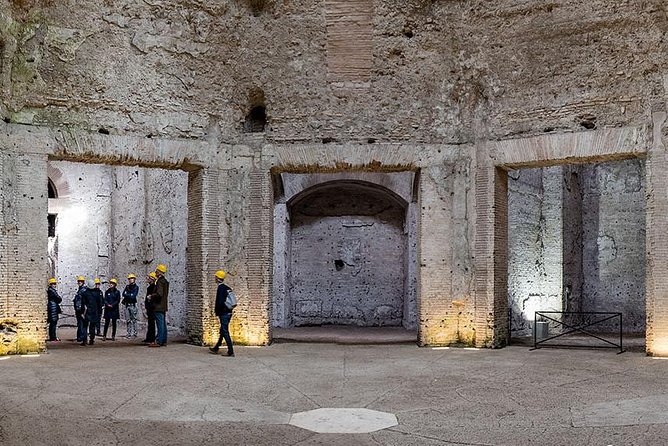
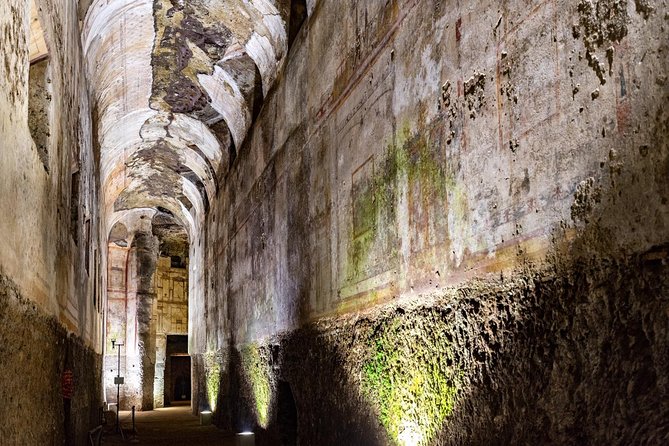
The Domus Aurea can frustrate you if you expect a complete palace. Many surfaces are damaged or incomplete, and the underground setting can make the original arrangement difficult to grasp. You may find yourself looking at a surviving patch of decoration and trying to understand how it once fitted into a much larger design.
The reward comes when the guide links those fragments together. Preserved decoration on walls, ceilings, and floors gives you a direct connection to the palace’s artistic program. Even in partial form, the work shows the level of detail and expense Nero demanded.
The palace was not simply a private home in the modern sense. The tour presents it as a vast daytime entertainment complex, a place built for display and ceremony. That explanation gives the ruins more meaning. Instead of imagining Nero sitting in a single lavish room, you begin to see the Domus Aurea as a statement about imperial authority and excess.
Its later burial helped protect some of the decoration, although it also hid the building from view. The result is an archaeological site that feels more like a work in progress than a finished attraction. If you enjoy seeing how evidence is uncovered and interpreted, that unfinished quality will add interest. If you prefer polished galleries and clearly marked routes, it may feel less satisfying.
More Rome tours worth comparing
- Vatican Museums, Sistine Chapel & St Peter’s Basilica Guided Tour
★ 4.5 · 39,149 reviews - Rome: Colosseum, Palatine Hill and Roman Forum Guided Tour
★ 4.8 · 32,814 reviews - Rome: Guided Tour of Colosseum, Roman Forum & Palatine Hill
★ 4.7 · 27,897 reviews - Rome: Colosseum & Forum with Audio Guide App -Optional Arena
★ 4.2 · 24,770 reviews
Why the virtual reality presentation is worth your attention
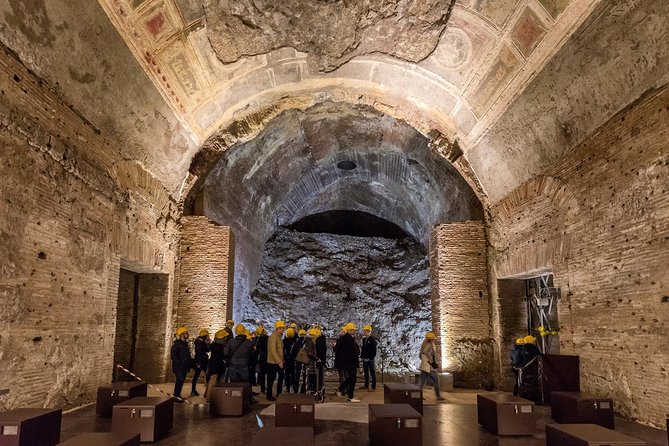
For many people, the virtual reality section is the high point of the visit. The palace is now underground, and much of what once made it dazzling has disappeared. A screen-based reconstruction and a headset presentation show the rooms and surrounding setting as they may have appeared in Nero’s time.
The technology is not just a novelty. It solves the site’s main problem: the ruins alone cannot show the full size, color, height, or opulence of the original palace. The virtual reconstruction gives you a sense of proportion, while visual panels along the route help fill in the missing decoration.
You may use the VR equipment near the end of the visit. Several departures have included a strong 3D presentation, and families have found that children can enjoy this part even when the archaeological explanations are harder to follow. One reported visit included an eight-year-old who especially liked the virtual reality, along with a one-year-old and a stroller.
The VR segment also makes the tour useful as an introduction to Rome. If you visit the Domus Aurea early in your holiday, the discussion of Nero, imperial power, Rome, and Egypt can give you useful context for other ancient monuments. It helps you understand why Nero’s name appears so often in Roman history.
There is one important caveat: the virtual reality experience is included in the advertised package, but one booking reported that it was not provided. That appears to be an exception rather than the normal arrangement, but you should confirm any change with the operator if this feature is central to your decision.
Price, timing, and the value of a limited-access site
The listed price is $56.72 per person for about two hours. That is not a cheap admission ticket, especially because transportation and gratuities are separate. The value depends on what you want from the visit.
If you only want to enter the site and look around, the price may feel high. The extra cost covers reservations, an English-speaking archaeologist guide, fees, and the virtual reality presentation. You are paying for access to a limited archaeological visit and for help making sense of a place that is difficult to read without interpretation.
The tour is also efficient. Two hours leaves room for the Colosseum, the Roman Forum, the Palatine area, or another part of Rome later in the day. I would not schedule it as a rushed gap between two fixed appointments, though. Start times have been changed for some bookings, with examples of departures moving from 9:45 to 9:30 or from morning to afternoon.
The site is often booked well ahead, with an average booking lead time of about 62 days. Entrance is limited, so early planning makes sense, especially if you need a particular day. Check your confirmation and any later messages rather than relying only on the original time shown during booking.
The free cancellation rule is useful. You can cancel for a full refund up to 24 hours before the local start time. Changes made inside that 24-hour window are not accepted, and a cancellation caused by the minimum number of participants not being reached should result in another option or a full refund.
Practical comfort notes for the underground site
Wear shoes that handle steps and uneven flooring. You do not need to treat this like a mountain hike, but thin sandals or stiff city shoes could make the walking less pleasant.
Bring a light jacket, even in July or August. The site is indoors and underground, and the cool air can be a welcome break from Rome’s heat until you realize you have dressed for summer only.
A bottle of water is recommended. Mobility concerns should be shared during booking so the operator can discuss the best way to accommodate you. The information describes the visit as suitable for most people, but it clearly includes staircases and uneven surfaces.
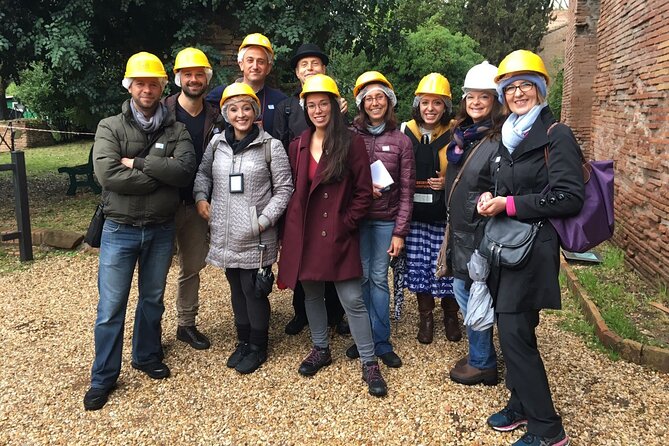
A stroller has been used successfully on at least one visit, but you should still mention mobility needs in advance rather than assuming every route will be easy. The site does not require hard hats according to one family’s experience, though this is an active archaeological area and conditions can change.
Bring a government-issued photo ID. The full names of everyone entering must be supplied for ticketing, and the names must match the IDs. A mismatch can prevent admission, which is a painful way to lose a prepaid Roman tour.
Rome’s Jubilee period can also bring restoration work or changes at monuments. Pay attention to messages from the operator about altered access or site conditions.
Who will get the most from this visit
I would choose this tour if you have already seen Rome’s famous headline sights and want something less familiar. It is especially suited to people who enjoy archaeology, ancient politics, Roman art, and the practical side of restoration.
It also works well for a first visit if you want historical background before seeing other imperial sites. The two-hour format is manageable, and the VR presentation gives you a clear visual starting point.
Families can enjoy it, particularly because the reconstruction adds movement and scale to a site that might otherwise seem like dark rooms and broken surfaces. Very young children may not follow the history, but the route has been manageable for at least one family with a stroller and a one-year-old.
I would hesitate to recommend it to someone who dislikes enclosed spaces, uneven ground, or tours that depend on a guide’s speaking style. You may also prefer an official site-only tour if you do not want to pay for a separate company representative whose role is mainly check-in and escorting.
Should you book the Domus Aurea tour?
Book it if you want to see a rare archaeological site that is still being excavated, and if the virtual reconstruction sounds useful rather than gimmicky. The surviving decoration is fascinating, but the VR presentation is what lets you grasp the palace’s original size and splendor.
I would book early, copy every participant’s name exactly as it appears on the government-issued ID, and confirm the meeting point and start time shortly before the visit. Bring a sweater, good shoes, and patience for a site that is still being restored.
The price is fair for guided access, site staff, reservation handling, and the visual reconstruction, but less compelling if you mainly want a quick look at ruins. For history fans and repeat visitors to Rome, the Domus Aurea offers a rare look at the city’s imperial past from below the modern streets.
FAQ
How long does the Domus Aurea guided tour last?
The visit lasts approximately two hours. That includes the guided visit inside the archaeological site and the virtual reality experience.
What is included in the price?
The price includes admission, reservation fees, all fees and taxes, an English-speaking archaeologist guide, exclusive access described for the tour, and the virtual reality experience. Transportation and optional gratuities are not included.
Where does the tour begin?
The listed starting point is Oppio Caffè at Via delle Terme di Tito 72, Rome. The guide may meet you across from the café at the garden or park entrance, so check the exact instructions before arrival.
Where does the tour end?
The listed ending point is Viale della Domus Aurea in Rome. Transportation away from the ending point is not included.
Do I need to bring identification?
Yes. Bring a government-issued photo ID. The full names supplied during booking must match the names shown on the IDs, or admission may be refused.
Is the site suitable for people with mobility concerns?
Most people can participate, but the tour includes walking, steps, staircases, and uneven surfaces. Tell the operator about mobility concerns during booking so possible accommodations can be discussed.
Can I cancel for a refund?
You can cancel up to 24 hours before the experience’s local start time for a full refund. Cancellations or changes made less than 24 hours before the start are not accepted for a refund.
Newest reviews from Rome
- Shared Shuttle Transfer from Rome to Civitavecchia Port★ 5.0 · 148 reviews
- Rome: Vatican Museums & Sistine Chapel Skip-the-Line Ticket★ 4.4 · 148 reviews
- Rome: Crypts & Catacombs After Hours Tour with Bone Chapel★ 4.6 · 149 reviews
- Ghosts Legends and Mysteries of Rome Walking Tour★ 5.0 · 149 reviews
- Skip the Line: Vatican and Sistine Chapel with Guided Tour★ 4.0 · 149 reviews
- Tivoli: Villa Gregoriana Entrance Ticket★ 4.7 · 150 reviews
- Pizza and Tiramisu Cooking Class in Rome, Piazza Navona★ 5.0 · 150 reviews
- Rome: Borghese Gallery Skip-the-Line Entry and Guided Tour★ 4.7 · 150 reviews
Domus Aurea Tours, compared.
Trevi Fountain District and Underground Domus Guided Tour
Read our review →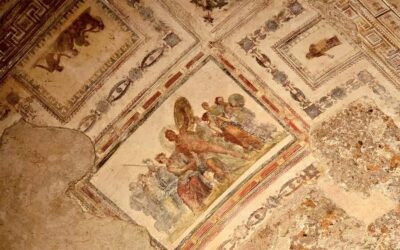
Domus Aurea Guided Tour and Virtual Reality Experience
Read our review →Browse the lists this tour appears in