
Reviewed · DOMUS AUREA TOURS
Rome: Domus Aurea Guided Tour and Virtual Reality Experience
The most striking part of this experience is the contrast between Nero’s vanished palace and the dark archaeological rooms that survive below Rome today. Oculus VR fills in the missing marble, color, gardens, and gold, while the guide explains what the ruins can still tell you.
I like two things especially: the short format gives you a focused look at a site many Rome itineraries skip, and the technology helps you picture a building that is otherwise difficult to read. The cool interior, around 10°C, is another practical detail to take seriously. Bring a jacket, and expect some echo in the rooms, which can make a guide hard to hear.
In This Review
- Key points at a glance
- Why Nero’s Golden House is worth your time
- Meeting near the Colosseo metro station
- Entering the cool, enclosed rooms
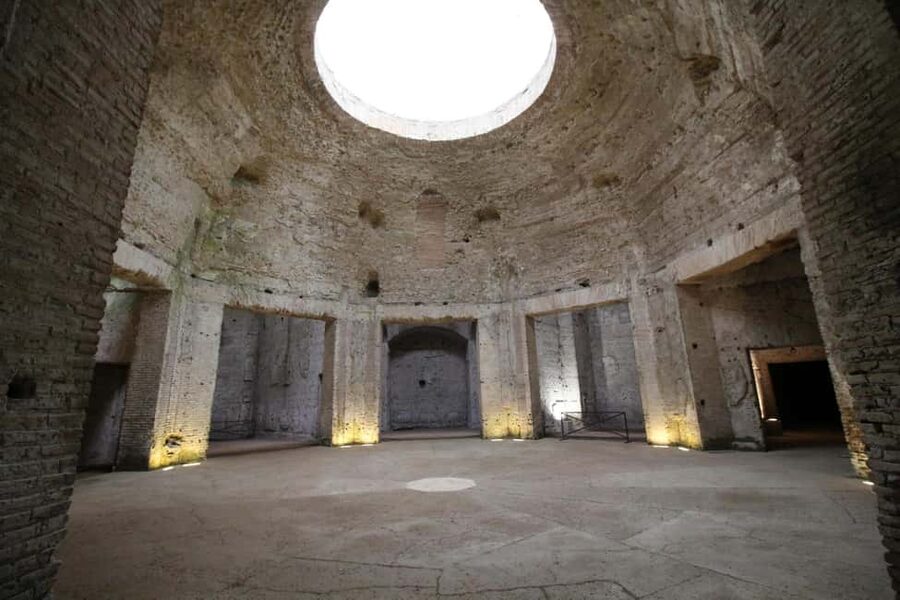
- Seeing the Octagonal Hall and concrete vaults
- The Cryptoporticus and Hall of Birds
- How the Oculus VR presentation changes the visit
- What the 90-minute schedule feels like
- Is $67 a fair price?
- Who should book this Domus Aurea tour?
- Booking details you should know
- Should you book it?
- FAQ
- Where is the meeting point for the Domus Aurea tour?
- How long does the experience last?
- What languages are available?
- Is the virtual reality experience included?
- What should I bring?
- Is the tour suitable for wheelchair users or people with claustrophobia?
Key points at a glance
- The VR reconstruction makes the lost palace easier to understand: You see the Golden Vault as it may have appeared in Nero’s day, not just as a bare ruin.
- The tour covers important surviving spaces: Look for the Octagonal Hall, Cryptoporticus, Hall of Birds, and decorated Roman interiors.
- The palace tells a complicated story: Nero planned a vast dynastic residence linking the Palatine with gardens on the Esquiline.
- The cool, enclosed setting affects comfort: Temperatures hover around 10°C, and the site is not suitable for wheelchair users or people with claustrophobia.
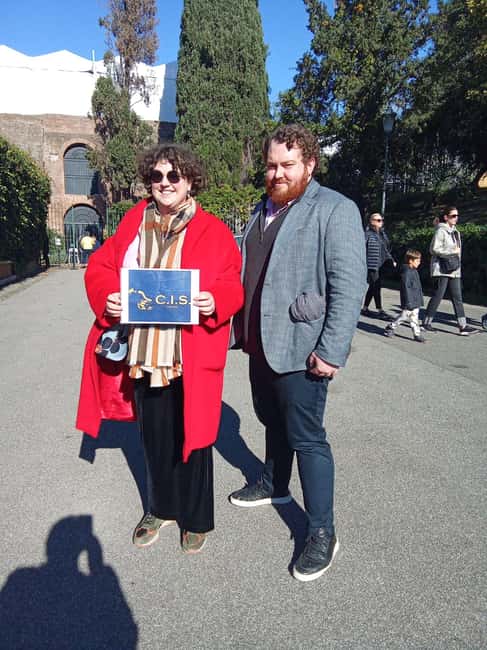
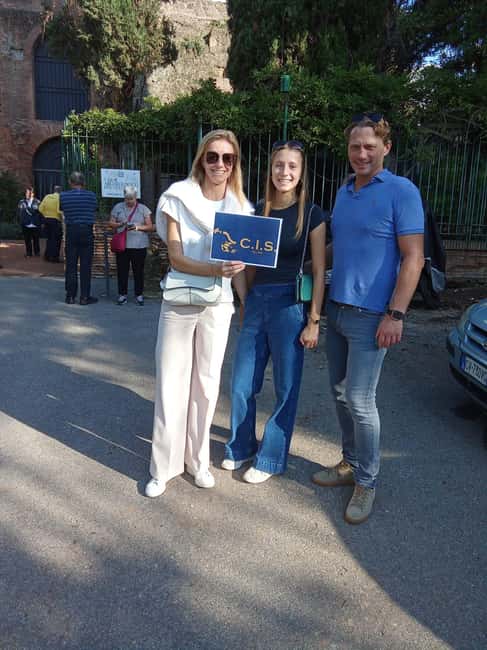
- The meeting point is by the Colosseo metro station: Arrive 20 minutes early and find the staff holding a C.I.S. Tours sign near the green kiosk.
- The visit lasts 1.5 hours: At $67 per person, the price makes the most sense if you value the guide and VR presentation, not simply a quick look at ruins.
Why Nero’s Golden House is worth your time
The Domus Aurea, or Golden House, was not a single villa in the usual sense. Nero wanted a grand imperial residence with palaces, gardens, court spaces, and areas linked to daily production. His plan joined the Palatine homes with the broad Esquiline gardens, creating a complex on a scale associated with Hellenistic royal courts.
That ambition explains the site’s unusual character. You do not walk through a complete palace with polished floors and intact furniture. Instead, you move through surviving concrete vaults, painted walls, and altered archaeological spaces. The missing pieces are the point. The tour asks you to read the remains, then uses VR to show how much has disappeared.
Nero remains one of Rome’s most notorious emperors, and the palace is tied to stories of lavish parties and imperial excess. Still, the visit is more useful when you look beyond the scandal. You learn how Roman builders used concrete to create wide, curving spaces and how decorators covered those structures with painted designs.
I find that combination more interesting than a simple tale of luxury. The Domus Aurea reveals an emperor’s political goals, Roman engineering, and the changing fortunes of a building that was later buried and reused.
More Domus Aurea entries:
- Rome: Domus Aurea Guided Group Tour
★ 4.6 · 697 reviews - Rome: Domus Aurea, Nero’s Golden House guide tour
★ 4.6 · 449 reviews - Rome: Trevi Fountain District and Underground Domus Guided Tour
★ 4.5 · 298 reviews
Meeting near the Colosseo metro station
Your starting point is in front of the Colosseo metro station, at the lower level and street level, near the green kiosk. Look for staff carrying a C.I.S. Tours sign.
Arrive 20 minutes before your booked time. That early arrival matters here because the meeting point can be busy, and a small delay may leave you searching for the group. One past scheduling problem also shows why it pays to arrive early: a participant reached the meeting point just before the stated time and had to wait for a later entry.
The tour provider is C.I.S. Tours. Live guiding is offered in English, Italian, French, and Spanish, with an audio guide in those same languages. The supplied information does not specify the group size, so you should not assume a small private tour.
From the Colosseo metro area, the Domus Aurea is close enough to pair with other central Rome sights, but plan your day around the fixed start time. The experience itself is only 1.5 hours, with about 70 minutes listed for the guided visit inside the archaeological complex.
Entering the cool, enclosed rooms
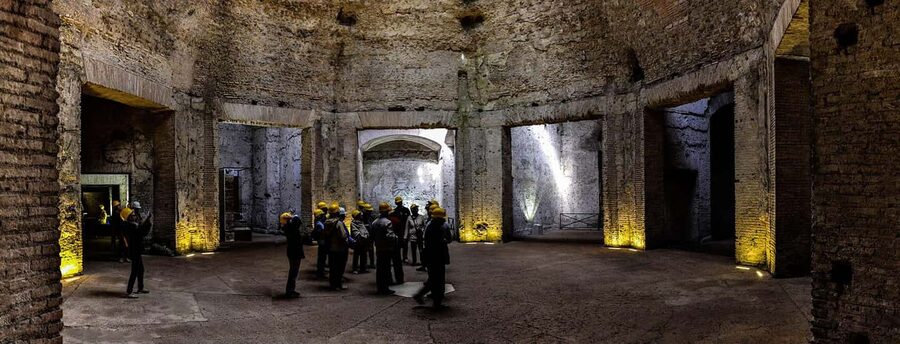
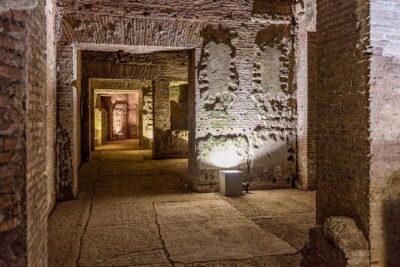
Once inside, expect a setting that feels very different from the open-air Colosseum nearby. The Domus Aurea is enclosed, dim, and cool. The temperature is around 10°C, so a sweater or light jacket is useful even in warm weather.
Comfortable shoes are also important. The attraction is not suitable for people with mobility impairments or wheelchair users, and it is not a good choice if enclosed spaces cause you distress. The supplied information does not describe every surface or step, so anyone with walking concerns should ask the provider for current access details before booking.
Food and drinks are not allowed inside. Large bags and luggage are also prohibited. Bring identification for every participant, including children, because tickets are nominative and the names of all participants are required.
The cold air and low light are not just annoyances. They help preserve the archaeological remains, and they give the site a quiet, underground feel. Still, if you are stacking several Rome attractions into one day, this is the moment to slow down. Hurrying through the rooms makes the wall paintings and building methods much harder to notice.
Seeing the Octagonal Hall and concrete vaults
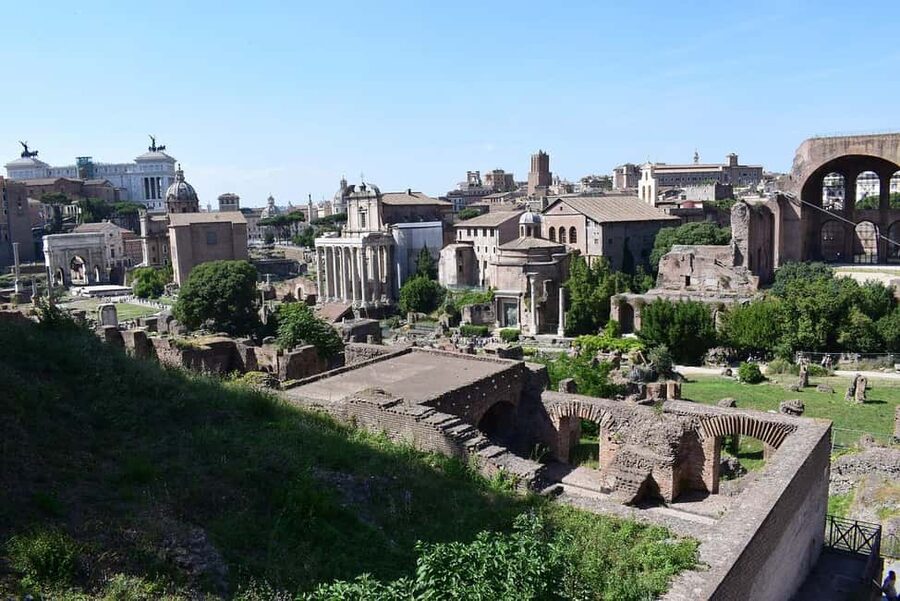
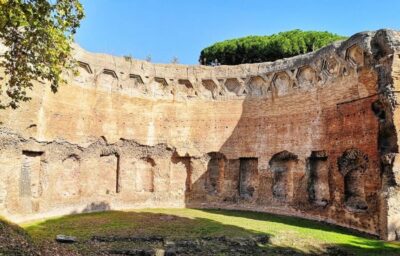
The Octagonal Hall is one of the key spaces on the route. Its shape and vaulting show the creative possibilities of Roman concrete, a material that allowed builders to form large interior spaces without relying only on rows of columns.
The guide connects the building methods to Nero’s wider plan. This was not simply a collection of richly decorated rooms. It was part of a large residence intended to house an imperial court and support productive activities. The scale tells you as much about Nero’s power as the decorative work tells you about Roman taste.
The ruins can be hard to understand at first. Walls may appear plain, damaged, or incomplete, and the original room heights are not always obvious. This is where the guide adds real value. A good explanation helps you separate original Roman work from later changes and understand how the rooms fitted into the larger palace.
One practical concern is sound. The vaulted rooms have poor acoustics, and it can be difficult to catch every word when the guide speaks from a distance. A visitor specifically found the information excellent but suggested that headsets would help. Stay reasonably close to the guide, and use the audio guide if it is offered as part of your visit.
More Rome tours worth comparing
- Vatican Museums, Sistine Chapel & St Peter’s Basilica Guided Tour
★ 4.5 · 39,149 reviews - Rome: Colosseum, Palatine Hill and Roman Forum Guided Tour
★ 4.8 · 32,814 reviews - Rome: Guided Tour of Colosseum, Roman Forum & Palatine Hill
★ 4.7 · 27,897 reviews - Rome: Colosseum & Forum with Audio Guide App -Optional Arena
★ 4.2 · 24,770 reviews
The Cryptoporticus and Hall of Birds
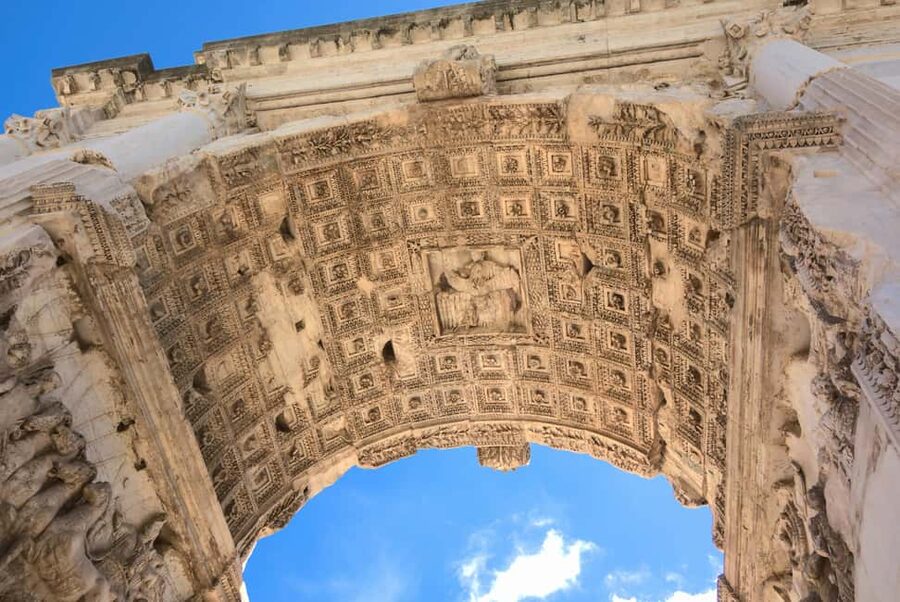
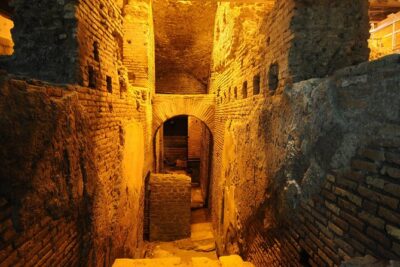
The Cryptoporticus is another important area. A cryptoporticus was a covered passage, and at the Domus Aurea it helps you understand how movement through the palace was controlled and connected. These corridors were not merely back routes. They formed part of the architecture of imperial life, leading people between grand rooms and more private or service-related areas.
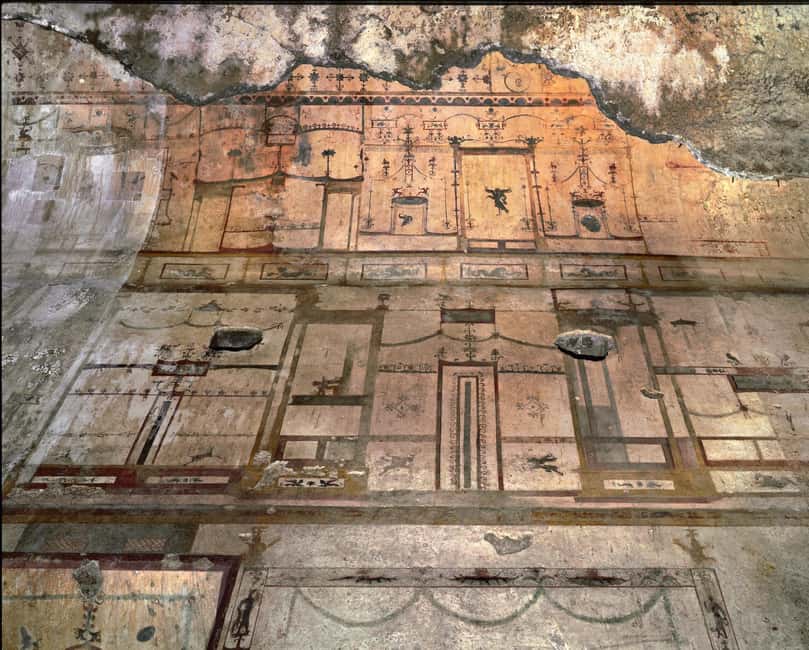
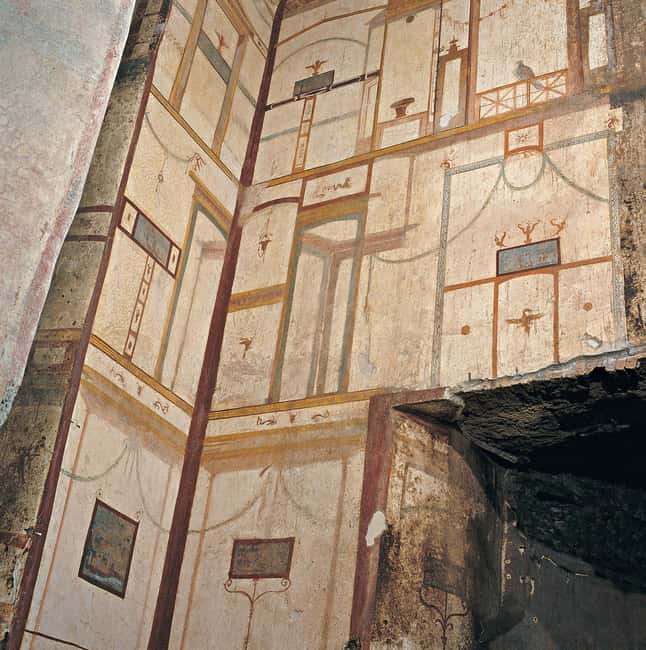
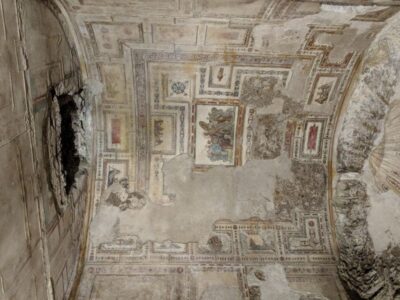
The Hall of Birds brings attention back to decoration. The Domus Aurea is especially important for its Roman wall painting, including the delicate, imaginative designs that influenced later artists. The name gives you a clue about the decorative theme, but the larger lesson is how much visual detail Roman interiors once contained.
Today, the surviving paintings can seem fragmentary. You may find patches of color, outlines, and sections interrupted by damage. That incomplete look can make it tempting to move on quickly. I recommend taking a moment to study the painted surfaces before the VR presentation. Seeing the actual fragments first makes the digital reconstruction more meaningful.
The guide also gives context for the palace’s later fate. After Nero’s death, the vast complex was not preserved as a permanent tribute to him. Areas were covered, altered, or built over, which helped bury some of the rooms but also separated the remains from their original setting. The palace you see is therefore both an ancient residence and the result of centuries of change.
How the Oculus VR presentation changes the visit
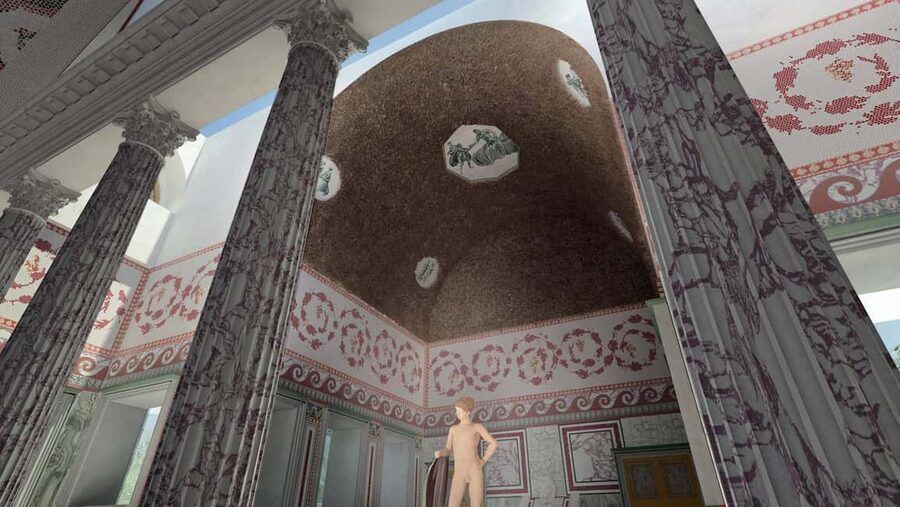
The VR section is the tour’s main hook. You use an Oculus headset to see the Room of the Golden Vault as it may have looked in Nero’s time. The presentation is short, but it gives you something the physical ruins cannot: a sense of color, scale, surfaces, and complete architectural form.
The experience is described as an innovative, multisensory video story. It is not a replacement for the archaeological site. Think of it as a visual aid that fills in the gaps between the surviving walls.
That distinction matters. Digital reconstructions are based on archaeological and historical interpretation, not a time machine. The presentation shows what scholars believe the palace may have looked like, so treat the images as informed reconstruction rather than absolute fact.
Still, the effect can be powerful. The plain concrete vaults become part of a vast imperial residence, and the painted details no longer seem like isolated fragments. The best part is the back-and-forth between the two versions of the site: first the real remains, then the proposed ancient appearance.
If you dislike headsets or prefer strictly traditional museum visits, this portion may feel less appealing. For most people, though, it solves a real problem. The Domus Aurea is visually incomplete, and VR gives your imagination a firm starting point.
What the 90-minute schedule feels like
This is a focused visit rather than an all-day archaeological outing. The total duration is 1.5 hours, with the guided tour itself listed at about 70 minutes. That leaves little room for a slow, independent wander, so listen closely and use the time well.
The likely rhythm is simple:
- Meet the staff near the Colosseo metro station.
- Enter the Domus Aurea with the group.
- Learn about Nero’s building program and Roman concrete.
- Visit major spaces such as the Octagonal Hall, Cryptoporticus, and Hall of Birds.
- Take part in the Oculus VR presentation, including the Golden Vault reconstruction.
- Finish after the guided visit and return to the central Rome area independently.
The short length is a benefit if you have limited time. You can fit the Domus Aurea around the Colosseum, Roman Forum, or other sights without giving up half a day. The tradeoff is that you will not get a leisurely, self-directed examination of every surviving detail.
The experience is also a good change of pace from Rome’s outdoor ruins. After hours in bright sun and crowded streets, the dark interior and technology offer something different. Just remember that the tour begins at a meeting point rather than at the archaeological entrance, and allow time to locate the staff.
Is $67 a fair price?
At $67 per person, this is not the cheapest way to see an ancient site in Rome. The price includes the Domus Aurea ticket, a live guide, the virtual reality experience, and taxes and fees. You are paying for interpretation and the special presentation, not just admission.
I think the value is strongest for three kinds of visitors. First, anyone fascinated by Nero, imperial Rome, or Roman engineering will get more from the explanations than from a basic entry ticket. Second, visitors who struggle to visualize ruins will find the VR useful. Third, people with a tight schedule may like the 90-minute format.
The value is weaker if you want a long, independent archaeological visit or if you are mainly looking for grand, intact architecture. The Domus Aurea is fragmentary, and the tour depends on your interest in context, decoration, and reconstruction.
The high rating of 4.7 from 194 reviews reflects a consistent pattern: people praise the VR film, the guides’ command of the subject, and the chance to see Nero’s palace from inside. The comments also point to the real limitations: the interior is cold, the acoustics can be poor, and the meeting process requires care.
My advice is to compare this cost with what you want from Rome. If you already plan to visit the Colosseum and Forum, the Domus Aurea adds a different view of imperial power. It is less about famous exterior monuments and more about how an emperor shaped private space, ceremonial rooms, and courtly life.
Who should book this Domus Aurea tour?
I would choose this for adults, older children who can follow a guided explanation, and anyone curious about how archaeologists reconstruct lost buildings. The VR element gives the visit a clear focus, while the guide supplies the facts that technology alone cannot explain.
It suits you especially well if:
- You enjoy Roman art and building methods.
- You want to understand Nero beyond the usual stories about his reputation.
- You like short, structured tours.
- You appreciate visual technology alongside real archaeological remains.
- You are comfortable in cool, enclosed places.
I would think twice if you use a wheelchair, have significant mobility limitations, or feel uneasy in confined rooms. It is also less suitable if you need every word of a spoken tour to be perfectly clear, since the acoustics can be difficult. Ask about headset arrangements before you book.
Guides can make a major difference. Claudia was singled out for giving clear, passionate explanations and answering questions, while another guide, not named, was praised for making complex information easy to follow. Language choices include English, Italian, French, and Spanish, both for live guiding and the audio guide.
Booking details you should know
Each participant needs identification, and children need their own passport or ID card. Enter the correct names when booking because tickets are nominative.
Cancel at least three days ahead if your plans change. The stated policy allows a 60 percent refund for cancellations made within that deadline. This is not a fully flexible ticket, so avoid booking it before your Rome schedule is reasonably firm.
Arrive 20 minutes early at the Colosseo metro meeting point. Bring a jacket, wear comfortable shoes, and leave food, drinks, luggage, and large bags behind. Unaccompanied minors are not allowed.
The tour does not promise skip-the-line access to every Rome attraction. It does include a ticket and skip-the-ticket-line entry for this activity, which saves you from arranging the Domus Aurea admission separately.
Should you book it?
Book this tour if you want the Domus Aurea explained rather than simply entered. The combination of surviving wall paintings, Roman concrete vaults, a live guide, and the Golden Vault VR reconstruction gives you a clearer sense of Nero’s enormous project than the ruins alone can provide.
Skip it if enclosed spaces, cold rooms, or imperfect acoustics would spoil the visit. Also skip it if your priority is a complete palace with intact decoration. For everyone else, $67 is a reasonable price for a specialized 90-minute experience, particularly if you are already planning to visit the Colosseum area and want to see a less familiar side of ancient Rome.
FAQ
Where is the meeting point for the Domus Aurea tour?
Meet in front of the Colosseo metro station at the lower floor and street level, near the green kiosk. Look for staff with a C.I.S. Tours sign.
How long does the experience last?
The full activity lasts 1.5 hours. The guided visit inside the Domus Aurea is listed as approximately 70 minutes.
What languages are available?
Live guiding and the included audio guide are available in Italian, English, French, and Spanish.
Is the virtual reality experience included?
Yes. The ticket includes the Oculus virtual reality experience, along with admission to the Domus Aurea and the guided tour.
What should I bring?
Bring a passport or ID card for each participant, comfortable shoes, and a jacket. The temperature inside the Domus Aurea is around 10°C.
Is the tour suitable for wheelchair users or people with claustrophobia?
No. The activity is not suitable for wheelchair users, people with mobility impairments, or people with claustrophobia.
Newest reviews from Rome
- Rome: Vatican Museums & Sistine Chapel Skip-the-Line Ticket★ 4.4 · 148 reviews
- Shared Shuttle Transfer from Rome to Civitavecchia Port★ 5.0 · 148 reviews
- Rome: Crypts & Catacombs After Hours Tour with Bone Chapel★ 4.6 · 149 reviews
- Ghosts Legends and Mysteries of Rome Walking Tour★ 5.0 · 149 reviews
- Skip the Line: Vatican and Sistine Chapel with Guided Tour★ 4.0 · 149 reviews
- Tivoli: Villa Gregoriana Entrance Ticket★ 4.7 · 150 reviews
- Pizza and Tiramisu Cooking Class in Rome, Piazza Navona★ 5.0 · 150 reviews
- Rome: Borghese Gallery Skip-the-Line Entry and Guided Tour★ 4.7 · 150 reviews
Domus Aurea Tours, compared.
Trevi Fountain District and Underground Domus Guided Tour
Read our review →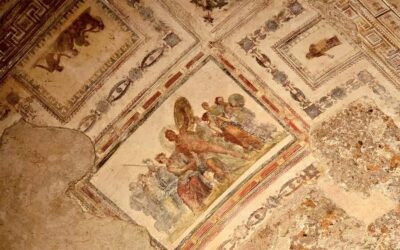
Domus Aurea Guided Tour: The Golden House of Nero
Read our review →Browse the lists this tour appears in