
Reviewed · DOMUS AUREA TOURS
Roman Domus of Palazzo Valentini Ticket
Beneath Palazzo Valentini, Roman villas appear under your feet, with mosaics, baths, kitchens, and painted walls revealed through a clever mix of archaeology, light, and projected images. The 16th-century palace was built over this earlier Roman residential complex, so the visit connects several layers of Rome in one compact hour.
I like the way the technology helps you understand ruins that might otherwise look like scattered stone. I also like the intimate group size, capped at 15 people, and the chance to see domestic Roman life rather than another grand monument built for emperors.
The main drawback is practical: the meeting point can be hard to identify, and the supplied address has caused confusion. You must collect your reserved ticket at least 30 minutes before the time slot, so allow extra time to find the entrance.
In This Review
- Key points to know before you go
- What lies beneath Palazzo Valentini
- Following the one-hour route underground
- How light and video make the ruins readable
- The Roman houses, room by room
- A helpful companion to Rome’s major ruins
- Timing, meeting point, and ticket pickup
- Group size and the pace underground
- Is the price good value?
- Who should book the Domus of Palazzo Valentini?
- Should you book this Roman Domus tour?
- FAQ
- How long does the Roman Domus of Palazzo Valentini visit last?
- Where does the activity start?
- How early must I collect the reserved ticket?
- Do I need a printed voucher?
- How many people can join the tour?
- Is transportation included?
Key points to know before you go
- Roman homes beneath a Renaissance palace: See how Palazzo Valentini was built over patrician houses from the imperial age.
- Projected reconstructions: Light, graphics, and video show rooms, courtyards, baths, furnishings, and decorations as they may have appeared.
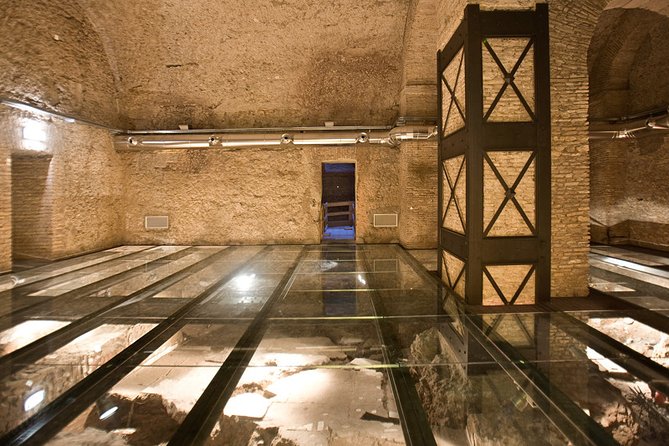
- Mosaics and glass floors: You walk above the excavations and look down at floors and remains below.
- Plan on 60 to 90 minutes: The advertised duration is about one hour, but the full presentation may last closer to an hour and a half.
- Small group, fixed timing: No more than 15 people are admitted, with several time slots during the day.
- Print your voucher: Bring a printed confirmation and collect the ticket no later than 30 minutes before your assigned entry.
What lies beneath Palazzo Valentini
Rome gives you ancient ruins everywhere, but many are difficult to read. A broken wall may once have formed part of a dining room. A few colored stones may be all that remains of an expensive mosaic. Palazzo Valentini handles this problem by showing the remains and then supplying the missing visual information with projections and animations.
The Roman Domus of Palazzo Valentini is a permanent archaeological exhibition beneath the 16th-century palace. The excavations reveal at least two opulent residential houses connected with powerful Roman families. You see sections of walls, decorated surfaces, polychrome floors, paving blocks, and the outlines of rooms that once formed private homes.
This is not a visit to a completely preserved Roman house. The ruins are partial, as you would expect in central Rome, where later buildings have repeatedly covered and altered the ancient city. The appeal comes from watching the fragments become readable. The presentation shows where rooms, courtyards, baths, and household spaces fit together.
I find this especially useful early in a Rome visit. Once you understand how a Roman house was arranged, other ruins around the city make more sense. The experience gives you a picture of daily life that the Colosseum and imperial forums cannot provide.
More Domus Aurea entries:
- Rome: Domus Aurea Guided Group Tour
★ 4.6 · 697 reviews - Rome: Domus Aurea, Nero’s Golden House guide tour
★ 4.6 · 449 reviews - Rome: Trevi Fountain District and Underground Domus Guided Tour
★ 4.5 · 298 reviews
Following the one-hour route underground
The visit begins at Palazzo Valentini, an imposing modern-era building whose exterior can be easy to overlook among Rome’s larger monuments. Inside, you go below street level to the archaeological remains.
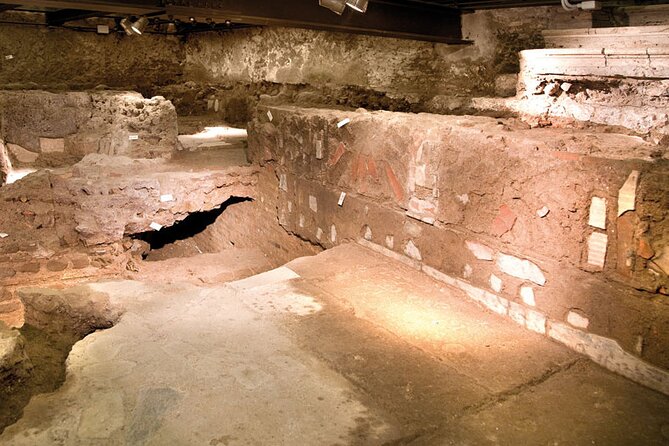
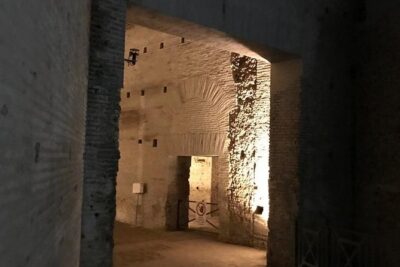
The route leads through the foundations and rooms of the Roman houses. Expect to see walls, floors, mosaics, baths, kitchens, peristyles, and traces of furnishings or decoration. A peristyle is a courtyard or garden area surrounded by columns, and it helps you picture the scale and comfort of an upper-class Roman home.
One of the most memorable features is the flooring. Parts of the route use transparent glass walkways, allowing you to look down at mosaics and excavated rooms. The glass is safe, but it can feel unnerving at first, especially when the space below is dark or brightly lit for the presentation. If you dislike heights, take a moment to get used to it. The glass should not prevent most people from enjoying the visit, but it is worth knowing about before you book.
You are not simply left to inspect the stones on your own. The commentary explains what you are seeing as the lighting changes. The route moves from one section to another while projections fill bare walls and floors with reconstructions of the ancient rooms.
The full experience may run longer than the one-hour description. Several people found it closer to 90 minutes, which matters when you are planning a museum day or a timed visit elsewhere. Much of the route involves standing, so wear comfortable shoes and avoid scheduling it immediately before a long walking tour if your feet are already tired.
How light and video make the ruins readable
The strongest part of the presentation is its visual work. Ancient Rome can be hard to picture because the surviving remains are often low, incomplete, and stripped of their original color. Here, images and light suggest the missing walls, decoration, furniture, and architectural details.
You may watch a plain section of masonry become part of a room through projection. A mosaic floor is lit so its pattern becomes clear. A bath complex is explained as a functioning part of the house rather than a collection of disconnected chambers. The effect is theatrical, but it serves a real purpose: you can connect the archaeology with the life that once filled it.
Some people compare the style to a historical show rather than a traditional museum visit. That is a fair description. If you prefer labels, glass cases, and quiet independent study, the presentation may feel too directed. If you want help imagining what the ruins looked like in use, the projections are a major advantage.
The technology is also useful for families. Children who might lose interest while looking at foundation walls have more to follow as rooms appear, change, and fill with reconstructed detail. Still, the tour includes a fair amount of standing and explanation, so younger children may become restless during the quieter sections.
The commentary is conducted by museum staff. The quality may feel more functional than theatrical, with some portions moving quickly from room to room. I would treat the visual program as the star and the spoken explanation as a guide to the sequence, rather than expecting a lively personality-led walking tour.
The Roman houses, room by room
The first residential complex includes an extensive bath area. This is one of the best clues to the status of the people who lived there. Private baths required space, water, heating arrangements, and considerable expense. Even in fragmentary form, the remains suggest that this was not an ordinary working-class apartment.
The bath section also helps you understand Roman domestic comfort. The house was not just a set of sleeping rooms. It included spaces for washing, socializing, preparing food, receiving guests, and moving between indoor and open-air areas.
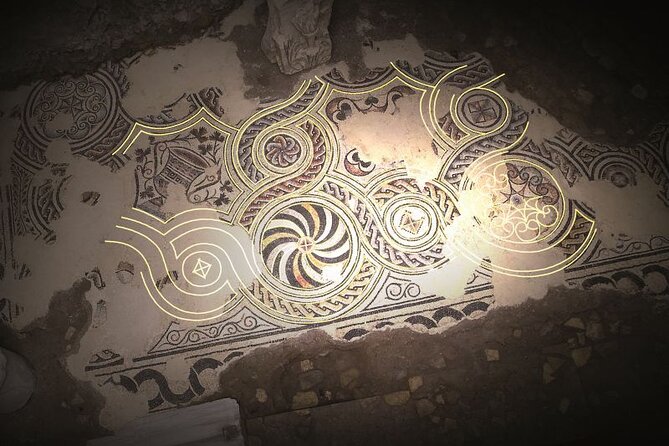
The second house is especially notable for its mosaic floor. Mosaics were both practical and decorative, and their patterns could signal wealth and taste. From the glass walkway, you can inspect the floor from above while the lighting draws your attention to its design.
The route also refers to kitchens, furnishings, wall decoration, and peristyles. You will not see every element intact, but the projections fill in enough of the arrangement to give the house a sense of structure. I like that the exhibition focuses on the home as a complete setting, not just on one exceptional artifact.
Later construction is part of the story too. Medieval and modern buildings were placed above the Roman remains, preserving some ancient floors by accident while hiding them from view. Palazzo Valentini demonstrates how Rome is built in layers. The palace is not merely a roof over an excavation. It is one chapter in the long reuse of the city.
More Rome tours worth comparing
- Vatican: Museums & Sistine Chapel Entrance Ticket
★ 4.5 · 144,003 reviews - Rome:Hop-On Hop-Off Panoramic Open Bus Ticket 3 Circuits x 1
★ 4.0 · 15,405 reviews - Vatican Museums & Sistine Chapel Skip-the-Line Entry Ticket
★ 4.4 · 13,838 reviews - Rome: Vatican Museums & Sistine Chapel Skip-The-Line Ticket
★ 4.2 · 11,708 reviews
A helpful companion to Rome’s major ruins
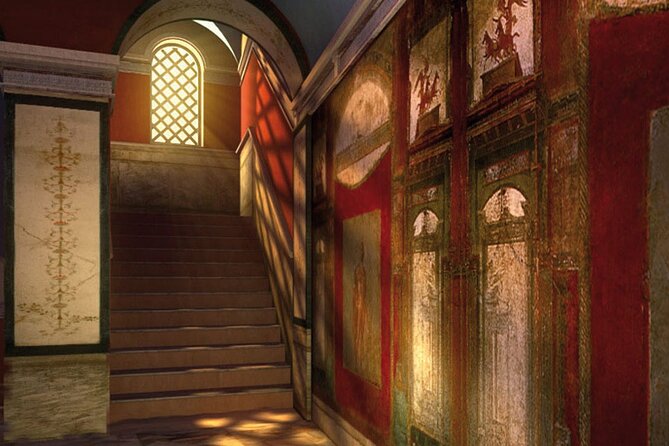
The Domus works well as a companion to the Colosseum, Forum, and Palatine Hill. Those sites show public buildings, political spaces, temples, and monuments. Palazzo Valentini brings you into the private world behind them.
I would especially consider it if you are interested in Roman architecture but find exposed ruins hard to interpret. The virtual reconstructions give you a working model of a Roman house. Later, when you walk through other archaeological sites, you may recognize the basic ideas: courtyard planning, mosaic decoration, bathing facilities, and layers of rebuilding.
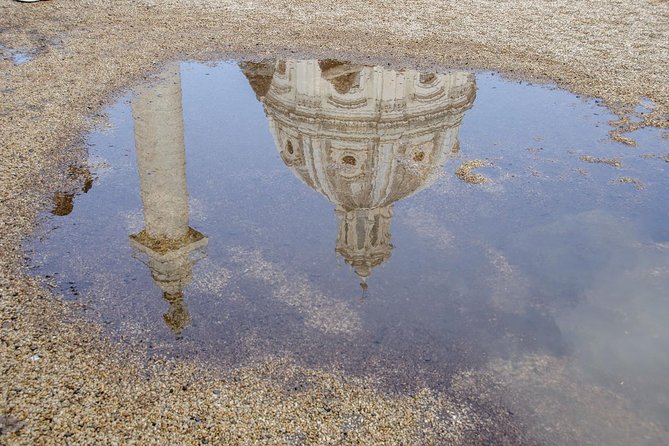
The exhibition also sits near Trajan’s Column. One presentation near the end explains the column’s spiral reliefs, which show episodes from Trajan’s military campaigns. That short addition provides a useful link between the private houses below the palace and the imperial monument just outside.
Do not expect the scale of the Colosseum or the open-air drama of the Forum. This is an underground, enclosed experience with a carefully controlled route. Its strength is concentration. In about an hour to an hour and a half, you move through a small part of Rome’s past with enough explanation to make the remains easier to understand.
Timing, meeting point, and ticket pickup
The practical instructions deserve close attention. The activity information gives the starting point as Via delle Terme di Traiano, 85, 00184 Roma, while the attraction itself is Palazzo Valentini. The address and entrance arrangements have not always been obvious, and some people have nearly missed the start because they were looking for a guide outside rather than a door into the building.
Check the confirmed meeting details carefully before leaving your hotel. Do not assume that a large sign or a person holding a tour board will make the entrance easy to spot. The supplied confirmation time is important, but the selected time may be treated as a preferred time. If that slot is unavailable, the closest available time during opening hours may be assigned instead.
You must print and present the confirmation voucher to redeem the tickets. Digital-only arrangements are not supported by the stated instructions. Reserved tickets must be collected at least 30 minutes before the confirmed entry time. If you arrive later, the reservation can be canceled and you lose the right to the tickets.
That rule makes this a poor choice for a rushed day. I would place it in a schedule with a generous buffer, especially if you are crossing the historic center or relying on public transportation. The site is near public transportation, but transportation to and from the attraction is not included.
Group size and the pace underground
The group limit is 15 people, which is a useful middle ground. You avoid the scale of a large sightseeing procession, but you should not expect a private tour or the freedom to linger wherever you wish.
The route follows a planned presentation. Light and video cues work best when the group moves together, so the pace may feel quick in some rooms. If you need more time to study a mosaic or photograph a detail, you may have to keep moving and rely on the visual program to return your attention to it.
You should also plan for frequent standing. Comfortable shoes matter more here than they might seem, because the route includes glass flooring and darkened sections. Anyone who feels uneasy looking down from a transparent walkway should stay aware of the floor surface and move at a comfortable pace.
The experience is generally suitable for most people, but the supplied information does not provide detailed accessibility specifications. If you need specific arrangements, confirm them before booking rather than assuming the underground route will meet your needs.
Is the price good value?
The supplied price is shown as $0.00, but the booking information and customer experiences indicate that the price can vary by seller and that buying directly from the official site may be less expensive. One clear lesson is to compare the final total before paying.
A third-party reservation may offer convenience, but it does not appear to add transportation or a private guide. The visit itself is conducted by museum staff, and the included services are admission and booking fees. If the third-party price is higher, you are mainly paying for the reservation channel, not for an extra layer of sightseeing.
That does not automatically make the booking poor value. A confirmed timed entry can be useful during a busy Rome itinerary. But the time-confirmation process needs care, and the meeting-point confusion reduces the convenience you might expect from a paid booking service.
At the direct admission price, I consider the exhibition a strong value for anyone curious about Roman homes and archaeology. At a much higher third-party price, compare it with the cost of other major Rome sites. The attraction is unusual and well presented, but it is still a compact underground exhibition rather than a full-day archaeological visit.
Who should book the Domus of Palazzo Valentini?
I would recommend it to you if you want to understand how wealthy Romans lived, not just how emperors were honored. It is also a good choice for people who enjoy visual storytelling and for families whose children need more than bare ruins to stay interested.
You will get the most from it if you are willing to stand, follow a fixed route, and watch the projections as part of the explanation. The exhibition is particularly helpful if you often look at ancient ruins and think, What am I actually seeing?
I would be more cautious if your schedule is tight, if you dislike underground spaces, or if transparent floors make you uncomfortable. I would also avoid booking through a third party without checking the price, confirmed time, printed-voucher requirement, and exact entrance instructions.
Should you book this Roman Domus tour?
Yes, if you want a compact and unusual look at Roman private life. The mosaics and bath remains are important, but the real strength is the way light, video, and reconstruction help you picture the original rooms.
Book it directly if that option is available at a lower price, and build in enough time to find the entrance and collect your ticket 30 minutes early. With those details handled, Palazzo Valentini can be one of the more memorable archaeological stops in Rome, especially when the Forum’s broken walls still leave you guessing.
FAQ
How long does the Roman Domus of Palazzo Valentini visit last?
The activity is described as approximately one hour, but the route may take closer to one and a half hours. Plan your schedule around the longer duration.
Where does the activity start?
The supplied meeting point is Via delle Terme di Traiano, 85, 00184 Roma RM, Italy. The activity information also identifies the attraction as the Domus of Palazzo Valentini, so check your confirmation carefully because the entrance may not be obvious.
How early must I collect the reserved ticket?
You must pick up your reserved ticket no later than 30 minutes before the confirmed time slot. Arriving later can result in cancellation of the reservation and loss of the ticket.
Do I need a printed voucher?
Yes. You must print and present your confirmation voucher when redeeming the tickets.
How many people can join the tour?
The group has a maximum of 15 travelers.
Is transportation included?
No. Transportation to and from the attraction is not included. The site is near public transportation, so you must make your own way there and back.
Newest reviews from Rome
- ROME:Colosseum & Ancient Rome – private/small group TOUR★ 5.0 · 24 reviews
- Off the Beaten Track in Rome: Rione VI Parione Private Tour★ 5.0 · 24 reviews
- Cinematic Photoshoot in Rome★ 5.0 · 24 reviews
- Rome: Best of Colosseum and Roman Forum Small Group Guided Tour★ 4.5 · 24 reviews
- The Labyrinth of Rome between catacombs and ancient quarries★ 4.5 · 24 reviews
- Vatican and Trionfale Market Tour with Wine and Food Tasting★ 5.0 · 24 reviews
- private tour: Vatican Museums, Sistine Chapel, St. Peter’s Basilica★ 4.5 · 24 reviews
- Colosseum guided tour with Virtual Reality★ 5.0 · 24 reviews
Domus Aurea Tours, compared.
Trevi Fountain District and Underground Domus Guided Tour
Read our review →
Domus Aurea Guided Tour: The Golden House of Nero
Read our review →
Domus Aurea Guided Tour and Virtual Reality Experience
Read our review →
Browse the lists this tour appears in