
Reviewed · JEWISH GHETTO TOURS
Rome: Jewish Museum and Tempio Maggiore Entry with Audio
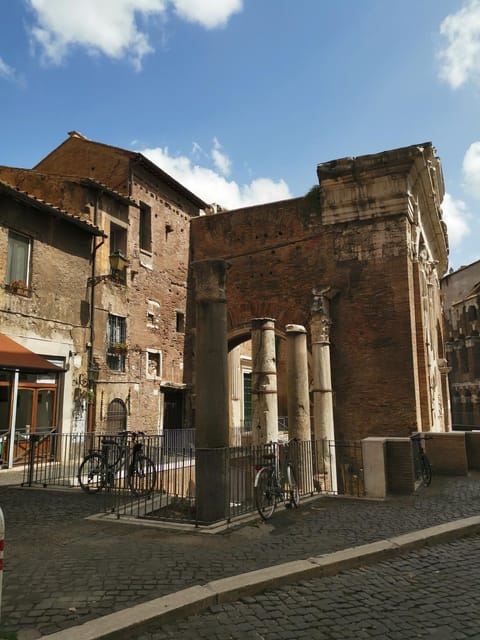
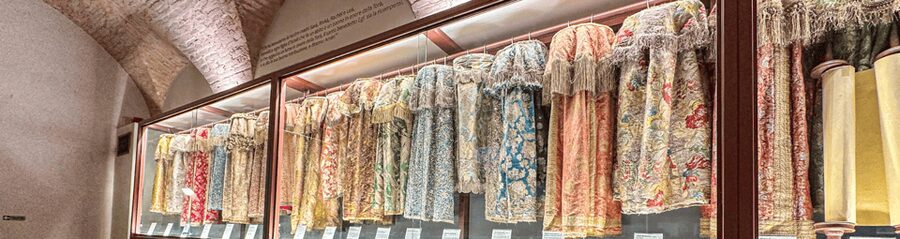
Rome’s Jewish Museum tells the story of a community that has lived in the city continuously for 2,200 years. Its collection comes mainly from the former Ghetto’s five synagogues, with ritual objects, manuscripts, registers, historical papers, and carved marble works arranged across seven rooms.
I like the guaranteed entry and the chance to see both Tempio Maggiore and the Spanish Synagogue in one visit. I also like the audio format, especially if you prefer to set your own pace and read or listen in English, Italian, French, German, Spanish, Portuguese, Hebrew, or Russian, depending on the museum section.
The main caution is that the synagogue portion may not feel like a full guided tour. The booking describes a guided visit, but practical feedback reports an English presentation with a single QR code leading to an audio segment of about three minutes. Clarify this point before paying.
In This Review
- Key points to know before you book
- A 2,200-year story inside Rome’s Jewish Museum
- The seven rooms and what they reveal
- The Ghetto period from 1555 to 1870
- Tempio Maggiore, Rome’s main synagogue
- The Spanish Synagogue inside the museum route
- How the audio guide works on your phone
- Small-group access and the one-day validity
- Who will get the most from this visit
- Timing, cancellation, and practical planning
- Is the $20 entry worth it?
- Should you book this Jewish Museum experience?
- FAQ
- How long is the Jewish Museum and Tempio Maggiore ticket valid?
- What does the ticket include?
- Is a guided tour of the Jewish Quarter included?
- Which languages are available for the audio guides?
- Do I need to download an app?
- Is the experience wheelchair accessible?
- Can I cancel the reservation?
Key points to know before you book
- The collection comes from Rome’s former five synagogues, giving the museum a strong connection to the old Ghetto.
- Seven themed rooms cover 700 square meters, moving from early Jewish life in Rome to the modern period.
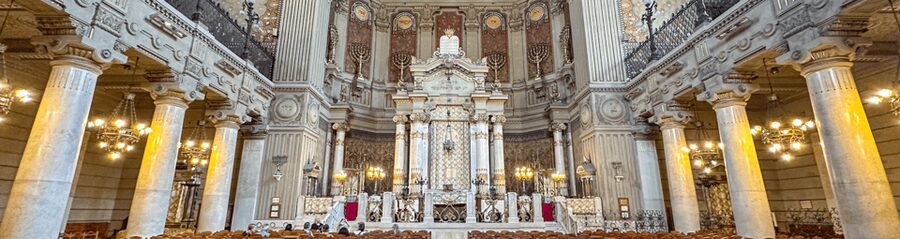
- Tempio Maggiore and the Spanish Synagogue are part of the museum route, not separate distant stops.
- You must download the Vatican&Rome App to use the mobile audio guide.
- Reserved entry includes an express security check, useful at a busy central site.
- The $20 price buys convenience, but a direct purchase may cost less according to one price comparison.
A 2,200-year story inside Rome’s Jewish Museum
Rome’s Jewish community is one of the oldest Jewish communities outside Israel. That fact gives this visit a different feel from a standard museum stop. You are not looking at a collection assembled from faraway places. The objects mainly come from the five synagogues that served Rome’s Jewish population during the Ghetto period, from 1555 to 1870.
The museum helps you see how a community kept its religious identity while living within Rome’s social and economic system. That balance is the heart of the visit. You’ll encounter signs of worship, education, administration, family life, and community organization rather than only isolated works of art.
The collection was once displayed in a single room. In 2005, a larger layout opened, giving the museum room to organize the material by subject. Today, the exhibition covers about 700 square meters in seven rooms.
That size matters. You can see the main story without committing half a day to a large national museum. At the same time, the material deserves more than a quick glance, especially if you listen to the audio explanations instead of simply walking through.
More Jewish Ghetto walks:
- Rome: Trastevere or Jewish Quarter Street Food Tour
★ 4.8 · 3,839 reviews - Jewish Ghetto and Trastevere Tour Rome
★ 4.5 · 1,729 reviews - Jewish Ghetto and Synagogues with Jewish Roman Guide 3 Hours
★ 5.0 · 907 reviews
The seven rooms and what they reveal
The exact sequence of the rooms may vary with museum operations, but the themes are designed to reconstruct Jewish life in Rome. You can expect religious furnishings, manuscripts, early printed books, registers, official documents, and marble pieces.
The liturgical objects are among the most important parts of the visit. They show how worship was organized and how religious traditions were maintained through changing political and social conditions. The manuscripts and incunabula, early printed books from the first period of printing, add another layer by showing how knowledge and religious texts circulated.
Historical documents and registers can feel less immediately dramatic than silver objects or carved stone. Still, they are valuable because they give the community a paper trail. They point to daily administration, records, names, and events that help place Jewish life in Rome within the wider story of the city.
The marble works also deserve attention. They connect the museum to Rome’s long tradition of stone carving while showing how Jewish religious spaces used local artistic materials. Listen to the audio rather than rushing past these pieces. A short explanation can make an ordinary-looking fragment much easier to understand.
The Ghetto period from 1555 to 1870
The museum’s strongest focus is the period when Rome’s Jewish population lived in the Ghetto. The dates are useful guideposts: 1555 marks the beginning of the Ghetto period, while 1870 marks its end.
You will not get the full experience by treating the museum as a room of beautiful religious objects. The collection is also about restriction, adaptation, and continuity. The rooms show how people maintained religious and cultural practices while taking part in Rome’s economy and civic life.
The museum does not present Jewish history as a side note to the city’s famous churches and ancient ruins. It gives the community its own place in Rome’s story. That makes this a good stop for anyone who wants to understand the city beyond its best-known monuments.
The audio guide is especially useful here. The objects may not always explain themselves, and some documents will be difficult to interpret without context. Use the guide to connect the pieces, rather than listening only to isolated descriptions.
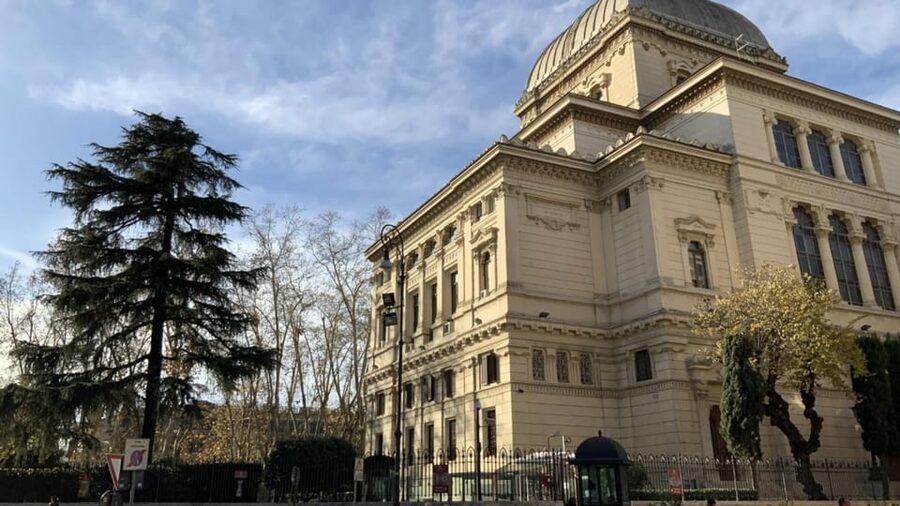
Tempio Maggiore, Rome’s main synagogue
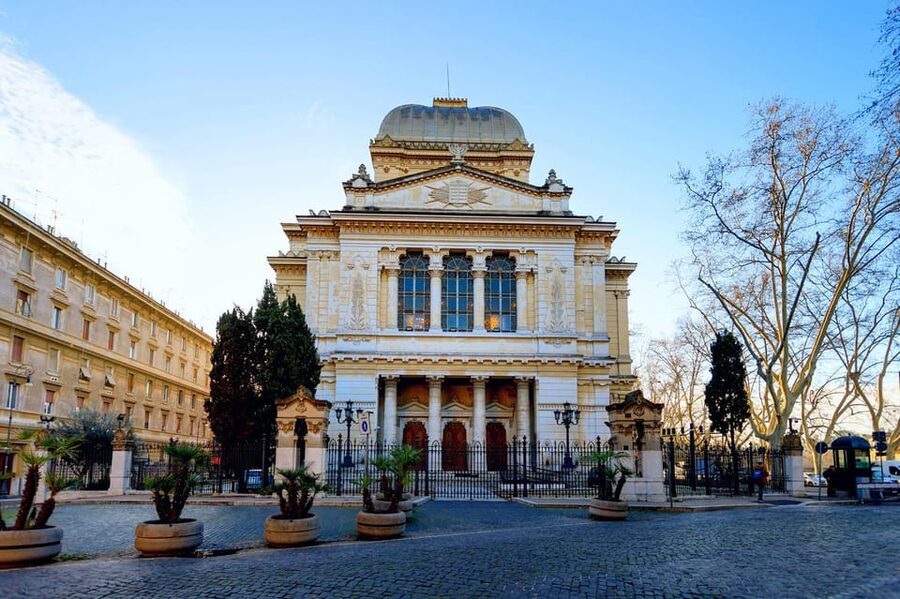
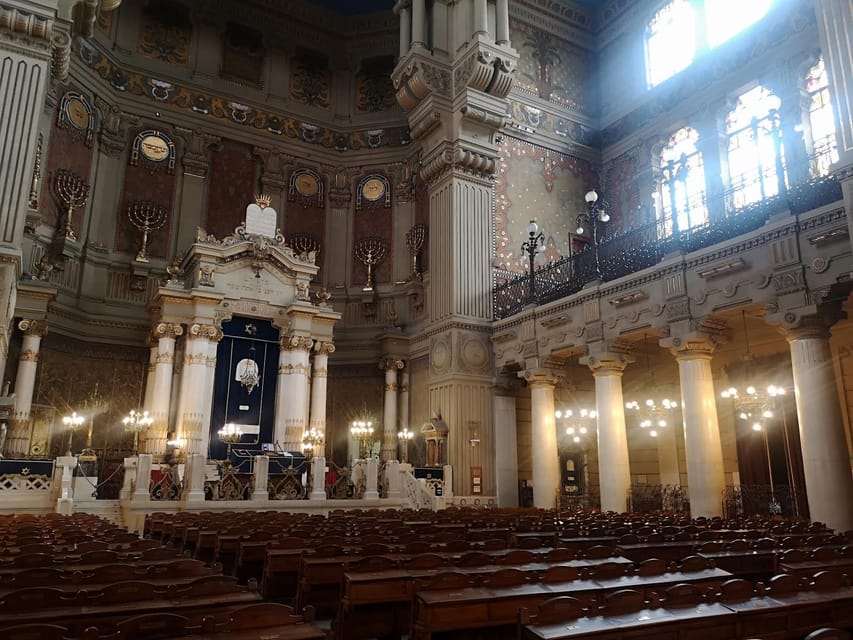
Entry to Tempio Maggiore is included. This is the central synagogue connected with the museum visit, and it gives the tour a sense of place that display cases alone cannot provide.
The synagogue is located as part of the museum complex, so you do not need to arrange separate transport between the museum and the house of worship. That makes the visit efficient, particularly if you are fitting it between other central Rome sights.
The booking information describes the synagogue portion as a guided tour. In practice, you should be prepared for a lighter format than a conventional, staff-led walk. One account reports an English explanation accessed by QR code, lasting around three minutes, while another person expected a French-speaking guide and could not find one.
This is the most important point to check before booking. If you want a personal guide who answers questions in your language, this product may not meet that expectation. If you are happy with reserved access plus a short digital explanation, the arrangement may work well.
Security is part of the entrance process. Go directly to the main entrance after the security check, and allow a little patience for the screening procedure. The express security arrangement is a practical benefit, but it does not mean you can ignore the site’s security requirements.
More museums and galleries in Rome:
- Vatican: Museums & Sistine Chapel Entrance Ticket
★ 4.5 · 144,003 reviews - Vatican Museums & Sistine Chapel Tour with Optional Basilica
★ 4.3 · 67,413 reviews - Vatican Museums, Sistine Chapel & St Peter’s Basilica Guided Tour
★ 4.5 · 39,149 reviews - Rome: Vatican Museums, Sistine Chapel & Basilica Tour
★ 4.3 · 13,872 reviews
The Spanish Synagogue inside the museum route
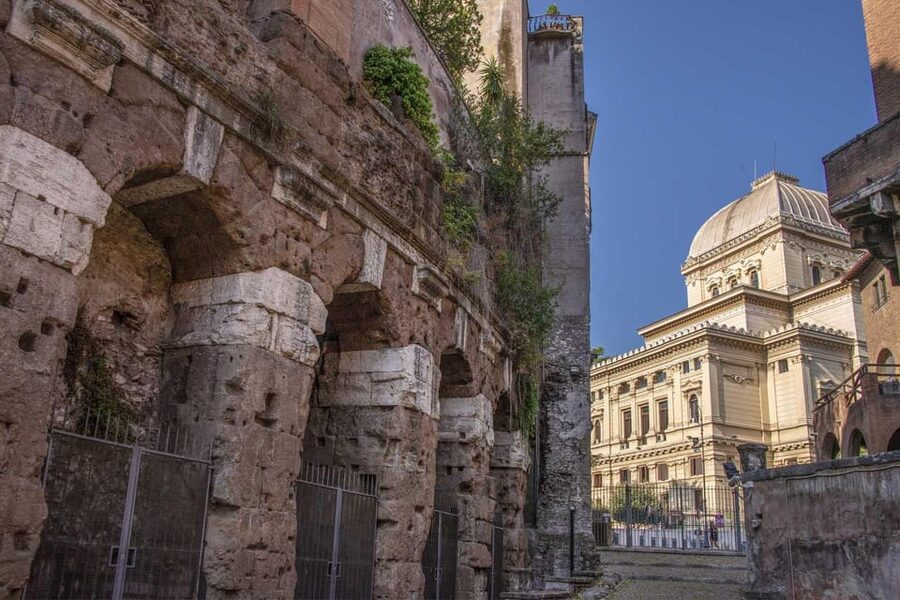
The Spanish Synagogue is also included within the museum itinerary. Its presence adds variety to the visit, since you are not seeing only the main synagogue but also a second worship space connected with Rome’s Jewish traditions.
The museum describes the two synagogues as part of the rooms and route, so think of them as integrated into one cultural visit rather than two entirely separate attractions. This is helpful if you prefer a compact plan with a clear beginning and end.
As with Tempio Maggiore, the exact amount of spoken guidance may be limited. The included museum audio guide and the synagogue information are not necessarily the same thing. Listen for the museum explanations, then use the available synagogue material as a supplement.
How the audio guide works on your phone
You need to download the Vatican&Rome App from the App Store or Google Play before using the audio guide. This is not a minor detail. If you arrive without the app, your visit can become more frustrating than it needs to be.
Bring a charged phone and headphones if you have them. The supplied information confirms mobile audio access but does not state that headphones are provided. A phone with limited storage, low battery, or unreliable data access could make the audio portion less useful.
The museum guide is listed in English, Hebrew, Spanish, German, Russian, and French in one part of the booking information. The wider activity audio guide is listed in Italian, English, French, German, Spanish, and Portuguese. Because the language lists differ, check the language you need when reserving.
There is also an audio guide for Rome’s Jewish Quarter, available through the same app in Italian, English, French, German, Spanish, and Portuguese. This is not a guided walk. No neighborhood guide or walking tour is included, so you explore the quarter on your own.
That extra audio material can help you extend the visit beyond the museum doors. It is best viewed as a self-guided add-on, not as a substitute for a person leading you through the streets.
Small-group access and the one-day validity
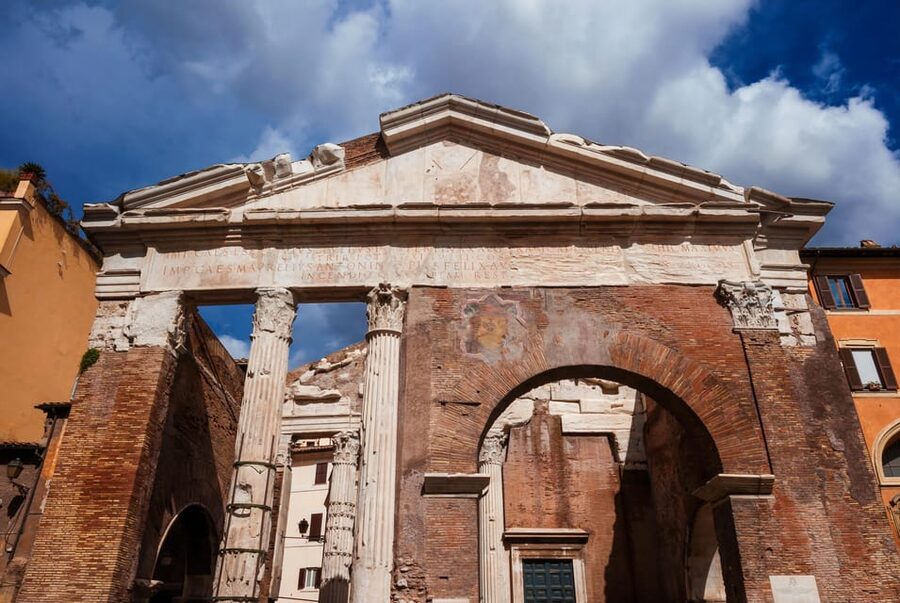
The experience is limited to 10 participants. That is a useful middle ground. You are not joining a large coach group, but you also should not assume this is a private tour.
The booking is valid for one day, with starting times dependent on availability. You go directly to the Jewish Museum’s main entrance, and the activity ends back at that meeting point. Transfers are not included, so plan your route to the museum separately.
Reserved entry matters most if your Rome schedule is tight. You receive a confirmed place and an express security check rather than simply hoping for space at the door. The tradeoff is that the online price may be higher than buying directly.
One price comparison reported a direct on-site cost of €12 against €18 paid for the reserved activity. The listed price here is $20 per person, though exchange rates and local pricing can change. I would pay the difference if a fixed reservation, flexible cancellation, and language support are important to you. If your schedule is open and you are comfortable buying at the museum, direct entry may offer better value.
Who will get the most from this visit
I would recommend this experience to you if you want a focused historical stop that takes less time than Rome’s major archaeological sites. It suits visitors who already know the Colosseum and Vatican Museums and want to understand another part of the city’s past.
It is also a good choice if you prefer audio touring. You can pause, replay, and move at your own speed instead of keeping up with a guide. The seven-room route gives enough structure to prevent the visit from feeling random.
The visit may be especially useful for people interested in religious history, migration, minority communities, architecture, manuscripts, and the way urban communities preserve identity. It is also wheelchair accessible, which makes it available to a wider range of visitors.
I would be more cautious if your main goal is a lively, personal synagogue tour in a specific language. The available information does not guarantee a named guide, and the synagogue audio may be brief. For that purpose, confirm the arrangement directly before booking.
Timing, cancellation, and practical planning
The experience is valid for one day, but you must choose from the available starting times. This gives you less flexibility than an open-entry museum ticket, so fit it carefully around meals, transport, and other reservations.
Free cancellation is available up to 24 hours in advance for a full refund. You can also reserve now and pay later, which is useful when your Rome plans are still changing.
No transfers are included. Make your own way to the Jewish Museum, then return from the same meeting point when the visit ends.
The museum and synagogue are in a security-controlled setting. Keep the entrance instructions handy, arrive with the app already installed, and avoid relying on a last-minute download. Those three steps address the main practical risks of this booking.
Is the $20 entry worth it?
At $20, this is not the cheapest way to see the museum. The reported direct price of €12 is a serious consideration, especially if you are already nearby and do not need a reservation.
The online booking earns its value through convenience. You get guaranteed access, an express security check, multilingual audio, access to both synagogues, and the option to cancel up to 24 hours ahead. For a carefully timed Rome itinerary, those benefits may be worth the premium.
The value drops if you expect a full personal tour. The experience is advertised with a synagogue guided visit, but the practical format may be a short QR-based audio presentation, and language-specific guiding is not assured.
Should you book this Jewish Museum experience?
Book it if you want a compact, well-organized introduction to Rome’s Jewish community and you are comfortable using an app. The museum’s objects come directly from the old synagogues, and the combination of seven rooms, Tempio Maggiore, and the Spanish Synagogue gives you a solid visit in one place.
I would book online when your schedule is tight, when guaranteed entry matters, or when you need a particular audio language. I would buy directly at the museum if saving money is more important and you can accept less planning certainty.
Before paying, check two things: the current price compared with direct admission, and exactly what guided means for the synagogue visit in your language. With those expectations set, this is a worthwhile Rome stop for understanding the city’s Jewish past beyond its usual monuments.
FAQ
How long is the Jewish Museum and Tempio Maggiore ticket valid?
The ticket is valid for one day. Starting times depend on availability when you reserve.
What does the ticket include?
It includes entry to the Jewish Museum with a downloadable audio guide, entry to Tempio Maggiore with the synagogue visit, and an audio guide for Rome’s Jewish Quarter through the Vatican&Rome App.
Is a guided tour of the Jewish Quarter included?
No. The Jewish Quarter audio guide is included, but a live guided walking tour of the neighborhood is not.
Which languages are available for the audio guides?
The activity audio guide is available in Italian, English, French, German, Spanish, and Portuguese. The museum information also lists Hebrew and Russian among the available languages, so check the exact language selection when booking.
Do I need to download an app?
Yes. You need to download the Vatican&Rome App from the App Store or Google Play to listen to the audio guide on your mobile device.
Is the experience wheelchair accessible?
Yes, the activity is listed as wheelchair accessible.
Can I cancel the reservation?
Yes. You can cancel up to 24 hours in advance for a full refund. You can also reserve now and pay later.
More Audio Tours in Rome
- Rome: Castel Sant’Angelo Skip-the-Line Ticket & Audio Guide
★ 4.4 · 3,500 reviews - Skip the Line: Vatican & Sistine Chapel Ticket with Audio Guide
★ 4.0 · 3,271 reviews - Rome: Pantheon Priority Entry Ticket & Audio Guide App
★ 4.1 · 3,234 reviews - Rome: Colosseum Experience with Audio Guide and Arena Option
★ 4.2 · 2,200 reviews
More Self-Guided Tours in Rome
- Rome: Colosseum & Forum with Audio Guide App -Optional Arena
★ 4.2 · 24,770 reviews - Rome: St. Peter’s Basilica & Dome Entry Ticket & Audio Tour
★ 4.2 · 7,537 reviews - Vatican & Sistine Chapel Ticket with Optional Audio Guide
★ 4.1 · 5,405 reviews - Rome: Colosseum, Forum, & Palatine Hill with Audio Guide
★ 4.3 · 4,591 reviews
Newest reviews from Rome
- ROME:Colosseum & Ancient Rome – private/small group TOUR★ 5.0 · 24 reviews
- Off the Beaten Track in Rome: Rione VI Parione Private Tour★ 5.0 · 24 reviews
- Cinematic Photoshoot in Rome★ 5.0 · 24 reviews
- Rome: Best of Colosseum and Roman Forum Small Group Guided Tour★ 4.5 · 24 reviews
- The Labyrinth of Rome between catacombs and ancient quarries★ 4.5 · 24 reviews
- Vatican and Trionfale Market Tour with Wine and Food Tasting★ 5.0 · 24 reviews
- private tour: Vatican Museums, Sistine Chapel, St. Peter’s Basilica★ 4.5 · 24 reviews
- Colosseum guided tour with Virtual Reality★ 5.0 · 24 reviews
Jewish Ghetto Tours, compared.
Trastevere or Jewish Quarter Street Food Tour
Read our review →
Eat Like a Roman Ghetto & Campo de’ Fiori Food Tour
Read our review →
Jewish Ghetto & Piazza Navona: Food, Wine & Sightseeing Rome Tour
Read our review →
Food & Wine Tour of Campo de Fiori, Ghetto, Trastevere
Read our review →
Jewish Ghetto and Campo Dè Fiori By Night Food, Wine and Sightseeing Tour
Read our review →
Trastevere and Rome’s Jewish Ghetto Half-Day Walking Tour
Read our review →

Jewish Ghetto & Campo de Fiori by Night Food Wine Tour
Read our review →Browse the lists this tour appears in